Android shoots past iPhone OS in market share

Android's share of the smartphone market has almost quadrupled over the last year, and now stands at more than double that of Apple's iOS, according to Gartner.
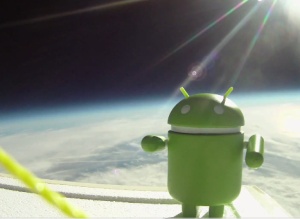
Android's market share has rocketed past that of Apple's iOS in the last year, according to a report by Gartner. Photo credit: Google
On Thursday, the analyst firm issued its handset market statistics for the first quarter of 2011. According to its figures, 36.3 million Android phones were sold in the quarter, up from 5.2 million the previous year. This rise took Android's smartphone market share from 9.6 percent to 36 percent.
Apple's iPhone operating system saw sales roughly double from 8.4 million to 16.9 million over the same period, but its market share rose more modestly, from 15.3 percent to 16.8 percent. This discrepancy in increases can be explained by the fact that overall smartphone sales almost doubled, going from 54.5 million units sold in the first quarter of 2010 to 100.8 million in the first quarter of 2011.
Outgoing Symbian
Nokia's soon-to-retire Symbian OS saw sales go up from 24.1 million to 27.6 million over the year, but its market share went drastically down from 44.2 percent to 27.4 percent. Gartner principal research analyst Roberta Cozza said in a statement the decline would "precipitate a competitors' rush to capture Symbian's market share in the mid-tier".
Symbian is being retired due to Nokia's tie-in with Microsoft over the Windows Phone platform. According to Gartner's figures, Windows Phone 7 has not been an unadulterated success. Its introduction in 2010 as the successor to the aged Windows Mobile platform saw sales of smartphones using a Microsoft OS fall stay flat at around 3.7 million, with market share falling from 6.8 percent to 3.6 percent.
"Windows Phone saw only modest sales that reached 1.6 million units in the first quarter of 2011, as devices launched at the end of 2010 failed to grow in consumer preference and [operators] continued to focus on Android," the report stated. "In the long term, Nokia's support will accelerate Windows Phone's momentum."
With Android, Symbian and iOS in the top three spots and Microsoft in the fifth, the fourth place in the top five was taken by Research In Motion's (RIM) BlackBerry OS. BlackBerry OS saw its market share fall over the year from 19.7 percent to 12.9 percent, albeit on sales that rose from 10.8 million to 13 million units.
Gartner's figures for the handset market as a whole show smartphones to be taking an ever-increasing share. Overall, 427 million mobile communication devices were sold in the first quarter, a 19-percent increase on the previous year.
"Smartphones accounted for 23.6 per cent of overall sales in the first quarter of 2011, an increase of 85 per cent year-on-year," Cozza said. "This share could have been even higher, but manufacturers announced a number of high-profile devices during the first quarter of 2011 that would not ship until the second quarter of 2011. We believe some consumers delayed their purchases to wait for these models."
Handset market
Nokia still dominates the overall handset market, commanding a 25.1-percent market share in the first quarter with 107.6 million sales. This is slightly down from the same period the previous year, when sales were 110.1 million and Nokia's handset market share was 30.6 percent.
Second-place Samsung had its strongest first quarter yet, with sales of 68.8 million handsets. This represented a rise on its 64.9 million unit sales the previous year, but a slight fall in market share from 18 percent to 16.1 percent. LG was in third place with sales of 24 million and a market share of 5.6 percent, both figures representing a year-on-year decline.
Apple was in fourth place, having boosted sales from 8.3 million to 16.9 million, and market share from 2.3 percent to 3.9 percent. "Considering the higher-than-average price of the iPhone, this is a remarkable result and highlights the impact that a strong aspirational brand can have on a product," Gartner research vice president Carolina Milanesi commented in the statement.
Rounding out the top five was RIM, with a flat three-percent market share but sales up from 10.8 million to 13 million.
Gartner's report added that while the shift to smartphones is accelerating in mature markets, "smartphones overall moved down market in the first quarter of 2011". It noted that manufacturers such as HTC, Sony Ericsson, Alcatel and ZTE have announced a broader portfolio of mostly Android-based mid-tier devices.
Get the latest technology news and analysis, blogs and reviews delivered directly to your inbox with ZDNet UK's newsletters.