Apple iPhone margin: 2X that of Nokia Lumia 900

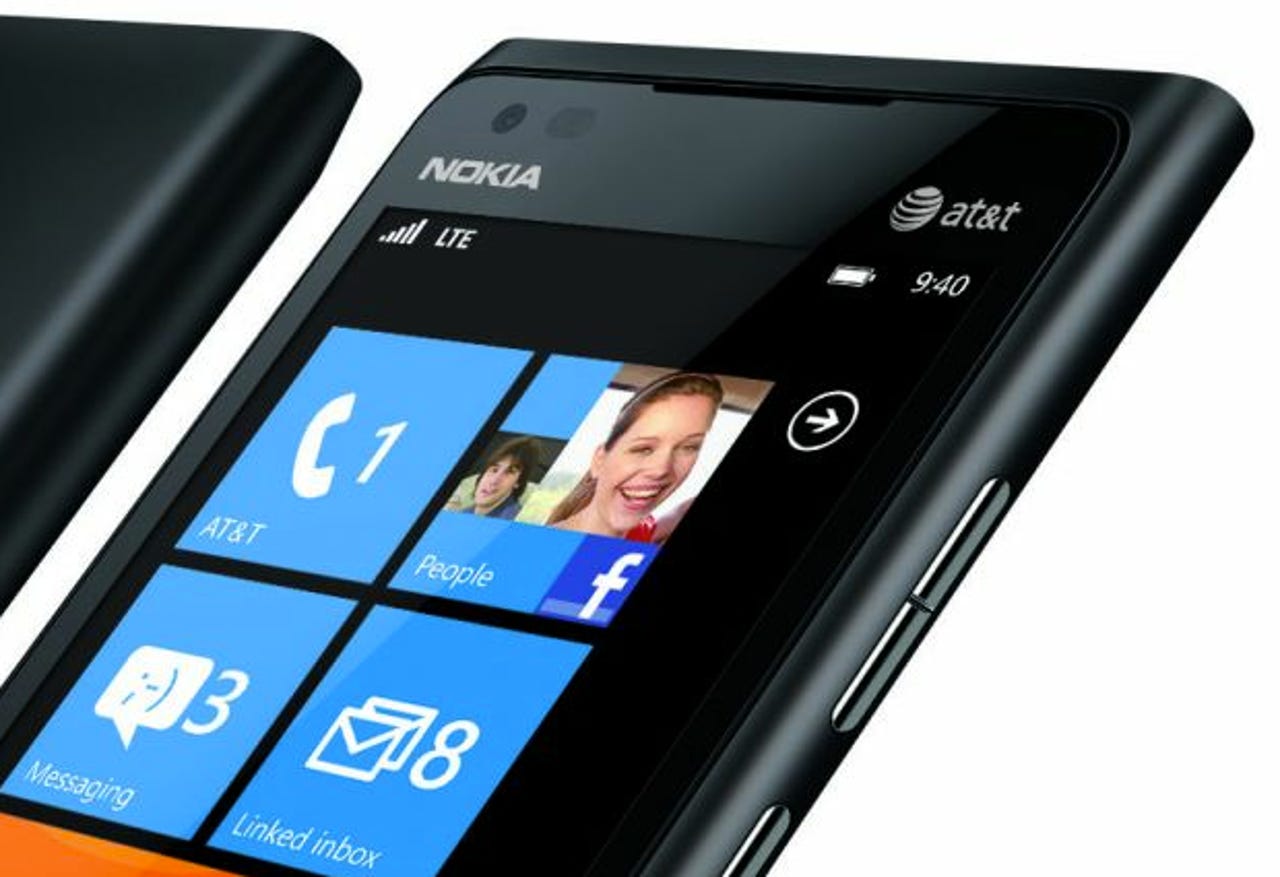
Summary: Nokia Lumia 900 components cost $20 more per device than the Apple iPhone 4S. But Nokia's device sells for $200 less. If you're betting on margins, don't hold your breath

Did you catch this latest brief in the Wall Street Journal?

The success of Apple is an oft-told tale, but what is rarely acknowledged is how complex the drivers are of that result.

Great design, sure. Innovative form factors, indeed. Pop culture icon, indeed. Lofty price points, absolutely. Savvy corporate moves -- well, most of the time -- for sure.

But sometimes it comes down to cold, hard numbers. As it has done in the laptop segment, Apple has demonstrated that it's very good at keeping component costs down while offering a complete product that appears superior than the competition -- and is priced accordingly.

No wonder Tim Cook landed the top job.

The Journal's Anton Troianovski and Don Clark explain how difficult it will be for Finland's Nokia -- rapidly losing its pole position in mobile -- to best the Cupertino, Calif.-based company when the numbers are perilously out of its favor.

No, not the company's stock price -- and not its sales, either. It's all about margins.

The Nokia Lumia 900 -- the company's "back to black" flagship device -- sells for a whopping $200 less than the Apple iPhone 4S. But its components cost about $20 more per unit. (Why? The Journal suggests a larger screen and more advanced chips.)

You don't have to be CFO to understand that the math is not in Nokia's favor, even if the Lumia 900 takes off: that's a $241 margin, versus Apple's $459.

This could be a real problem for Nokia. For now, it's an aggressive strategy to get back in the game.

If you're a shareholder searching for a dividend (any of those left?), you're probably terrified. But, as we saw with Google Android, the low-cost, rapid proliferation strategy can work -- temporarily -- provided you offer a device that's competitive with the iPhone. Because as we all know, it's not about the phone so much as the ecosystem -- and Nokia and Microsoft both need people to buy into Windows Phone. (And stay there.)

The challenge is where to go from there. Once you race to the bottom, price-wise, you can't race back up. Even if Nokia succeeds in putting a Lumia in everyone's pocket, and helps to turn the phone into a commodity like the laptop and the external hard drive, the company is still scraping for cash, relatively speaking.

Nokia doesn't just need to beat the iPhone; it needs to utterly snap its popularity streak. The belle of the ball gets to choose which song to dance to, and for too long, every mobile OEM has been swaying to Apple's beat. In this example, the song is leverage -- over retail prices, component prices and terms thereof. All because of intense popularity with consumers.

The other challenge: that commoditization thing. Apple has plenty of other revenue streams, thanks to iOS and every service and store that plugs into it. Motorola gave its software play to Google, which then turned around and bought it, bringing that money back under the same corporate roof. (Can't say the same for Samsung, HTC or LG.) Nokia did the same thing -- the first part, at least -- with Microsoft.

If this suicide mission is going to work, Nokia needs to pull an Android play: undercut the competition with pricing, sell volumes, lock users into a satisfactory ecosystem, use its new largesse to renegotiate component and retail prices more favorably -- and maybe, just maybe, merge with Microsoft to secure future software revenues. All while offering a product that consumers find attractive enough to leave their iPhones for. (And we haven't even discussed tablets yet.)

It's not just a wide margin that Nokia needs to overcome. It's the very scope of the challenge itself.

Topic: Nokia

Kick off your day with ZDNet's daily email newsletter. It's the freshest tech news and opinion, served hot. Get it.

Talkback

47 comments
Log in or register to join the discussion
  • People are overpaying for pretty Apple hardware.

    This is not a new phenomenon. When a car dealership tries to get a $459 margin out of somebody on a $40k car, they are considered pure evil. When Apple does it on a phone, people line up and beg to spend cash on it.
    eljay001
    • A fair price is one that both seller and

      buyer are happy with at the time of transaction. You opinion, as a third-party not involved in said transaction is irrelevant.
      baggins_z
      • scratch that

        NT
        LBiege
      • Also that price build calculation is very dubious

        [b]That price build calculation is very dubious.[/b]

        Especially "and more advanced chips" part, since iPhone 4S has more advanced chips such as Apple A5 -- as test proved. Camera also better, and the case itself is certainly pricier in iPhone (steel and metal against plastic), and so on.
        DDERSSS
  • But that price is also artificially high.

    Apple understood the US cellular market when they priced the iPhone to carriers

    Though it is a bit dishartening to learn that the blooger prefer we recieve the
    cheapest phone manufacturers can make, using Android or WP7 on bottom line
    hardware. We matter less then the corporations.

    But in truth, those margins are artificial

    Would not the logical way be to have US carriers opporate as they do in overseas martkets? As we can see, when price is not subsidized, the iPhone does not sell as well as many others. Here in the US, would the consumers still purchase the iPhone at 600 dollars when they can get a equal WP7 or Android phone for 200 dollars less?

    This would force Apple to lower their price, thus lowering their profit margin.
    This is not about how smart Cook was/is, instead how smart Steve Jobs was to get US carriers to sell the iPhone at a loss.
    :|
    Tim Cook
    • Apple tried selling for $600 and it was a flop

      When the iPhone first came out they were trying to sell it for $600, it didn't sell well and everyone laughed at those who did buy it. 4 months later they subsidized the cost and that's when consumers started to notice it.
      Loverock Davidson-
      • Wrong

        Wrong
        Synthmeister
      • iPhone did cost $600, failed.

        Synth: He's basically right. Apple introduced the iPhone 8GB for $599 on June 29, 2007, then on September 5, about a month later, cut the price by $200 due to slow sales. There was a lot of anger among the suckers who bought it at $599, and Apple eventually caved and offered a $100 rebate.
        pdxuser
    • Well...

      Considering there is no equivalent WP 7 phone, unless you're comparing it to the 3Gs model that is ancient. Or the fact tat Nokia is giving away the current phones, because they will not be upgradeable to WP8. It's not a ringing endorsement when you have to give away phones rather than selling them, but it does explain over $3 Billion in losses Nokia has reported in the last 6 months.
      Jumpin Jack Flash
  • Nokia's stategy seems fine to me

    The Lumia 900's margin seems fine to me. Over time it can add new, unique abilities to its handsets - using hardware, and software and services - along with must have designs, and slowly increase its margins, as it increases its market share. I think Nokia could also go into the PC tablet / hybrid, and all-in-one businesses, and do well there. Nokia has great design acumen over most PC OEMs - though some seem to be waking up to their deficiency - and has a great chance to do well here. Windows 8 looks astounding, and I believe Nokia could create PC experiences that significantly surpass the iPad's and the Mac's, and do very well.
    P. Douglas
  • Eljay and Mister Spock are right

    Funny thing happens to Americans on cell phone contracts once a month. They pay a premium for a phone they wouldn't pay for otherwise. Of course, Apple then takes money from the carrier, so you're again paying Apple. Your $100/mo smartphone bill turns into $2,400 for its duration. Apple just got $200 from you upfront for the phone and $720 from you through your carrier. Oh...and your carrier had to raise prices to afford being able to sell you the phone. So your phone you could have bought unlocked and paid much less monthly just costed you $920. Man... sweet deal!

    I wonder if all the bloggers on ZDnet are afraid of helping their viewers save some money. Of course, die-hard Apple fans will want to downrate me for pointing this out. Guess what Apple fans... the same goes for ANY phone. This article is about the margins on the iPhone so that's what I'm talking about now. If you buy any top-of-the-line phone, you are supporting higher service fees from carriers. If you buy a phone off contract and use it on a monthly plan, you'll save tons and tons of money.

    I bought my phone that retails for $350 new on ebay new for $269. On a $50/mo unlimited everything plan, I could buy an iPhone outright after two years just to say I bought one and still have saved money over having my phone on a two year contract. Instead, I'm going to save that money for other things.
    ikissfutebol
    • this is why

      I use virgin mobile. $150 for an android phone, $35 for unlimited text/data and 300 minutes. /win
      wendellgee2
      • That is expensive.

        I toke 2 year contract from my country carrier.

        - 100 euros for Android phone
        - 2 euros for unlimited data (speed and amount, I get as much as devices can just get, now 14/7.2 Mbits up/down).
        - 1 euro for unlimited talk time
        - 1 SMS 6 cents.

        I don't care about SMS, being 6 cents a piece, why?
        Because I don't write them. They are slow, can not attache good images or videos (MMS what cost 15 cent) and you have 160 letter limit.
        Every smartphone owner should use email. You just email all the time. No limits of size or attachments and you can access them from everywhere, not just from your phone.

        When I sent about 10 SMS a month, it is just 60 cent. But it is always faster and easier just to call someone (all goes to 1 euro even if I would talk so much other one would not want to hear from me anymore) and discuss about the topic even in few seconds than spend more time typing SMS and sending them few vice and versa.

        When my bills at month is just few euros and I am heavy used data amounts are about 70GB), I don't know what I will do when contract ends end of this year because I have so found to that deal.
        Fri13
    • Of course you're totaly wrong...

      "They pay a premium for a phone they wouldn't pay for otherwise. Of course, Apple then takes money from the carrier, so you're again paying Apple. Your $100/mo smartphone bill turns into $2,400 for its duration. "

      Any proof, or are you making an [b]ass[/b]umption? Microsoft is subsidizing each Nokia phone. The truly sad thing is order to move any WP 7 phone, you have to give them away...
      Jumpin Jack Flash
      • Here's a good game...

        Do 24 sets of 100 jumpin jacks. Tell me how many you did when you're all done. It will be amazing at how 5th grade math still comes in handy. Next, go calculate how much it costs for talk, text, web and taxes at the two biggest wireless carriers in the US.

        This isn't an iPhone thing... this is a carrier thing. wendellgee is spending $990 in two years on their phone and service. I don't care if they had an iPhone on a prepaid plan- you'll still save money.
        ikissfutebol
    • There is a hole in your logic somewhere

      And it breaks down with the charges for the month to month service. I have an iPhone 4 that I have through AT&T. I also have an HTC Thunderbolt that I bought via eBay and am using on VZW to replace the crappy Samsung Galaxy phone I bought through VZW. I pay MORE per month for the VZW service than I do with AT&T. Does that mean that HTC is getting more of my money than Apple?
      NonFanboy
      • We're talking about two different things

        First, the above post highlighted the iPhone, but is applicable to all AT&T and Verizon. If you get a 2 year contract with either of them, you'll pay too much, period. If I had any phone, Android, iPhone, BB, Windows Phone, Bada, etc. on a two year contract, I spend more money than someone on prepaid. Why? The carrier doesn't have to subsidize your phone.

        Here's a link that shows this pretty well, granted it only looks at AT&T. Verizon would be close to the same cost.
        http://phone-fanatic.com/blog/guides/the-ultimate-prepaid-iphone-guide

        With regards to your comment. An old (2/12) article you need to read in order to understand how this all works. In short, the iPhone costs the carrier more money. Wallstreet says to carrier, "you better keep your profits high!". Carrier says, "Customers, you have to pay more money for your service."

        http://money.cnn.com/2012/02/08/technology/iphone_carrier_subsidy/index.htm

        Another article that is older, but highlights the problem for carriers yet again. http://www.readwriteweb.com/archives/apples_iphone_not_profitable_for_carriers.php

        Anyway... does that mean HTC gets more money than Apple? No it doesn't. It does mean you shouldn't have put your HTC phone on a contract.
        ikissfutebol
      • 2 different things indeed

        [b]First, the above post highlighted the iPhone, but is applicable to all AT&T and Verizon. If you get a 2 year contract with either of them, you'll pay too much, period. If I had any phone, Android, iPhone, BB, Windows Phone, Bada, etc. on a two year contract, I spend more money than someone on prepaid. Why? The carrier doesn't have to subsidize your phone.[/b]

        This applies to ALL carriers that subsidize one's device. And yes I do realize that the increased costs with a contract are due to the subsidization of the devices - most people if they want the higher end devices will pay the extra over time as opposed to having the money up front and I personally am more willing to go through a carrier and get a subsidized device and have it insured which is a drawback to buying a device outright and using a prepaid plan.

        In regards to the first link you posted the AT&T cost is deeply inflated - I'm paying $160/m for [b][i]3[/i][/b] iPhones one with an unlimited data plan, one with a 2B data plan, and 1 with a 300MB plan... the chart on the link shows $110/m for 1 iPhone... So I'm getting 2 MORE iPhones for 50/m? Sweet deal then. I also notice that VZW and Sprint were left out of that post even though the post was dated yesterday and both VZW and Sprint have had the iPhone for long enough to add that data.

        As a comparison my plan on VZW with my HTC Thunderbolt w/unlimited data is $96/m... which does not come out of my pocket as it's a work phone and my employer foots the bill - and they are not willing to go to another carrier or with a prepaid option.

        With your second link the last few paragraphs the carriers or analyst try to blame the costs of the 4G networks on the iPhone calling it a "data hog" but the big hole in THAT theory is that the iPhones are not 4 capable at this time. I just wanted to point that out. My question concerning this is are the carriers actually losing money or are they just seeing a decreased profit?
        NonFanboy
      • Here is a simple fact .... that dumb haters don't understand

        A smartphone with a contract actually cost less than a smartphone with no contract.

        FACT: Even if you have you own fully payed smartphone (no matter what brand), you still have to pay for the carrier service. You don't get any discount on the price of the service.

        So, pay $600 (full retail) for a phone, then pay 2 years of service (assuming $60 a month) and your TCO (total cost of ownership) would be $2040.

        Or, pay $200 (or less) for a subsidize phone with a contract for the same 2 years .... TCO: $1640

        Which one is cheaper???

        People don't change carriers that often and by law you have 30 days to decide if you like it or not. So the issue of being stuck is pretty much BS. Even if you have to break the contract, the cancel fee is still less (or the same) than the extra money you payed for the retail price smartphone.
        wackoae
  • The bottom line is...

    You get what you pay for.
    PogoBlue