Lytro camera: A photographer's analysis

Summary: The Lytro represents a breakthrough in camera technology. But, is it really useful in practice?

The Lytro Light Field camera represents a large step forward in digital photography technology. Rather than rely on fixed points of focus, as with traditional cameras, the Lytro captures an entire scene and enables selective focus after taking the picture.
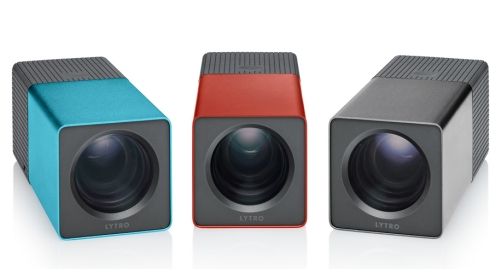
Lytro bases its technology on the doctoral dissertation (PDF download) written by the company's founder, Ren Ng. The document is an unusual thesis because it is so well written and clear, in contrast to most academic papers which are difficult to read. Ng wrote his paper in 2006, so it took six years to bring his vision to life in the Lytro camera.

According to the Lytro web site, the camera captures light differently from traditional photography:

Recording light fields requires an innovative, entirely new kind of sensor called a light field sensor. The light field sensor captures the color, intensity and vector direction of the rays of light. This directional information is completely lost with traditional camera sensors, which simply add up all the light rays and record them as a single amount of light.

In other words, the Lytro captures the light color, direction, and intensity as a blueprint to guide later reconstruction of important elements of the photo, such as focus point. Although traditional digital photographers routinely edit photos using tools like Adobe Photoshop, the additional data that Lytro captures adds a completely new dimension.

After taking a picture, the specialized processing software supplied by the company uses the additional data to let users interact with the photo and change the focus point at will. Lytro's ability to change focus, selectively, after the picture is taken represents a genuine innovation in photography.

Here is a cross-section of the camera hardware, from the Lytro website:

Although Lytro genuinely offers something new, the practical utility of this first generation camera and software combination is less clear. Let's consider Lytro's value to experienced photographers and casual photographers.

Experienced photographers seek three attributes in camera systems: high quality output, ability to control the image, and flexibility to accommodate a broad range of shooting situations. Based on the criteria, the Lytro system falls short of traditional film or digital cameras. It acts like a camera-phone quality point and shoot with the ability to adjust focus after the photo is taken. Based on traditional photographic criteria, the Lytro does not satisfy the needs of experienced photographers.

Lytro also disappoints casual picture-takers, who usually use a point and shoot or mobile phone camera. This group values low cost, ease-of-use, and good quality pictures over other attributes. Although Lytro basics are relatively easy to learn and the picture quality is passable, the base model costs $399, making it an expensive and less flexible choice among alternative cameras. For that price one can buy a high quality point and shoot camera with all the bells and whistles.

The Lytro system is ingenious, so who is it for? That's the magic question. Well-known photography site, DPReview, concluded:

The Lytro LFC is so unlike any conventional camera that it doesn't make sense to score it in comparison to them. Ultimately, though, we're not convinced that the Lytro either solves any existing problem or presents any compelling raison d'etre of its own.

CNET says the Lytro is perfect for the:

Mac-using early adopter with deep pockets who really likes to compose photos and be creatively different

Camera reviewer, Steve Huff, calls the Lytro, "a cool ass gadget, but not worth $400".

A PHOTOGRAPHER'S CONCLUSIONS

In a blog post on innovation, author Vinnie Mirchandani asked me to comment on the Lytro. Having spent time with the Lytro camera, unfortunately it appears to be little more than a toy in its current form. Here is why:

1. I question the fundamental value proposition of allowing ordinary users to change focus points after the fact. There are many point and shoot cameras that can keep virtually an entire image in focus, if that is important. To me, changing focus after the image is taken sounds cool, but becomes boring quickly. In addition, I just do not see the point of "interactive photographs" such as those presented by Lytro. Admittedly, I may be shortsighted here, however.

2. As a photographic artist, I place focus points precisely to convey a particular effect or composition. Honestly, I want the image to look a particular way and I do not want anyone screwing with it.

For example, in the image below, the focus point lies squarely on the large, red ornament. The image would make no sense if the focus point were moved back to the alligator. Nonetheless, the clear distinction between focused and out-of-focus areas makes this precisely the kind of image that Lytro would handle well:

Photo credit: Michael Krigsman

The following photograph shows where the Lytro is particularly weak. Because this photo has only a single point of focus, the Lytro camera would serve no purpose:

Michael Krigsman

Photo credit: Michael Krigsman

3. The Lytro software is limited and does not support editing options (as far as I could tell). Image editing is akin to printing a photo in a darkroom -- for serious photography it is often a required step, even if only to adjust sharpness or contrast.

4. The Lytro camera hardware is well built and easy to understand, but actually hard to use in practice. The screen is tiny, I find the zoom hard to control, and the two modes - everyday and creative - are confusing.

5. The whole focus thing is quite confusing - to get it right the user must understand how the camera software handles focus points and how the lens handles close focus distance. The zoom and close focus capabilities vary based on camera mode, which turns the point and shoot learning exercise into a required study, if you want to get the most from the camera.

Despite all these issues, the technology is fascinating and I suspect will have a rich future as it matures. However, in its current form, the camera is little more than a plaything for well-heeled photographic experimenters, especially since one can buy great point and shoot cameras for less money.

Also read:

Thanks to NetSuite, which gave some attendees a Lytro camera at a recent event. Lytro is one of NetSuite's customers.

Topic: Hardware

Kick off your day with ZDNet's daily email newsletter. It's the freshest tech news and opinion, served hot. Get it.

Talkback

17 comments
Log in or register to join the discussion
  • The problem with the Lytro

    It is limited by the lens itself. If you use a DSLR with a lens at a smaller depth of field the light field sensor cannot over ride the lens.

    I agree with the blog, the camera solves a problem that doesn't really exist.
    slickjim
  • Gimmick low-end camera with simulated depth of field

    Photoshop can do simulated depth of field on an exposure taken with an infinite distance focal point. The algorithms used to select the item you want in the foreground is not hard to do, if you've got that sort of programming skill. But Photoshop can do it. Many point and shoot cameras can do things Photoshop can do. So why should this gadget be "revolutionary" in any way shape or form?

    "Light field sensor" - more like "snake oil dispenser". Digital cameras have sensors that capture light. Without it you don't get a photo. Light is a wave that reflects off of objects giving them their appearance. This gadget cannot take zillions of atom-thick slices to allow so many post-snapshot focal points. It's merely running an analog of a Photoshop filter or other process that can be found or made natively.

    As is said, there is no problem that had to be solved.

    It's like selling a product mentioning a patent for a tangential or unrelated cause. Yes, the technobabble behind light and all that is cool, but it's irrelevant.

    The sensor quality in this gimmick is not very good, either - some P&S cameras and most DSLRs will capture far more information (color gamut, shadow detail, and pixel density for sharpness. Which is also why I don't buy the concept - these images should be far more scalable and retain the identical level of sharpness as well. But they don't.)

    Reading the pic above, "supercomputer replacing the lab" - WHAT?? Who ever once needed a mainframe or Cray "SUPERCOMPUTER" when, once again, Photoshop allows people to do the same thing by hand for a decade? Even people not versed in technology could see that verbal misuse a mile away. The more I read the technobabble, I mean propaganda, the less I'm buying the sincerity and start thinking "disingenuousness"
    ...
    HypnoToad72
    • You know nothing

      Saying that POV focus is unnecessary because Photoshop can do selective blurring in 2D is like saying that RAW exposure isn't necessary because you have Brightness and Contrast controls. That is to say, you don't know what you're talking about.
      Joe_Raby
    • Read up on it

      You should really read up on the camera and how it works before bashing it.

      While I would agree that the first gen isn't all that compelling due to the low resolution output it is a major advance in terms of how we think of digital imaging. It is nothing at all like a photoshop filter.

      The key point is that it knows and stores the VECTOR that light came in at. It uses an array of lenses and sensors rather than one big one. That's why the pixel count of the resulting photo is so low: the sensor is being split up to receive many different angles of the same image. Think fly's eye.

      Software then rebuilds all of that data into what we think of as a 2D photo.
      SlithyTove
    • Commenter is incorrect

      This comment is factually incorrect. To learn more about what Lytro actually does, which is extremely impressive, read the founder's dissertation. There is a link in the post.
      mkrigsman@...
  • Question:

    Does the camera store information on Z-depth point data? Couldn't that be used to reconstruct the image in a 3D medium?
    Joe_Raby
    • 3D

      Edit: YES! Yes, it does.

      http://blog.lytro.com/news/it-gets-better-lytro-3d-demo/

      Say hello to single-lens 3D. Definitely a plus for filmmakers.
      Joe_Raby
  • More information is betterer

    As it captures more information than normal camera, professionals will figure out uses and professionals will most certainly all use this some day.

    I think this has much more potential in the pro market than in consumer. Make one that costs $5,000 and has a way better image sensor in it, and professionals will snap it up and come up with new creative ways to make use of the additional information captured.
    orthorim
    • I agree

      There are great possibilities with the technology, but the current camera does not show it.
      mkrigsman@...
      • It's the same with any technology

        The first generation will always have its flaws, but give it a few generations to mature and it'll be a great technology.
        Aerowind
  • Potential

    The first generation of digital cameras didn't seem to hold much promise. The images were poor, resolution was abismal. and anyone shooting serious photography stuck with 35mm. It took years but the digital camera technology finally caught up with and surpassed (at least by most counts) film. The Lytro technology is in its infancy. What may become of it is hard to tell. My guess is that there will be other applications, more than just your casual photography work, that will take advantage of this new technology. And then it will all make sense.
    boomchuck1
    • Yes

      There plenty of potential uses for this technology. I am going to guest this company will be acquired by one of the big boys in the camera world in the near future.
      Knowles2
  • don't be so narrow minded

    I???ll bet there are all kinds of potential uses in surveillance and security applications.
    toolow66
  • Company name change

    This startup used to be named Refocus Imaging.

    Really cool technology with great potential. The current product is more or less shipping prototype mostly usable for hobby purposes -- but creative users will always find how to make wonders with it.

    This technology needs higher density (multi-megapixel) sensors. Such already exist, like the sensor in Nikon 800 (Full Frame 36 Mpix), or the tiny 41 Mpix sensor in the Nokia 808 Pure View phone. So, making such sensors is apparently no longer big deal.
    danbi
  • Hubris was a fatal flaw...

    When we first heard about Lytro, we thought it was the answer to a common dilemma. We use still photography and incorporate it into TV productions. Everything we shoot is at a distance and is moving, so we need maximum depth of field and exact targeting, which the camera often misses on a moving object, so we thought, gee never take a bad picture. Then we discovered images can only be shared on line and creating an extractable corrected image isn't part of the equation, so I attempted to call Lytro HQ in California to talk with someone about professional applications for the technology, not just sharing it with your pimply faced friends after school. THREE times we called and asked the receptionist to speak with someone (anyone) about professional applications. Three times Ms. Warmth told us "There is no one here you can speak with." I remember a time when companies who made a product wanted to talk to potential buyers because that was going to go to their paycheck. I guess if you are arrogant, you don't have to speak with those who are interested in buying your product. Anyway, when I win the lottery, I am going to buy Lytro, just so I can fire this receptionist.

    So then we tried the "black hole e-mail" route where you fire off e-mails that go nowhere, and no one responds, but after about 20 inquiries we finally got an e-mail from someone who provided nothing but canned answers, and refused to speak on the phone so we could have an intelligent conversation. I guess I should be grateful for that, but after reading this review, I'm kinda glad they panned it. Someone will probably buy the company (if I don't get to it first) if for no other reason than to take a competing technology off the market.
    EquusMaximus
  • Movie versions?

    An acquaintance who was one of fifteen professional photographers (i assume the author of this column was another), and who has lots of connections into Hollywood, has mentioned that Disney is working on a video version of the same technology.

    (Of course, a few years ago, he did say that an engineer/tech at Lucasfilm had assured him that 3D conversion on existing flat films was impossible.)
    fairportfan
  • Early models

    Like any new technology it will become better over time.

    I fully expect that years from now you will be able to download a Lytro picture to your computer and change lighting, color, clarity, etc. including possibly viewpoint.

    The biggest problem is if the company can survive until it's system is perfected and easy to use.
    shanedr