Between the Lines

Larry Dignan, Andrew Nusca and Rachel King

Microsoft's Windows Phone 7 Series: Too little too late?

By | February 16, 2010, 2:30am PST

Summary: Microsoft has finally come up with an answer for its mobile phone operating system conundrum: Take the Zune software and extend it into something unique and fresh. The big question is whether Microsoft has solved the Windows Mobile puzzle too late.
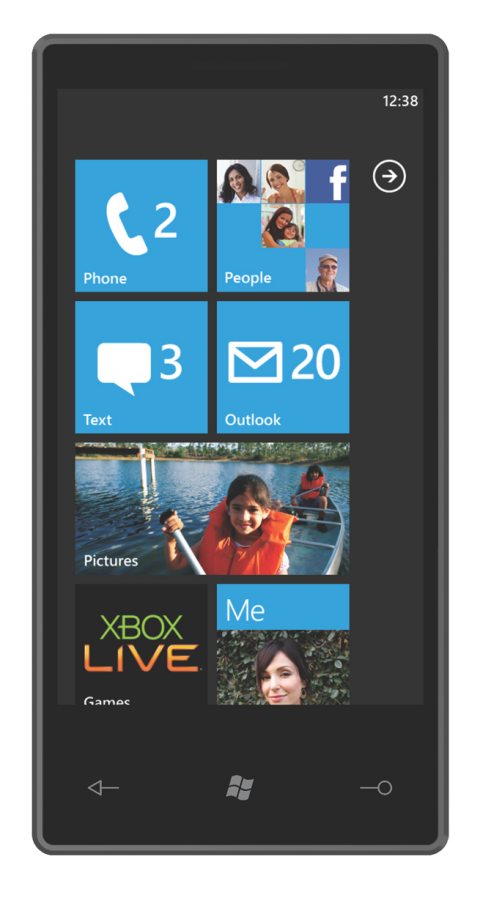
Microsoft has finally come up with an answer for its mobile phone operating system conundrum: Take the Zune software and extend it into something unique and fresh. The big question is whether Microsoft has solved the Windows Mobile puzzle too late.

At the Mobile World Congress 2010, Microsoft introduced Windows Phone 7 Series (statement, Techmeme). Clunky name aside, the software giant’s take is solid. If you have a Zune HD you’ll recognize Microsoft’s phone platform immediately. The Zune HD software works well and does what it’s supposed to without a lot of clutter. One can only hope that Windows Phone 7 does the same.

Microsoft said Windows Phone 7 represents a “fresh approach” that will layer in simplicity, context, applications and the Web. In a nutshell, Xbox Live games and Zune music are now features of Windows Phone 7. These phones arrive by holiday 2010.

First off, Microsoft appears to be generating some real return on investment for its Zune adventure. Sure, Microsoft is an also-ran on the music player front, but at least it started a mobile operating system. Kudos to the software giant for starting over from scratch.

The elephant in this mobile room is whether Microsoft’s move is a case of too little, too late. Microsoft CEO Steve Ballmer acknowledged that it is in “a crowded market filled with phones that look the same and do the same things.” Ballmer added that he challenged his team to deliver a new experience. The team actually built on the Zune experience.

All of that is swell, but at some juncture the mobile phone platform wars will settle out. I’d be more optimistic if Windows Phone 7 devices were going to launch in the second quarter. The fourth quarter launch complicates matters for Microsoft. If Windows Phone 7 devices land in September the software giant has a shot. If these phones launch in November, Microsoft may have issues.

Ten things we still don’t know about Microsoft’s next-gen Windows Phones

Why? If Microsoft is taking share from any company it will be RIM. It’s highly unlikely that Google Android and Apple phone buyers will even consider a Windows-powered phone. In addition, RIM hasn’t rolled out its next-gen plans. If Microsoft beat RIM to the punch it would have a nice shot with Windows Phone 7.

Today, we’re clearly in a mobile renaissance period. We’ve got innovation from Google’s Android, Apple’s iPhone, RIM’s BlackBerry—assuming the company delivers something next-gen in 2010—Palm’s WebOS and a new flavor of Symbian from Nokia. If Microsoft gets its mobile act together you can argue that the mobile industry will have six perfectly fine mobile platforms across the globe.

We all know how this movie turns out. You have six companies duking it out. A few years from now it’s four. Then three. Then the days of a happy duopoly.

We’re far from duopoly days, but you have to wonder if Microsoft can make the first cut to four. Android is coming on strong with an army of devices. Apple’s iPhone’s App Store alone will keep it in the game. RIM needs to innovate, but still has a commanding 41.6 percent smartphone platform market share in the U.S., according to comScore. Microsoft has 18 percent behind Apple’s 25.3 percent in the U.S. based on comScore data.

Microsoft’s challenge will be to hold market share for about 7 months (best case scenario) as Android grows at a frenetic pace. Microsoft says its Windows Phone 7 devices won’t launch until the holidays. Meanwhile, the days where Microsoft could announce a platform and freeze a market are long gone—especially in mobile. How much will Microsoft have to play catch up by the holidays?

Chances are Microsoft will have a huge gap to close by the fourth quarter. ChangeWave Research recently documented future smart phone buying intentions. It’s all about the iPhone and Android. Windows Mobile is an afterthought at this point—and that’s the OS that’s holding the fort.

If you assume Microsoft’s mobile platform share further erodes the Windows Phone 7 launch will have to be big to compete. That’s why you hear the stray rumors about Microsoft buying Research in Motion.

There’s a lot to be excited about with Windows Phone 7. Indeed, I think Microsoft has finally figured it out. We’ll see if Microsoft has found the answers too late to matter though.

End note: As a Verizon Wireless customer with an upgrade available I just don’t see the point in moving. For starters, RIM’s OS upgrade has made the Storm more palatable. In addition, the app selection for the BlackBerry has improved dramatically (amazing what a Sirius app can do). Every time I research a platform I find some sort of dealbreaker—tethering is a big one. Simply put, there is no perfect platform yet. And given the way handsets are developing I see no need to jump on the latest greatest thing—especially when I know it’ll be trumped in 3 months anyway. While the mobile space is in a renaissance today, it must be damn confusing for the consumer that doesn’t follow this space daily.

Kick off your day with ZDNet's daily e-mail newsletter. It's the freshest tech news and opinion, served hot. Get it.

Topics

Larry Dignan is Editor in Chief of ZDNet and SmartPlanet as well as Editorial Director of ZDNet's sister site TechRepublic.

Disclosure

Larry Dignan

Larry Dignan has nothing to disclose. He doesn’t hold investments in the technology companies he covers.

Biography

Larry Dignan

Larry Dignan is Editor in Chief of ZDNet and SmartPlanet as well as Editorial Director of ZDNet's sister site TechRepublic. He was most recently Executive Editor of News and Blogs at ZDNet. Prior to that he was executive news editor at eWeek and news editor at Baseline. He also served as the East Coast news editor and finance editor at CNET News.com. Larry has covered the technology and financial services industry since 1995, publishing articles in WallStreetWeek.com, Inter@ctive Week, The New York Times, and Financial Planning magazine. He's a graduate of the Columbia School of Journalism and the University of Delaware.

For daily updates, follow Larry on Twitter.

Talkback Most Recent of 205 Talkback(s)

  • Context
    Please put the graph into some kind of context. it is meaningless without.

    Examples of context are;

    a) Number of people asked
    b) Socia-Economic Profile of group asked

    etc, etc.

    I can just pull figures from my backside to prove any point I want you know.

    I asked x people in an Apple store somewhere on such a day for about y number of mins about their next likely purchase.

    84% said they were likely to buy an Apple Product.
    10% were undecided
    6% made no comment.

    Get the picture?
    ZDNet Gravatar
    Bozzer
    16th Feb 2010
  • Still, any way you look at it, MS is in trouble here. First, trust is a BIG
    problem. People do not forget what MS did to the PC
    market, sucking all the profits out, not allowing differentiation, and leaving PC manufacturers to
    fight for the crumbs. Phone manufacturers and
    carriers do NOT want to let MS lead them around by
    the ding-a-ling.
    ZDNet Gravatar
    DonnieBoy
    16th Feb 2010
  • You're very insightfull, Donnie Boy!
    You must know some people on "the inside".

    Phone makers want phones that sell, so since the Android army is ready to become the #1 phone OS in the world, who would want a run down has been like WinBlobile?

    "You can put lipstick on a pig, but it'll still be a pig!!"

    LOL!!
    ZDNet Gravatar
    Ron Bergundy
    16th Feb 2010
  • ZDNet Gravatar
    ItsTheBottomLine
    16th Feb 2010
    • Flagged
  • no this is intentional...
    and yes there are meds to help him with this behaivior.
    ZDNet Gravatar
    CrashPad
    17th Feb 2010
  • DonnieBoy, the spokesperson for planet Earth.
    you are flat out wrong. 99% of people using Windows would have no clue what you just meant, let alone care about it.

    You also act like the PC market is limited to the current OEMs. Did you forget about Apple Corp?
    Answer this question Donnie, it's normally avoided. If there was a market for Linux or whatever OS you are talking about (remember, Linux has only been ready for a few years and still has issues for average users) what has stopped people in the open source camp from starting up hardware manufacturing companies that cater to Linux? Has MS's partners somehow made that impossible? If there is a big desire for something other than Windows as you have your pulse on everyone in the world, then explain why the market won't respond with investors who are willing to put up the cash to start Linux OEMs. Why are we not seeing that? I know why, but I want your take.
    ZDNet Gravatar
    xuniL_z
    16th Feb 2010
  • Two reasons
    A.
    It cost a heck of a lot of money to start a decent sized OEM factory with any chance of a life span of more than six months.

    B.
    Microsoft never abandoned the business method called arm bending: "If you sell anything with OS "anything but Windows" we will up your price of Windows so you go bankrupt, or we will stop selling you Windows. In both cases we will start a FUD campagn against you."

    Microsoft is over the hill.
    ZDNet Gravatar
    pkrdk
    16th Feb 2010
  • Don't buy it. I was talking about Linux Only company.
    Surely if Linux is good and can compete for the hearts and minds, Venture capitalists would be willing to go *all* in on it, no?

    I know, and you are right, no. They know they would not sell enough machines no matter how much money is thrown at it.

    So they want existing partners to be forced to put their OS on and fool people into thinking they are getting Windows. Got it.

    MS has just begun. Their cloud services will be huge. They are the only company that allows a mix of clound and inhouse and still provide integration between them out of the box. Most companies and people in general are conservative. Cloud computing it talked about here but is a good 10 years away from being common, if it ever is.

    Windows 7 is selling at a very fast rate. It's eclipsing XP sales at the same point after launch, by a ton.

    I think they have a lot left in them. If MS is over the hill, then Linux, derived from Unix and minix, derived from AT&T from the 1960s is ancient and long extinct.
    ZDNet Gravatar
    xuniL_z
    16th Feb 2010
  • The problem up to this point has been application compatibility, and, of
    course, MS Office file formats. That has kept Linux
    in a niche. And, given the MS war chest, there are
    not many venture capitalists willing to invest to go
    head to head against MS.

    Google being a very notable exception, given that MS
    is willing to lose billions to attack Google's
    search business. Look for Google to fund Chrome OS
    computers this year.
    ZDNet Gravatar
    DonnieBoy
    16th Feb 2010
  • The problem is...
    For every Donnie Boy that don't like Microsoft products, there are a million other "Name" that like Microsoft products. Microsoft will do just fine, because of this.
    ZDNet Gravatar
    windozefreak
    16th Feb 2010
  • Chrome OS?
    I hope the first looks so far are not nearly what they deliver. I could build the same thing on my Windows 7 machine by filling a few folders full of internet links and arranging them in a square on my desktop.
    The world is in no way ready for a web OS.
    They will get some to bite and may even get a little share, and that's probably all they want for now, thinking their ad business will fund them for a long time they can just keep coming.

    But were does that leave Ubuntu? I don't hear about any other linux distros, outside of Redhat and Novell, what happened to all of those dozens of distros? Have they all fallen by the way side?
    ZDNet Gravatar
    xuniL_z
    18th Feb 2010
  • System76
    http://system76.com

    General rule of thumb: if you've thought of it,
    someone else probably has already done it - or
    similar. If they haven't, you're either brilliant or
    incredibly stupid.
    ZDNet Gravatar
    supermadman
    16th Feb 2010
  • Well, there you go. Now tell me...
    Why there is so many complaints about Microsoft partners not offering Linux on all models or "naked" PCs?
    I have no idea, do you?
    ZDNet Gravatar
    xuniL_z
    16th Feb 2010
  • choices
    Imagine walking into Best Buy or wherever you purchase your machines. You want one with 4 GB RAM, a quad core running at 2.8 GHz and a 1 TB SATA HD. You find one but it's running OS X. You're a Windows guy and you know you can just install Windows on it.

    You go up to the salesperson and ask if you can get that model with no OS so that you can install your choice and if there's a way you could get it cheaper since you'll be purchasing Windows on the premises.

    You're asked to leave and aren't even allowed to make the purchase you'd intended to make anyway or you're told that your machine will be full price as well as losing the warranty on the hardware unless you reformat so the original OS is on it before bringing it back to the store for repairs.

    That's what it's like to run Linux. We choose to do so because it's that much better than Windows for us.

    We're also not stupid, some people prefer the hardware from one manufacturer. We get that. They don't. If you still an "explanation", go back to school. You've got a lot more learning to do.
    ZDNet Gravatar
    tmsbrdrs
    16th Feb 2010
  • there is no need to attack my intelligence.
    Besides Red Hat and Novell, which seem to be doing ok, I think that the linux desktop, and even avid Linux OS users admit, has only been ready for preinstall or retail for a few years now...not much longer and many think there are still too many things you need to do along the way the average user will have trouble doing.

    But why would anyone expect for essentially a new OS on the scene, with a totally different business model that touches also on ideology and a complete shift from the current market system, to see any more movement than there has been?

    It's simple supply and demand. If there is enough demand, the market will always create the supply.

    I think it's too bad along the way that FOSS types didn't get together and realize breaking into a market that operates totally different than the way we'd like to see it, just might be a tough nut to crack.
    So you have to deal with getting windows with your PC of choice for now, life gets a whole lot worse than that sir.

    I think if there was a way to monetize and market Linux, so people could see it and become familiar with it, you would see a growing mainstream adoption. But to come in with a model that includes ideology and many people, at the dismay of Linus Torvalds, acting like they are waging a holy war for open source vs. proprietary, you can't see how that would scare a lot of people away from it? Free or not, the public sees nothing of a welcoming and open arms linux with indemnity and identity in the marketplace. Don't you think that make be part of it?

    I also don't understand how people feel an OS should be free because it's just created from knowledge and "knowledge should be free". That's one of the mantras. But then they want to charge you 150.00 an hour to give you the knowlege of how to use the OS, or the knowledge of what to do when you have problems.

    There are many businesses that still like the proprietary model and will for a long time to come. They like the one vendor, one copyright, on source, integrated system that gives them a lot of flexibility standard, without having high priced developerson staff writing integration piece by piece on things that could fork for all you know or be dropped by it's communty.
    There are businesses that like open source who are led by a more technical person with a dev. team that can write their own software and integration (with some risk).
    I think the majority want a hybrid system however. Microsoft is fine wth that. But RMS has even added language to the latest version of the GPL that prohibits it.

    All in all I think things are not going to change in the real near term and you can't force businesses to do what you feel is the "right" thing.

    It's up to the Linux Os commuity to create the demand, not HP or Dell.
    ZDNet Gravatar
    xuniL_z
    18th Feb 2010

Talkback - Tell Us What You Think

Formatting +
BB Codes - Note: HTML is not supported in forums
  • [b] Bold [/b]
  • [i] Italic [/i]
  • [u] Underline [/u]
  • [s] Strikethrough [/s]
  • [q] "Quote" [/q]
  • [ol][*] 1. Ordered List [/ol]
  • [ul][*] · Unordered List [/ul]
  • [pre] Preformat [/pre]
  • [quote] "Blockquote" [/quote]

The best of ZDNet, delivered

ZDNet Newsletters

Get the best of ZDNet delivered straight to your inbox

Facebook Activity

White Papers, Webcasts, & Resources