ie8 fix

Between the Lines

Larry Dignan, Andrew Nusca and Rachel King

Sprint, Clearwire rev 4G: What's the shelf life for WiMax?

By | March 24, 2010, 4:30am PDT

Summary: Sprint has its first 4G handset on the runway—a snazzy HTC created Android device that’ll fly—and Clearwire is forging ahead with its rapid expansion. How much staying power does WiMax really have?

Special Report: CTIA Wireless
Sprint has its first 4G handset on the runway—a snazzy HTC created Android device that’ll fly—and Clearwire is forging ahead with its rapid expansion. WiMax and 4G services are landing in a city near you. It’s all good and is generating buzz, but there’s this nagging question that hangs amid this 4G euphoria: How much staying power does WiMax really have?

That question has been coming up a good bit in my chats with equipment providers. There’s a debate about whether WiMax, the backbone of Sprint and Clearwire’s network, is fourth generation wireless service or more like 3.5G-ish. No one really wants to get into the squabble over WiMax, but it’s clear there’s a much faster technology, Long Term Evolution (LTE), waiting in the wings.

To wit:

  • Clearwire’s literature details wireless broadband speeds between 1 to 6 megabits per second (Mbps).
  • LTE, in trials now, will deliver speeds between 6 to 12 Mbps.
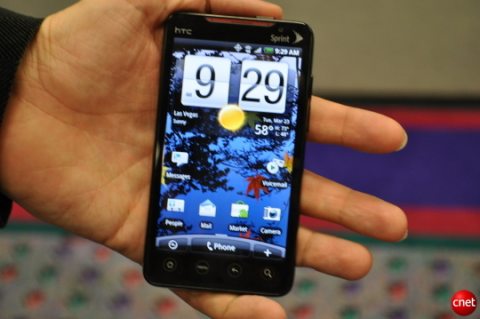
Now let’s not get too nit-picky. When it comes to wireless broadband you’ll take all the speed you can get at the moment so rest assured some folks will hop over to Sprint/Clearwire and that HTC Evo (right). But the leap to WiMax is really more like the change from dial-up access to DSL. It’s a nice speed gain, but it’s more of an intermediate step to something with more oomph.

Also: HTC Evo 4G (photos)

Sprint and Clearwire obviously don’t want folks thinking of WiMax as an intermediate step to LTE nirvana. And their shareholders definitely don’t want to hear that WiMax capital spending will just have to evolve to LTE investment in a few short years—investors like to think that the network buildouts will pause at some point. Sprint and Clearwire executives are clearly heading off the WiMax shelf life question at the pass.

Here’s Sprint in a statement:

And unlike “concepts” and “lab tests” from other wireless companies, Sprint is the first national wireless carrier to actually test, launch and market 4G technology. The strength of Sprint 4G lies in its all-IP backbone, common architecture and 4G spectrum depth, which give the company considerable flexibility to ensure that customers have a top mobile experience and the most advanced 4G services available well into the future.

Translation: Verizon can talk about LTE, but we’re there first. That said, we’ll leave the door open to LTE later.

Clearwire CEO Bill Morrow is a bit more direct. In Clearwire’s statement, Morrow said (emphasis mine).

“On average, our mobile 4G customers are using more than 7 GB of data per month, and we’re very pleased about the implications. Those who want to have a misguided debate about competing 4G radio technologies are missing the bigger picture. To deliver true mobile broadband requires deep spectrum resources and an all-IP network, and Clearwire remains unrivaled on both fronts.”

The big question: Is the WiMax vs. LTE debate really misguided? There are billions of dollars of capital spending at stake.

Both WiMax and LTE have the potential to allow people to cut their broadband cords, the LTE offers a bit more promise. LTE could really allow folks to cut their cable modems.

Now WiMax isn’t chump change by any means. However, the technology would have looked a lot better when Intel first started pushing it hard in 2004.

In fact, Macquarie Capital analyst Phil Cusick said it’s quite possible that WiMax will yield to LTE once the latter technology is implemented by carriers. Cusick noted that it’s quite possible that Clearwire hops on the LTE bandwagon too.

Clearwire’s WiMAX approach to 4G allows it first-to-market status in the 4G world, and the flexibility to eventually move to LTE if that ecosystem dominates. We expect Clearwire to market WiMAX devices exclusively for the next 2-3 years, but to add an LTE signal to its offering later, as the LTE device ecosystem matures.

The major selling point to Clearwire’s network is that it can support dual mode operation. Bottom line: While Clearwire talks a good WiMax game today it can just as easily play the LTE game if it has to with minimal change to its antennas.

Related:

Kick off your day with ZDNet's daily e-mail newsletter. It's the freshest tech news and opinion, served hot. Get it.

Topics

Larry Dignan is Editor in Chief of ZDNet and SmartPlanet as well as Editorial Director of ZDNet's sister site TechRepublic.

Disclosure

Larry Dignan

Larry Dignan has nothing to disclose. He doesn’t hold investments in the technology companies he covers.

Biography

Larry Dignan

Larry Dignan is Editor in Chief of ZDNet and SmartPlanet as well as Editorial Director of ZDNet's sister site TechRepublic. He was most recently Executive Editor of News and Blogs at ZDNet. Prior to that he was executive news editor at eWeek and news editor at Baseline. He also served as the East Coast news editor and finance editor at CNET News.com. Larry has covered the technology and financial services industry since 1995, publishing articles in WallStreetWeek.com, Inter@ctive Week, The New York Times, and Financial Planning magazine. He's a graduate of the Columbia School of Journalism and the University of Delaware.

For daily updates, follow Larry on Twitter.

13
Comments

Join the conversation!

Just In

RE: Sprint, Clearwire rev 4G: What's the shelf life for WiMax?
peerys@... 5th Aug 2010
@Elibom that is pretty much it...the others need to take it from Apple...amuse the masses don't need to do anything significant just have apps that are "fun" and don't do anything of great importance.
0 Votes
+ -
The mere fact that WiMax is again a topic of conversation is that it is here. It was dismissed as DOA several years ago.

The LTE promise of 6-12Mbps is both a fantasy and a don't care - especially when used on a 5 inch screen. Get real.

WiMax is here today and it has CDMA compatibility for non covered areas - which is what people care about.

The future? WiMax+LTE modem.s It's essentially the same OFDM technology.
0 Votes
+ -
A non-issue
DevStar 24th Mar 2010
Cell phones are a disposable technology. I'll take the best phone out at the moment and in 18 months get a new one. If WiMax works now, then why would I care if it only had a shelf-life of three years. The only way I would care is if you said the shelf-life of WiMax was three months, but I don't think you're making that claim.
0 Votes
+ -
I guess before iPhone. Everyone or every phone/network
company was talking about 3G, Super 3G, 3+G, B3G....
At that time, the standards matter. the air interface
matters.

After iPhone, people suddenly realized wait a
minute.... who cares about the AI, 3G, 3G+, 4G,....
they are important for sure and always. But people
began to appreciate more that Services/Apps are
king....

It is the service/app matter . This is the revolution
brought by Apple. This is my understanding.

My suggestion to Sprint/Clearwire is, to compete with
VZW/ATT, you need think out of the box.
@Elibom that is pretty much it...the others need to take it from Apple...amuse the masses don't need to do anything significant just have apps that are "fun" and don't do anything of great importance.
I don't understand this statement in the article: "But the leap to WiMax is really more like the change from dial-up access to DSL. It?s a nice speed gain, but it?s more of an intermediate step to something with more oomph." For me, the change from dial-up to DSL was like the difference between night and day. How can you say a 20x to 30x speed improvement is an intermediate step?
I'm not sure why these companies are forging ahead
with 4G when their 3G networks have gigantic holes in
them, and most of the coverage maps that show good to
excellent coverage are actually riddled with spotty
areas as well. If we actually got true 3G speeds
DEPENDABLY in even populous areas, that would be a
miracle. 3G is actually pretty darn fast.
-
What we will have for the next few years is spots of
incredible speed and tons of areas where we're still
searching for signal. Agg ro va tion. And then of
oourse they'll move on to 5G when their 4G network is
still not even close to being built out.
-
Uggh.
Agreed ArtIvent - what good is speed if there is no coverage offered when and where you need it?
0 Votes
+ -
Why bother?
p0figster 24th Mar 2010
Why would most companies want to flood the Utah
desert with a 3G, much less a 4G signal? In less
populous areas there's probably substantially less
demand for 3G coverage so they'd be wasting money
putting it there. Covering New York is more
economically profitable than covering most of
their non-covered regions.
0 Votes
+ -
Agreed @dabruton
p0figster Updated - 24th Mar 2010
I'm on DSL right now because of limitations of
infrastructure where I live but I still want to
shoot
myself whenever I'm at my wife's grandparents
where they
only have dial-up (The country-country part of
TN is
great...). The jump from your 56 modem to a 128
ISDN
line is an intermediate step, but going from 56k
to 3mb
is a huge difference.
The quality of the service is what is making people despise AT&T. They may have the fastest 3G, but only in those rare instances when it actually works at 3G speeds. Most of the time it downgrades to Edge or drops altogether. The same issues will apply to WiMax/LTE. If it only works 1/3 of the time, nobody cares how fast it is on paper. They should address coverage and reliability of connection before worrying about maxing out the theoretical speed.
0 Votes
+ -
You are very correct.

But as long as people keep getting fooled by "faster and faster speeds"... and ignoring "but I don't have it in my city"... fools will keep using companies like AT&T.

(AT&T only covers about 19% of the USA with 3G.)
0 Votes
+ -
Get 1-2Mbps now... or later
CathyCC 24th Mar 2010
> Clearwire?s literature details
> wireless broadband speeds between 1-6 Mbps

So I might only get 1 Mbps?

I already get that with my 2007 (amazing) iPhone, and (awful) AT&T.
Nice article Larry Dignan, and thumbs up to your exemplary writing skill!

My thoughts: It benefits us Now that we can take advantage of FASTER technology (and eventual unlimited downloads) through WiMAX. When it comes to LTE, bear in mind that its successful implementation will take up to 10 years. Thanks to Sprint and Clearwire, WiMAX is in place NOW. It's even in Syracuse and recently took footing near me in Auburn, NY.
In rural America, where millions of us live (like me), I'm tired of having no other viable option than Dial-up access (and NO, Satellite is Not Viable). Seeing how WiMAX will bring me DS/L speeds, I can hardly wait to cut the cords of my Dial-up and my landline. *snip* ?
When LTE finally gets here (in about 5+ years), THEN I'll board that ship.

All the best to you and your readers.

Steven Hotelling

Join the conversation!

Formatting +
BB Codes - Note: HTML is not supported in forums
  • [b] Bold [/b]
  • [i] Italic [/i]
  • [u] Underline [/u]
  • [s] Strikethrough [/s]
  • [q] "Quote" [/q]
  • [ol][*] 1. Ordered List [/ol]
  • [ul][*] · Unordered List [/ul]
  • [pre] Preformat [/pre]
  • [quote] "Blockquote" [/quote]
ie8 fix

The best of ZDNet, delivered

ZDNet Newsletters

Get the best of ZDNet delivered straight to your inbox

Facebook Activity

White Papers, Webcasts, & Resources
ie8 fix