ie8 fix

Double slash in Web addresses 'a bit of a mistake'

By | October 14, 2009, 10:42am PDT

Summary: According to the founder of the World Wide Web, Sir Tim Berners-Lee, the double-slash in every website address was a “mistake”.

The creator of the World Wide Web, Sir Tim Berners-Lee, has admitted that the double slash we see in every website address was a mistake, and that if he could go back and change things, it would be to remove this oblique double punctuation.
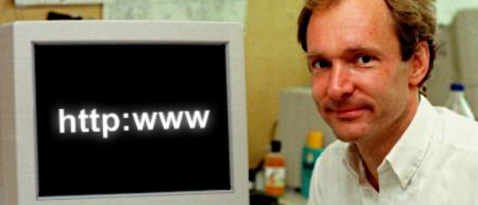
The British scientist according to the BBC News says that the double forward-slash is “pretty pointless”, with:

“[t]yping in // has just resulted in people overusing their index fingers, wasting time and using more paper”.

The rest of the address is relatively important for the browser. Back in the “olden days” of the Internet, there were http protocols, gopher protocols and ftp protocols - and all followed with a colon and a double forward-slash. Now we have more protocols which are used, such as Skype and AIM to initiate a VoIP call or an instant message.

But there is practically no reference to the double forward-slash on the web, or as to why it is even there. In an interview with The Times of London, he could have easily redesigned URLs not to have the double forward-slashes in. Perhaps as a result, it would have reduced initial frustration, confusion over web addresses and saved on paper.

Perhaps along with the evolution of Web 3.0, we may well see the end of the double forward-slash. Anybody fancy visiting http:news.bbc.co.uk or http:www.zdnet.com today?

Kick off your day with ZDNet's daily e-mail newsletter. It's the freshest tech news and opinion, served hot. Get it.

Topics

Zack Whittaker, a criminologist who studied at the University of Kent, Canterbury, is a journalist, writer and broadcaster.

Disclosure

Zack Whittaker

I worked briefly with Microsoft UK in 2006 but no longer have any connection with the company. Regardless, I remain impartial and unbiased in my views.

I don't hold any stock or shares, investments or industrial secrets in any company, but have signed confidentiality agreements with a number of UK and U.S. organisations, whose names I am not at liberty to disclose.

I was involved with Kent Union, the University of Kent's student union, undertaking voluntary, non-salaried, elected positions between early 2009 and mid-2010.

No other company, body, government department, non-governmental organisation or third sector organisation employs me or pays me a salary in any capacity whatsoever.

As a freelance journalist, whenever expenses are given and taken by a company that is not CBS Interactive, these will be disclosed in each relevant post to ensure transparency.

I currently work with a UK law enforcement unit, but this is an entirely separate position which bears no connection to other work.

(Updated: 23rd October 2011)

Biography

Zack Whittaker

Zack Whittaker, criminologist who studied at the University of Kent, UK, is a journalist, writer and broadcaster.

After studying criminology at university, though still in his early-20's, he has already had a series unconventional work and voluntary positions. He has worked with researchers studying neurological illnesses like Tourette's syndrome (which he suffers from), has given lectures on the nature of disabilities in the public community, and occasionally ends up speaking on television and radio discussing the events of the day.

He first had academic work published at the age of 22, then still an undergraduate, and has been cited by a wide range of publications: from the Huffington Post, Business Insider, AllThingsDigital, The Atlantic Wire and CBS News.

Related Discussions on TechRepublic

Did you know you can take part in these discussions with your ZDNet membership?
20
Comments

Join the conversation!

Just In

RE: Double slash in Web addresses 'a bit of a mistake'
markbt 13th Sep 2010
The double-slash does have a meaning. Path specifications used to be "filename" for a local file, "/path/to/filename" for a file somewhere else on the system, and "//computername/path/to/file" for a file on a different computer (or the same computer if the computer name is omitted, which is why "file:///C:/ has three slashes, not two). This long path is then prefixed with a protocol to access that file with and you get "http://computername/path/to/file". Of course, http always requires a computer name, so what Sir Tim is saying is use of long paths like this is pretty pointless.
0 Votes
+ -
I just openned a second tab, typed in zdnet.com and VIOLA - I am here!
0 Votes
+ -
About that excessive typing...
IT_User 14th Oct 2009
You don't need the .com if you're using FireFox.

And you also don't need the 2nd "n" in "openned" happy
0 Votes
+ -
Nitpicking
jorjitop 14th Oct 2009
Sorry, but VIOLA is a musical instrument. I think you meant "voila"
Who uses http:// in a URL these days?
the http:// seldom, but if I'm going to a specific secure URL (i.e. google mail) I use the https:// - I also frequently use the ftp:// prefix to the address. There is a reason that's there after all.
0 Votes
+ -
Saved on paper?
croberts 14th Oct 2009
Is he serious? I won't even bother calculating the minute amount of toner and paper a single extra character uses in proportion to a standard letter/A4 page.

Idiotic comment by someone smart enough to know better.
0 Votes
+ -
Contributr
I personally thought it didn't make sense, but hey
- academics live in their heads, I am not an
academic (yet).
0 Votes
+ -
Him (nt)
croberts 14th Oct 2009
(nt)
0 Votes
+ -
Hey...
cosuna 19th Apr 2010
He meant paper saved due to long URLs not fitting using expensive real estate on a page, which after several instances will increase the page count.

Anybody who has printed PDFs that contain long URLs know that similar versions using URL shorteners are considerably smaller by a page for every 10 (consider a 2000 page version you would save 20 pages)
0 Votes
+ -
Let's see who's idiotic here
ke6gwf 19th Apr 2010
First of all, it's 2 extra characters.

Secondly, how many billions of times have web
addresses been printed since he designed the protocol, what 20 years ago now?

When you think that almost every joke, virus
warning, photo, etc printed off the internet
since then has had those 2 extra characters at
least once on the page, and add them up, it
comes to a lot of ink. Now when you compare it
to how much ink was used total, it's not a very
big percentage, but he was correct.
0 Votes
+ -
Sure.
http:country.domain/sublevels/etc seems is more logically
...so zdnet CTRL RETURN becomes http://www.zdnet.com.

That key comination has been around for years (does anyone know when it was introduced?) and with some browsers allowing you to add others like CTRL + U for co.uk etc its kinda moot. But still, it really hasn't slowed down the growth of the net, has it?
GAH!!! "/" is NOT a forward slash! It's a regular slash. THIS-- "\" is a forward slash.
0 Votes
+ -
...that "/" was the forward slash and "\" was the back slash. At least every
MS-DOS book I ever read referred to the "\" as a back slash.
0 Votes
+ -
You know naught of which you speak
Get-Smart Updated - 19th Apr 2010
@Flyer22: submitted for your education.

"/" is a slash, forward slash, slant, stroke, solidus, or any of several other names. Everything it seems *except* backslash.

"\" is a backslash.

Obviously you never used anything but Windows. Not even a command line.

And yes, the double-slash in web addresses is pointless.
0 Votes
+ -
Next, let's ditch "www."
yonian 19th Apr 2010
There is only one letter in English with three syllables, so let's use it three times! To prove how stupid we can be.

My http servers are registered without "www." and aliased with the accursed needless prefix for those who stubbornly insist on including it.

If I could just persuade our web developers (who are young enough to know better) to quit putting "www." in our own web docs, I could quit being such a bitter old bast#rd.
0 Votes
+ -
www is not a standard
Get-Smart 19th Apr 2010
It is merely a convention that many web sites follow. If you want the browser to *try* www. as a prefix, fine.

Here's an alternative idea that makes more sense: Why don't we just drop names altogether and go back to numeric IP addresses. Naming problem solved!
0 Votes
+ -
I think "www." is a mistake too, but that's one that website owners aren't bound to repeat.

Why use www.zdnet.com when you can use zdnet.com?
0 Votes
+ -
www
View from Here 19th Apr 2010
I've run in to some sites where typing the address without "www." will lead to an address not found error. I don't get why considering most work fine without typing it. *scratches head*
The double-slash does have a meaning. Path specifications used to be "filename" for a local file, "/path/to/filename" for a file somewhere else on the system, and "//computername/path/to/file" for a file on a different computer (or the same computer if the computer name is omitted, which is why "file:///C:/ has three slashes, not two). This long path is then prefixed with a protocol to access that file with and you get "http://computername/path/to/file". Of course, http always requires a computer name, so what Sir Tim is saying is use of long paths like this is pretty pointless.

Join the conversation!

Formatting +
BB Codes - Note: HTML is not supported in forums
  • [b] Bold [/b]
  • [i] Italic [/i]
  • [u] Underline [/u]
  • [s] Strikethrough [/s]
  • [q] "Quote" [/q]
  • [ol][*] 1. Ordered List [/ol]
  • [ul][*] · Unordered List [/ul]
  • [pre] Preformat [/pre]
  • [quote] "Blockquote" [/quote]
ie8 fix

The best of ZDNet, delivered

ZDNet Newsletters

Get the best of ZDNet delivered straight to your inbox

Facebook Activity

White Papers, Webcasts, & Resources
ie8 fix