Google kills 'http' URLs; about time to follow suit?

Summary: Google plans to kill off 'http://' in later builds of Chrome. Is it about time other browsers followed suit and made web addresses simpler?
Google's Chrome browser will no longer include http:// as part of the URL field. It was only six months ago that Sir Tim Berners-Lee, the creator of the World Wide Web, admitted that the double slash punctuation in the URL was "a mistake", and Google have seem to have acknowledged this revelation.
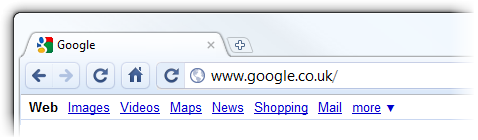
However as OSNews points out, this has indeed ruffled some veteran's feathers. Nowadays, FTP, HTTPS and other protocols which are non-HTTP are still used - iTunes and Magnet links for example. But Google's stance on this could lead to a further roll-out of changes to other browsers and set a Microsoft-Mozilla "RSS icon" precedent.
I don't think it's that much of a deal, frankly. When have you ever heard on the television, radio, or in print media the use of 'http://'? You don't, because it's practically unnecessary, and seeing as Chrome is 'the search browser', the need for manually inputting URL's in my eyes has been questioned for years with Google being able to pretty much find exactly what you want, when you want it.
With the changes in Internet Explorer 8 and Firefox 3.x and the highlighting of secure websites, and anti-phishing filters which enable the user to see the full address path, I can see why people may be hesitant to adopt the new non-http approach. However taking out the http:// bit will have little difference, secure sites will still be highlighted as such, and sub-domains will simply come before the domain name and replace the www.
Sure, it might look a bit odd at first and take some getting used to visually, but at least we won't be getting rid of the forward slashes altogether. What do you think?
Kick off your day with ZDNet's daily email newsletter. It's the freshest tech news and opinion, served hot. Get it.
Talkback
Really?
If you don't like using http:// then don't ... any standard browser will take the address you've typed in, connect to the remote server, determine what type of server it is (http, ftp, etc) and connect using the appropriate protocol.
Voila ... discussion over, it does it now - the only difference I could see is an option in your browsers setting to show the protocol tag (http:// or ftp:// etc)
Ludo
I know. This is just much ado about nothing (nt)
Exactly.....
As a general rule:
Whatever works best and easiest. Forget the rest.
disagree - IE already has issues with alternate ports
that is.. http://192.168.1.1:8080 ... etc...
often times if not manually typing http:// I can not access several special sites that I go to that require alternate ports .. doesn't matter if I use IP or Hostname the same thing happens, IE flubs, and just comes across with "page cannot be displayed".
BUT ... the second I put http:// in front of it, IE has no problem showing me content..
Additionally the "auto anything" concept is enherently flawed .. believing that IE could identify the server type (http / ftp / etc) again relies SOLELY on the server running the requested service at the standard ports (por 80/443/21) and not to mention that you can cause other programs to open from URL's such as the default telnet or ssh clients by specifying telnet:// ... etc..
so.. 1) browsers NEED to support the prefix
2) they *can* default to port 80 ... but need to be able to go beyond.
http:// isn't required in IE
Not limited to IE
completing a standard url, not just IE.
This should have been the only response
The article is clear, your comments rational.
I like seeing the http or https or ftp because I am used to, but I rarely, if ever, type it in my browser. The browser and DNS do the address completion for me.
The way the human brain is wired, most users don't even see the http, even when it is there.
Not to mention that the // wasn't the major blunder.
If EVERY Web address starts with "WWW", then it's obviously useless as an identifier and should have been eliminated. Even worse is the fact that they picked the only multi-syllable (and THREE syllables, no less) letter in the dictionary and repeated it three times.
So for years people pointlessly said "dubbelyoo dubbelyoo dubbelyoo" before every address. Great judgment.
Yes, "WWW" is a pain to pronounce
Re: Yes, "WWW" is a pain to pronounce
You could say triple-dubbelyoo. ;D
We had a dubbelyoo in the White House and no one had any trouble saying dubbelyoo then or after dubbelyoo left. ;)
Just me-too LOL.
"www" wasn't part of a standard as such
file transfer protocol servers were named ftp.
world wide web servers were names www.
and these were usually aliases for convenience.
and not all web servers did have the www. prefix, causing confusion for those that assumed it was a standard and inserted the www. for hosts that did not use it.
wibbly
RE: Google kills 'http' URLs; about time to follow suit?
I rarely use that anyway
Echo that
JJB
Padlock vs https:
Need to put the padlock in htps' place
relax, guys....
I agree with all the experts, make "http://" an automatic default, OPTIONAL (and totally unnecessary) in URLs. All of the other protocol specifications (e.g., https://, ftp://) would still be necessary to show that a non-default protocol is being specified.
I most assuredly want that security!
better gimme SOMETHING to show me the security of
"https" prominent and visible!!!
In fact, I want ANY protocol differing from plain ol' vanilla
http clearly marked, dagnabit!
just because you rarely? - do you work on firefox too?
this is the same arrogance that took over at Firefox when one developer did away with the "Properties" option on the "right click" menu in Firefox..
that is .. you see something (image, url, even a blank page) you RIGHT click that something, and then can select "Properties" ... this tries to tell you something about the item you right clicked.. but oh no.... that's not used every day by *some* people, so this developer made the argument that its useless or unneccessary ... etc.. and stripped it out of the core code .. now anyone wanting it (in firefox) needs to download a plugin ...
Same case for http ... the browser *MUST* continue to support the use of it, it should always display the prefix **IF** the currently displayed URL isn't http ... so that you the user CAN look up there and see that you're on an FTP Server rather than HTTP ... and, as I've stated further above, IE doesn't handle Alternate ports for HTTP very well without explicitly putting the HTTP:// at the front of the url.
Even if you break down your own subject line you yourself should realize it can't be gotten rid of ... your own subject says that you RARELY USE ... that means you DO in fact use it some times.. so there MUST be a reason to keep it around.