Next generation technology to 'smarten' the workplace

With the "Google revolution" of flexible working, dynamic hours and a relaxed way of office life to ensure maximum comfort and productivity, this has opened up the way that offices work. Only a decade ago, you would find offices to be cramped, smokey environments with police chiefs and boardroom executives smoking fat cigars, the slamming of fists on the desks and a 9-to-5 routine which would send the average employee potty.
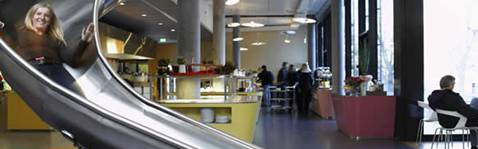
Whether this is a branch of office psychology which originates from the Hawthorne experiments, I don't know, but from working in and around offices for the last two years, I know what it is like to have a relaxed environment in the workplace. How will the workplace change and develop into the mass-technological environment we expect it to become?
A news story by the BBC discusses a report by Johnson Controls, highlighting the changes we can expect to see in the then-modern-day workplace.
"It predicts that as workforces get more mobile, technology will ensure that everything an employee needs is available no matter where they are.
Head offices and individual desks are likely to disappear in favour of hot desks, collaborative spaces and decor that adapts to a worker's mood."
Hotdesking is something we have seen in the workplace for a while; desks and workstations which are ad-hoc and can be used by anybody on a first-come-first-serve basis to some extent. This works on a technological level by allowing you to login to any computer and configure the phone on your desk to your settings by typing in a PIN, swiping a smartcard or something similar.
But the workplace over recent years has not necessarily been in one place. Businesses and organisations are now opening their virtual floodgates to external communications: Outlook Web Access and BlackBerry service to manage your email from outside the office, VPN routes, DirectAccess technology which is part of the next generation of Windows Server, all generating much needed support to the teleworking generation.
While the idea of "decor that adapts to a worker's mood" personally makes me want to retch, the visualisation of one's emotions or moods transformed into an angry wallpaper or a red dashed scene would probably infuriate me even more. The thought of a computer telling me when to "calm down" may well improve productivity, but for me and many, I am sure, would make even the most confident of workers feel rather uncomfortable with their mood being broadcast across the office.
Working from home is not a fad which will go away lightly. I find working from home rather satisfying but the pro's versus the con's will surely highlight the balance needed between home life and office life. I have no children to look after yet have no office to go to either. Something which caught my eye was the OfficePOD.

The POD is your workplace away from the office, and depending on the OfficePOD you choose, it can go in the office as part of your futuristic office or in your back garden at home. There isn't a "wow factor" in using the OfficePOD except for the looks - only a number of slight conveniences and interests in the product. Employers will benefit from using less energy resources and the simplicity of the design makes it relatively easy to install, remove and to move about, with the energy reduction up to around 67%.
Let's face it: it's just another office with a slightly innovative design. It looks awesome, but personally I'd rather be sitting at my dining room table with a mug of tea and my laptop, my non-existent cat purring on my sofa, and with the sun shining through my conservatory windows.
The OfficePOD may well be ideal for some, but working from home for me and the rest of my generation seems an attractive solution. However, without the infrastructure that you may have in your work - super fast Internet speeds being the important one - I can't see how we can remain away from the office for long, especially once this generation spawns the next-next generation and they start hammering the home broadband with their future Xbox 540's.
Would you try an OfficePOD? Which suits you - working from home or from the office? Leave a TalkBack.