Senator co-sponsor of PIPA officially abandons bill. Why?

By | January 18, 2012, 9:52am PST

Senator Marco Rubio, one of the co-sponsors of the PIPA legislation, has announced on the social networking site Facebook his abandonment of the bill.
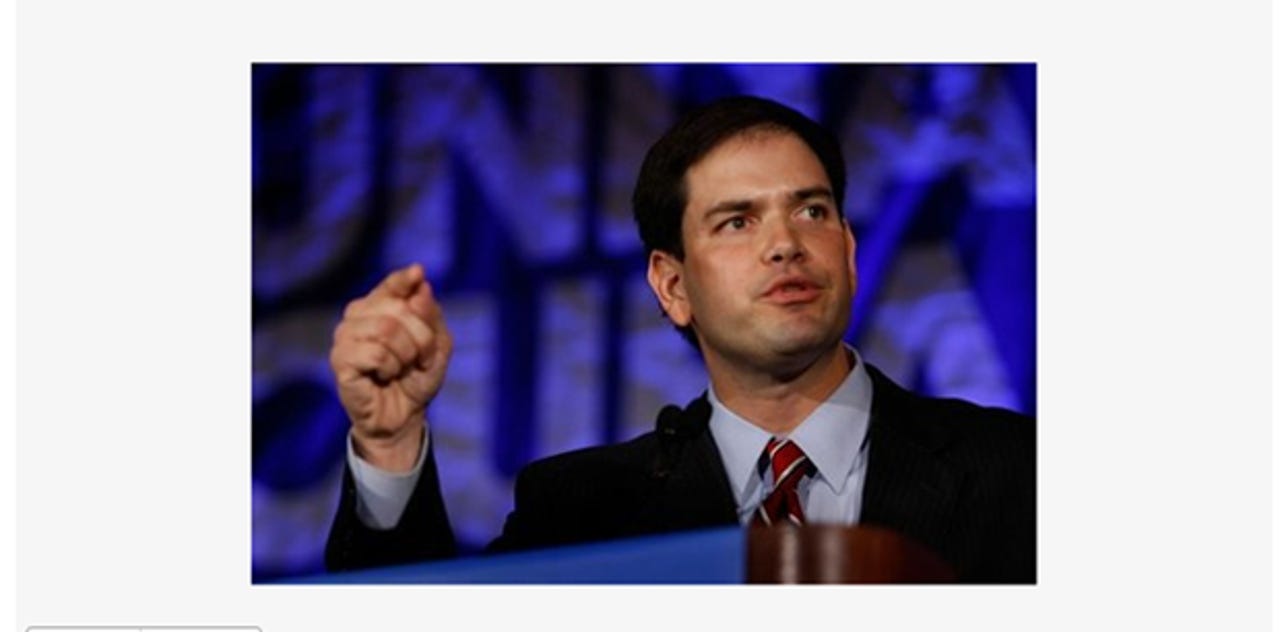
In a Facebook post on his page titled ‘A Better Way to Fight the Online Theft of American Ideas and Jobs’, the senator states:

“In recent weeks, we’ve heard from many Floridians about the anti-Internet piracy bills making their way through Congress. On the Senate side, I have been a co-sponsor of the PROTECT IP Act because I believe it’s important to protect American ingenuity, ideas and jobs from being stolen through Internet piracy, much of it occurring overseas through rogue websites in China. As a senator from Florida, a state with a large presence of artists, creators and businesses connected to the creation of intellectual property, I have a strong interest in stopping online piracy that costs Florida jobs.

However, we must do this while simultaneously promoting an open, dynamic Internet environment that is ripe for innovation and promotes new technologies.

Earlier this year, this bill passed the Senate Judiciary Committee unanimously and without controversy. Since then, we’ve heard legitimate concerns about the impact the bill could have on access to the Internet and about a potentially unreasonable expansion of the federal government’s power to impact the Internet. Congress should listen and avoid rushing through a bill that could have many unintended consequences.

Therefore, I have decided to withdraw my support for the Protect IP Act. Furthermore, I encourage Senator Reid to abandon his plan to rush the bill to the floor. Instead, we should take more time to address the concerns raised by all sides, and come up with new legislation that addresses Internet piracy while protecting free and open access to the Internet.”

Something most of the tech community have been petitioning for since the SOPA and PIPA acts manifested, is simply the desire for those in Congress to attempt to understand the frustration of online businesses and individual users.

It is not that those who rebel against bills such as the Protect IP Act and SOPA are simply a bunch of good-for-nothing thieves who despair at the idea of actually paying for the latest season of their favourite television show.

It is the prospect of losing a valuable communicative tool, the idea of online businesses going bust, of start ups who suddenly lose investment due to the threat of future court cases. For the average user, the threat of losing Google and YouTube may be enough to cause heart palpitations. Remove Facebook and you’ll have civil war.

Corporations, even though they naturally do not advocate piracy, also have a right to worry — money may be lost on products, but more is potentially lost through heavy-handed censorship that could strangle new technology and profitable business models.

Any corporation or site that allows any interactive components on their platforms — whether it be streaming, commentary or perhaps even chat rooms, can be branded a ‘facilitator of thievery’, and within moments, the lawyers can come knocking.

Microsoft is the latest to make their stand on SOPA clear, stating that the bill in its current form is something they cannot advocate.

The ‘opposition’, from the tech community to online giants such as Wikipedia and Reddit, harbors resentment at the idea of people in government being handed the power to regulate a network they appear to know little about, and which will no doubt strangle an industry which contributes profusely to the economy and job creation.

Piracy isn’t right. But taking the wrong approach, when a young generation of developers has already made steps to circumvent legislation anyway, will only harm innovation and information exchange. Other criticisms of the legislation include the fact it has the potential to strangle free speech, deter investment in digital business, and gives too much power to one governmental group.

Another senator expressing dissatisfaction of the ways these bills are being managed can only be a good thing for current online users and the generation to come after us. Perhaps the Gen Y won’t need to worry about China’s version of censorship evolving in to a global wall that removes any prospect of online free speech, and strangling the fledgling businesses that a generation suffering a job shortage relies on to try and make something of themselves and improve the economic situation.

No bill will ever work unless enough is understood about that which you intend to regulate — whether the information exchange itself or the people who are more versed in ways to circumvent such legislation than you care to admit. The senator has the right idea, now its time for others to follow suit.

Image credit: Facebook

Related:

Kick off your day with ZDNet's daily e-mail newsletter. It's the freshest tech news and opinion, served hot. Get it.

Topics

London-based medical anthropologist Charlie Osborne is a journalist, graphic designer and former teacher.

Disclosure

Charlie Osborne

I have no current affiliations or relationships that are worth noting.

Biography

Charlie Osborne

Charlie Osborne, Medical Anthropologist who studied at the University of Kent, UK, is a journalist, graphic designer and former teacher.

After studying Anthropology at university, she spent several years travelling and working across Europe and the Middle East, living for periods of time in Italy and Spain. She has been involved in the running of several businesses ranging from University media and events to b2b sales, and works currently as a freelance website designer and mobile development specialist.

She has particular interests in social media, intellectual property law, data protection and online hacker organisations.

8
Comments

Join the conversation!

Just In

Robert Hahn: Most senators do know what is in proposed bills,
adornoe@... Updated - 21st Jan
and many of them are quite capable of lecturing the rest of us out here on the merits, or lack thereof, of any bill.

The fact is that, each senator and each congressperson, is equipped with what one might call a "company" of people, whose task is to investigate each bill and to report to the president of that "company", that being the senator and/or congressperson.

We might disagree with many of their decision, but, for the most part, they are informed about what's in a bill (with the possible exception of certain bills which are quite incomprehensible, like Obamacare).

Some senators and congresspeople might give up the fight on a bill, not because there is no real need for the bill, but, they'll sometimes give up because, "sometimes, it's just not worth it" to fight for something that gets so much negative publicity. Bad publicity is not good for any politician.
0 Votes
+ -
Rubio has gotten wise
HollywoodDog 18th Jan
why isn't Bing blacking their site out today?
and zero impact symbolic gestures are for the feeble minded.
@Johnny Vegas These 'symbolic' gestures are a rather good way to wake up the 'feeble minded' to what was taking place.
@Johnny Vegas : it brings the fight to those who do not read tech sites.
0 Votes
+ -
I think PIPA's dead this year
John L. Ries 18th Jan
It may be back next year (or SOPA), but it will be done with a lot more care (and probably a lot more quietly). When the sponsors start deserting, it usually means the bill is doomed (remembering that bills in the Senate are usually brought to the floor by unanimous consent).
0 Votes
+ -
Go along to get along
Robert Hahn 18th Jan
I agree. Most Senators had no idea what was in it, and they still don't. Like Rubio, they were assuming that if it got through Committee unanimously and without controversy, it was something they could safely back.

Now they know something's wrong. They still don't know what it is, but they do know that they need to hear a few more voices before proceeding.
@Robert Hahn

"Most Senators had no idea what was in it, and they still don't."

That statement could apply to more legislation than just SOPA/PIPA.

I guess those who love power just can't resist the temptation to "regulate." Even if they have no idea of the consequences or the impact regulation has on the lives of those over whom they exert authority.
0 Votes
+ -
and many of them are quite capable of lecturing the rest of us out here on the merits, or lack thereof, of any bill.

The fact is that, each senator and each congressperson, is equipped with what one might call a "company" of people, whose task is to investigate each bill and to report to the president of that "company", that being the senator and/or congressperson.

We might disagree with many of their decision, but, for the most part, they are informed about what's in a bill (with the possible exception of certain bills which are quite incomprehensible, like Obamacare).

Some senators and congresspeople might give up the fight on a bill, not because there is no real need for the bill, but, they'll sometimes give up because, "sometimes, it's just not worth it" to fight for something that gets so much negative publicity. Bad publicity is not good for any politician.

Join the conversation!

Formatting +
BB Codes - Note: HTML is not supported in forums
  • [b] Bold [/b]
  • [i] Italic [/i]
  • [u] Underline [/u]
  • [s] Strikethrough [/s]
  • [q] "Quote" [/q]
  • [ol][*] 1. Ordered List [/ol]
  • [ul][*] · Unordered List [/ul]
  • [pre] Preformat [/pre]
  • [quote] "Blockquote" [/quote]
ie8 fix

The best of ZDNet, delivered

ZDNet Newsletters

Get the best of ZDNet delivered straight to your inbox

Facebook Activity

White Papers, Webcasts, & Resources
ie8 fix