ie8 fix

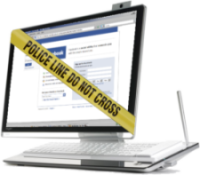
The most comprehensive police database: Facebook

By | June 14, 2008, 5:25pm PDT

Summary: Over the last few decades, police intelligence gets better through technological means. Before they used pen and paper, and the only way to cross reference files was by means of filing. Nowadays with specific databases for different crimes - the PND, ViSOR, the UK DNA database, ANCHORY, FBI Guardian, and individual sex offenders registers for [...]

policefacebook.pngOver the last few decades, police intelligence gets better through technological means. Before they used pen and paper, and the only way to cross reference files was by means of filing. Nowadays with specific databases for different crimes - the PND, ViSOR, the UK DNA database, ANCHORY, FBI Guardian, and individual sex offenders registers for each US state.

There sure is a lot of data out there about us - whether we have committed a crime or not. I’m on the UK Police National Computer by default because I have a driving license, not to mention on the UK Biometrics database because I have a passport. It sucks, but we live with it.

However, recently, police forces and constabularies around the globe have been using Facebook as a new social medium to “connect” with its younger population; it seems to be the most popular way to communicate for ordinary folks, why can’t the police use it too? Some questions came to light regarding the police presence on Facebook, especially with some of the applications created to enable users to feel more updated with local policing news in their areas - or so it seems.

gmppolice-small.pngBy adding certain applications, you’re opening yourself up to be viewed by police officers on the other end of the line. When adding any application, you have to tick a box (though already checked) to allow your information and who you are to be given to the application. According to Guilherme Roschke of the EPIC, wrote in a research article, “Law enforcement use of applications will significantly expand the reach of what law enforcement can see, and also provides a more surreptitious viewing ability.”
There’s no doubt in my mind this is a good idea - reach out to people on their terms, on a medium they relate to. On the other hand, the flip-side to this is, can they see what I’m really doing? Yes, yes, oh my God yes… if you’re not careful. I’m an upstanding citizen and I respect the law - but students have been caught out. According to DailyIllini.com (I presume Illinois?):

While University Interim Chief of Police Kris Fitzpatrick did not give an exact number of police officers who have accounts on Facebook or could say how often it is used by the department, [We] were able to identify 16 police officers with accounts on Facebook by searching for department member’s e-mail addresses. None of the profiles state the owner is a police officer at the University, although some state they are “UIllinois Staff.”

Thankfully you’ll have some switched on students who know about this and decide to leave a little prank on the police themselves:

But this time, when the campus police showed up, they found 40 students and a table of cake and cookies, all decorated with the word ‘beer.’ “We even set up a cake-pong table,” a twist on the beer-pong drinking game, he says. “The look on the faces of the cops was priceless.”

Considering social networking and social media has been the heart of this post, I’d personally like to welcome a new colleague to the circle, Jennifer Leggio, who writes the ZDNet blog Feeds because “microblogginglifestreamingbloggingpodcastingetc” was far too long”. It’s added to my favourites, you should definitely have a read.

Kick off your day with ZDNet's daily e-mail newsletter. It's the freshest tech news and opinion, served hot. Get it.

Topics

Zack Whittaker, a criminologist who studied at the University of Kent, Canterbury, is a journalist, writer and broadcaster.

Disclosure

Zack Whittaker

I worked briefly with Microsoft UK in 2006 but no longer have any connection with the company. Regardless, I remain impartial and unbiased in my views.

I don't hold any stock or shares, investments or industrial secrets in any company, but have signed confidentiality agreements with a number of UK and U.S. organisations, whose names I am not at liberty to disclose.

I was involved with Kent Union, the University of Kent's student union, undertaking voluntary, non-salaried, elected positions between early 2009 and mid-2010.

No other company, body, government department, non-governmental organisation or third sector organisation employs me or pays me a salary in any capacity whatsoever.

As a freelance journalist, whenever expenses are given and taken by a company that is not CBS Interactive, these will be disclosed in each relevant post to ensure transparency.

I currently work with a UK law enforcement unit, but this is an entirely separate position which bears no connection to other work.

(Updated: 23rd October 2011)

Biography

Zack Whittaker

Zack Whittaker, criminologist who studied at the University of Kent, UK, is a journalist, writer and broadcaster.

After studying criminology at university, though still in his early-20's, he has already had a series unconventional work and voluntary positions. He has worked with researchers studying neurological illnesses like Tourette's syndrome (which he suffers from), has given lectures on the nature of disabilities in the public community, and occasionally ends up speaking on television and radio discussing the events of the day.

He first had academic work published at the age of 22, then still an undergraduate, and has been cited by a wide range of publications: from the Huffington Post, Business Insider, AllThingsDigital, The Atlantic Wire and CBS News.

5
Comments

Join the conversation!

Just In

UK example
danielgwood 18th Jun 2008
A specific example in the UK:

Greater Manchester Police recently created a facebook app with the declared purpose of sending out police news and updates to locals.

However anyone who adds this application unwittingly submitted their facebook friends to GMP privacy invasion (if the GMP decided to, and subject to the default facebook privacy settings).

http://www.facebook.com/apps/application.php?id=9878600737&ref=s
0 Votes
+ -
fraud
cwhull 16th Jun 2008
it is fraud to not identify themselves when they are using the data for official purposes

but of course we no longer recognize the constitution

and the police motto has changed to (protect and serve) the highest bidder
0 Votes
+ -
Contributr
We're unlucky to some extent - the British have a constitution... somewhere, but it's not written down. Nobody really got round to doing it.

I reckon King John had a little too much mead and thought "sod it". Because it's not written down, our legal system can be bent and altered, which means essentially every case is unique and we learn from past court cases.

Good point well made.
Are you a cop?
0 Votes
+ -
Contributr
Nope, not even close, but nearly was, and as good as.
0 Votes
+ -
UK example
danielgwood 18th Jun 2008
A specific example in the UK:

Greater Manchester Police recently created a facebook app with the declared purpose of sending out police news and updates to locals.

However anyone who adds this application unwittingly submitted their facebook friends to GMP privacy invasion (if the GMP decided to, and subject to the default facebook privacy settings).

http://www.facebook.com/apps/application.php?id=9878600737&ref=s

Join the conversation!

Formatting +
BB Codes - Note: HTML is not supported in forums
  • [b] Bold [/b]
  • [i] Italic [/i]
  • [u] Underline [/u]
  • [s] Strikethrough [/s]
  • [q] "Quote" [/q]
  • [ol][*] 1. Ordered List [/ol]
  • [ul][*] · Unordered List [/ul]
  • [pre] Preformat [/pre]
  • [quote] "Blockquote" [/quote]
ie8 fix

The best of ZDNet, delivered

ZDNet Newsletters

Get the best of ZDNet delivered straight to your inbox

Facebook Activity

White Papers, Webcasts, & Resources
ie8 fix