ie8 fix
madison

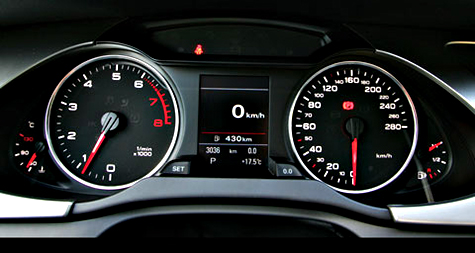
Building a great CIO dashboard

By | March 8, 2008, 2:09pm PST

Summary:   Enterprise dashboards summarize measurements and results of critical business functions into visual displays. In areas such as IT, it can be difficult to define useful metrics, because the performance measures may be highly complex or subjective. For example, determining accurate measures to answer the question, “Is our IT project on-track for success?” may be challenging. Well-designed [...]

 Building a great CIO dashboard

Enterprise dashboards summarize measurements and results of critical business functions into visual displays. In areas such as IT, it can be difficult to define useful metrics, because the performance measures may be highly complex or subjective. For example, determining accurate measures to answer the question, “Is our IT project on-track for success?” may be challenging.

Well-designed dashboards represent operational activities and results, relating them visually to key organizational goals and strategies. The key is selecting useful and meaningful metrics, determining how to collect data on these metrics, and then building a system that displays the data clearly to the intended audience.

Information Week’s eight steps offer an excellent, business-oriented overview of this process:

  1. Define the key performance indicators (KPIs) that need to be measured in your dashboard.
  2. Map KPIs to specific data requirements. Determine if the data exists in systems or needs to be collected.
  3. If data-collection gaps exist, explore improvements to fill holes. Develop a plan and timeline to implement those systems.
  4. Investigate business service management, project and portfolio management, and BI tools based on your KPI requirements. Pay attention to how tools integrate with your existing infrastructure.
  5. Budget for the initial cost of the CIO dashboard, annual maintenance, and fees to implement the system. Take into account the complexity and cost of changes and updates.
  6. Develop an implementation plan that provides dashboard visibility into key systems one at a time.
  7. After systems are integrated, focus on correlating data across those systems to provide meaningful visual information and alerting capabilities should a metric violate a threshold.
  8. When new components are considered, evaluate how they’ll be integrated into the dashboard.

Visit The Dashboard Spy to see interesting dashboards from many industries.

Kick off your day with ZDNet's daily e-mail newsletter. It's the freshest tech news and opinion, served hot. Get it.

Topics

Michael Krigsman is a recognized authority on the causes and prevention of IT failures.

Disclosure

Michael Krigsman

Michael Krigsman writes and speaks about technology in a manner that most observers consider to be fair and balanced. Michael believes that writing about IT failures, which often have complex causes, creates a unique obligation to be reasonable and accurate in both reporting and analysis.

Michael maintains active personal and professional relationships with enterprise technology buyers, vendors, analyst firms (or individual analysts), consultants, and system integrators. As CEO of Asuret, Michael sells and delivers paid services to members of these same groups.

Vendors regularly reimburse Michael's out-of-pocket travel expenses to attend industry conferences and events. Conference organizers frequently waive entry fees when Michael attends industry events. Michael often speaks at industry conferences and events.

He is a member of the Enterprise Irregulars, a loose association of consultants, investors, industry representatives, analysts, and users of enterprise software.

For daily updates on Michael's activities, follow him on Twitter.

Biography

Michael Krigsman

Michael Krigsman is CEO of Asuret, Inc., a consulting company dedicated to reducing technology implementation failures. Asuret's suite of software tools improve the success rate of enterprise software deployments by quantifying and measuring governance issues that cause most project failures. Michael led the research effort underlying Asuret's model of collective intelligence and its practical application to reducing IT failures in consulting environments. He is a recognized authority on the causes and prevention of IT failures and is frequently quoted in the press on IT project and related CIO issues. He is considered an enterprise software industry "influencer" and provides advice to technology buyers, vendors, and services firms.

Previously, Michael served as CEO of Cambridge Publications, which develops tools and processes for software implementations and related business practice automation projects. Michael has been involved with hundreds of software development projects, for companies ranging from small startups to Fortune 500 organizations. Michael graduated with an M.B.A. from Boston University and a B.A. from Bard College. He is a Board member of the America's Cup Hall of Fame and the Herreshoff Marine Museum in Bristol, RI.

Related Discussions on TechRepublic

Did you know you can take part in these discussions with your ZDNet membership?
2
Comments

Join the conversation!

Just In

RE: Building a great CIO dashboard
Dashboard Examples 6th Aug 2008
Prior to Building a great CIO dashboard, one should spend some time building a good Dashboard prototype. Building a prototype with mockup data, charts gives an instant gratification and helps materialize the final "Great Dashboard"

http://www.dashboardzone.com
0 Votes
+ -
Green LEDs are good too
toadlife 8th Mar 2008
CIO's love those. Makes them feel like things are working.
0 Votes
+ -
RE: Building a great CIO dashboard
Dashboard Examples 6th Aug 2008
Prior to Building a great CIO dashboard, one should spend some time building a good Dashboard prototype. Building a prototype with mockup data, charts gives an instant gratification and helps materialize the final "Great Dashboard"

http://www.dashboardzone.com

Join the conversation!

Formatting +
BB Codes - Note: HTML is not supported in forums
  • [b] Bold [/b]
  • [i] Italic [/i]
  • [u] Underline [/u]
  • [s] Strikethrough [/s]
  • [q] "Quote" [/q]
  • [ol][*] 1. Ordered List [/ol]
  • [ul][*] · Unordered List [/ul]
  • [pre] Preformat [/pre]
  • [quote] "Blockquote" [/quote]
ie8 fix
Click Here
ie8 fix

The best of ZDNet, delivered

ZDNet Newsletters

Get the best of ZDNet delivered straight to your inbox

Facebook Activity

White Papers, Webcasts, & Resources
ie8 fix
ie8 fix