Android holds two-thirds of EU, US mobile markets

Android continues to dominate sales in the EU and U.S. mobile markets, even in the run-up to the iPhone 5's expected announcement later this month.
According to the latest smartphone sales figures from Kantar Worldpanel Comtech, Google-owned Android has jumped by more than 20 percent in share in the U.K., Germany, France, Italy and Spain markets, rising to 67.1 percent in the five major EU economies.
Throw in the U.S., Australia and Brazil into the mix -- where Australia's share of Android sales is the lowest which drags down the overall average -- Android still takes more than a 61 percent share in the eight key countries, up by 9 percent a year ago.
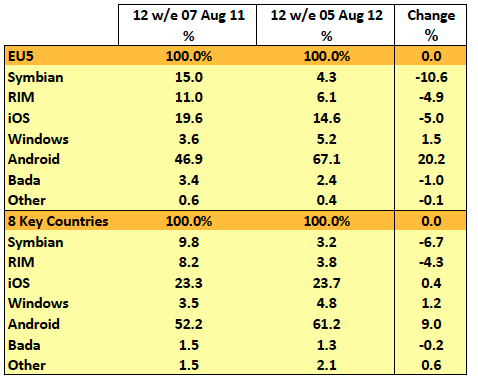
Android's continued development has pushed individual market growth into the double digits in every region out of the eight major global economies in the past year, with the exception of the U.S. -- the fly in the soup -- in which Android lost 4.5 percent share seemingly in favor of Apple's iOS platform.
Kantar's figures show Android's individual and collective share points Google's mobile operating system to be the strongest market share holder in all regions. The U.S., with a greater share of mobile platforms available, remains an outlier for the time being but remains a strong litmus indicator for the rest of the world.
What's interesting is why the U.S. beats to a different drum altogether: the study also showed that the current trend of users are opting for larger 4-inch or greater screens, despite a renegade U.S. movement from Android to the iPhone which has a 3.5-inch screen (at least, for now.)
There's no doubt there's a duopoly of Android's dominance versus the iPhone's edge skirting, but what will be key for the coming months and year is who will take the third-place spot. According to Kantar, Microsoft's Windows Phone is making headway over RIM's ailing BlackBerry platform, a significant handover of power to the third-place rival.
"Surprisingly, Windows has managed to maintain its 5 percent share despite a raft of new Windows 8 products being announced. However, this has been achieved through heavy discounting," said Kantar's global consumer insight director, Dominic Sunnebo.
But in any case, you're not looking at who's trailing behind and stumbling at the first hurdle: you're looking to the finish line to see who'll win the race.