Apple dishes out 128GB iPad; available early February

Summary: The rumors were true. Apple today announced a 128GB version of the fourth-generation iPad, doubling the storage capacity of the previously highest-specification tablet.
Apple today announced a 128GB version of the fourth-generation iPad, which boasts a Retina display and with double the maximum storage.
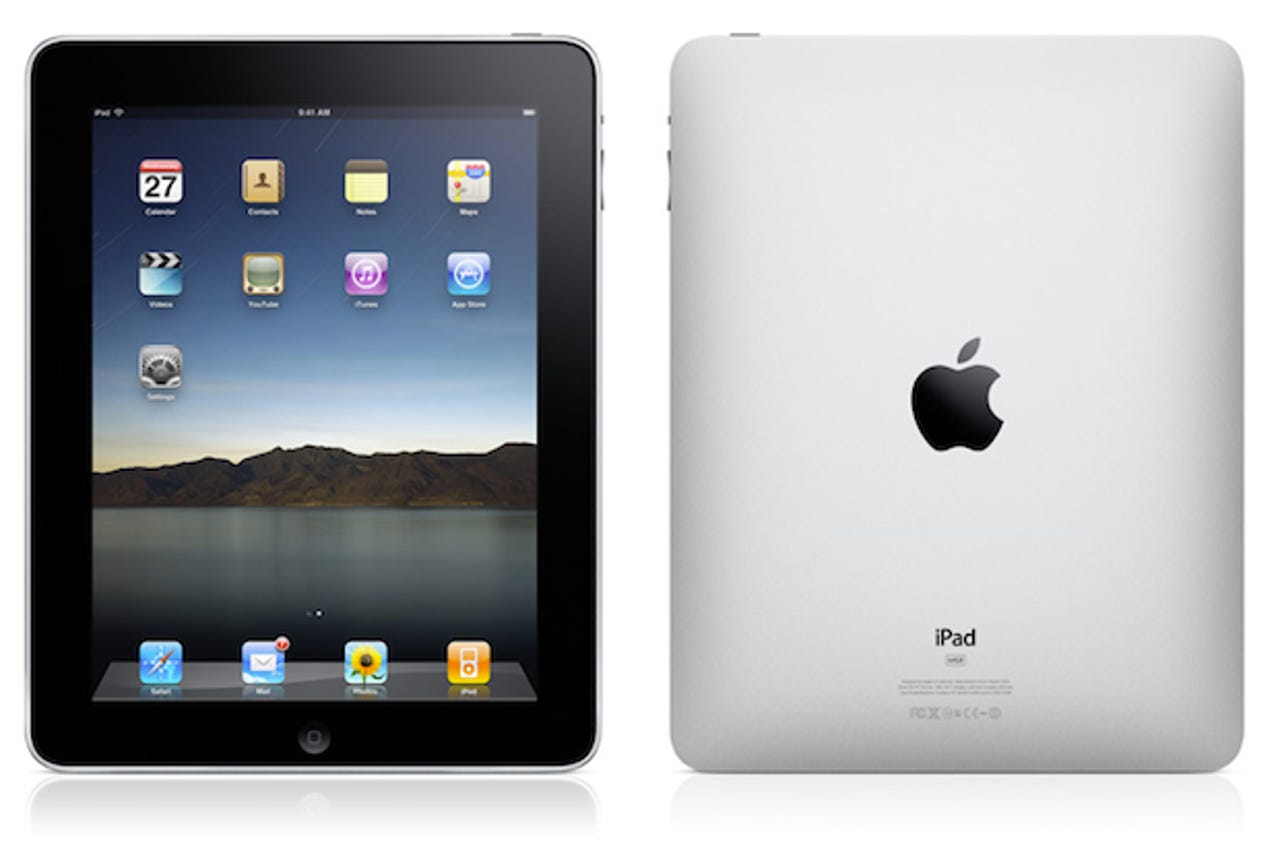
(Credit: Apple)
Rumors began to swirl last week that the Cupertino, California-based technology giant would dish out a new tablet with increased storage capacity, but it was thought on the most part that the device would be rolled out during the March refresh of tablets--or that the rumors were bunk.
Instead, Apple took to the wires to announce the new tablet today, which complements the existing 16GB, 32GB, and 64GB tablets in the iPad 4 range.
It also comes a day after Apple released the latest version of its mobile operating system, iOS 6.1, which includes support for the 128GB storage model, further support for more 4G LTE markets including Nordic states and Middle Eastern countries, and a range of security fixes.
Apple vice president of marketing Phil Schiller said in prepared remarks:
With more than 120 million iPads sold, it's clear that customers around the world love their iPads, and every day they are finding more great reasons to work, learn, and play on their iPads rather than their old PCs. With twice the storage capacity and an unparalleled selection of over 300,000 native iPad apps, enterprises, educators and artists have even more reasons to use iPad for all their business and personal needs.
Apple focused on the enterprise market in its announcement this morning to note that 85 percent of the Fortune 500 companies are currently deploying or testing the tablet. The firm noted that many companies are "regularly utilizing large amounts of data such as 3D CAD files, X-rays, film edits, music tracks, project blueprints, training videos, and service manuals," and that the increased storage capacity would benefit these industries.
On a security note, the iPad has one of the greatest mobile device management (MDM) feature sets, allowing enterprises and businesses to lock down the device, enabling the highest level of security.
The new 128GB iPad 4 model will be available in black and white from February 5. The Wi-Fi version of the tablet will cost $799, while Wi-Fi + Cellular will cost $929, a 15 percent and 12 percent increase, respectively, on the previously highest storage capacity devices.
Kick off your day with ZDNet's daily email newsletter. It's the freshest tech news and opinion, served hot. Get it.
Talkback
Wouldn't it have been easier to just add an SD slot to last iPad?
Now these people have to go out and buy a whole new iPad to get 128GB.
I just don't understand it.
Content licensing has been much easier...
Exactly!
As for Ye's comment, you almost got it partially right - view from the business perspective and not the consumer perspective. I would say that more than 85% of our customers are exploring the iPad for content delivery; they'll gladly replace every iPad they have to double the storage.
I don't understand....
The reason why I bought the Samsung Galaxy Note 2 is that they are the last few mobiles that still support microSD storage and I wouldn't want to trade this feature with a fixed storage just like the iPad.
What do you define as "good"
If you define "good" as meaning user friendly, lower configuration, ease of use, accessible to a wide range of content then yes.
Most techies only consider the first option with zero insight into why anyone would ever consider the second option "good". There are strong advantages (consumer goods) to not exposing the end user to the complexity of a file system. This is needed (to some extent) when you introduce removable and configurable storage, like an SD card. The number of times I have seen Android users bamzubled by perceived content loss when they (re)moved a card staggers my mind. Many people are lost when it comes to the concept of where media, applications and data are stored and get easily puzzled when it changes.
That's a ridiculous argument.
The argument about available content is ridiculous considering you can put tons of content on the device with removable storage. Content not available via Apple's closed and limiting system.
djmo00@yahoo.com
In fact, I have a 64GB Class 10 SD card on my Galaxy S3 and I have never removed it. I use an app to download music from my Google Music account where all my MP3s are stored. I do have some other music on my NAS, but DiskStation also has an app that I use to copy files.
I understand that there are still some users that benefit from removable storage, especially among Android users who like custom ROMs. But as a Galaxy S3, Nexus 7, iPad (4th gen) user, I see SD cards mostly as problem generators since installing apps on them can lead to instability.
There is also no reason to allow removable storage on enterprise apps that will have a set suite of apps for that business and which will likely sync to corporate servers.
Market speaks for itself.
Talk about ignorant
wide range of content?
I'm sick of converting media stuff to iOS compatible.
sick of explaining to noobs their ipad cannot play that file format even if we manage to get it on the ipad.
what do you mean you can't find the file on your ipad?
WTF?
Your iPad IS removable storage when connected to your PC.
Yep, WTF.
It amazes me how people that claim to be savvy in tech are clueless with legal issues. When the iPod came out, one of the reasons Apple got speedy access to music and other content was specifically because of the captured storage and the requirement to have data go one way. From the computer to the device. DRM could be controlled at the computer level. As stated a few times, these were conditions of the agreements between the media companies and Apple. Yes, times change. Agreements change.
If Apple were to start providing removable storage, it would jeopardize many of the agreements they have in place and these are not always easy to come by. This is one of the reasons Apple is crushing Google, Amazon and Microsoft on the ability to deliver content across the globe.
http://www.macstories.net/news/mapping-the-entertainment-ecosystems-a-brief-revisit/
And when using iTunes on a PC or Mac...
Read the link.
What's easier than burning through your PC?
Humm
OPEN~
Care to link to the stats backing up your pirating claim?
DRM
RE:iTunes removed DRM back in 2009
BTW I buy films here because it is cheaper than watching films on my hotel TV.