Apple patent could remotely disable protesters' phone cameras

Summary: A new patent, granted to Apple, could prevent academic cheating, cinema interruptions, but also see areas of political protest activity 'ring-fenced' disabling phone and tablet cameras.
Don't you just hate it when there's someone in the cinema taking photos, or talking on their phone? How unfair is it that 'they' cheated on their test because they could access the Web, and yet you only got half their marks?
Isn't it a shame you can't take a photo of the police officer beating a man in the street because your oppressive government remotely disabled your smartphone camera?
A new patent granted to Apple could do all of the above.
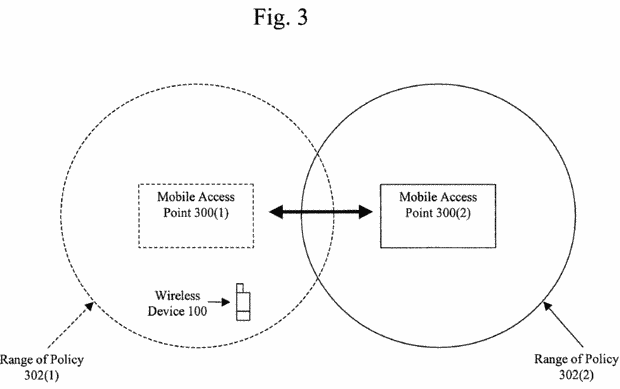
U.S. Patent No. 8,254,902, otherwise known as "Apparatus and methods for enforcement of policies upon a wireless device," was granted in late-August, and would allow phone policies to be set to "chang[e] one or more functional or operational aspects of a wireless device [...] upon the occurrence of a certain event."
What that means in real-terms is "preventing wireless devices from communicating with other wireless devices (such as in academic settings)," and for, "forcing certain electronic devices to enter "sleep mode" when entering a sensitive area."
But the patented technology may also be used to restrict protesters' right to free expression in oppressive regimes around the world -- if you haven't checked recently, there's plenty of them -- by preventing camera images and video being taken at political rallies and events.
Apple makes a good point for the voice of good:
As wireless devices such as cellular telephones, pagers, personal media devices and smartphones become ubiquitous, more and more people are carrying these devices in various social and professional settings. The result is that these wireless devices can often annoy, frustrate, and even threaten people in sensitive venues. For example, cell phones with loud ringers frequently disrupt meetings, the presentation of movies, religious ceremonies, weddings, funerals, academic lectures, and test-taking environments.
But it notes later on:
Covert police or government operations may require complete "blackout" conditions.
Adding:
Likewise, an airline operator or airport may cause the mobile device to enter into an "airplane" mode, wherein all electromagnetic emissions of significance are prevented, at least during flight, thereby more affirmatively preventing interference with aircraft communications or instrumentation and enhancing safety. Similarly, if a terrorist threat or other security breach is detected, the airport may disable at least a portion of the wireless communications within a terminal using a policy command, thereby potentially frustrating communications between individual terrorists or other criminals.
It's clear that although Apple may implement the technology, it would not be Apple's decision to activate the 'feature,' such as a remote-switch -- it would be down governments, businesses and network owners to set such policies.
Those policies would be activated by GPS, and Wi-Fi or mobile base-stations, which would ring-fence ("geofence") around a building, a protest, or a sensitive area to prevent phone cameras from taking pictures or recording video.
Other features, such as email or connecting to non-authorized networks -- such as working in the office and connecting to a non-work network on a company-owned device -- could be set, for example.
This sort of 'feature' would not bode well for journalists taking photos and citizens recording acts of state violence or police brutality in areas where ordinary people are facing increasing crackdowns on civil and human rights.
One unknown variable to this is what if you disable all connectivity, such as the cell network, Wi-Fi, and GPS? If there was no connection to a network to set such feature-disabling policies in the first place, it could be possible to circumvent such restrictions.
Questions have been left with Apple, but there was no reply at the time of writing outside U.S. business hours.
It goes almost without saying, just because a patent has been granted doesn't mean Apple will use the technology any time soon.
Companies often patent technologies and features that do not go into end products, so it's not a looking-glass view into what's coming in the next iPhone or iPad at an upcoming September announcement, or even further down the line. It does though offer a view into what companies are working on and have the potential to dish out to end-consumers and business customers.
Kick off your day with ZDNet's daily email newsletter. It's the freshest tech news and opinion, served hot. Get it.
Talkback
A little surprised that nobody thought of this before
One major difference between the last generation (PC) and the current generation (smartphone) technology is the closed nature of the platform. A handful of companies can build whatever controls or backdoors they want and we are helpless to do anything about it, since there are no viable alternatives like designing and building your own device.
Corporations and governments are finally starting to wake up and realize the power that now available to them by monitoring and controlling these devices. Tracking movements, data communications and even payments were the first steps, now there's the possibility of active control, including turning the device on and off without your knowledge or consent.
How do you really know when those cameras and microphones are on or off? I think I'm leaving my iPhone outside the bedroom from now on ...
Android advantage?
Re: Android advantage?
If you don't use any Apple devices, or you manage to put Android on them,
this doesn't affect you.
> I think I'm leaving my iPhone outside the bedroom from now on ...
I can't sleep well with an Apple dev. next to me. Really.
It's like a DRM-ed spy.
Dream on
Dream on? Not .. quite.
highly unlikely
iOS advantage?
There are Android apps that already do that.
Its been done everywhere already
The way I see it, not protesters or terrorists, but
Method for sending settings to my phone/tablet allowing me to issue lockdown/remote wipe/camera mode/gps to activate upon realising my phone was missing/stolen.
So in effect, only apple can findmyiphone and only apple can remote wipe malicious apps.
Cant desksms, chrometophone either
really? only apple?
I can see the lawsuits now.....
No need for lawsuits
That's why this solution is neater than normal cellphone jamming.
emergency calls
Totally agree, but ...
For example, walking into a movie theater might force your phone to switch to "silent"/vibrate mode and disable the video camera and/or the flash. It wouldn't necessarily have to shut-off the phone, since that could have obviously safety concerns.
Of course, even just disabling the camera & flash could be problematic (as in: grounds for a lawsuit) if there was a crime in the theater and no one could then photograph or video it ... or if the power went out and everyone had to evacuate and needed a little extra light to avoid trampling someone to death.
I don't see the patent as evil, no more than I see a handgun as evil. But who uses it and how could definitely be evil.
Given that it's unlikely that we can put the genie back in the bottle on this, we'll just have to fight/hope that there are good laws in place to prevent the technology from being misused.
As for Apple patenting it ... they're probably doing it because if they don't, someone else will. There are tons of companies that would kill to have that kind of patent as an asset.
Don't forget...
Remember the Days Before Cell Phones?
But speaking of "implementing correctly", all they really need for the theater use case is to turn off the ringer. It is much more rare that some cad suddenly decides to initiate his own phone call from inside the theater during the movie.
Already happened
In most countries they appear to be illegal, but some (the US, for example) allow their use by federal agencies for (possibly arbitrary and unchecked) purposes.
talking about nothing
Your Argument would Make Sense
Yeah, I know it sucks
Making audio or video recordings at live concerts is illegal, especially when posting on the internet like YouTube. Some care and some don't care. Personally, it is up to the artists rights to enforce these laws or not. Same thing with movie theaters, etc.
Restaurants, I think ALL phone should be put on vibrate mode and calls can only be accepted in a the appropriate area called WAITING area OR OUTSIDE. People that use their cell phones in restaurants tend to be kind of RUDE to others. It's just a common courtesy issue, especially the finer dining establishments. Personally, if I am out with a friend, business associate or date, the cell phone gets either turned OFF, or in vibrate mode and I only answer it if I know it's an emergency. There are things that Apple is doing to put in the OS to decide if a call is important or not, which I am hoping actually works. But turning off the camera at certain places or deactivating certain features actually might be good in SOME circumstances. Yeah, I know some of us want to be cry babies, like our civil rights are being violated. But again, there might be legitimate reason.