China's Internet crackdown: Anonymous, political intrigue and blackouts

Summary: Chinese authorities continue their crackdown of online 'rumors'. Is now the right time to launch an attack on the Great Firewall?
Anonymous has announced its intentions to take down the Great Firewall of China, but while the relationship between Chinese authorities and net users is extremely shaky, is it the right time to declare war?
There is an interesting dialogue emerging in much of China's state-run media this week about the difference between 'free speech' and 'harmful rumours'.
People's Daily has recently released an article entitled "Freedom of Speech does not protect rumors." Unsurprisingly, for a news source often considered to be a government mouthpiece, they are attempting to reinforce the need for China's latest crack downs.
The article says, "how could freedom of speech be defended, if we turn our back on slander? Can we tolerate fake [or] inferior products with the aim of promoting the free market?"
This is the prevailing attitude that is being displayed towards allegedly damaging 'rumours', and these news sites are being used to justify the significant actions being taken by Chinese authorities at the moment.
Liu Zhengrong, a senior official in the State Internet Information Office, told China Daily that the Internet cannot police itself. He said that Web users weren't necessarily able to distinguish truth from fiction, "requiring government departments and website companies to take measures."
At first there were rumours being spread about a potential coup in Beijing, and as a direct result 42 Web sites were shut down, and an additional 210,000 messages have been deleted since mid-March. Beijing police have also arrested 1065 suspects.
Commenting functions on Sina and Tencent Weibo were also shut down for 4 days, a stark warning that authorities can intervene whenever they want.
Political scandals
So why has China suddenly become such a hostile environment for web users? Well, to start with, authorities are currently managing the scandal surrounding ousted communist party politician Bo Xilai.
Xilai, the former Chongqing party chief, was officially stripped of his party positions on Tuesday. He and his wife, Gu Kailai, are being investigated over the murder of British businessman Neil Heywood. This is serious news in China, and they are struggling to contain the sudden overload of online commentary.
Ministry of Tofu provided the following analogy to describe the magnitude of this scandal. "It would be like a California governor, a presidential candidate, gets sacked after his police chief, who helped him fight a glorious war on organized crimes in the state, divulged to Chinese diplomats his dirty laundry and a murder masterminded by his wife in exchange for protection."
Chinese netizens jumped on the news, a confirmation of rumours that had been stirring for months, and were quickly stymied.
When the news item broke on Tuesday evening, it received over 50,000 reposts within the first 15 minutes. The story didn't reach CCTV's evening news, but it thrived online. Searches for both Bo Xilai and his wife's name were quickly blocked on Sina Weibo, and mass censorship of comments began.
"Tonight, Sina's little secretaries are probably so busy they're spitting blood," one Weibo user commented, "who allowed rabble like us to possess nuclear-level weapons like a mouse and keyboard?"
Controlling a scandal in a social network society
Unfortunately, that seems to be exactly what Chinese authorities are afraid of. This is the first major scandal to rock China's leadership since social media became prevalent, and suddenly there is a new audience seeking the truth.
At this point, the crack down over online rumours is a vague and uncertain fight. The lines between free-speech and rumours are extremely unclear, but what does the Chinese government expect when so called 'rumours' turn out to be true?
The scandal around Bo Xilai has not only raised questions about corruption within the government, but on the growing need for transparency.
Attacking the Great Firewall
In many ways, it seems like now is the perfect time for a group like Anonymous to take on China's Great Firewall, when so many in China would rally to their side.
However, as much as few would disagree that the battle against censorship is inherently correct, would a calculated strike on the Great Firewall at this point be the right move?
A blackout of large portions of the Internet yesterday morning in China have many speculating about the potential for a 'kill switch', to limit any outside access. At this point the actual cause of the blackout, which rendered many Chinese and foreign websites inaccessible for a few hours, is unknown.
Telecom companies have denied issues with their network, or damage from the significant Earthquake in Indonesia.
Although there is absolutely no concrete evidence that the blackout was the result of any sort of 'kill switch' test, it does raise the possibility that such a thing exists.
Authorities in China are trying to reign in their control over the online community at the moment, that much is apparent, and high profile groups like Anonymous getting involved might have them on alert.
Anonymous already succeeded in hacking hundreds of Chinese government, business and other general websites so far, so their presence must be registering in China. As ZDNet's Emil Protalinski commented, "if they manage to pull off the feat for even a few minutes, it will be an accomplishment of epic proportions."
This is true. It could also be long enough to cause a serious backlash from authorities, at a time when they fear nothing more than the online community undermining them with 'harmful rumours'.
[Updated: April 15th @ 6:50 am, This post has been altered for clarification regarding Anonymous hacks of Chinese websites.]
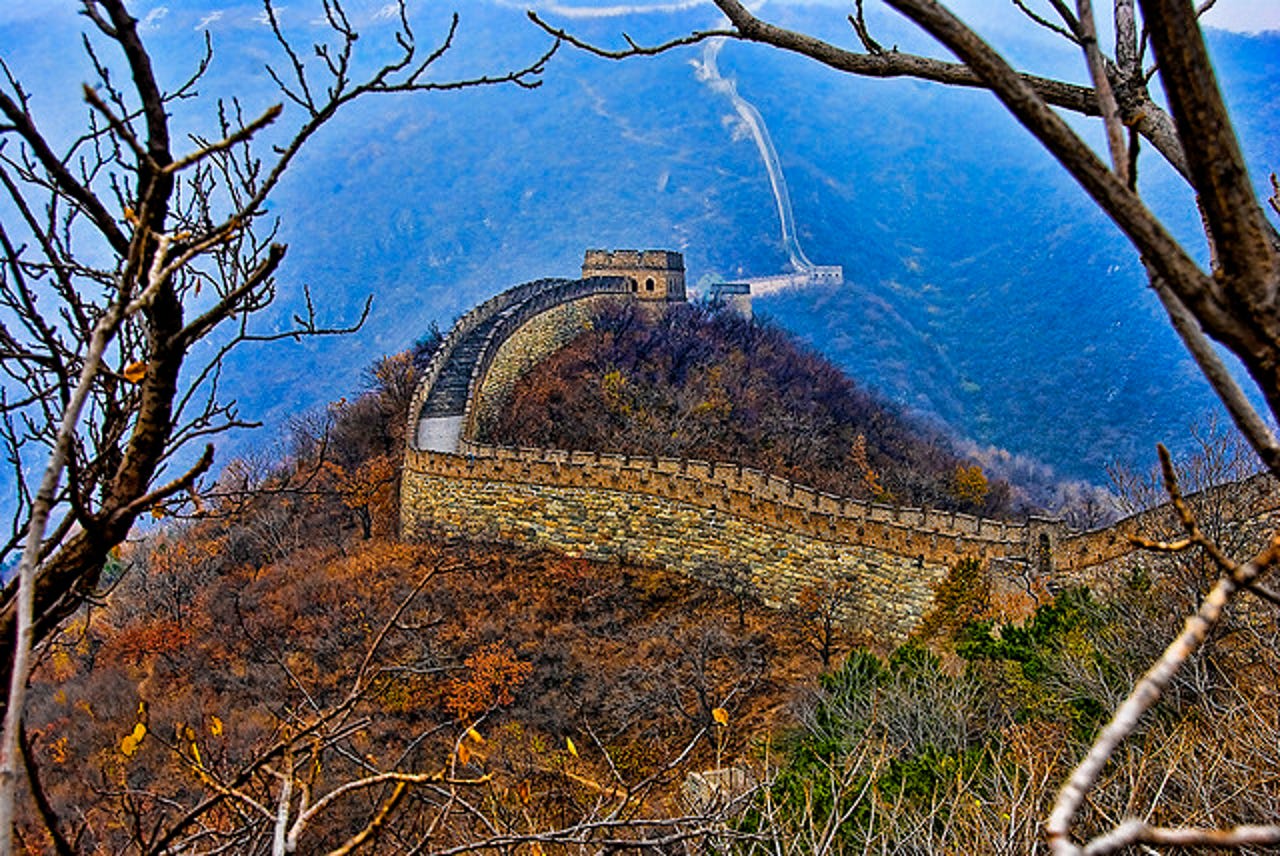
Image source: Francisco Diez/Flickr.com,
Related:
- Anonymous wants to take down the Great Firewall of China
- China's Internet firms urged to prevent the spread of online rumors
- China admits Anonymous hacks
- Anonymous hacks hundreds of Chinese government sites
Kick off your day with ZDNet's daily email newsletter. It's the freshest tech news and opinion, served hot. Get it.

Talkback
Irresponsible journalism
There are two problems. The first is when there is an attack on our properties, it's illegal and damaging. But - as we are known around the world as the keepers of the moral double-standard - when it is against a "foe", the act is acceptable, and even encouraged. We simply have to accept one stance or the other.
The second problem is actually even more troubling. Anon does, indeed, have some good intentions. I have to personally agree with their disgust with Wall Street, banks, politicians and many other things. But, as they are not a cohesive force, and there are many rogue individuals making up the loose organization, something of this magnitude could go very wrong, and for all the wrong reasons.
The threat in itself has proven, already, to help galvanize the thoughts and efforts of many within China's borders; and that is good. But it also perpetuates the very dangerous idea that a popular uprising with no specific goals, no leadership and a lack of facts in all the many facets of this circumstance will not ultimately do any of us any good.
What AnonCN managed to hack
Only a handful of local government sites were defaced - a county records office, a BID promotion site, a neighborhood committee, and a municipal court, couple others and that's about it.
The rest of the 500 were private businesses, like a dude ranch amusement park near Shanghai, a donkey farm in Shandong, and a wedding photographer named Mimu.
Here are some random example of who AnonCN is actually hurting
http://www.mimu-vision.com/ - a wedding photographer's website, her name is Mimu
http://www.senseoriental.com/ - Sense Oriental is a management consulting company that serves small to medium size business, likely a one-person operation (their contact is a free sohu account, saisi2000@sohu.com)
http://www.prosperity-china.com/ - a recruiting website, again likely a one-person operation
http://www.schshipping.com/ - Shanghai Xinchuan is a JV with a Singaporean company. They operate two 800 ton class sea-faring cement transporters (pictured in their website)
http://www.caiyizu.com/ - Yinxin Food Co. Ltd's e-vegetable website. The Qingdao-based company sells organic vegetables online
http://www.sdniu.com/ - a village farm co-op in the town of Xuji, Liangshan, Jining, Shandong, population 60,000 (Xuji town, not the village.) They sell cattle and donkey
http://spherechina.cn/fazhan.php - Sphere Logistics is a trucking company that operates in Shanghai and Changzhou. They own about 100 cars and trucks, and a 8000 SqM warehouse
http://www.rzyhjc.com/ - Rizhao Yihe Building Material Technology Co. LTD, a company that sells resin products like glue, water repellent, rebar coating
http://mbaoo.com.cn/ - a website that sells building contractor supplies
Do any of them look like they are connected with the Chinese government? It's very obvious to me you choose sensationalism over facts.
World War Web Advisory #7: Anonymous Has Been Occupied
"Anonymous" has been occupied. And no longer just by web warriors laying waste to websites of the wicked, computer wizards worming their way into the iPhones of "Internet Security" frauds, or digital do-gooders doxing Congressional dolts and other corporate-controlled degenerates.
Like Al Qaeda, Anonymous is no longer a band. Like Al Qaeda, Anonymous is now just a brand. Like Al Qaeda, Anonymous is the boogeyman. What "Al Qaida Terrorism" did for the corporate cartel controlling America's Military Industrial Complex, "Anonymous Hacktivism" will do for that same corporate cartel's Terrorism Industrial Complex, the vastness and taxpayer cost of which - if ever disclosed - would certainly defy comprehension. Here is the awful, ugly truth:
http://inewp.com/?p=12646
approach to "rumors"
censorship
read more: http://en.wikipedia.org/wiki/Censorship_in_the_United_States
China's Regulation of the Internet.
Now I believe that everyone has the right to surf the internet in a responsible and positive manner. However, the government in power has control what flows in and out of the network and they can impose all the apparent control on the systems. Though being in China, before, many of these restrictions can easily be bypasses by the very resourceful citizens of China. For example, mainland allows little to no access to sites such as Youtube and Facebook. Yet, I have seen students in China bypassing the firewall restrictions and seeing whatever youtube videos they wished to see, which was ironically, stuff from IGN(game website) and American pop music videos (like Lady Gaga and Taylor Swift). In addition, China has their own social network which "utilizes certain features" from the Facebook social network, creating this quasi-similiarity many individuals in Europe and U.S. are familiar with.
With this in mind, I think that what Anonymous is doing will more likely make the government go the other direction in sealing the internet vs. being more open and welcome with the internet connection. There is no policy of what country can impose restrictions on what sites. The only way really for the great firewall can come down is lies more likely in the realm of negotiation and compromise. Unfortunately, this optimistic approach relies on the Chinese Party officials in power. Through time, as younger generation of Chinese take positions in the government, there is a possibility of more free-reign for government to permit more free web access and less restrictions on what websites can be accessed. However, this could happen with the next generation of Chinese.
Anonymous attacks may be supported by a good number of the population living in mainland China, however, I think it is going to a slow, ultimately severe impact in the future where China will open the doors welcome the realm of free internet. The hackings could serve as a counter-justification on the importance of putting this restrictions on its citizens. The key to getting more freedom for internet browsing lies in the general population of China, though the population may more preferably have a slow and graceful transition to this objective. The latter route seems to put this idea of free-internet for all in jeopardy in this case. Though that in itself is based on personal observation and perspective.
Please don't.
If Anon started messing with the Firewall it would make things worse for us here in the long run. Please don't encourage this!