Is Google's slow Chrome for iOS a preview of Windows RT?

Summary: Google announced Chrome for iOS today. But it's not the same speedy browser everyone falls in love with on Windows and OS X. So why is Google bothering to release it? And will Chrome for Windows RT suffer the same fate?
Google today announced the availability of its Chrome browser for iOS.
Well, sort of.
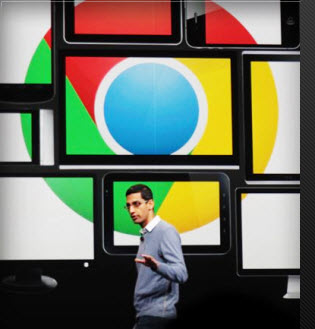
Chrome for iOS isn't really Chrome, the browser that people fall in love with because it's so damn fast. Instead, it's a native iOS app that acts as a shell over the Mobile Safari engine.
All of Google's nifty engineering work on JavaScript optimization that goes into its V8 JavaScript engine is lost. And to add insult to injury, Chrome for iOS can't use Safari's JavaScriptCore engine, Nitro (aka SquirrelFish Extreme), either. Instead, it has to use the older, slower UIWebView control.
Sound familiar? This is nearly identical to the set of restrictions that developers of Metro apps face, and about which both Mozilla and Google have complained bitterly. In a formal statement last May, Mozilla General Counsel Harvey Anderson accused Microsoft of “platform lock-in.” In a separate statement, Google said it had "concerns" over Windows 8 "restricting user choice and innovation.”
I haven't heard similar complaints about Apple.
This issue isn't a new development. It first raised its head well over a year ago.
John Gruber of Daring Fireball acknowledged the issue at the time:
The Nitro JavaScript engine is only available within Mobile Safari. Outside Mobile Safari — whether in App Store apps using the UIWebView control, or in true web apps that have been saved to the home screen — apps get iOS’s older JavaScript engine.
Put another ... the most significant performance improvements in iOS 4.3, particularly for JavaScript, are exclusive to Mobile Safari.
And he explains the reason. In a word, security:
Perhaps the biggest reason for Nitro’s performance improvements over WebKit’s previous JavaScript engine is the use of a JIT — “Just-In-Time” compilation. Here’s Wikipedia’s page on JIT. A JIT requires the ability to mark memory pages in RAM as executable, but, iOS, as a security measure, does not allow pages in memory to be marked as executable. This is a significant and serious security policy. Most modern operating systems do allow pages in memory to be marked as executable — including Mac OS X, Windows, and (I believe) Android. iOS 4.3 makes an exception to this policy, but the exception is specifically limited to Mobile Safari.
That's the same reason that third-party browser makers can't write a pure Metro app and install their own JavaScript engine in Windows RT (although they can do so in the x86/x64 Windows 8 versions by writing a "Metro style enabled desktop browser"). Just as iOS makes an exception for Mobile Safari, so too will Windows RT make an exception for Internet Explorer only.
Those security concerns are legitimate. JavaScript and browser plugins are extraordinarily popular and effective vectors for installing malware and gaining illicit access to a remote computer or device. In a modern operating system, those subsystems have to be tightly controlled, and third parties can't be allowed to install their own replacements, which carry the risk of introducing vulnerabilities that can't be serviced by the OS developer.
So why is Google bothering? Because Chrome is a delivery vehicle for Google services, and a way to get around pesky browser makers who might set privacy defaults that make it difficult for Google to tie all of your information together.
Those other browsers can throw a privacy-related monkey wrench into grand data-collection schemes. Earlier this year, for example, Google was caught deliberately circumventing privacy settings in Safari, by implementing a technical workaround that tricks the browser into accepting tracking cookies from a third-party site.
And Google's representative to the W3C has argued that it has "the option to reject" Do Not Track (DNT) requests coming from browsers that have the DNT setting on by default—specifically, Internet Explorer 10.
Using your own browser—even one that's relatively slow—is preferable.
Google's actually catching a break with Microsoft's decision to make an exception to its sandboxing rules for third-party browsers running on Windows 8. That option isn't available for Windows RT. I suspect we'll see a slow Chrome for Metro, built under the same restrictions as Chrome for iOS, when Windows RT ships this fall.
See also:
- Game on- Google releases Metro-style Windows 8 browser
- Mozilla and Google accuse Microsoft of unfair browser competition
- Mozilla shows off a Metro style Firefox prototype for Windows 8
- Mozilla begins development of Firefox for Metro
- CNET: Google Chrome and Drive come to Apple iOS devices
Kick off your day with ZDNet's daily email newsletter. It's the freshest tech news and opinion, served hot. Get it.
Talkback
Judging...
Apple & MS don't understand lack of a speedy Chrome is a deal breaker
There is a reason Chrome has become the most widely used browser. MS and Apple need to come to terms with that.
Really.. who wants sub par browsing with IE or Safari?
"Speedy" is subjective ....
Now if you are talking about the speedy spyware ... then yes ... Chrome is light years ahead of the competition.
Speed not so important...
I want security more than performance. That is why I use Firefox most of the time, not because it is inherrently more secure, but because I can use add-ins like NoScript and FlashBlock to ensure that domains I don't trust or have never visited before are unable to automatically execute content. That isn't a 100% secure solution, but it does improve security and privacy.
If I can't get those add-ins on my tablet or Windows 8 Metro, then I won't be using them. On my smartphone, I only surf when I absolutely have to, it is an unpleasant experience anyway (I have an iPhone, Android ICS and WP7 devices, so it isn't a particular platform, it is the whole concept of surfing on such a small screen). If I want to really do any serious reading or research, I wait until I get back onto my main machine.
I still see no place for a tablet in my life and I see no point in a Metro version of a web browser, when I can run a "real" browser on the desktop in a window and have other reference material and my edit window open next to it, so that I can work efficiently.
I like the concept of Windows 8 with Metro for tablets, but I still don't see the point of the backwards step of Metro apps on a 27" or 30" display set-up, the apps generally look silly, because they are designed for a 10" screen.
Have you tried IE10?
Stay away from RT
My company's internal sites are certified on IE only though most of them run on Chrome and Firefox. Those that run on IE only and not on others are the ones that people don't adopt.
People (read MS paid bloggers) always jump about chrome and spyware. In my life, I every time I have acquired a spyware or a virus from the Internet, it has always been via Internet Explorer. On top of that, I am not too comfortable with the privacy issues on IE. Google at least shows what they are recording and allows you to block. IE does that all hidden.
what?
So if you don't use it how do you get spyware and viruses again??
I Myself have never gotten any spyware and viruses on my computers and I always use IE. Go figure...
Wow!
Before you accousing a company of paying bloggers, show proof.
As for privacy issues, maybe you just aren't looking hard enough. Try installing IE. The EULA is there.
And the proof is...Mr Bott
Rusty Chrome.
I have noticed people tend to make assumptions. I can't believe how many iOS users already think Chrome is faster on their device. According to this article it must only be in their minds.
Standards and speed
And IE9 won't run almost all of our pages correctly, it doesn't respond to button clicks or other input randomly and almost always it's because it doesn't implement the javascript standard. IE 10 is supposed to but there are still issues and well that pesky x3dom tag doesn't always work either in IE but works fine in FF and Chrome.
Totally Agree!
I like the Metro layout and design for applications, because they don't seem to be restricting the other developers, like the way Apple always does on all their software w/ stolen ideas. But what really does it for me in Windows 8 is Thank God there's NO "Safari Browser", Quicktime and especially..... "iTunes" (all are filled w/ manipulative features or malware, very slow, junky, lame w/o add ons)!
As long as Microsoft leaves my Chrome Browser with remarkable new features, Apps running in their own instance and being able to keep running even after you close your browser. Native Client is a whole new ball game for Internet Browsing and actually being able to stream full desktop and console games inside your browser is a great asset. It changes our the perceptions of the web only for catching little blurps and bits of mumbo jumbo'd up chaos. It makes the browser it's own platform without the need for plugins. Because even FLASH becomes just another application!
The store has gone to a whole new level in Chrome. We're getting more full desktop games like "Bastion". It got easily ported to Native Client in just hours using Google's Tools. It's a whole new Operating System platform running inside Windows and it has full hardware access for CPU and GPU acceleration! .......and neither Apple or Microsoft have anything like it!
Are you sure that you and Toddbottom3 are unrelated, Ed? Grin.
Still, the security angle is an important point to highlight. I hope others that read your comments (and Todd's) appreciate what Apple and Microsoft are trying to accomplish with their mobile browser policies.
Interesting
I really really like Chrome on iOS
You did not read the article; there is answer to your question
Sir...
Chrome
Google Chrome vs Safari on iPhone iOS
Here is A showdown speed test between Google Chrome and Safari on the iPhone
http://liveoncampus.com/wire/show/3389460
I turn off Pre-fetching in chrome.