ie8 fix
madison

With SP1, Microsoft plans to ditch the Vista "kill switch"

By | December 3, 2007, 8:20pm PST

Summary: When SP1 ships sometime in early 2008, it will strip away one of Vista’s most annoying features and remove one of the most persistent objections to Vista’s adoption. Microsoft plans to remove the infamous “kill switch” from Windows Vista when SP1 is installed, restoring WGA to its original role as a series of persistent but nonlethal notifications. I’ve got the details of Redmond’s dramatic reversal in policy.

The case for Windows Vista Service Pack 1 just got a lot stronger.

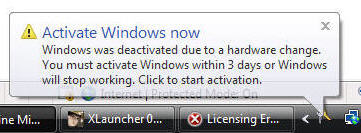
When SP1 ships sometime in early 2008, it will strip away one of Vista’s most annoying features and remove one of the most persistent objections to Vista’s adoption. Microsoft plans to remove the infamous “kill switch” from Windows Vista when SP1 is installed, restoring the Windows Genuine Advantage (WGA) program to its original role as a series of persistent but nonlethal notifications. Vista activationIn a confidential briefing ahead of today’s formal announcement, WGA senior product manager Alex Kochis laid out the changes for a handful of reporters and analysts. One of the bullet points on Kochis’s PowerPoint deck was especially blunt:
“Based on customer feedback, we will not reduce user functionality on systems determined to be non-genuine”

Those italics are in the original, suggesting that the WGA team has finally realized that they need to react forcefully to a year of embarrassing WGA glitches, server outages, and nonstop customer complaints. Beginning with the final, released version of SP1 next year (the modified WGA code will be missing from all but the most exclusive of SP1 betas), Microsoft plans to roll back WGA to its original format as a series of notifications that nudge and nag but don’t block access to any installed programs or Windows features.

The Softies responsible for WGA, including Kochis, wince when they hear the term “kill switch.” They prefer a more benign description, reduced functionality mode, when talking about the final step in Vista’s progression of penalties for any system that fails to pass its online test of activation status. But as I noted last year:

Microsoft denies that this is a “kill switch” for Windows Vista, even giving it a separate question and answer in its mock interview announcing the program. Technically, they’re right, I suppose. Switching a PC into a degraded functionality where all you can do is browse the Internet doesn’t kill it; but it’s arguably a near-death experience.

In current retail copies of Vista, there are dire consequences for failing to activate a retail copy of Windows Vista after 30 days or ignoring the three-day “grace period” when a system falls out of tolerance after too many hardware changes. When the timer runs out, the desktop turns black and its icons disappear and the Start menu vanishes. You can copy your personal data files, but you can’t open them, and you’re granted the right to use Internet Explorer for one hour before being forcibly logged off.

In its post-SP1 incarnation, the penalty for ignoring these activation notices is … more activation notices. The most annoying change is an Activate Now dialog box that forces you to wait 15 seconds before the matching Activate Later option is available to be clicked.

With SP1 installed, a Vista system that fails validation - one that Microsoft calls “non genuine” - will continue to work exactly as before. All programs will run, the Aero interface will keep its transparent window borders and whizzy effects, ReadyBoost will remain enabled, and there won’t be any time limit on your user session. If your copy of Windows is flagged as ”non genuine,” you’ll have to deal with some minor annoyances: the desktop background is a solid black (the better to see the “non genuine” label in the desktop’s lower right corner). If you change your desktop to something less stark, a scheduled task will paint it black again one hour later, and you’ll see a small “Activate Now” alert in the same location, which you’re free to ignore.

Restrictions on Windows Update will remain unchanged. If your system is flagged as “non genuine,” you’ll still get critical security updates, but you’ll need to pass a WGA validation check before you can download optional updates and new, signed drivers.

But that’s it. Under the new system, you can run Vista indefinitely as long as you’re willing to put up with a few nag screens.

The new SP1-era WGA code is designed to detect two of the most common Vista cracks: one tries to fool Vista into thinking that it’s an OEM copy with a matching OEM BIOS; the other rolls the mandatory activation checks ahead to 2099 or some other ridiculously distant date. Both the OEM BIOS and Clock Timer hacks are detected when SP1 is installed; the goal, says Microsoft, is to alert innocent or naive consumers who’ve been ripped off by crooked system makers or who purchased hacked Vista copies from shady online vendors. But even those known fakes will run indefinitely if you choose to ignore the messages.

Microsoft says the new notifications will lead to online “get legal” offers comparable to those for XP:

  • Windows Vista Home Basic, $89
  • Windows Vista Home Premium, $119
  • Windows Vista Business, $145
  • Windows Vista Ultimate, $199

Ironically, those prices are significantly better than the retail prices that you’ll find from legitimate Windows resellers. In theory, at least, a consumer could install a copy of Windows Vista without a product key, refuse to activate the system for 30 days, and then purchase a perfectly legal license at a discount using Microsoft’s online offer.

This drastic change in Microsoft’s WGA system is only the latest in series of attempts to smooth WGA’s rough edges. In August, Kochis apologized on Microsoft’s WGA blog for an outage that incorrectly flagged thousands of customers’ systems as “non genuine.” In October, Microsoft removed the WGA validation requirement from IE7 downloads. Two weeks ago, on November 20, Kochis promised to “build more trust in WGA” by improving its back-end systems, its response times, and its customer support.

Getting rid of the “kill switch” is a much better way to build that trust.

Kick off your day with ZDNet's daily e-mail newsletter. It's the freshest tech news and opinion, served hot. Get it.

Topics

Ed Bott is an award-winning technology writer with more than two decades' experience writing for mainstream media outlets and online publications.

Disclosure

Ed Bott

Ed Bott is a freelance technical journalist and book author. All work that Ed does is on a contractual basis.

Since 1994, Ed has written more than 25 books about Microsoft Windows and Office. Along with various co-authors, Ed is completely responsible for the content of the books he writes. As a key part of his contractual relationship with publishers, he gives them permission to print and distribute the content he writes and to pay him a royalty based on the actual sales of those books. Ed's books written prior to fall 2011 have been distributed by Que Publishing (a division of Pearson Education) and by Microsoft Press. As of November 2011, Ed is a partner in the independent publishing company Fair Trade Digital Exchange, which exclusively publishes his books.

On occasion, Ed accepts consulting assignments. In recent years, he has worked as an expert witness in cases where his experience and knowledge of Microsoft and Microsoft Windows have been useful. In each such case, his compensation is on an hourly basis, and he is hired as a witness, not an advocate.

Ed does not own stock or have any other financial interest in Microsoft or any other software company. He owns 500 shares of stock in EMC Corporation, which was purchased before the company's acquisition of VMware. In addition, he owns 350 shares of stock in Intel Corporation, purchased more than two years ago. All stocks are held in retirement accounts for long-term growth.

Ed does not accept gifts from companies he covers. All hardware products he writes about are purchased with his own funds or are review units covered under formal loan agreements and are returned after the review is complete.

Biography

Ed Bott

Ed Bott is an award-winning technology writer with more than two decades' experience writing for mainstream media outlets and online publications. He's served as editor of the U.S. edition of PC Computing and managing editor of PC World; both publications had monthly paid circulation in excess of 1 million during his tenure. He is the author of more than 25 books on Microsoft Windows and Office, including the recently released Windows 7 Inside Out.

448
Comments

Join the conversation!

Just In

RE: With SP1, Microsoft plans to ditch the Vista
s5e5com 6th Jul 2009


????? 2009 - ?? ??? ???????? }~


??? ?????? ???? ?????? ??????? ?????? ???????


????? ????? ??????- ??? ????? ?????? - ????? ?????


?????? ??? ???? ?? ????? sms -?????? ??? ??????? ???????


?????? you tupe -?????? ?????? ??????- you tupe ??????


?????? ????? ?????? ??? ???? .. ?????? ????? ?????? ?? ?? ?????


????? ?????? ??? ??????? -????? ??? ???????- ????? ????? ?????


????? ????? 2009 - ??????? ?? ??? ???? ???? ~


????? ?? - ???? - ???? ?? ?????? ?????? ??? ???????


????? ?????? ??????- ????? ?????? ??????- ????? ????? ?????? 2009-


??????? ?????? - ??????? ?? ?????? ~ ??????? ?????? ??????? ~


??????? ???????? - ???? ?? ????? ??? ~ ????? ?????? ???


??????? ????? ??????? - ??????? ??????? -??????? ??????2009- ??????? ???????
?


??????? ?????? ???? ??????- ??????? ???? ??????- ??????? ?????2009
????:

????? ????? ??????? ????? . ?????? .


???? ???? ??? ???? ??? ????? - ??? ????? ?????? ..~


??? ?? ?????? ????????


??? ??? - ??????? ???


??? ?????? ??????? ???? ?????? -??? ????? ???? ??????- ??? ??????? ????


???????? ?????? ??? ? ????- ???? ????? ??? ???- ??????? ????? ???????


??? ?????? ??????? ??????.. ????? ?????? ???? ???????


????? Love ~ ????? ??????? ???????? 9 ????? ?????? 9


?????? 2009 ????? ???? ???? - ????? ???? ???? 2009


?????? ?????? ????????? ????? ?????? ????????? ????? ????? ?????????


????? ??????? ??????? ???? 2009 ?????? ??????? ??????? ???? 2009 ????? ???????
??????


???????? ????? ????? ???? ????? ???? ????? 2009 ????????


????? ???? , ???? ????? ???? , ??? ?? ???? , ????? ???? ????? ???????


????? ??? ????? - ????? ???? 2009


????? ??? ??????- ??? ?? ??? ??????- ??? ????? ??????? ??? ??????- ????? ??????


??? ?????? ?????? 2009 - ???? ??????? ?????? ??????


??? ??????? ????? - ??????? ????? ?????? 2009


??????? ????


??? ???? ???? ???? ????? ????? ????? - ????? ????


??? ???? ?????? ???????- ??? ???? ????- ??? ???? ??????? 2009


??????? ??????? ??????...Scraps


?????? ??? ?? ?????????- ?????? ????? ????????? -?????? ?????


??? ?????? ??????? - ??? ???? ???????- ??? ?????? ?????????


??? ??? ???????- ??? ???????- ??? ????? ???????- ??? ??????? 2009
0 Votes
+ -
could it be that the adoption by the masses of this 1-year old OS is so sluggish, that in hopes of furthering market penetration, Microsoft has decided to relax their rigid grasp on authentic software. I suppose one can make great claims about market saturation of a new OS this way, even when many may be illegal copies. Or maybe this is to encourage illegal software use to obtain their penetration goals for Vista. At least that would be my conspiracy theory (which just might, in the end, be true).
0 Votes
+ -
Cracking ^Vista is so easy
Mectron 3rd Dec 2007
is not even a issue for anyone who use a non-genuine version of vista (any flavor). WGA only punish legal users and will continue to ONLY punish legal users. When MS saw is browser share drop, it drop WGA on IE7. now MS realise that Vista is lot harder to push on consumers... to preven defection to Mac OS or Linux (or back to XP) it just make the OS even easier to hack to be make sure users will adpot it. then when most user are using it (paying user or not) it will find more twisted way to de-activate non-genuine Vista.

Pirates have put MS when it is right now and MS is again relying on them to make sure Vista become as widely used as any previous version of windows.

The winner? Pirates or course, the loosers... Paying comsumers who pay 100's of dollards for a OS that should be sold for 50$ to 75$ (the real solution to piracy, LOWER PRICE). MS invested millions of $$$ for WGA and it is 100% totally not working at preventing piracy... now is that money was used to LOWER PRICE.....
0 Votes
+ -
Pricing is tricky for any company ...
mwagner@... 4th Dec 2007
Saying that Windows is "too expensive" and it being so are two different things. Companies price products at levels that "the market will bear" - meaning that companies need to balance sales volume against costs of development and their return on investment.

If they pick a price-point that is too high, they don't sell enough copies to pay their development costs in a timely fashion -- and they piss of existing customers, which is really the bigger issue.

If they pick too low a price-point, they may sell lots more copies but still not be able to recover the development costs in a timely fashion.

Prices that are too low or too high can kill a company -- any company. IMHO, Linux would be more widely adopted if it weren't FREE!
0 Votes
+ -
I disagree . . .
jlhenry62 4th Dec 2007
I think that the real reason behind Linux adoption is that you can't readily buy a PC with it pre-installed. If it were on the shelves at the local stores (where people still buy a computer most of the time), you'd see a much higher rate of adoption. Most people simply aren't going to Download OR install an OS on their own.

And the other gentleman is right. MS wouldn't have half the problems they do if they would just lower the retail price-point. You notice that the Mac OS (I know it only installs on Macs) is, what a little over $100? Even with a locked-in audience, Apple keeps the price relatively low.
0 Votes
+ -
Availibility of Linux desktops
rr.mailing003@... 4th Dec 2007
My understanding is that WalMart has been selling a low-cost Linux desktop system faster than they can keep them on the shelfs. Maybe things are changing.
0 Votes
+ -
Which Linux Distrobution
LLLActive 5th Dec 2007
is being sold in the US at WalMart?
0 Votes
+ -
gOS
Louis.Ross@... 5th Dec 2007
It's gOS, a lightweight distribution available here: http://www.thinkgos.com/
0 Votes
+ -
Wrong assumption!
ShadeTree 4th Dec 2007
Mos PCs are bought online and not in retail stores. The split is about 60/40. Furthermore you can buy Linux at retail in Walmarts. There is no coorelation between price and stealing. People steal small things and people steal large things. Neither is there a relationship between ability to pay and stealing. Winona Ryder and Brittany Spears are proof of that. The price for a System Builder version of Home Premium is about the same price as a single user version of OSX. Apple has released three updates in the time it took Microsoft to go from XP to Vista. If the Apple user kept current that would have been 3 times $129 which is far more expensive then Microsoft. none of your arguements are valid.
0 Votes
+ -
As with Windows.....
arminw 4th Dec 2007
So also, most Mac users get a new OS with a new Mac. Apple is a hardware business.
They make great software to sell excellent hardware. Together these make a system
that "just works"(TM).
0 Votes
+ -
Not according to many of their users.
ShadeTree 4th Dec 2007
Leapord has landed with a resounding thud! iMacs that freeze at the log in screen and Data loss during moves are just two of the complaints.
0 Votes
+ -
Different Kinds Of Problems
Cardhu 8th Dec 2007
iMac issues with Leopard now appear to be issues with systems not meeting hardware requirements for the new OS.

Data loss during file moves is a clear design flaw. That can be easily fixed.

But the deliberate use of flawed unreliable validation installed as spyware without customer consent, forced "stealth" updates without customer consent, restricted licensing, and kill switches in XP, Office, and Vista, are all the result of a consistent business strategy that reflects a fundamental difference in attitudes towards customers that no amount of hardware upgrades or patching can ever fix.
0 Votes
+ -
been to a WalMart lately?
sbeckstead@... 4th Dec 2007
They have Linux PCs on their shelves. What now?
0 Votes
+ -
re: been to a WalMart lately?
rbennett00 4th Dec 2007
That's not true...the gOS machines are all sold out!!!
0 Votes
+ -
But how many people have
GuidingLight 4th Dec 2007
re-installed their copy of 98, 2000, XP onto the machine?

I know of two people who have done just that.
0 Votes
+ -
I disagree
xuniL_z 4th Dec 2007
The real reason is nobody knows of linux. It's not advertised or presented as a legitmate product.

I'm sure you are right, as was proved at Walmart, when they sold out of the 200.00 Linux boxes. But I have a feeling those were either Linux people in search of a cheap box or others who had no idea it was not Windows. In the case of the latter, it's hard to know how that's working out w/o more data.

In any case, i wonder why nobody has come out with big money to start a Linux distribution channel? Bigtime. Answer is probably they can't do it because it's simply not a retail OS.

I don't think retail is interested in not making money from the OS for the most part, but that's a guess.

Need a commercial version, marketing, the whole bit. Even if they have to close it up due to OSS people opposing the move i guess. they want mass adoption but the way it's setup now, how could that be fair to the supported distros that essentially all work together as one huge team in the end? How is Samba going to survive if some of the bigger names go commercial and start getting all the programming effort shifting to their new projects etc. I don't know. I just seems like FREE doesn't work in the marketplace and I agree with Marc, as i said in another post and have supported the idea for a long time.

Someone has to break out of the pack and sell their OS commercially. They want adoption, they have to play the rules of the game.
0 Votes
+ -
First, I wouldn't say that Linux is doing that terribly. I recall reading at one point that MacOS has a lower desktop market share, although that may have changed.

The reality is that there is no single reason for Linux's struggle to get market share. There are many, and here are some:

1) Lack of popular applications: It is true that for any major Windows application, there is a Linux alternative, but in most cases the alternative simply isn't attractive enough to make people switch from what they're used to. For example, Open Office is arguably almost as good as MS Office, but it isn't better. So you're not just trying to get people do adopt a new OS, but you're also trying to get them to adopt a whole suite of new applications. If I'm using another *nix variant, say BSD, I might be more inclined to switch to Linux because at least I can still use the same application.

2) Fewer choices: More software is written for Windows than Linux, mainly due to Window's dominance. So there's not much Linux can do about that until it becomes the dominant player. The only thing it can do is get more popular exclusive applications. This is a bit hard considering that the majority of software written for Linux is open-source, and a lot of it ends up getting ported to Windows anyway. I think the argument about Linux being free hurting its market share is partically correct, because nobody is making enough money from Linux alone to want to develop Linux-exclusive applications.

3) The "Geek" Factor: The fact that Linux is viewed as a "geek OS" scares most average users away, no matter how user-friendly the developers try to make it (not that they've been terribly successful, but Windows is arguably less user-friendly in some ways).

4) Apple has carved out a market niche for itself in "glamour computing" -- computers that are trendy and hip, for those that are more fashion-conscious and have money to spend. And the only reason Apple is able to pull that off is because they make the hardware themselves, and so by perfecting little details, they can make it appealing to people who want to feel good about themselves because they spent more money than the bloke who bought a boring PC. Windows doesn't even pretend to be hip, but it's practical. Linux is neither really, unless you're a geek or tech-savvy (see #3).

5) Less support from hardware developers: While Linux drivers are more common than they used to be, they still lag behind Windows drivers, and often times, you can't utilize all the hardware features from Linux.

6) Not good for gamers: There's a whole demographic down the drain. This largely has to do with #5 and the fact that Linux's resource management is not as flexible as it is in Windows, which makes it more difficult to squeeze performance out of the hardware as you can in Windows.

7) Windows is more likely to be pre-installed on new computers, more people know how to provide tech support for Windows, etc.

8) Piracy: Keeps Windows installed on computers of people who are too poor or too cheap to buy it.

I'm sure there are many more reasons too, but the point is that it's not just one major reason that's keeping Linux down in the mainstream. Price is not enough of a reason for people to switch, because Windows may be expensive but not expensive enough. Gas is expensive, and people still drive cars.

I'm not bashing Linux. I use it myself a lot. Just putting perspective.
0 Votes
+ -
We use OpenSUSE in the company
LLLActive 5th Dec 2007
now, because most serious business software is going Web 2.0 anyway. Our ERP system is fully Web 2.0. The previous Access and AS/400 systems are being migrated to a unified Web 2.0 ERP System (also Linux LAMP). We now only buy naked PC's and install OpenSUSE with OpenOffice.

To your points:
1. We have very few problems using OO and MSOffice 2300 in parallel. We are phasing MSOffice out completely in the next year. With MSOffice Pro you have to pay many $$ more than just for MS OS. All inclusive in OpenSUSE (and other distrobutions)!
2. In business, there are few gamer apps needed. For a normal office environment Linux works perfectly for us.
3. All MS users just want to have the Apps linked to the Desktop, and way they go. We even use a AS/400 client in Wine; works perfectly.
4. I have an Apple Notebook at home. It is a Linux kernel and has most of the software on the other distributions. It is neat, fast and uses most MS software ported to Apple. HW is the only barrier, but it is compact and robust.
5. Very few Notebooks do not have drivers. We have Dell Notebooks with OpenSUSE running also, with Compiz and finger print reader access also.
6. Admittedly not a gamer's choice. But for this W200 or XP that comes with most bundeled PC's will suffice as a Win/Linux dual boot gamer PC. For serious stuff, use Linux - for playing arount use Win.
7. That in a free market system smells like monopolizing. One of the big reasons why other OS's are coming up, because users cannot freely choose their products without OS anymore.
8. We have decided to be completely legal, but the MS price was too high. I personally do not enjoy having to use illegitimate software at home; I learnt to use Linux. Now I am migrating my company as well. The 5% of nice to have software on MS in business are not necessary anyway. Alternatives become more and more common.

I'm not bashing MS either, it is just a pain to legal users to fight the nags of DRM and MS efforts to stop piracy (their legitimate right!), that ends up causing lots of admin work if after updates the software needs new activation.

Perspective is, serious business does not need MS anymore. OpenSUSE does it all. Gamers may keep the non-optional MS-WinOS software (that is in the price of the HW anyway) for games on a dual boot system, and have all other things on Linux.
0 Votes
+ -
Where Linux has the
alaniane@... 5th Dec 2007
advantage is that it provides many developer tools for free. When you install a version of Linux, it allows you to select developer tools in the language of your choice. You can get free tools for Windows, but they are not provided with the OS. For programmers like me that work with expensive development packages the free tools are not much of an advantage. However, for students and kids that are interested in learning how to program, those free tools are attractive.
Linux will gain an advantage if the next generation of programmers grow up learning to program on it instead of Windows. It's the programmers and developers that drive the innovation in software and this is the area Microsoft needs to secure if its going to maintain its edge.
IMO Microsoft needs to do more to win over this next generation of programmers.
0 Votes
+ -
That's a stretch.
notsofast 5th Dec 2007
Those who graduated 10 years ago were using Unix, which has pretty much the same tools, yet MS has made gains with those same programmers that started on Unix.

I don't write for Windows, but I've used their IDE as well as several different IDEs for different languages on both windows and *nix, and there's no comparison. Visual studio is a great IDE. Others are good, but nothing I've used is as good as VS.

Bottom line is that developers don't drive what platform is used, users do...and most people don't use *nix. As a result, most software is developed for the platform those people use: Windows.
0 Votes
+ -
Users will use software
alaniane@... 5th Dec 2007
that meets there needs and if cool software is developed they will follow. I develop in VS, I have developed using Borland's old Turbo C++ product. I agree VS is an excellent package especially if your using the enterprise edition, but VS sells for over $600. Yes, you can get a free copy and that is a plus in Microsoft's favor. But, I remember when you got GW-Basic and later QBasic with DOS. They were not show stoppers, but they created excitement in hobbyist and beginning programmers. If something similar was bundled with Windows, it would attract the same hobbyists. Many of the programmers today also got started programming the old hobbyist PCs. Those PCs like the TRS 80s, Commodores, Apple IIs were considered toys not business machines. IBM even miscalculated the importance of PCs. Today, Linux is considered a cool tool by many of the younger programmers. You don't hear the same enthusiasm for MS tools. In fact I see many of them disparaging VS and other MS tools.

Let's face it most business decisions today are made by individuals who have used DOS and then later Windows when they were starting out. However, when our generation retires, it's not a guarantee that the next will be as tied to Windows. If Microsoft ignores this younger market, it could come back to haunt them just like IBM.
0 Votes
+ -
Addendum
alaniane@... 10th Dec 2007
I didn't want to add this until I researched it better. The site's stats are taken from a random sampling of data from their client sites. So, the accuracy of the sampling should be compared to its population. The population in this case is the sampling companies client websites and not necessarily the entire Internet. Their client websites may or may not be representative of the Internet as a whole.
0 Votes
+ -
If Linux was not free ....
kd5auq 4th Dec 2007
Linux would probably be "just another ho hum fork" of Unix if it
wasn't structured as a volunteer community effort.
What has been widely adopted have been the professionally supported
"enterprise" versions like Redhat. If you mean widely adopted as
a desktop environment then many issues have to be resolved such as
wireless support and simplified updates before that can happen.
0 Votes
+ -
Linux makes up less then 1% of the total user base.
0 Votes
+ -
He's referring to server OSes
alaniane@... 4th Dec 2007
and not desktop OSes. If there is less than 1% market adoption of server OSes then why is Microsoft wasting marketing money by advertising that its server product is superior to Linux. Also, I highly doubt that Linux has had less than 1% adoption in the desktop market. Since it is next to impossible to verify the stats with any accuracy, it is easy to throw around the 1% figure. Many users have both Windows and Linux on their systems. How can you verify which they use more often? Polls generally have +/- accuracy of 5 to 10%. Monitoring websites isn't a completely accurate system since some are only accessible by IE others are used almost exclusively by Linux users (so the stats would be skewed in either case).

So really any percentages given are just guest work at best. Marketing loves to throw around stats because they sound impressive, but anyone who has half a brain realizes that stats are too easily manipulated and often just plain garbage.
0 Votes
+ -
A couple problems with what you say.
ShadeTree 4th Dec 2007
Number one, how do you know he is talking about servers? Are you a mind reader? Wouldn't it be a little silly to throw servers into a client discussion. Secondly Web hit data is very accurate since there are almost no IE only web sites. Windows update is one of the few remaining and it is not used for these statistics. The bottom line is it is easy to discount statistics that don't back your personal view but without facts to counter it is a self serving excercise.

http://marketshare.hitslink.com/report.aspx?qprid=10

If you have some facts to refute these then go for it!
0 Votes
+ -
The facts are
alaniane@... 4th Dec 2007
that stats are routinely skewed. The only stats that I'm going to accept are stats that show how the info is gathered the percentage of variance in the polling method, the standard deviation of the sample taken, and detailed description of how the info is gathered. Even then, the stats maybe skewed or the data corrupted. Stats are too easily manipulated.

If you want facts on stats take a course in statistics.
0 Votes
+ -
As for why
alaniane@... 4th Dec 2007
I think he was referring to servers. I inferred this from the fact that he mentioned both enterprise solutions and Redhat. Redhat is a major player in the Linux server market and Redhat has also stopped making a desktop OS (they outsourced it to Fedora).
0 Votes
+ -
Wrong again!
ShadeTree 4th Dec 2007
Nothing to back your claims that these stats are skewed and then to top it off you mistakenly claim that Redhat got out of clients when in fact they still sail an enterprise client. Come back and play again when you get your facts straight!
0 Votes
+ -
The stats you
alaniane@... 4th Dec 2007
gave are unproveable. You directed me to a marketing site not a scientific study. The chart does not show how the data was gathered or even the variance of error in the data. I don't have to prove that the stats are skewed. My contention is that stats can be easily skewed. The site offered no evidence to show that their data was accurate. Even the data gathering process was not revealed for the chart.

In other words, except for marketing the chart was completely useless. Prove they didn't skew their stats. As for Redhat, I didn't realize they still produced an enterprise client. Then again, I haven't been keeping up with the Linux world. I'm primarily a Windows user. I just deslike stats being thrown around out of context and without verifiable information attached to them.
0 Votes
+ -
I shouldn't have to spoon feed you.
ShadeTree 4th Dec 2007
The site in question posts it's methodology. How about you doing a little research instead of questioning others?
0 Votes
+ -
If you don't
alaniane@... 4th Dec 2007
know the difference between a marketing broshure and methodology description, then no wonder you put faith in every stat out there.
0 Votes
+ -
So let me get this straight.
ShadeTree 4th Dec 2007
They told you they monito 40,000 sites and report the percentages based on web hits. You claim that is not good enough. Yet you do not offer a single shred of proof that they have some hidden agenda which would cause them to skew the results. Just because something can be skewed is not evidence it is. What would this company gain by lying?

Okay, I say you are lying. You haven't offered any justification or methodology upon which you base your opinion. Prove that your not. Don't expect me as the accuser to provide any evidence that your lying because I said it must be enough.

That is exactly what you are doing. Either prove that there numbers are wrong or go away. First you refute the sales numbers and now you refute the sampling of 40,000 web sites. You are wasting everyones time.
0 Votes
+ -
I haven't said
alaniane@... 4th Dec 2007
that they lied. What I have said is that their stats cannot prove your claim. They have monitored 40000 site out of how many. What is the sampling error ratio for that 40000 site sample? They maybe right, but there is no way to determine how accurate their sample is based on the description of their sampling process. The stats are basically their word only.

As for why their stats maybe biased, their site is for marketing not for consumer research. Their site is also an aspx site (that does not prove that they are biased, but since aspx is Microsoft technology it doesn't seem to indicate that they are neutral third party either). If the site you had been citing was a consumer research site or if the technology used by the site had been non-Microsoft then it would have added credence to your argument. Since it is neither, then the burden of proof for the accuracy of their stats rests on being able to verify that accuracy through their sampling techniques. Since they don't give a sampling variance or how the sampling was made other than to say 40000 sites, there is no way to verify the accuracy of the stats.
0 Votes
+ -
... you would know that a random sample of 40,000 is infinitely large for any population. Assuming some error for non-random selection the margin of error would still be extremely small. You sir are a poser. You claim to be unbiased but any data that does not support your preconceived notion is challenged. You have an agenda and it shows!
  • Flagged
0 Votes
+ -
Since it shows
alaniane@... 4th Dec 2007
that I have an agenda then what is my agenda?

I haven't found your 40000 sites reference, but I did find a copy of their methodology:

"We use a unique methodology for collecting this data. We collect data from the browsers of site visitors to our exclusive on-demand network of live stats customers. The data is compiled from approximately 160 million visitors per month. The information published is an aggregate of the data from this network of hosted website statistics. The site unique visitor and referral information is summarized on a monthly basis."

It took clicking on several links to find it. I will give you this at least they posted how they collected the data and it does appear to be a pretty good sampling of data. They also mentioned the steps they took to clean the data to minimize skewing. Also, they were honest enough to mention that the data was gathered from their customer sites. That may or may not give a completely accurate picture, but at least it bolsters confidence in your reference.
0 Votes
+ -
The link for
alaniane@... 4th Dec 2007
the above information:
http://marketshare.hitslink.com
0 Votes
+ -
I replied before I click your link
alaniane@... 4th Dec 2007
Your evidence comes from a marketing website. It shows a pie graph with no indication of how the data is collected. The whole purpose of the page is to market their services. If your trying to convince me of the validity of your stats, then you should have given me a better resource than some marketing verbage. A scientific study would have been preferable or even a consumer report that was done by a neutral third party.

I'm not anti-Vista or Microsoft, I just dislike the inappropriate use of stats. How do you know that the sites stats are unbiased? How did they gather their stats? If they used IP addresses accessing a site, how did they account for masked IPs (or IP gateways where hundreds or thousands of computers could be accessing the site with the same IP address)? If they used user-clicks, how did they root out redundant clicks? They show nothing has to how the data for their chart is gathered or the percentage of variance in the data. Their statistics are worthless outside of marketing.
0 Votes
+ -
Where do the stats come from?
MTPCbldr 5th Dec 2007
I'm really curious, I'm a CNC Programmer for a living, I also own my own computer repair business. I've NEVER bought a computer, I've been building my own since 1994. The company I work for has 200 workstations, all are Windows XP, through my own business, I have almost 100 clients, most are 2 or 3 computer households, but I also have 19 business clients with a combined total of 160 computers, so that is approximately 320 computers I work with on a semi regular basis, and the 200 workstations at work, so a grand total of 520 computers I'm familiar with. NOT A SINGLE ONE IS LINUX BASED. Granted, this is Montana, but still, you would think ONE computer would be Linux based if the stats show 5 to 6 percent adoption of Linux.

I personally have tried Linux, but there is no way I can do my primary job without AutoCad, and my wife, who knows how to surf the net, and edit photos in Adobe, told me to take Linux off our system or she'd go buy a computer off the shelf with Windows, she wasn't happy with Linux at all. She's since gotten her own laptop, running Vista Premium, which she uses to edit photos (she's a professional photographer, and she has yet to be impressed by the Gimp, although I use it for all my photo editing.)

Linux does have a hobby base, but that's it, and out of the millions of users in the U.S., how many are hobbyists? Most of the hobbyists I know are ******** gamers, and using Linux for them would be like trading an Xbox 360 in on an Atari 2600, since maybe you could find the 2600 games emulated for Linux, but you won't find any of the current games.

As far as the 200 or so computers at the company that I work for, we use a program that we paid for, just to run our company. The program is paid for, the $500 Dell workstations are paid for, BUT, the loss in productivity and the cost of buying a new proprietary program to run the company would make Linux probably 10 times, if not more, expensive than Windows. Just the retraining of the employees on how to get anything done with Linux would be far more expensive than the cost of Windows.

Linux is fine if you want to surf the internet at home, BUT, if your business and income depend on it, you'd quickly find out that it's MUCH more expensive than a simple little license of Windows. That's the fact that the fanboys don't like to admit, but it will always be the fact.
0 Votes
+ -
Actually, the stats
alaniane@... 5th Dec 2007
in the chart show less than 1% adoption of Linux. When I found how the company got their stats, it appears that their stats are pretty accurate. There are some small companies that do run Linux and some larger companies also have sections where Linux is run, but Windows is still by far the dominant OS in the business desktop market.

Believe it or not, not all companies need Auto-Cad and for some companies moving to Linux is a viable option. The problem with Linux is that it has little to no marketing and without improving its marketing, it's not liable to make a significant dent. Also, Linux is not going to be a viable option for everyone out there. Our company would not be able to adopt a Linux system without a major change in our entire IT structure. SQL Server, Business Portal and MS Server 2003 are the main backbones to the system. All of our development tools are Windows based and our custom apps are all Windows based. The most expensive part of the move would be re-writing those custom apps.
0 Votes
+ -
ShadeTree comes here with a strict agenda of "pro-Microsoft at any cost," doesn't bother actually reading others' posts, and spends his time flinging insults intended to provoke others into emotional exchanges that distract them from meaningful discussion.

In this case, as usual, ShadeTree doesn't both reading kd5auq's post. Note that the original post clearly stated "... professionally supported enterprise versions like Redhat ... ."
0 Votes
+ -
Free Linux
geneven 4th Dec 2007
Wireless support is getting pretty good, as I can attest with my Dell Latitude and the infamous BCM43xx card, which works perfectly with Linux and was very easy to set up.

Updates -- how could they get simpler? I'm running Linux Mint, and get notified automatically when updates are available. What's more, they don't bring my system to a crawl like the ones I get from Microsoft on my XP computers do...
0 Votes
+ -
It just don't add up
bbbaldie_z 4th Dec 2007
Hardware prices have plummeted over the last few years. it just doesn't add up that SOFTWARE prices should climb. I know, thanks to M$'s stranglehold on new pc's, you don't ACTUALLY pay over 200 bucks for Vista, but if a user wanted to hand-build a system and install Vista on it, that's exactly what they will do.

BTW, Microsoft, I overwrote my XP Media edition computer with Ubuntu. You owe me about a hundred bucks. Please remit your check ASAP.
0 Votes
+ -
Software and hardware
alaniane@... 4th Dec 2007
are not related. The costs for the manufacturing processes for developing hardware have generally fallen becuase of automation. You don't have to pay a robot a wage. However, software is developed by people not machines (despite what IDEs claim). Payroll costs for most companies that I know about have increased in the past few years (excepting those that laid off a large portion of their workforce). So, to expect software prices to decline because hardware prices have declined is not realistic.
0 Votes
+ -
Maybe so
bbbaldie_z 4th Dec 2007
But when the day comes that you can spend 100 bucks on the hardware for a PC and then have to fork over 200 bucks for an O/S, I suspect many will see the folly in such a situation.
0 Votes
+ -
Actually retail software
alaniane@... 4th Dec 2007
is quite inexpensive in comparison to custom software. For a report or input screen that takes a week to develop, a company could end up paying several thousand dollars for it. Depends on how many developers they have working for them and their salaries. If a company spends only 1 thousand dollars per week to pay a developer (very cheap) for a project that takes 6 months to develop. They would have spent 26 thousand dollars for their custom software. $200 doesn't seem like that much when compared to $26,000.
0 Votes
+ -
Software and Hardware go together
arminw 4th Dec 2007
like a hand and a glove. That's why Apple's systems ARE better and also cost more.
Hardware without good software is only an expensive paperweight or doorstop. The
major parts that go into Apple's Macs are no different than brand name Windows
boxes have in them. Apple builds complete systems that work.
0 Votes
+ -
For a niche market
alaniane@... 4th Dec 2007
I would agree. For the market that I work in, Apple becomes an expensive paperweight.
0 Votes
+ -
Apple doesn't build anything!
ShadeTree 5th Dec 2007
Those precious Macs are coming from the same ODM's that build PCs for Dell, HP and the rest. I am always suprised by Mac users ignorance in this regard. Macs are assembled side by side with oter PC manufacturers products out of the same parts. To claim it is superior demonstrates a complete lack of understanding of what is occuring. Furthermore the complaints about Leapord also attack the myth of OSX superiority. All that is left is the arrogance of the typical Mac user.
0 Votes
+ -
Even if it is outsourced is considerable.I feel Linux distros need more retail supported versions to become newbie friendly. This won't be cheap either.

Can't see comparing hardware/software unless some genius comes up with a truely automated software support system; and even then you don't get developers cheap.
0 Votes
+ -
applies only to a true free-market situation, where multiple sellers compete for the interest of multiple buyers. When a single seller controls 90% of the market, these market forces simply no longer apply. Your argument is irrelevant.


????? 2009 - ?? ??? ???????? }~


??? ?????? ???? ?????? ??????? ?????? ???????


????? ????? ??????- ??? ????? ?????? - ????? ?????


?????? ??? ???? ?? ????? sms -?????? ??? ??????? ???????


?????? you tupe -?????? ?????? ??????- you tupe ??????


?????? ????? ?????? ??? ???? .. ?????? ????? ?????? ?? ?? ?????


????? ?????? ??? ??????? -????? ??? ???????- ????? ????? ?????


????? ????? 2009 - ??????? ?? ??? ???? ???? ~


????? ?? - ???? - ???? ?? ?????? ?????? ??? ???????


????? ?????? ??????- ????? ?????? ??????- ????? ????? ?????? 2009-


??????? ?????? - ??????? ?? ?????? ~ ??????? ?????? ??????? ~


??????? ???????? - ???? ?? ????? ??? ~ ????? ?????? ???


??????? ????? ??????? - ??????? ??????? -??????? ??????2009- ??????? ???????
?


??????? ?????? ???? ??????- ??????? ???? ??????- ??????? ?????2009
????:

????? ????? ??????? ????? . ?????? .


???? ???? ??? ???? ??? ????? - ??? ????? ?????? ..~


??? ?? ?????? ????????


??? ??? - ??????? ???


??? ?????? ??????? ???? ?????? -??? ????? ???? ??????- ??? ??????? ????


???????? ?????? ??? ? ????- ???? ????? ??? ???- ??????? ????? ???????


??? ?????? ??????? ??????.. ????? ?????? ???? ???????


????? Love ~ ????? ??????? ???????? 9 ????? ?????? 9


?????? 2009 ????? ???? ???? - ????? ???? ???? 2009


?????? ?????? ????????? ????? ?????? ????????? ????? ????? ?????????


????? ??????? ??????? ???? 2009 ?????? ??????? ??????? ???? 2009 ????? ???????
??????


???????? ????? ????? ???? ????? ???? ????? 2009 ????????


????? ???? , ???? ????? ???? , ??? ?? ???? , ????? ???? ????? ???????


????? ??? ????? - ????? ???? 2009


????? ??? ??????- ??? ?? ??? ??????- ??? ????? ??????? ??? ??????- ????? ??????


??? ?????? ?????? 2009 - ???? ??????? ?????? ??????


??? ??????? ????? - ??????? ????? ?????? 2009


??????? ????


??? ???? ???? ???? ????? ????? ????? - ????? ????


??? ???? ?????? ???????- ??? ???? ????- ??? ???? ??????? 2009


??????? ??????? ??????...Scraps


?????? ??? ?? ?????????- ?????? ????? ????????? -?????? ?????


??? ?????? ??????? - ??? ???? ???????- ??? ?????? ?????????


??? ??? ???????- ??? ???????- ??? ????? ???????- ??? ??????? 2009

Join the conversation!

Formatting +
BB Codes - Note: HTML is not supported in forums
  • [b] Bold [/b]
  • [i] Italic [/i]
  • [u] Underline [/u]
  • [s] Strikethrough [/s]
  • [q] "Quote" [/q]
  • [ol][*] 1. Ordered List [/ol]
  • [ul][*] · Unordered List [/ul]
  • [pre] Preformat [/pre]
  • [quote] "Blockquote" [/quote]
ie8 fix
ie8 fix

The best of ZDNet, delivered

ZDNet Newsletters

Get the best of ZDNet delivered straight to your inbox

Facebook Activity

White Papers, Webcasts, & Resources
ie8 fix
ie8 fix