Apple's Android fragmentation, Kindle Fire case: Does the argument hold up?

Summary: In Apple's view, Android fragmentation can derail a big chunk of the tablet army gunning for the iPad. Does fragmentation matter that much?
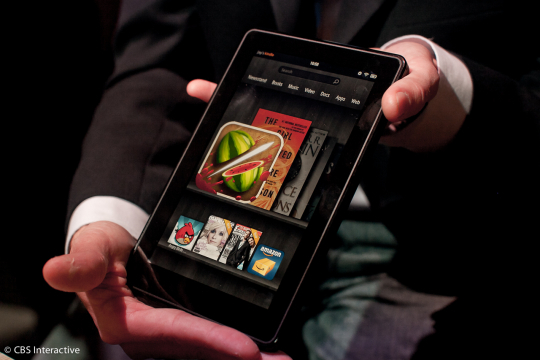
Apple management is all for Amazon's Kindle Fire because of fragmentation. Apparently, the more Android fragments the better it is for the iPad and iOS.
That's the takeaway from a research note from Barclays Capital analyst Ben Reitzes. Reitzes met with CEO Tim Cook and CFO Peter Oppenheimer and sparked a good bit of discussion. Cook and Oppenheimer weren't divulging any company secrets about the product pipeline, but their take was that Amazon's Kindle Fire is more boon than bane for Apple.
Reitzes said in a research note:
While the pricing at $199 looks disruptive for what seems to be the iPad’s most important rising challenge, the Amazon Fire – it is important to note that it could fuel further fragmentation in the tablet market—given it represents yet another platform. While compatible with Android, the Apps work with Amazon products. The more fragmentation, the better, says Apple, since that could drive more consumers to the stable Apple platform. We believe that Apple will get more aggressive on price with the iPad eventually but not compromise the product quality and experience. Over time, we believe iPad’s will be “docked” more and more to keyboards (and these keyboards could gain touchpads), which could extend its appeal to PC users.
If you cut to the chase, Apple is arguing there's a high-end, low-end equation. Apple will occupy the high-end of the tablet market and become more of a PC replacement. In this view, Android tablets go commodity and ultimately are derailed by the different flavors of Android.
I buy Apple's take on the tablet market segmentation. I'm just not sure the average consumer cares about fragmentation. If Amazon's Kindle Fire becomes a hit it will because the integration is there. A successful Fire doesn't necessarily derail a high-end Android tablet from succeeding. Ultimately, Android needs a seamless tablet experience to compete with the iPad.
Reitzes' recap had a few other notable bullets:
- Cook isn't necessarily a cash hoarder. What Apple will do with its $81 billion cash hoard is an ongoing question. Cook said isn't religious about holding cash.
- Apple is focused on China. Reitzes said Cook is very focused on China and future growth there. Apple now has 7,000 points of sales on the iPhone for greater China. Cook also thinks that the Mac could be a hit.
- iCloud is the lock-in. Reitzes said in his report:
We agree with Tim Cook – iCloud is profound. It basically makes the cloud the digital hub - not the Mac or PC. As a result, we believe that iCloud is the “sneaky” product launch of 2011, which could actually drive the most long-term value to the company. Furthermore, iCloud lays the groundwork in our opinion for a foray not only into TV’s, but devices we haven’t thought of yet. We believe that iCloud and future upgrades of the service are one of the big reasons that Apple guided for its FY12 capex to grow to $8 billion from just $4.6 billion in FY11.
Kick off your day with ZDNet's daily email newsletter. It's the freshest tech news and opinion, served hot. Get it.
Talkback
RE: Apple's Android fragmentation, Kindle Fire case: Does the argument hold up?
Not getting the "Fragment"
Google puts out a "pure" Android phone every year - Nexus
Android is open source meaning OEMs can mod / add as needed / wanted.
So, why the big issue?
RE: Apple's Android fragmentation, Kindle Fire case: Does the argument hold up?
I owned a cool Acer netbook that was a dual-boot config with Android and Windows. However, Acer did not install the Android Market, and provided no means for receiving OS updates. It was hobbled by the lack of Android updates or access to apps, so I gave it away. Android was a gimick that quickly lost its luster.
I also owned an Android phone for a while but hated the fact that the wireless carrier (in this case rhyming with Horizon) took their sweet time releasing OS updates ... I hated that. My iPhone gets updates from Apple, not from AT&T, so I have the update at the same time everyone else does.
Fragmentation
As a developer, Android fragmentation, while certainly requiring testing cycles, is really not a big deal to code for. You code to the API not to a device. Every once in a while, something gets screwy on a specific device, but it's generally a quick fix.
As a consumer, fragmentation on Android sucks! And Google is going to have to realize this and fix the problem.
Tablet market is FUNDAMENTALLY different..
IBM Compatible (DOS)
Commodore 64/128
Apple
Amiga
And even among these there were sub-fragments:
Apple - Apple IIe/IIc/III, etc or Apple IIgs or Mac?
IBM - DOS / Windows / OS/2 / *NIX
Love me like a brick
Fragmentation
PC Applications worked just fine across various screen resolutions, varying keyboards etc. But you can't efficiently run Photoshop CS on a PC from 10 years ago. And most of Android apps behave the same across various devices. The difference here is that PCs evolved relatively slowly while mobile devices are going down the road at break-neck speeds. So Android devices today have more hardware changes than devices from just 18 months ago. Software requiring these hardware changes are obviously not going to work on older devices. It's all a matter of how critical the new feature is. If it's very critical (say 6 way gyroscope for a high end game), then obviously the app will target phones with those features. If not, then it's not difficult to gracefully degrade.
The problem is that most phones that could be upgraded to a later version of the software to take advantage of new software features can't do it because of Google's laissez faire attitude and the feet dragging of manufacturers and carriers who would like to sell newer phones or contracts respectively.
RE: Apple's Android fragmentation, Kindle Fire case: Does the argument hold up?
I've got an HTC Evo 4G phone and an HTC Flyer tablet. Thanks to Amazon's free app of the day program I've got over 100 apps for these guys. I hardly ever run accross an app that won't install or run on either of these two tablet. Also, I bought my HTC Flyer after selling my (rooted) Nook Color. Almost every app I used on the Nook Color worked without a hitch on the Flyer.
So, I personally have not really suffered at all from the "fragmentation" issue.
PC vendors can't modify Windows
@virtualTodd
Keep in mind with Windows, OEM's are not usually modifying
RE: Apple's Android fragmentation, Kindle Fire case: Does the argument hold up?
To add to that..Linux is a great OS and the Linux kernel is more stable and secure than Windows/OS X/Android/Chrome but once a person installed a particular distro (ie. RedHat, Ubunto) then getting software to run is a pain in the a$$. Even the various versions of RedHat makes it painful. This is what Android is destined to become. Google will lose control of Android (Amazon is a perfect example of how Amazon no longer rely on Google...they can fork it completely and not even care about Ice Cream, and Jellybean, etc, etc if the Fire takes off). This is the next stage of fragmentation....not the various versions of Googles OS but the complete branching and control of the OS by different software vendors. The true test will be to see if Amazon even mention Android or show the green robot. I noticed some of Sony's tablet advertisements make no mention of Android.
RE: Apple's Android fragmentation, Kindle Fire case: Does the argument hold up?
I had an HTC phone for a while, and I gave it a good shot. But getting things to work with my Mac was too much effort, and eventually bought an iPhone and I'm glad I did. If the iPhone didn't exist, then I would go Windows Phone before Android.
RE: Apple's Android fragmentation, Kindle Fire case: Does the argument hold up?
You are letting Apple tell you what you can hear, see and do, instead of you being the one that controls the technology.
RE: Apple's Android fragmentation, Kindle Fire case: Does the argument hold up?
<i>You are letting Apple tell you what you can hear, see and do, instead of you being the one that controls the technology. </i>
As opposed to Android which has just as many limitations on what you can hear, see, and do, but you don't get to know what they are until you've already bought the phone and signed the 3-year data contract.
RE: Apple's Android fragmentation, Kindle Fire case: Does the argument hold up?
@j28n They are broken? Care to explain how? My iPhone 4 works great and I could not even duplicate the antenna issue that affects a small percentage of people. As far as battery life, I would say that two days on a charge is far beyond acceptable and that is with the iOS 5 issues that will be fixed. Next time to use some facts or is that absolutely against your Apple Hater religion?
RE: Apple's Android fragmentation, Kindle Fire case: Does the argument hold up?
What some call fragmentation, others call choice
I agree with you in the regard that it is a different market and, personally speaking, I like having options.
RE: Apple's Android fragmentation, Kindle Fire case: Does the argument hold up?
That wasnt fragmentation...What happen vth PC....Microsoft still had control of hardware u can implement windows on....
With android there are so many flavours of android going around....its casued lots of fragmentation moreover updates have become a problem
RE: Apple's Android fragmentation, Kindle Fire case: Does the argument hold up?