Between the Lines

Larry Dignan, Andrew Nusca and Rachel King

Comcast-Level 3 fight goes public: Is this really about Net Neutrality?

By | November 30, 2010, 2:41pm PST

Summary: On the surface, this Comcast-Level 3 dispute - which is quickly being moved into the court of public opinion - appears to be a slap-in-the-face challenge to Net Neutrality, the movement to ensure a free and open Internet. After all, to hear Level 3 tell the story, big bad Comcast is suddenly shaking down the content [...]

On the surface, this Comcast-Level 3 dispute - which is quickly being moved into the court of public opinion - appears to be a slap-in-the-face challenge to Net Neutrality, the movement to ensure a free and open Internet.

After all, to hear Level 3 tell the story, big bad Comcast is suddenly shaking down the content delivery network for a recurring fee at the “toll booth at the borders of its broadband Internet access network.” It makes a big accusation that Comcast is unfairly charging companies that deliver content that competes with its own. And it paints itself as a noble victim: a company that “agreed to the terms, under protest, in order to ensure customers did not experience any disruptions.”

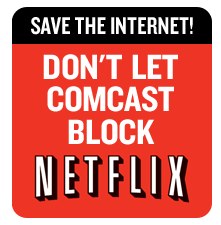
Granted, Level 3 raises some valid concerns. By waving the red flag of blatant Internet discrimination - whether real or perceived - the company is forcing the FCC to once and for all deal with the issue of Net Neutrality, as President Obama promised during his campaign. Already, a grassroots movement calling on the FCC to “Stop Comcast from blocking Netflix” is working its way through Twitter and Facebook, calling on fired-up consumers to sign petitions and be heard by Comcast and the FCC.

But is this really a Net Neutrality issue? Comcast, which is fighting back in the court of public opinion, says it’s not. (I would have expected no less.) And to make its point, Comcast is launching what appears to be an educational campaign of sorts to explain these technical business relationships to the jury of the court - consumers.

The disagreement between Comcast and Level 3 has nothing at all to do with the type of content being moved over the broadband networks, Comcast spokeswoman Sena Fitzmaurice told me earlier today. This is strictly a traffic issue and it started when Level 3 came to Comcast to request more capacity beyond what was already being offered as part of a no-cost “peering” agreement.

A peering agreement, simply put, means that two companies transfer more or less equal amounts of data back and forth over their networks without charging each other. The agreements sometimes allow as much as a 2:1 ratio of traffic to move without any additional charges. But when Level 3 came to Comcast and asked for a 5:1 ratio on that traffic-exchange relationship, the broadband provider came back with a fee that’s comparable to what Level 3’s competitors are being charged by Comcast.

And that brings us to where we are today, with the companies launching dueling press releases and blog posts, grassroots movements and consumer rights groups like Free Press calling on the FCC to “keep Comcast in check” and the FCC quickly responding to those cries by saying that they’re “looking into it,” as reported by the Wall Street Journal

But Comcast is fighting back. This morning, the company posted7-minute video to explain how these peering relationships work, using illustrations and language that easily understood by non-technical people. This afternoon, it put a Top 10 list on its blog, pointing out, among other things, that:

  • Any rumors about blocking Netflix are false.
  • Peering agreements are negotiated commercial arrangements between providers like Comcast and Level 3 that carry traffic across the networks that comprise the Internet. These agreements have existed for over a decade.
  • Our agreement with Level 3 is no different than our agreements with its competitors.
  • 10. The bottom line is that this is a good, old-fashioned commercial peering dispute. It is not about online video, it is not a net neutrality issue, it is not about “paid prioritization,” and it does not involve putting “toll booths” on the Internet.

It’s a smart move on Comcast’s part. If the battle is already being fought in the press - and it is - then the company really has nothing to lose. After all, it’s in the best interests of Comcast to put as much spin on this if they want to preserve what’s left of its consumer reputation. (Certainly, many already see Comcast as one of corporate America’s evil empires.)

Likewise, they need to make the FCC understand that what they’re doing isn’t a challenge to Net Neutrality. Remember. Comcast has already been successful at keeping the government from dictating how they can use their network, thanks to a court ruling in April.

The FCC is already checking into Comcast on the matter of Comcast’s acquisition of NBC Universal. Now, this controversy over delivery of online video - already a topic of interest for regulators - could douse optimism around final regulatory approval of that acquisition by the end of the year.

A Stifel Nicolaus investor’s note today said that the allegations “come at a bad time for Comcast, and unless they’re definitively and quickly knocked down or explained away,” it could complicate the approval of the NBC Universal acquisition.

Another research note, by a Barclays Capital analyst, questioned the timing and Comcast’s reaction. The note read:

The awkward timing makes us wonder why, assuming (Comcast) is contractually due the payments, it would choose to pursue them now, given the FCC’s sensitivity around online video, rather than just letting the issue sit until after the NBCU deal is approved. As such, we believe that Level 3 may be the one pushing the peering payment issue now, given that its leverage would be much lower once the NBCU deal is approved.

None of this is to suggest that one side is right and the other is wrong on this issue or that neither side has long-term business motives. Simply put, the matter isn’t as black-and-white as it might appear on the surface.

Hopefully, the FCC will keep that in-mind as it continues to look into both the Level 3 accusations and the implications of the NBC Universal acquisition.

Kick off your day with ZDNet's daily e-mail newsletter. It's the freshest tech news and opinion, served hot. Get it.

Topics

Sam has been a technology and business blogger for more than 18 years.

Disclosure

Sam Diaz

Sam Diaz has nothing to disclose.

Biography

Sam Diaz

Sam has been a technology and business blogger, reporter and editor at ZDNet, the Washington Post, San Jose Mercury News and Fresno Bee for more than 18 years. He's a member of the National Association of Hispanic Journalists and a graduate of California State University, Fresno.

30
Comments

Join the conversation!

Just In

RE: Comcast-Level 3 fight goes public: Is this really about Net Neutrality?
birumut Updated - 19th Jun
Well done! Thank you very much for professional templates and community edition
sesli sohbet sesli chat
0 Votes
+ -
Comcast is wrong
sismoc 1st Dec 2010
This is not about a "Peering Agreement". A Peering Agreement allows traffic to flow through an ISP's network on it's way to or from a 3rd parties network. (Imagine your neighbor cutting through your yard to get to another neighbor's house).

All of the traffic that Comcast is receiving from Level 3 is destined for Comcast's customers. In other words, Comcast's own customers are both asking for the data and receiving the data. There is no 3rd party involved.

This is not about Peering. It is a blatant move by Comcast to put up a toll both at the edge of their network and charge twice for the same service.
@sismoc

as far as i know, peering agreements only apply to traffic that is passing through the carrier, not terminating at a carrier's customer endpoints.
0 Votes
+ -
I hope Comcast wins this one
DBA-MI 1st Dec 2010
Why should my Comcast high-speed internet connection get even slower, why should I a non-NFLX parasite be impacted?

Let NFLX build out its own internet network and pay for it. NFLX is simply trying to make more profit without incurring any costs in the process.

GO COMCAST!
@DBA-MI
And lets kill all the ESPN and other sport crap while we are at it. I can not stand it. So why should I have to pay for it
@rparker009

Of course, let's get rid of anything that you don't like or use. The heck with everyone else!
@HaknGolfer

And of course, let's get rid of anything that you don't like or use. The heck with everyone else!
@DBA-MI
Why should my ISP be allowed to decide which parts of the Internet I am allowed to access, and which parts of the Internet are off-limits?

If Comcast wants to have a walled-garden, then don't go around advertising it as the Internet. They should build their own worldwide interconnection of computers, providing access to only the services and content providers they want to approve. Comcast is simply trying to make more profit by advertising access to the "Internet" without doing their central duty -- namely, incurring the costs associated with actually delivering the Internet content their subscribers demand to access. Their job isn't to create, regulate, or discriminate the content, or to promote one provider of content over another. Their job is simply to provide the pipe through which the content creators are connected to the content consumers.

Go Netflix!
@DBA-MI

and you are privy to the amount Netflix is paying Level 3 to be the carrier? pray tell how you are privy to such information
@DBA-MI

Your argument is not based on the facts. The Coscast usere have already paid for the bandwidth that they are using. The business model is that you buy a certain amount of bandwidth for a preset price and then you may use it however it meets your needs. Your needs may not include Netflix, but you probably have other used for the bandwidth that you have purchased. How would you feel if Comcast was blocking your content or charging the content provider that makes available the content that you use? Besides, regardless of whether Level 3 is charged for the Netflix traffic crossing the Comcast network, the traffic will flow, so your point is not valid.

If you believe in a free and open Internet then the obvious solution is to charge the Comcast customers who are using the most bandwidth more money for their access, not to charge to content providers. Comcast is trying to make money on both ends and is attempting to stifle the competition of their own content. This cannot be allowed!
@DBA-MI
Comcast is the one trying to maximise profits, in an arena where they compete poorly. They are trying to leverage their position as an ip to distort more out of its competitors. This in addition to being the worst cable provider on the planet. By the way, I'm not a Netflix subscriber either. However, tomorrow Bobby McGhee Streaming Services may come up with an offering that interest me. I do not want them hampered by the like of Comcast, in providing their services. Netflix today; someone else tomorrow! The only way to nip fraud in the bud is to act quickly to stiffle it.
If Comcast invested in fiber optic technology to begin with (like Verizon did), we wouldn't be having this discussion.

Remember, this is the same fat corporate monopolistic parasite who promised their customers "unlimited access" only to have a monthly 250GB cap placed on their accounts.
@DBA-MI

actually, Netflix is paying for the bandwidth, they are paying Level 3 to carry it. Comcast wants to charge extra because it is a competing service (direct competitor to Comcast's OnDemand service) and wants to mask it as a "peering agreement" dispute.
0 Votes
+ -
Net Neutrality
scubaj 1st Dec 2010
Why can't the FCC hire people fluent in the semantics of backbone and internet connectivity? As it stands, they are basing their decisions largely on the huge quantities of mis-information that are published by the content providers themselves.
@scubaj

No, actually, during the Bush years, all their "data" came from reports from ISPs, in large part Comcast.
0 Votes
+ -
In my area, Comcast has a monopoly on cable television. It buys out every competitor, even after many voters wanted competion on cable service. Like telephone companies, they find a way to charge for every little thing they can. In my area, they changed service where you MUST get a cable box to receive upper channels.

This is not, necessarily, wrong, it is business. What brings attention is that the publc now has more public forums to complain about rising costs. Like Banks and Credit Card companies, this will keep happening until customers start leaving Comcast internet service, that is the real power of the public.
@DadsPad

Comcast is not a natural monopoly. The problem is that people keep looking for the free market to fix the problem when cable isn't a free market. I think the most viable solution right now is for neighborhood associations and other non profit collectives at the neighborhood level should take over last mile internet communications for themselves.
@tkejlboom
thanks for your reply, but notice I started my email with "In my area". I did not indicate it was a national monopoly, but if it comes in your area, you might just see what I mean. happy
Basically, Comcast's deal with NBC will set up a huge horizontal monopoly. In a classic Adam Smith Free Market it is the role of the government to break these monopolies up. There should be some real competition in every micro-market for not only content but content delivery.

Basically when Comcast buys NBC, how is that going to affect other content providers such as Netflix? Level 3 is going to pass the inflated cost of increased network traffic on to it's customers, Netflix in this case. Will NBC have to pay more to go over a Comcast delivery system? Probably not.

Monopolies are very bad for consumers and for society in general. If Comcast manages to buy NBC, they become not only a content delivery system but a content provider as well. That is truly dangerous to consumers and society in general.
@mr1972

Comcast already is a content provider on several levels, buying NBC will just make them a bigger one
I don't disagree with the idea that Comcast want to earn more money from their infrastructure. They are a private company and they have a right to do that. There was a poll about this earlier, http://my-take.com/poll/Should-comcast-be-allowed-to-charge-websites-for-web-traffic The internet isn't free and there are a lot of physical costs to make it work. Considering how popular streaming is and how much bandwidth it takes up, Level 3 should have expected to pay higher fees. Comcast has a right to single out Netflix because their site now accounts for a large percentage of the web traffic. Even if this is a net neutrality case, I'm not sure what the government can legally do in this case. From a capitalistic point of view, Comcast is doing very well for itself. Unless we recognize that the internet is a right, or have more competition. We are basically powerless against Comcast.
@BTerada

personally, i'm voting with my dollars and refuse to be a Comcast customer
A simple question.
What does it cost Comcast to accept a stream from
Netflix? While I personally loathe cable companies, I do
believe that they can serve a useful function and they
are entitled to earn a fair return on their investment.
If the fees being charge actually reflect something akin
to the additional costs being imposed upon Comcast
because of the actions of a third party, then case closed.
If, however, the amount being charged is designed to
act as a deterrent to the use of a competitor, that is
another thing all together.

As simple solution is have the charge passed along to the
customer. If the charge is too much, they can choose
to either stop using Netflix or stop using Comcast as they
choose.
Imagine if the companies that made electronic voting machines were able to decide who would get to use them and were able to make it more difficult to vote for the candidate of your choosing?

Allowing companies that provide the infrastructure for the internet to invade the neutrality of the net is tantamount to that.

The turn of the 21st century will be remembered as a time when government was outsourced to the highest bidder (or highest briber). We see it now from our military to our prisons.

The dismantling of net neutrality will be the final nail in the coffin, the tipping point beyond which we will be unable to recover from the privatization of America.

The mere fact that it's up for discussion is indicative of how poorly the importance of the issue is understood.

As for Comcast and Netflix, the former may say that the latter must pay to use the former's bandwidth, but aren't Netflix customers with Comcast service already paying for that bandwidth?

How a Comcast subcriber chooses to use his bandwidth is of no concern to Comcast, and Comcast charging Netflix amounts to "double dipping", i.e. they're getting paid at both ends.

If I was a Comcast subscriber, regardless of whether I used Netflix, I'd be screaming bloody hell and insisting on getting what I paid for. You know that any fees Comcast charges to Netflix will inevitably be passed on to Netflix customers.
0 Votes
+ -
Bad analogy
dominigan 1st Dec 2010
@omb00900@... This is nothing like voting machines.

This is a case where NetFlix continues to be a larger and larger consumer of bandwidth. The peering agreement between Level-3 and Comcast does allow for traffic to cross between networks, but in this case, the Level-3 increased traffic is going to incur significant infrastructure costs in the form of more switches to handle the traffic. Because of the lopsided percentage in traffic consumption, Comcast believes it is within their right to pass on infrastructure costs incurred by them, to the organization demanding its implementation.

I don't see a problem with them doing this. If actual traffic loads follow the load predictions as NetFlix switches to primarily on-demand streaming video, and other sites follow suite... Comcast MUST pass on the costs or cease to exist, which the ivorty tower net neutrality ideal completely ignores.

In the real world, those consuming large proportions of services SHOULD BE PAYING FOR THEIR USAGE... either on the consumer side, or the corporate (NetFlix) side to be passed onto the same consumers.
@dominigan
The users are'nt actually Netflix customers in the truest sense. In fact Comcast is Netflix customer and Netflix is providing a service to Comcast users. I suspect that Comcast would rather be providing this service, since they have a competing service.
0 Votes
+ -
A better analogy for you to think about....
adornoe@... Updated - 1st Dec 2010
Say there's a national but privately owned delivery system. Now imagine that that system is for transportation of animals.

Now imagine that John wants to send his little cat from California to Peter in New York. He pays, say $50 for the service. Then, Bob sees what Peter paid and wants to send his horse from California to New York for the same price. It's the same service, but, larger packages. Would it be unfair for the service provider to want to charge Bob a much higher price for delivering the horse?
@adornoe@...
It depends...
0 Votes
+ -
Now, would you mind clarifying?
0 Votes
+ -
Peering...
Allstar_z 4th Dec 2010
The idea of peering was developed back when most Internet traffic was symmetrical.

Today it is not. You have networks that represent content providers (like Level3) and networks that represent ISPs/users (like Comcast). Very little traffic (relatively speaking) flows out from Comcast, because its users have upload restrictions.

If users are unhappy with what Comcast is doing, they should all upload massive amounts of video to websites connected to Level3's backbone, and then Level3 could charge Comcast for this.
Well done! Thank you very much for professional templates and community edition
sesli sohbet sesli chat

Join the conversation!

Formatting +
BB Codes - Note: HTML is not supported in forums
  • [b] Bold [/b]
  • [i] Italic [/i]
  • [u] Underline [/u]
  • [s] Strikethrough [/s]
  • [q] "Quote" [/q]
  • [ol][*] 1. Ordered List [/ol]
  • [ul][*] · Unordered List [/ul]
  • [pre] Preformat [/pre]
  • [quote] "Blockquote" [/quote]
ie8 fix

The best of ZDNet, delivered

ZDNet Newsletters

Get the best of ZDNet delivered straight to your inbox

Facebook Activity

White Papers, Webcasts, & Resources
ie8 fix