Hardware makers slog through hard disk drive shortages

One of the larger questions for tech companies going into fourth quarter earnings revolved around hard drive shortages and whether the supply chain could adapt after flooding in Thailand.
Answering that question is still fairly tricky. Why? There were no uniform trends. Some companies thrived and a few struggled. Seagate was a clear winner. Western Digital held up better than expected. Meanwhile, other companies such as Sony---a financial basket case to start with---flopped.
The takeaway here is that October's flooding in Thailand continues to whack the technology industry. But the impact is far from uniform.
Here's a tour of how the Thailand flooding affected three tech giants.
Sony: Thailand flooding hurts
Here's what Sony CFO Masaru Kato said on the company's fiscal third quarter earnings conference call from Tokyo Thursday:The floods in Thailand were one of the major factors behind the significant decrease in sales and deterioration in operating results for the quarter. Several overall manufacturing facilities incurred direct damage, resulting in halt in production and the delayed launch of certain products.
Moreover, the supply chain across the entire industry was impacted and the demand decreased as companies we do business with were affected. The decrease in sales and significant deterioration in equity in net income of the affiliated companies caused us the record operating loss for the quarter.
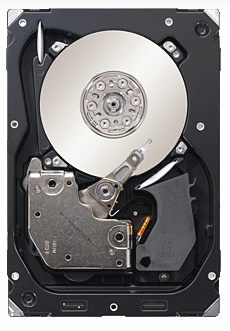
Western Digital: Could have been worse
Western Digital was widely expected to take a huge hit from the Thailand flooding. Western Digital, which makes disk drives, couldn't get components out of its suppliers, which were mostly in Thailand. Overall, Western Digital's fiscal second quarter earnings held up well.CEO John Coyne said:
We've made substantial progress in our mission to restore our manufacturing capacity in the aftermath of the historic flooding in Thailand. This is reflected in our Q2 financial performance announced earlier today, the continued ramp of our Thai HDD production capacity, and in the fact that we have now recommenced slider manufacturing which had been suspended since October 10.While much work remains to be done over the next several quarters to reach our pre-flood manufacturing capabilities, the progress thus far is ahead of our original expectations and is a tribute to the dedicated and effective actions of our employees, contractors and Thai government agencies, the efforts of our supply partners, and the support of our customers.
However, Coyne also noted that he expects hard drive shortages to persist throughout 2012 with the situation improving gradually. He added that he expects the hard drive industry to reach pre-flood quarterly builds toward the end of the June quarter. From there, the pipeline of components has to build back up. Normal levels won't appear until 2013.
Coyne added that Western Digital has to revamp its supply chain. He said:
First, we will continue to focus on restoring our manufacturing and supply chain capacity to pre-flood levels. Second, in concert with our supply partners we are establishing the most robust and resilient supply chain of critical HDD components as we ramp our manufacturing capability back up. Third, during the flood recovery period we have maintained our focus and investment in development to ensure that we will be in a position to offer new products with advanced technology to sustain our leadership as we ramp our post-flood production.
Bottom line: Western Digital held its own and the fallout could have been much worse.
Seagate: The hard drive shortage creates opportunity
Steve Luczo, CEO of Seagate, said his company has weathered the Thailand flooding better than most. Why? First, Seagate's operations were relatively unscathed. Second, the supply chain is diversified.Luczo said on Seagate's earnings conference call:
The disaster in Thailand affected a vast number of individuals and thousands of businesses. Although the industry is continuing to increase output, it's important to note that while many observers tend to believe that mid to late October was the low point of industry production, we believe the low point was closer to mid-December. Seagate's geographically diversified factory footprint and broad supply chain provided inherent advantages that mitigated the impact of the floods to Seagate's operations. Although many of our external component suppliers are still working to recover their businesses and return to full capacity. We have been very impressed with the response and efforts of our suppliers who have worked tirelessly to rebound from the effects of the flooding. There are still clear challenges that lie ahead in our component supply chain. And to help address the gaps in various product lines, Seagate has worked with its customers and suppliers on aggressive qualifications of new parts and factories, allowing us to match precious supply to end demand.
Indeed, Dave Mosley, Seagate's executive vice president of operations, said the hard drive maker has seen more than 200 requalifications just for motor base assemblies. Lead times are longer too. Nevertheless, Seagate is posting strong financial results because relative to rivals it's in a much better position.
Luczo added that the company isn't maximizing profits---average selling price per unit was $13 higher, but costs were $2.50 higher. Seagate's plan is to give suppliers a break on pricing in exchange for longer term contracts. The strategy is paying off in the short and long runs. Seagate blew away its December quarter earnings (non-GAAP earnings of $1.32 a share vs. estimates of $1.08 a share) and gave a strong outlook for the months ahead.
Barclays Capital analyst Ben Reitzes said in a research note that Seagate's long-term supply contracts are going to pay off nicely. As a result, Seagate can predict its fiscal 2012 results. Reitzes said:
Given the company’s improved visibility due to long-term supply agreements with all of its top customers (60% of capacity is under these LTAs for the year), the company provided guidance not only for March and June but for CY12. In the March quarter, Seagate expects revenue of $4.3 billion (+62% y/y; 36% q/q) on expected unit shipments of 60 million (including Samsung) on TAM of 130-135 million. Seagate is also planning for gross margins of at least 33% as the company expects pricing to remain relatively benign for the next several quarters. For June, Seagate is currently expecting revenue of $5 billion, which implies y/y growth of 75% (15% q/q) with gross margins remaining relatively flat sequentially. Most surprising was the company’s confidence in its ability to generate $20 billion in revenue in CY 2012 (implying y/y growth of over 70%).
Related: Thailand floods to lead to hard drive shortages for months