Between the Lines

Larry Dignan, Andrew Nusca and Rachel King

HP's biggest challenge vs. IBM, Oracle: Continuity

By | September 23, 2011, 3:32am PDT

Summary: Continuity wouldn’t be such a big deal for HP if it didn’t have to compete with IBM and Oracle daily.

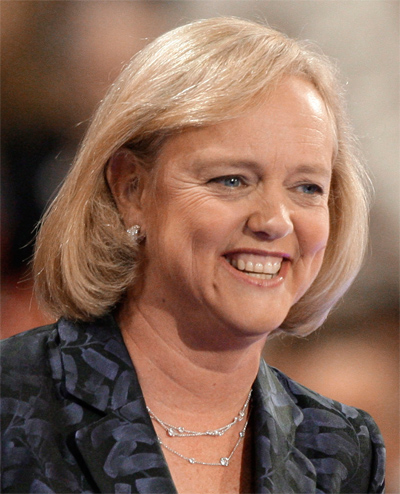
HP CEO Meg Whitman in her debut talked about better execution, harnessing a talented workforce, hitting metrics, strategy and innovation, but the one thing that matters most for the company—continuity—wasn’t mentioned.

Continuity frames HP’s challenges well. Simply put, HP has little to no continuity. Strategies, product lines, research and development spending and CEOs—seven of them since 1999—all change regularly at HP. As a result, HP never quite seems like it has a long-term plan. The HP Way isn’t in the DNA anymore and that prevents the company from being a long-term strategic partner to customers.

HP started out as a maker of instruments for scientists and engineers and lost its way. It doubled down on the PC market a decade ago and now plans to spin off the unit. HP bought its way into businesses that alienated partners such as Cisco. R&D spending in recent years fell to commodity hardware levels at about 3 percent of revenue.

HP CEO Whitman: PC spin-off still in play, Autonomy deal too | HP’s CEO carousel continues: Whitman officially in, Apotheker out | HP’s Lane defends board: We didn’t pick Apotheker | HP’s Lane on why Apotheker had to go | Is Whitman up to running HP? | CNET: Meg Whitman takes over at HP (roundup)

And now HP is trying to reinvent itself into something akin to IBM with a focus on software and services. Whitman said:

HP really matters. HP matters to Silicon Valley, California, to the United States and the world, and now it’s time to get to work.

For HP to matter it needs the one thing that has been missing for decades—continuity. It’s hard to have continuity when the company creates plans based on what the CEO knows best. Mark Hurd was all about the hardware so HP went down that road and acquired 3Com, 3Par, Palm and others. Leo Apotheker knew software. Poof, there’s $10 billion down the tubes to buy Autonomy. Following that recent history, maybe it’s time for HP to focus on e-commerce. After all, Whitman knows e-commerce.

Perhaps this continuity thing wouldn’t matter so much if HP didn’t compete with two juggernauts that launch plans, stick to them and know what they’re about. Those juggernauts are IBM and Oracle. In fact, HP runs into the continuity wall daily. In storage, HP competes with EMC and CEO Joe Tucci. In networking, there’s Cisco and CEO John Chambers. In PCs, Michael Dell is there.

IBM this week held a leadership powwow with big name CEOs such as J.P. Morgan’s Jamie Dimon, Sony’s Howard Stringer and Boeing’s James McNerney. Toss in the various heads of state talking up IBM and it was quite a conference to celebrate a 100 year anniversary.

Big Blue chief Sam Palmisano worked the room and the crowd as he pondered the next 100 years. Palmisano took over from Lou Gerstner in 2002. Palmisano’s likely successor, Virginia Rometty, also had some time on stage. The baton wasn’t officially passed, but rest assured it was back stage to be handed off at some future date.

Add it up and IBM has had two CEOs since 1999 to HP’s seven. HP CEOs last about as long as an NFL running back. Both groups apparently run into brick walls for a living.

During Palmisano’s opening remarks on Tuesday, he said:

It’s so easy to stick with things that have made you a successful company or institution—a winning product, a profitable business model. It’s even easier to stick with what’s made you successful as a professional—what got you to where you are. Yet one of the core responsibilities of leadership is to understand when it’s time to change. And it’s equally important to understand what not to change…what must endure.

Now IBM has had its rough moments too. IBM missed the PC curve. IBM had to bail on OS2. IBM was a complete mess before Gerstner showed up. But IBM continued to invest in R&D during bad times, cooked up 5 year plans that worked and rejiggered its portfolio to catch secular trends. IBM will spend about 6 percent of revenue on R&D every year.

Palmisano said it’s critical to manage for the long term and to have “institutional patience.” The catch is that long-term thinking needs political and financial capital. In other words, a company needs to satisfy customers, shareholders, employees and the community to have the luxury of thinking long term. “A lasting enterprise must maintain all of them,” said Palmisano.

That reality is why Whitman gave a nod to Wall Street. Whitman said she understood the investment community and noted HP will hit its numbers. In addition, Whitman will have to calm down an HP workforce that has been through way too much in the last two years. And naturally, HP will have to keep its customers happy.

As if IBM’s steady-as-she-goes approach and culture weren’t enough, Oracle also has a lot of continuity going for it.

Oracle’s continuity boils down to CEO Larry Ellison. Ellison has been at the helm as long as Oracle has been around. Back in 2003, Ellison said software was a mature industry that needed to be consolidated. He later followed through. Whether you love Oracle, hate the company or are simply scared of it continuity reigns.

Ellison’s personality drives the company. Oracle makes big bets and loves competition. Today, Oracle’s bet is on integrated hardware and software systems. The jury is still out on the hardware plan, but rest assured Oracle won’t pull the plug on a high-end system in a month.

IBM’s culture thinks big. Oracle’s culture revolves around punching rivals in the mouth. What’s HP’s personality?

On Oracle’s earnings conference call Tuesday, Ellison broke out some historical perspective. Oracle’s plan is simple when it comes to databases: Take the latest technology and absorb it.

Ellison said:

I don’t know how many people are on the call are my age, probably no one, but a long time ago, after relational databases came out, there was a next generation database that were called object databases. And everyone talked about, well, object databases are going to replace relational databases and what actually happened is that object database capabilities got integrated into the Oracle database. So Oracle ceased to be just a relational database and became a relational and object database and then there were these things called text databases for text search and those were separate databases and Oracle then incorporated a text search and text capability into the Oracle database. And then there were these things called XML databases and separate XML databases and then Oracle integrated XML capability into it.

Now people are talking a lot about unstructured data and things like Autonomy. Oracle’s strategy has always been to integrate additional types of data into the Oracle database.

To cut to the chase, Ellison said Oracle will exploit the big data trend too.

Oracle’s exec behind the scenes—Safra Catz, president and CFO, also has that continuity thing going. She knows the company cold. Add former HP CEO Mark Hurd to the mix and Oracle is formidable. Critics would argue that Oracle’s main vision is charging customers more for maintenance every year, but it’s one fine business model.

Add it up and HP’s biggest rivals have continuity. Maybe Whitman begins the continuity trend for HP, but there were a few hints that executive turnover may be an issue going forward. HP Executive Chairman Ray Lane said Thursday that there were CEO candidates inside the company, but they “were not ready.” “We think they are future candidates to be CEO here but they are not ready,” said Lane.

If HP wants to get on the continuity bandwagon—assuming those passed over don’t bolt—the next CEO handoff needs to be to one of those internal candidates running $40 billion businesses today.

Kick off your day with ZDNet's daily e-mail newsletter. It's the freshest tech news and opinion, served hot. Get it.

Topics

Larry Dignan is Editor in Chief of ZDNet and SmartPlanet as well as Editorial Director of ZDNet's sister site TechRepublic.

Disclosure

Larry Dignan

Larry Dignan has nothing to disclose. He doesn’t hold investments in the technology companies he covers.

Biography

Larry Dignan

Larry Dignan is Editor in Chief of ZDNet and SmartPlanet as well as Editorial Director of ZDNet's sister site TechRepublic. He was most recently Executive Editor of News and Blogs at ZDNet. Prior to that he was executive news editor at eWeek and news editor at Baseline. He also served as the East Coast news editor and finance editor at CNET News.com. Larry has covered the technology and financial services industry since 1995, publishing articles in WallStreetWeek.com, Inter@ctive Week, The New York Times, and Financial Planning magazine. He's a graduate of the Columbia School of Journalism and the University of Delaware.

For daily updates, follow Larry on Twitter.

Related Discussions on TechRepublic

Did you know you can take part in these discussions with your ZDNet membership?
22
Comments

Join the conversation!

Just In

gvbwnco 85 zjb
cmakrekwe71-24379039756124611384937790769048 25th Nov
lujswl,zmxgxxif35, pkord.
0 Votes
+ -
RE: HP's biggest challenge vs. IBM, Oracle: Continuity
Rabid Howler Monkey Updated - 23rd Sep
From the article:
"HP Executive Chairman Ray Lane said Thursday that there were CEO candidates inside the company, but they were not ready.

Ann Livermore has been ready since 1999. As a long-time HP employee and executive, she might have provided some continuity.

Meg Whitman, with her eBay experience, might be able to auction off unprofitable HP business units.
0 Votes
+ -
@Rabid Howler Monkey

I tend to agee. I have used ebay for years, but from my perspective it was a great idea that ebay in all the subsequent years has totally failed to improve upon. The filtering is amateur and the item page is really clunky. So from my perspective she didn't do much for ebay. I'd be curious if other ebay users feel this way.

gary
@gdstark13 - Yes, agree 1000%.
0 Votes
+ -
@gdstark13

Yes, when she came to eBay it was an online auction site. When she left eBay, it was an online auction site. If she had a vision for the company, eBay could have been Amazon... they could have been Google.
Ann Livermore has been ready since 1999. As a long-time HP employee and executive, she might have provided some continuity.
Online radio - ?????????? ?????? ????????
0 Votes
+ -
I think one of the first things Meg Whitman has to do as new CEO is to bring back Matias Duarte, the original UI designer of WebOS, to work at HP. He now works for Google and is making Google earn money for the Android OS, but this talented guy is a leader in the developer community, he can rescue WebOS and bring HP profitable in the next generation smartphones.
@Gabriel Hernandez

Agree, but I think they would rather just punt to Amazon and continue being Microsoft serfs.
[ SOS ] Complaint with IBM China CSR on Centennial

[ Review ] How Much IBM Can Get Away with is the Responsibility of the Media
http://wp.me/p1hDC3-aL

IBM Advised to Treat its People with Humanism in China
http://wp.me/p1hDC3-aW

Tragedy of Labor Rights Repression in IBM China
http://wp.me/p1hDC3-92

Scandal stricken IBM detained mother of ex-employee on the day of centennial
http://wp.me/p1hDC3-8I
In terms of hardware, I think it should be more like HP's challenge vs Oracle, DELL etc...
Different time different strategy focus so it's confused. Now let's hope for best. HP has every thing except RDBMS may be Teradata is good candidate for HP to compete with Oracle. On the top of Teradata applying lot vanilla flavors nothing like that.
0 Votes
+ -
Meg Whitman... /facepalm. So when she turns out like another Fiorina...will the BoD finally be replaced by people who know what they are doing? What a train wreck.
All Whitman offered was boilerplate. My condolences to the employees and shareholders of HP; the best I can say is better you than the state of California.
HP's motto is "Invent". That's what they need to do; invent something new for a chosen marketplace and then pursue it. That's how the company started with Bill Hewlett's unique audio oscillator for engineers and that's how they remained successful through Bill and Dave's leadership. It's not a bad way direct a company.
0 Votes
+ -
More importantly...
John L. Ries Updated - 23rd Sep
@rondec
...the internal slogan for a company like HP should be "do it right". The goal should be to produce the best quality merchandise money can buy, sell it for what it's worth, support it whole heartedly (and otherwise make your customers delighted to pay the high prices you charge), and treat your employees in such a way that the best and brightest will choose you first, and maybe settle for a competitor if you don't have a place for them.

It will be a while before HP can use such a slogan publicly, but now is a good time to make the internal changes necessary to make the above vision a reality.
0 Votes
+ -
Well diagnosed
John L. Ries Updated - 23rd Sep
HP can get some continuity back, but it's going to require a lot of work and will probably require the complete repudiation of both Carly Fiorina and Mark Hurd (Apotheker wasn't there long enough to have a real legacy). The HP way is probably a good place to start (it worked), but it has to be taken as "guidelines" (to quote a famous movie) rather than as scripture.

One thing for certain is that the revolving door in the boardroom (at the very least) has to stop. It's hard to set a consistent policy when there's a new board every couple of years and a new CEO (recruited from outside the company) every 5.
TRUTH: "-the next CEO handoff needs to be to one of those internal candidates running $40 billion businesses today."
0 Votes
+ -
Good article!
realvarezm 23rd Sep
I remember when i was a student my father bought me this HP calculator (right now i dont remember the model) but it was great; it could do graphics and basic programing, it had everything even a serial port to handel a printer and the first think that comes to my mind while i was handling the gadget was this company is the future. Long gone are those days and today i work at an IT company. I've seen HP laptops model DV6, DV4, DV6000 and ohter similar models, stack up in the storage room, bacause they had a flawed design that makes them overheat. So i thought is this company losing its quality and how that can happen in corporatio like that, 5 years later everybody can see the cancer that is knawign this colosus and it seems like everybody is enjoying hte downfall. I know is soon to talk about the death of HP but in my humble opinion is like that escene from the green mile movie, when the hideous and obnocious guard was yelling: Dead man walking... dead man walking.
0 Votes
+ -
I have doubts.
commentzd 24th Sep
Whitman acquired Skye (sold later for a loss over 1 bn). How can you be considered a good CEO if you produced that kind of a loss? Also growing a business that had demand anyway might be slightly different than managing a large company in shambles. I wish she succeeds (I always considered HP laser printers the best) but I'm afraid she will not be that successful. Since Carly messed up HP it will be beyond hard to put back HP on track. I'm skeptic.
Hurd was forced out of HP the same month HP made a move on 3Par. Who knows if HP would have overpaid so grossly for 3Par if he hadn't gotten canned.

kevinclosson.wordpress.com
Unfortunately a number of large companies made the same sort of blunders: ignoring the gems they have inside, and spending instead the company's treasure to buy at exorbitant prices from outside resources that don't fit and that they are unable to digest: Intel buying McAfee, MS buying Skype for $8.5B (and even trying Yahoo for $44B!), HP buying Palm for way too much, and continuing.

HP had in 2010 the staff, knowledge, and other resources, to build excellent smartphones and tablets, along with the NEW OS that was REQUIRED. I still use my HP iPaq h2215 of 2003; since MS had left its wonderful Windows Mobile OS become a buggy underdog (and its according ecosystem slowly die), this was an opportunity for HP to finally build the new OS that had been badly needed and awaited from Sun, HP, IBM, Oracle, or else. Instead they left an ignorant newcomer (Google) do it twice (Chrome OS and Android). And they bought Palm!!! A sure way to humiliate and discourage the excellent staff they had for this (at all levels; I don't know Ann Livermore but she may have been the most wasted resource in high level at HP).

Now once done this gigantic blunder (buying Palm), the way to go was to digest the loss, continue, bolster the acquisition, work hard and fast to complete and improve the new OS and the new line of phones and tablets. Instead they added a second blunder: throwing the baby out with the bathwater (giving back too early with WebOS and TouchPad, and even with PCs!). Yes the article is right: the main failure at HP is lack of clairvoyance, consistency, LONG TERM sight, CONTINUITY.

Until 2010 I was still waiting for the new excellent smartphones HP HAD TO come with. When they bought Palm my hope went away. The recent events just confirm: HP hasn't any more brains or hearts to lead it; just greedy CEOs (e.g. Fiorina) trying to make their personal money instead of the company's.

Versailles, Tue 27 Sep 2011 23:34:00 +0200
0 Votes
+ -
gvbwnco 85 zjb
cmakrekwe71-24379039756124611384937790769048 25th Nov
lujswl,zmxgxxif35, pkord.

Join the conversation!

Formatting +
BB Codes - Note: HTML is not supported in forums
  • [b] Bold [/b]
  • [i] Italic [/i]
  • [u] Underline [/u]
  • [s] Strikethrough [/s]
  • [q] "Quote" [/q]
  • [ol][*] 1. Ordered List [/ol]
  • [ul][*] · Unordered List [/ul]
  • [pre] Preformat [/pre]
  • [quote] "Blockquote" [/quote]
ie8 fix

The best of ZDNet, delivered

ZDNet Newsletters

Get the best of ZDNet delivered straight to your inbox

Facebook Activity

White Papers, Webcasts, & Resources
ie8 fix