Intel cuts sales outlook, blames hard drive shortage

Summary: With the warning, Intel becomes just the latest technology company to take a hit because of hard drive shortages.
The hard drive shortage is backing up the supply chain and Intel's revenue will fall well below expectations as a result.
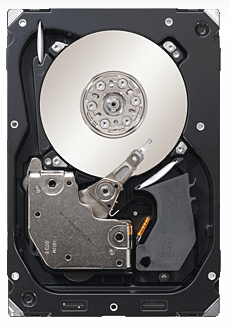
Tech industry needs more of these.
Intel said that its fourth quarter sales will be $13.7 billion, give or take $300 million. The company projected fourth quarter sales of $14.7 billion, give or take $500 million. Wall Street was looking for sales of $14.65 billion and earnings of 69 cents a share. Intel also said gross margins would be lower than expected at 64.5 percent. Wall Street expected 64.96 percent.
With the warning, Intel becomes just the latest technology company to take a hit. Texas Instruments also cut its outlook and cited the hard drive shortages. Even DuPont noted that demand for its chemicals used in electronics manufacturing fell because of the hard drive shortage. Flooding in Thailand set hard drive makers and the associated supply ecosystem on its heels.
The working theory among analysts a few weeks ago assumed that the fourth quarter would be OK, but the first quarter would be rocky. Given the warnings of late, it's clear that the fourth quarter is hampered by the hard drive shortage too.
In a statement, Intel said:
Sales of personal computers are expected to be up sequentially in the fourth quarter. However, the worldwide PC supply chain is reducing inventories and microprocessor purchases as a result of hard disk drive supply shortages. The company expects hard disk drive supply shortages to continue into the first quarter, followed by a rebuilding of microprocessor inventories as supplies of hard disk drives recover during the first half of 2012.
On a conference call, Intel CFO Stacy Smith said that demand for servers remained strong:
The demand across the various segments, again, is playing out pretty much as we expected when we started the quarter. And we are seeing that in our sales pattern. Server has been relatively strong, but we are seeing a pretty significant reduction in backlog in the PC-related segment of our business, so that seems to be where it is really hitting us. In terms of the shape of this thing, we do expect continued shortage of HDDs to be pretty significant in the early part of 2012; and we expect supply to catch up to overall demand sometime in the first half of 2012. Where exactly that happens over the course of the first half, it is too early to say, but we do expect that this will catch up sometime in the first half.
Texas Instruments said demand was weak in all of its markets---excluding mobile. Ron Slaymaker, TI's head of investor relations, said:
In the computing space, computing overall is down, with the declines at storage or hard disk drive customers especially exacerbated by the flooding in Thailand. In the consumer products areas such as televisions and video games are also weak this quarter.
Related:
- HP: Hard drive shortages hitting Google, Facebook DIY servers
- Dell tackling hard drive shortage; affirms plan is ‘adaptable’
- PC makers vs. hard drive shortages: Q4 likely ok, Q1 a clunker
- Thailand floods to lead to hard drive shortages for months
Kick off your day with ZDNet's daily email newsletter. It's the freshest tech news and opinion, served hot. Get it.
Talkback
RE: Intel cuts sales outlook, blames hard drive shortage
If they paid people to make them in north america instead of in China or Thailand they wouldn't be stuck would they? too bad for them.
RE: Intel cuts sales outlook, blames hard drive shortage
Um
Common misconception.
Do you think a front end loader made in China is going to be less expensive than a US version? It seems silly that heavy equipment would be imported from China. It's just wishful thinking that reduced cost Taiwan drives would result in a lower selling price. Sometimes US articles cost less than Chinese.
Does Microsoft give you a refund for redundant licensing? No, they would you rather keep buying new computers with the same OS and pay for it over and over.
RE: Intel cuts sales outlook, blames hard drive shortage
HypnoToad72: So, what the heck is wrong with trying to make more profit?
And, prices would indeed have to be raised to reflect the higher costs of labor if that labor was in the U.S. and other high-labor cost countries. So, instead of people being able to afford a computer every 2 or 3 or 4 years, they'd have to keep their computers for 8 or 10 years, because, those computers would be less affordable, and if those computers were less affordable and not as many got sold, a lot fewer of them would need to get built, and if fewer were built, there would be no need to have so many people building computers, and so, we'd end up with higher unemployment. Follow the dominoes.
Joe.Smetona: You're just using hypotheticals, and not real cases,
Look, there is no doubt that, higher labor costs do raise the prices of goods and services. Anybody that would argue differently would be missing most of his brain.
If there wasn't cheaper labor offshore, then there is no doubt that, companies would have to hire from within our shores, and that prices would have to reflect the higher costs of labor.
When it comes to doing banking online to save banks some money, there is no doubt that they do save money, because, the cost of labor at a banking floor is higher than maintaining a website where a person might be able to get the same transaction completed. If banks were so greedy with their profits and from keeping the savings from their online presence, then why is it that so many banks are doing so badly and many went out of business and many are still having problems staying in business? Many banks will go out of business every year, because they can't make ends meet. The problem that most banks have is that, they can't offshore their brick-and-mortar operations and they can't just hire somebody overseas to do the work that happens on the banking floor, such as tellers and customer service and loan officers and personal banking representatives.
Nothing is as simple as what they first appear.
The Microsoft example you used, is really nonsense.
Microsoft keeps a staff of people maintaining their OS, and even creating updated and new versions of their OSes. That's labor, which isn't cheap. They have a right to charge for all licenses which might be purchased or needed.
Would you require that, once you purchase an automobile, that you shouldn't have to pay for another stereo system for a new car, because, you already paid for the older car's stereo? If you could transfer the old car's stereo to your new car, then I'm pretty sure no one would stop you, but, you'd be going through a lot more trouble than it's worth. Or, would you expect a discount on the new car's stereo system because, you already were using that manufacturers system on another car?
Some things are transferable, others are not. Some things you can get discounts on, others you can't. I happens everywhere and not just with Microsoft.
Reply to Adornoe.
Joe.Smetona: You're still being short-sighted and not looking at the big
Banks have been subjected to a massive number of regulations, which cost a lot of money in compliance. The bank customer is not told about the increased costs of having to comply with those regulations. Banks are also subject to the same kind of higher taxation that has been happening to the other industries in the economy. The banks might be saving money on one end, but their expenses have gone up on the other end, and so, they try to save as much as they can, and can easily justify keeping the savings by pointing at how much more expensive their operations have become. As an example, Bank of America tried to raise the cost of maintaining check cards by $5, and they were batted down by bad publicity, but, they were trying to gain back some of the revenue they lost through legislation which made them lose income on credit card transactions. There are repercussions to everything that government does that increases the cost of doing business.
Also, the case of the hedge fund managers getting their bonuses is another one of those that people don't get to see the other side of the issue, and most of what people get to see or hear is the demonization about how greedy and sleazy those people are. But, to get the bonuses, they had to perform, even if while doing something that seems unseemly.
Before I continue, I doubt very much that it was $3 billion dollars in bonuses, and your figures are highly exaggerated.
Now, what tanked the economy was not the Wall Street scandals nor the perceived greed.
The causes for what transpired was, again, government intrusion with their regulations, which forced banks to make mortgage loans to people who couldn't afford their homes, nor had good credit or any credit at all. The banks were trying to unload those bad loans, and the mortgage packaging was one way to not be stuck with them. Fannie and Freddie became the ultimate buyers of those fraud-filled packages, but the fraud was the result of the bad lending practices that were forced on the banks with the CRA that was passed by the Carter administration, and the threats of loss of licenses to the banks if they didn't comply with the lending rules; the enforcement regulations were passed under Clinton. Again, it was government regulations which had some very dire consequences to the banks and the economy, but, most people only look at those holding the bag instead of looking at those that forced the bag into their hands. So, the banks were mostly just trying to save themselves from the bad losing practices that were forced on them.
When it comes to Microsoft, my analogy still works. The license is, in a way, equivalent to the keys to the car, but, a new car normally comes with a new key and the key to the old car won't fit. A license is the key to paid software packages, and if a software package is updated or reworked or is a new version, then the developer has a right to require a new license. I don't expect a new computer to use the same old OS with the same old license. If that were the case, Microsoft and Apple and all software companies would have gone out of business a long time ago.
I don't have the time to continue right now, so I'll cut my comments right here. If I have the time, I'll try to get back to this post and update it. But, I gotta go.
RE: Intel cuts sales outlook, blames hard drive shortage
It's also very bad for business to pay for extra plants when they're not
Not all companies want the extra expense of setting up plants in separate locations, just in case something happens in one location. That's not how businesses should be run. Not only would be a lot more expensive, but it would be more labor intensive to do so.
RE: Intel cuts sales outlook, blames hard drive shortage