Between the Lines

Larry Dignan, Andrew Nusca and Rachel King

Why the FTC is likely to hit a dead end probing Google's Android

By | August 11, 2011, 5:21am PDT

Summary: The FTC is looking into Google’s business practices around Android, but the probe may not yield much given the smartphone industry is so competitive.

The Federal Trade Commission is reportedly eyeing Android in its investigation of Google business practices. On the surface, Android seems like a natural target for regulators, but the details are a bit trickier.

According to the Wall Street Journal, FTC lawyers are looking into whether Google prevents smartphone manufacturers from using competitors’ services. The FTC is also looking at whether Google favors its own properties in search results.
The Android argument is probably the most interesting. Here are the moving parts that would attract regulators like flies.

  • Android market share has surged to 39 percent of the smartphone operating system market from zilch. Apple is second with 28 percent of the market, according to Nielsen.
  • Google was partially able to get this share by giving away Android because it could make money off of search.
  • Mobile ads are the next frontier Google can leverage.
  • And Google can bundle its services and tightly integrate them into the operating system.

On the surface, Google’s Android bundling rhymes with Microsoft’s Windows-Internet Explorer bundle that killed Netscape.

Android’s success could be an “ah-ha!” moment for regulators, but the reality is vastly different. Here’s why:

  1. When Google launched Android it filled a competitive vacuum in the smartphone industry and served as a counterweight to Apple’s iOS.
  2. The smartphone industry is highly competitive even among vendors on team Android. HTC, Motorola and Samsung are killing each other.
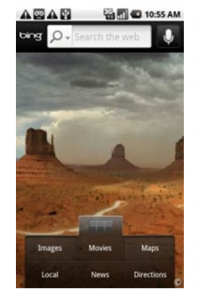
  3. A user isn’t forced into any Google service on Android. For instance, I use Firefox on my Android device over the included browser. Bing is there too. And so is Amazon’s app market. Verizon has its navigation app and so does Google.
  4. You could argue that Android wouldn’t have been a runaway train if Microsoft would have had its Windows Phone 7 act together sooner. Android also would have been thwarted if RIM would have moved at a faster pace.

Add it up and the FTC doesn’t have a ton to work with on Android. The legal types could argue that Google favors its own services, but network carriers can tweak Android as they see fit. Verizon has no problem plopping Microsoft’s Bing on an Android device. AT&T also has its tweaks.

In the end, FTC can poke around Android to see if there’s any wrongdoing, but it will be a tough case to make from a purely antitrust perspective.

Update: There have been a few folks that disagree with the argument above—actually more than a few. The best argument against my points come from Scott Cleland at the Precursor Group. His argument is that the FTC isn’t just about antitrust. The FTC can investigate and put restrictions on companies based on deceptive practices. Cleland said that if the Department of Justice were investigating Google then my argument would hold up better.

Cleland on Forbes last month argued that Google has been deceptive about its business practices. His report on the subject goes into more detail, but the crux of the argument is that Google doesn’t disclose its conflicts of interest and then uses search to enter new markets. Whether you buy Cleland’s argument is your call, but his report is worth a read.

The money slide:

Related:

FTC adds Android to Google antitrust probe

Kick off your day with ZDNet's daily e-mail newsletter. It's the freshest tech news and opinion, served hot. Get it.

Topics

Larry Dignan is Editor in Chief of ZDNet and SmartPlanet as well as Editorial Director of ZDNet's sister site TechRepublic.

Disclosure

Larry Dignan

Larry Dignan has nothing to disclose. He doesn’t hold investments in the technology companies he covers.

Biography

Larry Dignan

Larry Dignan is Editor in Chief of ZDNet and SmartPlanet as well as Editorial Director of ZDNet's sister site TechRepublic. He was most recently Executive Editor of News and Blogs at ZDNet. Prior to that he was executive news editor at eWeek and news editor at Baseline. He also served as the East Coast news editor and finance editor at CNET News.com. Larry has covered the technology and financial services industry since 1995, publishing articles in WallStreetWeek.com, Inter@ctive Week, The New York Times, and Financial Planning magazine. He's a graduate of the Columbia School of Journalism and the University of Delaware.

For daily updates, follow Larry on Twitter.

67
Comments

Join the conversation!

Just In

RE: Why the FTC is likely to hit a dead end probing Google's Android
bitcrazed 13th Aug
@AdnanPirota ... ooooooh. Look out for those axes - they can be sharp wink

I'd like to consider the author's reasoning for a moment, revised historically:

When Microsoft launched IE it filled a competitive vacuum in the browser industry and served as a counterweight to Netscape Navigator.
The browser industry is highly competitive even among vendors on team IE. Dell, HP and Gateway 2000 are killing each other.
A user isn?t forced into any Microsoft's service on Windows. For instance, I use Firefox on my Windows device over the included browser. Bing is there too. And so is Amazon?s app market. Verizon has its navigation app and so does Google.
You could argue that Navigator wouldn?t have been a runaway train if Microsoft would have had its IE act together sooner. Navigator also would have been thwarted if Opera would have moved at a faster pace.


Pretty much the same logic was used when discussing IE vs. Navigator and we all know how that logic was dismissed.

It'll be interesting to see if the FTC has the balls to measure Google by the same yardstick that the US Gov't and EU used to measure Microsoft.
Axes of Evil will fail, and freedom will eventually come ...
@AdnanPirota

Thanks George.
@AdnanPirota

So you mean Apple finally be brought down for their anti-competitive practices?! =P
@AdnanPirota

Oh God no...not the Axes of Evil! http://goo.gl/JKAzJ
@gork platter

rofl!
@AdnanPirota
Great, it's about time Apple is taken down:)
@AdnanPirota ... ooooooh. Look out for those axes - they can be sharp wink

I'd like to consider the author's reasoning for a moment, revised historically:

When Microsoft launched IE it filled a competitive vacuum in the browser industry and served as a counterweight to Netscape Navigator.
The browser industry is highly competitive even among vendors on team IE. Dell, HP and Gateway 2000 are killing each other.
A user isn?t forced into any Microsoft's service on Windows. For instance, I use Firefox on my Windows device over the included browser. Bing is there too. And so is Amazon?s app market. Verizon has its navigation app and so does Google.
You could argue that Navigator wouldn?t have been a runaway train if Microsoft would have had its IE act together sooner. Navigator also would have been thwarted if Opera would have moved at a faster pace.


Pretty much the same logic was used when discussing IE vs. Navigator and we all know how that logic was dismissed.

It'll be interesting to see if the FTC has the balls to measure Google by the same yardstick that the US Gov't and EU used to measure Microsoft.
Until they come to the question:-

Did Google unfairly use it's influence with Android to prevent a competitor's services (Skyhook) from being used by OEM's?

That manoeuvre was as evil as anything Microsoft has done.
@bannedagain
Better question. Did MS unfairly use it's influence with money and a former employee to prevent a competitor's OS (Android) from being used by Nokia?

Also, did MS unfairly use it's influence with WP7 to prevent a competitor's service (google search) from being used by OEMs?

Actually this one is not worth asking because we already know the answer. Not only are OEMs forced to use Bing as default, they can't allow consumers to change it either.
@anono

Nah. Elop's from Microsoft. The better question is, was there a secret kickback between former employee and employer?
@anono
Hmm, that's funny... I can use many other search methods on my WP7 aside of Bing... Maybe you should try it before you think you're the professor.

Money is one thing that both companies were bringing to the table... Just because it came from MS doesn't mean anything. Elop may have had some influence but then again the company as a whole could choose as well. Symbian has the highest amount of Mobile Malware and Google is right on their heels. So far I haven't heard about any WP7 malware... Then again MS should know security better then the competition since it has had to deal with such on this desktop OS.

If MS is willing to flip the bill for their products to be used Google could do the same but they don't... Why? Because they want the free handout... about 97% of their profits made are by advertising and collecting personal information from sheep such as yourself. Seems Google can take take take but never give. Linux is free and was handed out before Google. Search was free before Google and now you sacrifice your identity for search?

Try using startpage dot com. Google results without compromising your privacy.

GFool just as all the iFools... Funny how Microsoft is the only company without some stupid crap like MMail or MChat or some other crap like that.

I feel companies like Apple and Microsoft are in the right because they've worked hard to make the OS and GUI and so on... Google has done nothing relevant nor innovated anything aside of a search algorithm. I knew the moment that Google bought ad.doubleclick.net that things were not right with Google. A company listed as spyware and malware... Google picks them up? From that day forward I no longer used Google services aside of gmail for all those sign up crap for spam avoidance.

From Wikipeida...

DoubleClick is often linked with the controversy over spyware because browser HTTP cookies are set to track users as they travel from website to website and record which commercial advertisements they view and select while browsing. DoubleClick is considered to be malware by several commercial organizations (Adaware, Symantec, Spybot) which detect it and provide the tools to block/remove it.

DoubleClick has also been criticized for misleading users by offering an opt-out option that is insufficiently effective. According to a San Francisco IT consulting group, although the opt-out option affects cookies, DoubleClick does not allow users to opt out of IP address-based tracking.
kthnxbai
@audidablo -- wrong.
have you used windows messenger from XP?

No windows phone malware? What sane hacker is gonna attack less tahn 10% of the market share? Just like linux.
Nobodys is gonna attack it because it JUST ISN'T WORTH IT.
@anono MS pays Nokia US$1Bn to go with WP7. Does Google pay OEMs to use Android? I don't know the answer to that. If there is payment, MS and Google are in the same boat. If not, then not.

Also, I strongly suspect that Google's mobile OS department was in the black -- based on ad revenue generated by handsets -- within a short time from launch. WP7 is not profitable, and it doesn't look like it's going to recoup investment for a long time.
@bannedagain
Don't forget about price fixing, which keeps the competition out of fray. Google price fixed android to keep competing operating systems and services at bay. That would take major role in the investigation and I don't know how a senior editor like Larry missed it completely.
@Rama.NET
How do you price fix something that is free? If manufacturers prefer to use Android due to it's zero cost and take a bigger profit, well good for them, and their shareholders.
@bannedagain what about MS and thier messenger, or apple and its safari? or MS and IE, or maybe even ubuntu and FF.
Are we all gonna die for providing defaults?
@rockachu2

Apple has never forced another manufacturer to accept their defaults.

Quite simply there are none, that is not their business model.

You were doing quite well until you bought in Apple.
Apart from Skyhook (which is obvious) you could also argue that Google use the riches from its web-monopoly to buy dmoniation in other areas like mobile. The "scorched earth" strategy to remove any oxygen for competitors - cleverly introduced by Microsoft.
0 Votes
+ -
Brush up on your antitrust law
farbuckle@... 11th Aug
Larry, antitrust law is almost exclusively about acts committed by dominant companies that disadvantage others for no other reason than to harm competition. The fact that Firefox is available on Android doesn't tell you nearly enough about GOOG's behavior to pass judgment. Likewise, competition among GOOG licensees is very possibly good -- not bad -- for GOOG: Remember how OEMs were at each others? throats during the late 1990s, all to curry favor with MSFT? That didn't change the antitrust analysis one whit -- in fact, it made it much worse for Microsoft. Microsoft, Judge Jackson found, deliberately ?commoditized? the market for PCs in order to keep margins razor thin and bargaining power equally weak among the computer makers.

And no, neither carriers nor manufacturers can tweak Android "as they see fit." Running Bing on Android here and there is not the same as open and competitive, any more than the presence of Netscape on Windows proved MSFT was playing fair with the market. (That was another key finding in US v MSFT, by the way.)

No, the fact is we don't know all that Google is doing behind the scenes. We don't know what the evidence is, because what goes on in closed meetings is just that -- closed. For all we know, companies that are visiting with FTC have bushels of evidence not visible to outsiders ? again, just as it was with Microsoft.

Nope, you're out of your depth here. Get with a real policy guy and start studying what the law actually says. Or maybe go back and read what the New York Times, Wall Street Journal, ZDnet and Cnet wrote back in the day. It might refresh your memory...
@farbuckle@...

well said
@farbuckle@...
"antitrust law is almost exclusively about acts committed by dominant companies that disadvantage others for no other reason than to harm competition." - So why is it that we haven't seen Apple's head on the chopping block yet???
0 Votes
+ -
@NetAdmin1178
Apple doesn't appear to be on the DOJ's (or FTC's) radar screens because despite being highly successful with certain aspects of its business (iPhone, iPad), it doesn't hold much of a commanding lead in any market other than tablets ... and even there, there is lots of competition, from Motorola, Samsung, Amazon, etc.

But Macs are only about 6% of the market. iPhone is about 28%. iTunes sells more music than any other market, but there's plenty of competition -- namely Amazon, Walmart, etc. Apps, too, has plenty of competition (for other devices). Again, iPad is the only market where Apple is more dominant at the moment, but as the Fandroid gang keeps pointing out, the next Android tablet is going to be the iPad killer. Either way, the tablet market -- and particularly Apple's success in it -- is way to brief so far to interest the DOJ. After all, when a "new" market starts to catch on, it's inevitable that one of the early players will hold a commanding lead for a while, until competitors enter with their own well-designed responses.

Apple might find itself in the spotlight, though, if it litigates competitors out of the tablet market. It all depends on what they do and how they do it. Of course, if the courts rule that others infringed on Apple's patents/trademarks/copyrights, then that's not Apple's fault if court's say the infringing devices need to be re-designed/re-developed so that they don't infringe ... and in the meantime can't be sold. (That is the point of patents: to prevent others from using a patented technology or design, so it's government-sanctioned anti-competitive behavior.)
0 Votes
+ -
http://www.pcworld.com/article/237799/walmart_to_exit_mp3_business_on_august_29.html

So Amazon is the only music store left other than iTunes. And Apple is crushing Amazon. There is not plenty of competition in the music market.

Sorry. There is Zune and all the other tiny sites with less than 1% of the market. That isn't competition.
@farbuckle@... It's time to put on the tin foil hat again.
@farbuckle@... "And no, neither carriers nor manufacturers can tweak Android "as they see fit." "

I'd like to add that the SkyHook case showed that Google was in fact PROHIBITING manufacturers from using SkyHook services -- if they did they wouldn't have access to the Google App Store.

One question to ask about Android is if it were spun into a new business would there be a business case for it at all? I don't think there would be. There is no revenue to be made with Android, but it competes in a market where there are other companies who do do so.
0 Votes
+ -
The realities you cited
facebook@... 11th Aug
Many of the realities you cited as counter-arguments are, in fact, evidence of Google abusing its monopoly power.

"The smartphone industry is highly competitive even among vendors on team Android. HTC, Motorola and Samsung are killing each other."

That is akin to saying the operating system market of the 1990s was highly competitive with Packard Bell, Gateway, and Dell killing each other. The monopolistic Android market does not equate to the broader device market.


"A user isn?t forced into any Google service on Android."

Again, comparing that to Microsoft in the 1990s: You could just as easily have chosen Netscape. However, Google is exerting its monopoly power and making that choice difficult for the average user to make.

"You could argue that Android wouldn?t have been a runaway train if Microsoft would have had its Windows Phone 7 act together sooner."

non-sequitur. Android's monopoly is the question here.
@facebook@...

true
@facebook@...
"akin to saying the operating system market of the 1990s was highly competitive" - news for ya, it still is... so does that mean Microsoft is still guilty of monopoly abuse?

"comparing that to Microsoft in the 1990s: You could just as easily have chosen Netscape" - sorry, but you're comparing Apples to oranges here. In the 1990s, the point of the antitrust case was that IE was bundled with the and could not be substitued (to be honest they still do this, so I don't know how they aren't still guilty of it, but...). In contrast, when OEMs put Android onto their smartphones, there is absolutely nothing stopping them from being able to change the accompanying browser, search, etc to a different vendor's before selling their product. Consumers are not forced to use Google services on their devices as the OEMs have the power to change it as desired.
@NetAdmin1178

"so does that mean Microsoft is still guilty of monopoly abuse?"

Not according to the FTC. The consent decree has expired for Microsoft.


"there is absolutely nothing stopping them from being able to change the accompanying browser, search, etc to a different vendor's before selling their product."

You may not be familiar with skyhook. In fact, there is quite a bit stopping vendors from making changes. See http://thisismynext.com/2011/05/12/google-android-skyhook-lawsuit-motorola-samsung/ for an overview of the demands Google places on manufacturers, exerting it s monopoly power.
0 Votes
+ -
ie vs netscape
normcf 11th Aug
@NetAdmin1178, and further, microsoft added proprietary features to ie, and convinced web developers to use them, thus further diminishing netscape's competitiveness. It's possible android could have something built into it to decrease bing's competitiveness, but since android is open source, I suspect that would have been long since found.
@facebook@... You have only suggested that Android is dominant, but provided no evidence that it reached this dominant position via anti-competitive means.

You're comparing apples to oranges here.
@facebook@...
"Android's monopoly is the question here."

I agree and since Android doesn't have a monopoly, your entire argument fails.
Here is why all your 4 points are invalid
. Here?s why:

1.When Google launched Android it filled a competitive vacuum in the smartphone industry and served as a counterweight to Apple?s iOS.

==> This is not an excuse to do anti-competitive behaviour

2.The smartphone industry is highly competitive even among vendors on team Android. HTC, Motorola and Samsung are killing each other.

==> So What??? Just because the competition in school or universites is cut throat, should students resort to un-ethical ways to get a high grade ?
3.A user isn?t forced into any Google service on Android. For instance, I use Firefox on my Android device over the included browser. Bing is there too. And so is Amazon?s app market. Verizon has its navigation app and so does Google.

==> So was microsoft, A PC is a very customizabe thing, yet in Europe, they have to do a browser ballot and remove media player.
4.You could argue that Android wouldn?t have been a runaway train if Microsoft would have had its Windows Phone 7 act together sooner. Android also would have been thwarted if RIM would have moved at a faster pace.
==> Again market conditions are no excuse to do evil things.


This is indeed an "ah-ha!? moment for regulators. Google should be taught a proper lesson. Evil thugs, stealing others IP and distributing it for free to make money by selling services bundled with it
@owlnet
"A user isnt forced into any Google service on Android. For instance, I use Firefox on my Android device over the included browser. Bing is there too. And so is Amazons app market. Verizon has its navigation app and so does Google.

==> So was microsoft, A PC is a very customizabe thing, yet in Europe, they have to do a browser ballot and remove media player." - The difference here is that these things can be changed before they reach the consumer. In fact, the entire Google services package can be completely removed from an Android powered device and substituted with rival services by the OEM. When was the last time you saw a Windows PC come without IE... oh yeah, they still can't; it's integrated (intentionally).
@NetAdmin1178
Google is applying strong-arm tactics to OEMS and Carriers. They are keeping the latest version of android as 'closed source', where are the ethics they bragged about? Shame !!!

IE can be uninstalled in Windows 7.
@NetAdmin1178

Windows has an "N" version that has no browser or media player per their deal with the EU, so sorry, your argument fails there.
@NetAdmin1178 That's right, IE cannot be 'Uninstalled' from any version of Windows. Your only option on Win 7 is to 'Turn IE off', which is a far cry from uninstalling. IE is still there, just hiding and being used, like a virus.
@NetAdmin1178

Google forces OEM's to take ALL their services or NONE.

Motorola (and Samsung) found out that if they used a Google competitors location based services (Skyhook) they couldn't use any Google services including the Market.
what about apple here? they dont allow alternate app stores, music apps etc. isn't that more similar to the windows model in that consumers literally have no choice. at least with android consumer can pick and choose every aspect of it. there are also cases of carriers bundling bing with android so wtf?

And lastly, how is this all that bad for consumers? by having higher integration of google services we get easier and better access to many of the apps we know and love.

Whilst the skyhook stuff does sound a bit suspicious, i dont understand how making a free operating system that fills a clear void is that big a crime, mean they only have 40% market share. it's not like it's the 90% the windows have!
@gustavf
I agree - if anyone where to be in the spotlight of an anti-competitive investigation, it should be Apple (and, yeah, I think they should be!). If it isn't obvious to anyone that their actions have been entirely an attempt to stiffle competition, then they need to open their eyes. I think the only reason they haven't been investigated yet, is that they have more money to throw at politicians and SIGs.
0 Votes
+ -
@NetAdmin1178
Apple does not license its OS to anyone and therefore does not compete with Google in that market.

If Google were to stop licensing its OS to others and only release Google hardware, they would be perfectly within their rights to have 100% control over the entire product just like Apple does.

Interestingly enough, if Google were to do that, Microsoft would become a monopoly in the mobile OS licensing market even while losing a ton of money and with a 5% marketshare in what is actually sold to the end user. As such, they would be under the watchful eye of every anti-trust organization out there. Crazy.
@toddybottom Which is exactly why I think this angle of attacking Google is not going to lead anywhere. It just looks silly to attack a company for licensing it OS freely to anyone that can stick a phone together, it sound silly to most consumer and most non lawyers and hopefully the judge.
0 Votes
+ -
It's quite simple ...
jscott69 11th Aug
@gustavf ... Apple doesn't have a monopoly in any of its markets. The only one they come close in is tablets at the moment, but that market is too new for the DOJ/FTC to investigate.

Remember, the first entrant into a "new" market is -- by definition -- the monopolistic leader in that market. And patents, trademarks, and copyrights give those early companies protection to have that lead for a while.

Apple did NOT create the tablet market (though they do have tablet designs going back to the early 1980s ... see link below). But the market really didn't have any big winners until Apple came along with the iPad. But as Apple's competitors do eventually figure out how to produce an "iPad killer" (and I'm certain they will, at some point), Apple won't have a monopoly ... if you could even say they do now, since there are other options out there like the Zoom, Galaxy Tab, etc.

Apple does bundle Safari and Mail and other apps, which probably isn't unlike IE and Outlook Express being on Windows, but again, if you aren't a monopolist you can't be doing monopolistic activities, so it's a mute point.
@gustavf

What's this then?

http://www.amazon.com/gp/feature.html?ie=UTF8&docId=1000579091

An alternative bookstore for iOS devices.

There are others as well, including NSFW ones.
@castanor
If Google is strong-arming OEMs into disallowing other services to used, I can see this as being a legitimate reason for the investigation - though it being the only legitimate one I could think of. It still does not completely make sense though as Android is freely available - being released as source code, there are many avenues available for Motorola to aquire the Android software outside of Google directly (see the many independant ROMs available).

Join the conversation!

Formatting +
BB Codes - Note: HTML is not supported in forums
  • [b] Bold [/b]
  • [i] Italic [/i]
  • [u] Underline [/u]
  • [s] Strikethrough [/s]
  • [q] "Quote" [/q]
  • [ol][*] 1. Ordered List [/ol]
  • [ul][*] · Unordered List [/ul]
  • [pre] Preformat [/pre]
  • [quote] "Blockquote" [/quote]
ie8 fix

The best of ZDNet, delivered

ZDNet Newsletters

Get the best of ZDNet delivered straight to your inbox

Facebook Activity

White Papers, Webcasts, & Resources
ie8 fix