Discover Case Study: How Cardinal Health uses SaaS tools to improve ALM, quality, development productivity
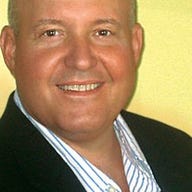
Transcript of a BriefingsDirect podcast on the experience of Cardinal Health in using software-as-a-service tools from HP to develop and test applications.
Listen to the podcast. Find it on iTunes/iPod and Podcast.com. Download the transcript. Sponsor: HP.
Dana Gardner: Hello, and welcome to a special BriefingsDirect podcast series coming to you from the HP Discover 2011 conference in Las Vegas. We're here on the Discover show floor the week of June 6 to explore some  major enterprise IT solution trends and innovations making news across HP’s ecosystem of customers, partners, and developers.
I'm Dana Gardner, Principal Analyst at Interarbor Solutions, and I'll be your host throughout this series of HP-sponsored Discover live discussions.
We're now going to look at how software as a service (SaaS) is impacting the application lifecycle through the experience of Cardinal Health. I'm here with Don Jackson, a Senior Engineer in the Testing Center of Excellence within the Performance Engineering Group at Cardinal Health, in Dublin, Ohio. Welcome to the show, Don. [Disclosure: HP is a sponsor of BriefingsDirect podcasts.]
Don Jackson: Thanks for having me.
Gardner: Tell me, from a high-level perspective, why SaaS is appealing to you. Just on general terms, why SaaS, even for applications or in development-testing? What makes it appealing to you?
Jackson: SaaS is a service offering, not just for testing and for development, but as a simple service offering, that allows us to focus on our primary core competencies and on what our clients and customers need, rather than focusing on trying to learn how to handle this particular application that we may have purchased from a vendor like HP. So, we can really focus on those core competencies. [View the slides from Don's HP Discover presentation on Fundamentals of Testing.]
Gardner: And you haven't had any complaints about things like security, performance, or latency. It all it seems work for you?
Jackson: There are some trade-offs, obviously, that you're going to have from a security standpoint, and the HP guys can tell you about this as well. They can go through all the  details, but we did go through their security documentation to make sure that it was adequate for what we needed.
If there are compliance issues that you have to take into account, they’ll work with you. It's a very secure environment. So, we were pleasantly surprised when we started looking at that.
Gardner: Before we dig more deeply into how you're doing SaaS and how you've gone involved with it, tell me a bit about Cardinal Health, what kind of organization you are, and maybe even some details about your IT organization. Industry leader
Jackson: At Cardinal Health, our slogan is "Essential to Healthcare." We want to be a  healthcare industry leader providing a diverse, inclusive work environment that reflects the marketplace and communities where we do business, while maximizing our competitive advantage through innovation, profit, and adaptability.
Some facts about Cardinal Health: we’ve got 32,000-plus employees. We are number 17 on the Fortune 500 list. So, we're a very large company. The latest estimate that I saw on our public website cardinalhealth.com was that we'll do about $100 billion in revenue this fiscal year. Our fiscal year ends in June, so we're pretty confident at this point that we're going to hit that number. We deliver to 60,000 different healthcare sites each day.
Think about the healthcare industry. If you go into a hospital say, all the different products that you might consume or use or may be used upon you, whether you're having a procedure done or whatever, that could have been manufactured, developed, or just distributed with some of our suppliers through Cardinal Health.
For example, half of all surgeries in the United States last year, used at least one product of ours. We deliver more than 25 percent of all medications prescribed in the US each day. That’s just to give you a rough example.
Gardner: I certainly can appreciate that the need for scale is there. Tell me about the IT support now and your role in making sure these applications are performing and are safe and reliable. What kind of scale are you dealing with?
Half of all surgeries in the United States last year used at least one product of ours. We deliver more than 25 percent of all medications prescribed in the US each day.
Jackson: We work very tightly with our business analyst community. Our group specifically doesn’t actually interface directly with our customers, but we interface very closely with our business analysts to generate requirements both from the functional and non-functional.
Our group specifically, focuses on non-functional in the performance engineer realm to establish good service level agreements (SLAs) beforehand. On the HP website, there is a webinar that I did for them a year ago, where we talk about back to basics for performance engineering and focusing on planning.
If you don't plan right, your chances of success are very minimal even in a performance realm, and you end up not meeting what the customer or your client needs. Whereas, when you work with them and develop a good non-functional requirements you have the opportunity to deliver really what they need and want instead of what they think they want.
Gardner: Tell me a little bit about first, your experience with HP products, and then second, your experience in moving into SaaS delivery?
Y2K testing Jackson: I was a former Mercury customer way back in the day. I started in 1997 working on the HP products -- Mercury products back then. I worked on WinRunner 2000, when we're all doing Y2K testing which was an absolute joy -- if you'll pardon the sarcasm -- as you all remember Y2K was for IT folks. It was a lot of work.
It's funny how the general public thinks it was just a big sham because nothing happened. Well, that's because of a lot of IT professionals spent a lot of man-years effort to make it so that that happened.
I've used the functional testing products, functional automation. When I moved into Cardinal, there was a recognized gap. Our network engineers did our performance testing, and network engineering's focus wasn't what we thought it needed to be. So, we took that over and started doing that. With that also came a relationship that we already had with HP's SaaS organization, back when it was called ActiveWatch.
I don't know if you remember that, but ActiveWatch was what today is business process monitoring through a hosted service. I took that over back in late 2002 or early 2003. And initially my reaction was probably what a lot of people listening to this reaction would be when they think about SaaS. What can I do and how quickly can I bring it in-house? That was my initial reaction, and I had a very wise manager at the time. He said, "Just give it six months before you do it." He told me to get myself familiar with it and go from there.
So, I spent six months and I just kind let it be how it was and I got to work with our technical account manager at the time. It became a situation where not only did I feel that it was valuable to keep it that way, but I started realizing that I was able to focus on our core competencies.
Do I have FDA validation concerns? Do I have to put this into a validated environment? Do I have HIPAA compliance concerns? Do I have SaaS compliance concerns?
We went from just having BSM through SaaS. I'm trying to use the current HP acronyms, because they like to change names on us. At the time, it was just BSM that we had through SaaS. Now, we've Quality Center through SaaS, BSM through SaaS, and Performance Center through SaaS.
I spoke here at the conference about how leveraging SaaS, not only can we focus on our core competencies, but time to market is a huge benefit. [View the slides from Don's HP Discover presentation on Fundamentals of Testing.]
When you look at a healthcare industry, you have to look at new applications when you stand them up. Do I have FDA validation concerns? Do I have to put this into a validated environment? Do I have HIPAA compliance concerns? Do I have SaaS compliance concerns? All that kind of stuff.
It's almost at a turnkey level when you work with SaaS, assuming that you've established a good relationship with your sales staff and your client account manager. We were able to stand up Performance Center, which is an enterprise application, in one week. From the time we signed the deal until the time we were live, executing performance tests, was one week, and I think that's very powerful.
Gardner: And of course, upgrades, patches, these things also happen rapidly and without too much thought on your part?
Jackson: Absolutely. I'm sure no one has ever experienced any problems with any upgrades at all because it's such a seamless and easy way to do it. Another layer of testing The SaaS organization takes another layer of testing that they do before they even recommend to us that we should start looking at it and potentially upgrade. The SaaS guys work with us very closely, for example, with ALM 11. It's a radical shift from the Performance Center, Quality Center days. It really is, and we're still not on ALM 11. We've chosen that because we want to make sure that it's ready and do our due diligence to make sure that it's ready.
The SaaS organization is doing a lot of testing on it right now to make sure that in a multi-tenant environment it will perform and function the way that we need it to. Once they feel it's ready then they are going to provide a testing environment for us, so that we can do our own testing in-house to make sure it's ready.
All of that stuff, all of that set up, all that conversion is done by them. I don't have to worry about it. I'll have to go through the plan. From my perspective, once they feel it's ready, then we do some testing, and I can scale back the level of testing that I have to do, because a lot of that's already been covered by them, and off we go.
A great example – we upgraded point releases of BSM, when we went from 7.5 to 7.51 to 7.52 and 7.55. I got a notification from them that they were putting in this point release and I wasn't going to have any downtime. I came in Monday morning, and instead of 7.51, it now said 7.55.
That's really powerful, and that goes back to my core competencies. I don't have to focus or be concerned about that. I can let the guys who are specialists and really know in-depth the HP tools, which would be HP, focus on that, and I can focus on what my customers' or clients' need.
SaaS is a type of cloud. It's now new. We're just calling it "cloud."
Gardner: This is probably a question for an enterprise architect, but I'll ask you, given your depth of experience and your trust and results from SaaS. We're hearing a lot about cloud and we're hearing a lot about moving toward dev-ops. Do you think that what work you've done, the experience you've established, would lead to an easier path for you to do more SaaS and perhaps even start using private or hybrid clouds for operations and deployment?
Jackson: It's definitely something that our CIO has been talking about. Let's be honest, SaaS is a type of cloud. It really is a type of cloud. It's now new. We're just calling it "cloud." It's another one of those marketing terms. But, cloud is a huge thing.
Vendors, come in and talk about different capabilities, not just HP but other vendors obviously. We're a big company and we deal with a lot of vendors. We typically will ask them, can this be implemented through SaaS or through a cloud model?
Once again, for the same reasons, you're the expert in your tool. You know your tool. If we think it can bring value to us, let's work on that value realization instead of us trying to become an expert in your tool.
Gardner: Well great. We've been hearing about Cardinal Health and their vision and use of SaaS in the application requirements and development, deployment and test phases, and it sounds like perhaps this is a harbinger of more SaaS and cloud activities for them.
I want to thank our guest, we've been joined by Don Jackson. He is Senior Engineer in the Testing Center for Excellence in the Performance Engineering Group at Cardinal Health. Thanks so much, Don.
Jackson: Thank you again, it was a pleasure. [View the slides from Don's HP Discover presentation on Fundamentals of Testing.]
Gardner: And, I also want to thank our audience for joining this special BriefingsDirect podcast coming to you from the HP Discover 2011 Conference in Las Vegas. I'm Dana Gardner, Principal Analyst at Interarbor Solutions, your host for this series of User Experience Discussions. Thanks again for listening, and come back next time.
Listen to the podcast. Find it on iTunes/iPod and Podcast.com. Download the transcript. Sponsor: HP.
Transcript of a BriefingsDirect podcast on the experience of Cardinal Health in using software-as-a-service tools from HP to develop and test applications. Copyright Interarbor Solutions, LLC, 2005-2011. All rights reserved. You may also be interested in:
- HP's Kevin Bury on how cloud and SaaS help pave the way to increased IT efficiency in 2011, and beyond
- Discover Case Study: Seagate Ramps Up Dev-Ops Benefits with HP Application Lifecycle Management Tools
- HP Discover Interview: Security Evangelist Rafal Los on Balancing Risk and Reward Amid Consumerization of IT
- HP takes plunge on dual cloud bursting: public and-or private apps support comes of age
- HP at Discover releases converged infrastructure products and services aimed at helping IT migrate rapidly to the future
- HP's IT Performance Suite empowers IT leaders with unified view into total operations, costs