Are Windows 8 tablets already irrelevant?

Summary: Why do people what Windows on a tablet unless it's to be able to run existing Windows applications and connect existing hardware to their tablet?
Microsoft is putting a devoting a significant amount of time, effort and money into making Windows 8 'touch-enabled' ready for loading onto tablets. But are Windows 8 tablets already irrelevant.
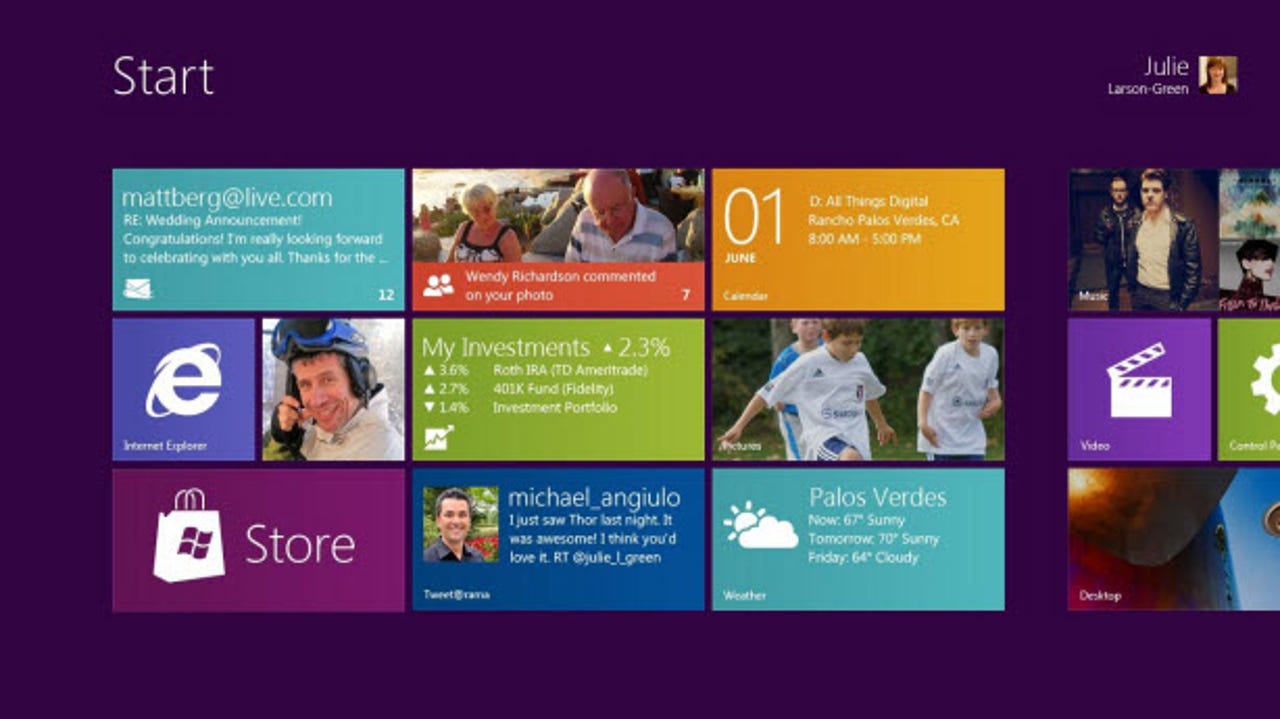
Here's the problem. Microsoft is putting an awful lot of time, effort and money into making Windows 8 a touch-enabled operating system that will work on both desktop and tablet, x86 and ARM hardware. But in order to put Windows on a tablet, Microsoft is having to turn its back on the x86 architecture and instead look to more power-efficient ARM hardware. That makes sense because when it comes to mobile devices consumers (home and enterprise) are now more concerned with battery life than they are with megabytes and gigahertz.
But that leads Microsoft onto a problem. ARM can't run x86 code natively. You'd need an emulator to pull that trick off, and Microsoft has made it clear that it will not be putting an x86 emulator into Windows 8 for ARM. So if Windows 8 tablets are going to be powered by ARM hardware, and if ARM hardware won't be able to run x86 code, then what's the point of Windows 8 on tablets?
Now that statement might seem flippant, but ask yourself the following question. Why do people what Windows on a tablet unless it's to be able to run existing Windows applications and connect their existing hardware to their tablet? But, Windows-powered tablets have been around for over a decade now, and yet they've not taken off because Windows and Windows applications are poorly suited to being driven by fingers.
And there's the catch-22. Microsoft is betting the farm on there being a demand for Windows on tablets despite there having been no serious demand in the past. And to make matters worse, Windows on ARM-powered hardware won't actually be the sort of Windows that people are used.
There's even confusion over whether the ARM version of Windows 8 will even ship with the classic Windows desktop or not. The presence of a classic desktop at least allows for the option that applications (in particular 64-bit software) could be ported to ARM. But then as I've already said, traditional Windows applications aren't really well-suited for touch systems, so maybe it doesn't matter.
Ars Technica's Peter Bright suggests that there's a case for Microsoft to both support and not support the legacy Windows desktop. Personally, I don't think it matters. Bottom line, Windows 8 on a tablet will be only offer a Metro version of Windows, which, for anyone using Windows right now, this it NOT the Windows experience that people will expect from their tablet.
It's not just software. It's hardware too. ARM-powered Windows tablets might have USB ports just like a desktop PC, but good luck hooking up a printer or camera or other such hardware. Unless you have specific ARM drivers, you'll be out of luck. Again, it might be be called Windows, but it won't act like the Windows that users are currently using.
In other words, Windows 8 are irrelevant before they're even released.
Given these drawbacks, what does a Windows tablet offer that, say, the iPad or an Android tablet doesn't? If anything, the iPad and Android platforms have a far more mature app ecosystem to support them.
It's quite possible that Microsoft is putting too much effort into the touch UI (user interface). Apart from the iPad, there's no indication whatsoever that there's any significant demand for tablets. Microsoft is taking a huge risk by tinkering with its desktop OS in such a fundamental way when it could put a modified Windows Phone OS onto tablets and offer a similar experience while leaving Windows a purely desktop OS.
At the very least Microsoft needs to start managing user expectation of what Windows 8 tablets will and will not be capable of. At present, the information vacuum is being filled by speculation and wishful thinking, neither of which will be helpful once tablets start hitting shelves.
Related:
- Windows 8 Metro UI and how previous attempts to revamp the desktop failed
- Windows 8 will be 'largely irrelevant' to traditional PC users: IDC
- Is Microsoft putting too much emphasis on touch in Windows 8?
- Windows 8 design flaws Microsoft MUST address
- Ars Technica: Why Microsoft should, and shouldn't, support legacy Windows desktop on ARM
Kick off your day with ZDNet's daily email newsletter. It's the freshest tech news and opinion, served hot. Get it.
Talkback
RE: Are Windows 8 tablets already irrelevant?
If the windows 8 tablet works well with all existing windows software and if it integrates well with people's laptops/desktops and Xboxes ... I think it could be a big hit. You don't know and neither do I.
RE: Are Windows 8 tablets already irrelevant?
Existing Windows software won't run on an ARM based tablet, period, end of discussion. What you may see is an Intel based tablet capable of what you desire. My guess is that the Wintel team is cheering for this one.
Now, let's talk price, battery life, and that integration thing you are talking about.
RE: Are Windows 8 tablets already irrelevant?
And who's to say that it won't be written to work on an ARM based tablet? Again, what we're talking about is a good ways off right now. You've called the race before you even know what the horse looks like.
RE: Are Windows 8 tablets already irrelevant?
Yes, it will require a rewrite. And, no, I don't expect to have a fully functional version of 3D modelling software on a tablet. Office? Probably. Adobe already has light versions of its photoshop software for existing tablets so why not a Windows 8 on ARM? Personal financial management software? Sure.
Not all software makes sense on a tablet form factor but quite a bit of it does. That said, ARM isn't necessarily going to be limited to the tablet form factor either.
Either way, as I keep saying ... declaring it dead before anyone has a chance to see how it will shape up is pure arrogance.
RE: Are Windows 8 tablets already irrelevant?
UI is the only reason products sell or don't sell?
OS X is stuggling to maintain 5-10% marketshare so it isn't a tremendous success as far as user adoption is concerned. Therefore OS X has a bad UI. At least if we used your logic.
RE: Are Windows 8 tablets already irrelevant?
Ummm Wp7 is a big success...I mean at least it's starting to be...You can read wherever you want that its usage is growing fast..
RE: Are Windows 8 tablets already irrelevant?
Really? It's been out for little over a year and they're at the 1.5% market-range. Hardly an iPhone killer. lol...
But keep putting on that brave face. Redmond needs it.
RE: Are Windows 8 tablets already irrelevant?
Microsoft has already stated publicly that Windows 8 on ARM tablets will NOT run existing Windows software, other than the latest .Net-based stuff.
BUT - it is highly likely Win8 tablets will integrate well with desktops/laptops running Windows. That could end up being the biggest selling point considering iOS integration with Windows is the worst hack job in the software world. Apple is basically shooting itself in the foot again with the whole "iTunes for syncing everything" concept. Even iCloud support in Windows is a horribly-limited kludge. By limiting integration with Windows, Apple is implying they really only want to sell iOS devices to 9% of existing computer owners (Macs.) It is the poor integration of iOS with Windows which gives Windows 8 tablets the biggest potential to eat Apple's lunch.
If Microsoft nails desktop integration, and hardware companies don't screw up the devices too badly, we could see a huge shift in the tablet market. The big unknowns are price, battery life, size, and weight. Getting those four wrong could turn Win8 tablet into another fiasco like Vista or Bob.
RE: Are Windows 8 tablets already irrelevant?
Not perfect by any means but it's amazing how hunders fo millions use iTunes on Windows just fine.
Have you heard of wireless syncing for iOS devices, it been out for months now.
Amazing...
Amazing. Utterly amazing. So let me get this straight. A company who had absolutely no real success getting into the smartphone market and who will be releasing a totally new tablet OS with no existing user base and with which nobody is familiar and which is without the ability to run anything in the vast catalog of legacy Windows apps is still somehow going to "eat Apple's lunch" because it WILL NOT integrate well with the iPhone...the world's most popular smartphone that nearly causes riots among those wanting new ones when they come out?
Please explain to me how that will happen.
RE: Are Windows 8 tablets already irrelevant?
It's fact that "windows on a tablet" has failed - for over 10 years. Each time, it's that old standby fallback excuse - "it hasn't sold because we didn't really intend it to be sold to customers, we intended it only to be used in industry for special case applications" - and yet a "intended for general public" is never actually released, confirming that as a line of BS.
Microsoft itself is partially responsible for the success of the iPad - it is everything that Windows isn't. It's anti-Windows, or an escape from the headaches of Windows. A device that just simply "does", rather than Windows, which mysteriously degrades over time, has popups, annoyances, and other mystery headaches that have your mom, dad, and sister all pounding their desk in frustration until they finally give up and call you (or whoever is "the computer guy" in the family). NO ONE WANTS THAT.
So the iPad looks like a breath of fresh air - it just works, no MCSE education required when it inevitably starts going wrong.
...on my Win7 machine at home, install so fresh I don't think I've so much as opened anything other than a web browser yet - and shutting down the PC, I'm already getting errors that "sidebar not responding - preventing shutdown". NO one wants that.
Compounding those issues that contribute to the "stigma of Windows", Microsoft never gets first releases right. Windows 95 was awful, Windows 98 was at least acceptable in that it was perceived as fixing much of what made Windows 98 awful. Windows ME was awful, Windows XP acceptable. Windows Vista was awful, Windows 7 at least stepped towards acceptable.
So...
The point.
With THIS effort, not only is MS adding ANOTHER layer on top of Windows, it's apparently entirely rewriting Windows to be ARM compatible. It's the most ambitious leap that MS has ever made - and why?
Really - why?
The REALITY is, in today's paradigm, people don't expect (therefore don't demand) "Windows on a tablet" - they expect a simple, mobile OS like iOS or Android. It's not speculation to say "there's no reason to think people wouldn't reject it as they always have" - it's speculation to think otherwise.
MS would be much wiser, given their way-behind starting point in the tablet arena, to understand the tablet paradigm, and follow suit with what the public is already accepting loudly with their wallets, rather than following the path of what the public has already rejected loudly with those same wallets for the past 10 years...
Trying to make it look more like the OS that's on your phones because that's kinda-sorta-like what made the iPad successful isn't the same thing as just using WP7 on your tablet. That would be the path of least resistance, would be logical in the same way Apple has a separate OS for their laptops and desktops, and meets today's paradigm. It's lighter weight, already works, and might actually ensure that MS invests time and resources in their WP7 platform, rather than being focused solely on bloating Windows 8 to attempt to be a "does everything, kinda" OS.
They already have a working OS that uses this interface and works on ARM devices, reliably, with it's own market, following the paradigm that is today's tablet - WP7.
Corrupting Windows so that it works less effectively/stably/familiarly on the desktop and laptop, so that you can also fail in the tablet space, is not a step towards success. It's a step towards the entire collapse of Microsoft.
Ballmer should be shot for not looking forward - or at least at "today's paradigm".
What's speculation is what YOU are saying.
RE: Are Windows 8 tablets already irrelevant?
Absolutely not!
RE: Are Windows 8 tablets already irrelevant?
Well Said. I find that one of the biggest drawbacks of tablets today is that they do not integrate well aside from being a personal device for a single user and stuck in it's own little world. To me a Windows Tablet will expand the horizon for those organizations that have to support a multi-user environment on large(r) networks. It is all about flexibility.
RE: Are Windows 8 tablets already irrelevant?