Who cares that the iPad 3 is thicker and heavier than the iPad 2?

Summary: Not only are the changes so small that we humans don't notice them, they're so small as to be mechanically irrelevant. We know this because most cases designed to fit the iPad 2 will comfortably fit the iPad 3.
The new iPad -- aka the iPad 3 -- is 0.03-inch (0.6 mm) thicker and 0.12 pounds (49 grams) heavier than the iPad 2. Apart from those small number of people who obsess over technical specifications, does anyone really care about these increases?
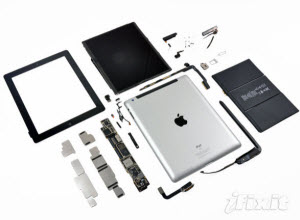
In an interview with CNET, Dr Raymond Soneira, founder, president and CEO of DisplayMate Technologies, claims that the display panel used in the iPad 3 is a "Plan B," and that it was Apple having to resort to old display technology that resulted in a thicker, heavier tablet.
"The plan was to use this new technology called IGZO from Sharp -- a lot higher electron mobility that allows them to make the transistors a lot smaller and the circuit elements a lot smaller," he said.
IGZO -- short for Indium Gallium Zinc Oxide -- technology would have meant smaller transistors in the panel, which would have reduced on the number of backlights needed to the screen. This, in turn, would have resulted in a thinner display and reduced battery consumption.
However, according to Soneira, Sharp didn't have the IGZO display technology ready in time for the iPad 3. This meant that Apple had to use more conventional amorphous silicon technology.
"There's no question that the iPad 3 is Plan B. They pushed amorphous silicon to a higher [pixels per inch density] than anybody else. But the light throughput is not good. So it has roughly twice as many LEDs, and they had to get a 70 percent larger battery," Soneira said, referring to the third-generation iPad.
But the question is, does it matter that Apple didn't use IGZO display technology? Or, to put that question the other way, does it matter that the iPad 3 is thicker and heavier than the iPad 2?
From a technical standpoint, I understand Soneira's argument, but from an end-product or user standpoint, I think that it's overblown for several reasons.
First, the size and weight gain of the iPad 3 compared to earlier models is negligible. If the back of the new iPad wasn't beveled differently to the iPad 2, there's no way that I could tell the difference between the two devices by feel alone. I tested this out on several other people the other day, and none of them could tell the difference between the two models based on weight and thickness alone. It seems that we're just not calibrated to pick up on changes that small, and I think that Apple knew this when it designed the iPad 3.
Not only are the changes so small that we humans don't notice them, they're so small as to be mechanically irrelevant. We know this because most cases designed to fit the iPad 2 will comfortably fit the iPad 3.
By using older amorphous silicon screen technology as opposed to IGZO, Apple had to fit more backlights into the iPad's screen, along with a battery that had 70 percent more capacity than the battery powering the iPad 2. But since it managed to do this with only negligible gains in size and weight, and managed to keep the battery life the same as for the iPad 2, what display technology the iPad 3 used is irrelevant as far as consumers are concerned.
Most people are looking at what's on the screen, not what went into the making of it.
Another point worth raising here relates to how companies develop products. Phrases like "Plan B" tend to give the impression that Apple made a last-minute switch from planning to use IGZO technology to instead using older amorphous silicon screen technology.
Product development doesn't work like that.
While there would have been advantages in Apple using IGZO technology, the decision as to whether the technology was ready -- in terms of reliability, yield, cost and so on -- would have been made months before the first iPad rolled off the production line. There would have been nothing last minute about the decision. Also, we have nothing but rumors to go on to suggest that Apple had ever planned to use IGZO for the iPad 3.
Bottom line, Apple made the best iPad possible given the size, weight and cost limitations.
If your reason for not wanting an iPad is the fact that it's 0.03-inch thicker and 0.12 pounds heavier, then you really need to find a hobby.
Image source: iFixit.
Related:
Best tablet for those who don't want an iPad
| Image Gallery: Best tablet for those who don't want an iPad | ![]() |
![]() |
||||
- iPhone touch panel shipments to fall 15-20 percent in Q2 2012
- Best earphones for your iPhone and iPad
- Jailbroken iPads can now multitask apps
- Top accessories for your iPhone and iPad
- 100 reasons to jailbreak an iPhone
- The iPad's missing feature: multitasking
- Oops! New iPad drop test
- New iPad accounts for 6 percent of iPad traffic
- Why Apple doesn't need to innovate much to stay ahead of the competition
- New iPad's most revolutionary feature is its battery
- Why Apple's iPad rebranding makes sense
Kick off your day with ZDNet's daily email newsletter. It's the freshest tech news and opinion, served hot. Get it.


Talkback
You see all those little things crawling on the floor?
[i]If your reason for not wanting an iPad is the fact that it???s 0.03-inch thicker and 0.12 pounds heavier, then you really need to find a hobby.[/i]
The irony is that the #1 single largest group on the Internet to shriek about the importance of tiny differences in thickness and weight are: Apple fanbois. [i]Don't buy this laptop or that phone because the MBA or iPhone is a tiny bit thinner and lighter.[/i]
Something tells me that those exact same people will be here agreeing with you that these small differences in size and weight suddenly don't matter. Then they'll flip flop when the next iPhone competitor comes out with very slightly different size and weight specifications.
Hold on, let me get my popcorn. *munch* *munch*
"#1 single largest group" after Samsung fans, which think that their phones
As to Soneria guy, he is completely wrong about calling current iPad 3 "Plan B". There is no way how Apple would make a technology (IGZO) that was never used for actual mass production as "Plan A". Also, it will only unfold in production capacities by the end of this year -- almost year after current displays for iPad 3 started to be manufactured.
You are confusing Apple and Samsung
Apple never measured MBA on its thinnest part, ever
But Samsung never mentions how thick their phones are, because they only measure its thickness by thinnest part, which is ridiculous. Somehow media fall for this.
Liar liar pants on fire
http://www.macrumors.com/2008/10/14/apple-announces-new-macbook-pros-updates-macbook-air/
Apple's quote:
[i]MacBook Air, measuring only 0.16-inches at its thinnest point[/i]
Huh?
Lift them in hand...... iPhone 4 feels a tad heavier.....
yawn..... (reaches into popcorn bowl)... munch munch munch munch munch munch munch munch munch munch - luv the butter!
Liar liar yourself
Apple explicitly state there that they are referring to the device's thinnest point. They do not try to mislead the reader that the Macbook Air is 0.16 mm thin.
You were responding to a post that said that Apple use a diaspersion of thinness. This is the rest of the sentence that you selectively quoted from:
"MacBook Air, measuring only 0.16-inches at its thinnest point, 0.76-inches at its maximum height and weighing just three pounds, now includes new NVIDIA GeForce 9400M integrated graphics and a faster architecture to provide robust support for 3D games and enhanced performance."
On the other hand, you wrote that "Apple really wanted people to believe the MBA was 0.16" thick". If anyone here is a liar, it's you.
Right you are!
Really?
What fanbois?
I think you do notice that the new iPad is slightly thicker and heavier than the old one. For me, the point is that it still feels good in the hand. That's subjective -- it feels good to me, in my hand. But Apple must have got the design right enough for sufficient people's hands, otherwise it wouldn't be selling like it does.
The article's main point, though, is absolutely right. End users don't care what it's made of, only what it's like to use.
Welcome to ZDNet
See DeRSSS? Why don't you ask him about specifications. He is always the first to post on any Android tablet or phone with a list of exactly what specifications the Apple product wins on.
[i]End users don't care what it's made of, only what it's like to use.[/i]
I agree. It is just that this rule is not consistently applied. This rule only counts when it is the Apple product with the inferior specifications. When, for example, WP7 gets rave reviews for having an incredibly fluid OS on a single core device, DeRSSS starts talking about cores and GHz and glue between the screen layers. Suddenly, what it is like to use doesn't matter.
Disclaimer: I own an iPhone 4 and an iPad 2 and thoroughly enjoy using both. I'm not a blind fanboi though.
Actually, DeRSSS comments
Regarding that disclaimer.
As for myself, my words might imply that I am an Apple Fanboi but that would be unintentional. However, I must confess that I have encountered precious few occurrences during the past eight years inside the Apple ecosystem that have disappointed me personally. In that regard, I believe my past posts have indicated those experiences while refraining from all attempts at bashing other platforms or their products. Indeed, as you know, I enjoy using tech regardless of the platform it was created in if that tech meets my needs. I'd still be using my Amiga systems had they evolved along with the other platforms. Alas, that was not to be the Commodore Amiga's fate. (BTW, there is an interesting - if somewhat over priced - WinTel box now but it's only an Amiga in name only.)
baggins: No, that isn't often true
He also never backs up any of what he says. He simply repeats Apple's press release about 5 lenses and glue screen layers without ever talking about the fact that other screens actually have far better black levels and can actually be used outdoors, leading to a more pleasing end user experience.
In other words, no, you are wrong. Sorry.
Do you REALLY expect anyone to believe that?
Incredible, given your vicious hatred of anything non-Microsoft.
Queue the double standard
re: What Fanbois?
One thing that is interesting to consider though is if Apple did not use the new technology and a competitor does what will be the form factor. Not knowing the specs but from reading the article it sounds like the new tech may have made the iPad 3 thinner and less heavy then the iPad2. If this is the case and competitors do use it, this could show one of the very few mistakes Apple has made with the tablet market. It is not really the difference from the Ipad 2 to the iPad 3 that should worry Apple people but the the difference between using the new technology on Apple 3 as compared to using the old technology because that now gives competitors to an upper hand to come out with a thinner, lighter tablet even compared to the iPad2.
One other thing about the weight of the tablet that I think the author blissfully overlooked. When holding an iPad or any current tablet in one hand while trying to read even very small weight differences can cause major hand strain a lot faster, I am a book reader (old school books, you know made out of paper) and even the smaller tablets and even some of the older ebooks can cause hand strain fairly fast. My point is that even small increases in weight can be very noticeable when used certain ways.
Nobody cares.
And why would they.
Think about the multi millions who actually laid out the big bucks for one of these toys. Its clear that piles of critical thinking didn't go into most iPad purchases. It was new, it looked cool, Apple made it, they wanted it...they bought it. A few grams and part of a millimeter isn't going to do much to dissuade that kind of thinking.
You just can't help yourself, can you Cayble?
Gross assumption