ie8 fix
madison

Hardware 2.0

Adrian Kingsley-Hughes

Why 'post-PC' is a far bigger threat to Microsoft than Mac or Linux ever was

By | January 18, 2012, 3:19am PST

Summary: Microsoft is embarking on what I believe to be its biggest challenge yet … the end of the road for the x86 architecture.
Microsoft has dominated the PC desktop and notebook markets for over two decades. Competitors have come, and competitors have gone and Microsoft is still on top. But the winds of change are approaching, and Microsoft is embarking on what I believe to be its biggest challenge yet … the end of the road for the x86 architecture.

Microsoft stitched up the PC market tight. It was in the right place at the right time and managed to get to a position of dominance that has lasted over 20 years. It’s been a good run. But Microsoft’s success was based on the PC, and we’ve now entered what is most definitely a ‘post-PC’ era. What is ‘post-PC’? If the PC era was symbolized by big beige desktops and knee-breaking notebooks, ‘post-PC’ is the exact opposite. Small, lightweight, low-power, more personal devices. Think smartphones. Think tablets. But these are just the beginning. Devices such at the Google Chromebook will bridge that gap between the traditional PC-style devices that we all know and love, and the ‘post-PC’ device.

One surefire indicator that we are now in a post PC era is what buyers look for in a device. Those old metrics such as GHz and GB (or even for some, the physical size of the system) have given way to new metrics such as weight and battery life. ‘Post-PC’ has in many ways made the personal computer even more personal.

And Microsoft is positioning itself ready for the ‘post-PC’ era. It’s seeing the 30-year-old reign of the x86 ‘Wintel’ architecture is coming to a close and it is preparing for this. One such step is in making Windows 8 run on the ARM architecture. It’s not the first time that Microsoft has ported its operating system to run on different platforms (remember MIPS, PowerPC and DEC Alpha). Microsoft has always had an eye on the future.

But this shift to ‘post-PC’ is dangerous for Microsoft. It’s dangerous because it’s a big transition. Windows is very much a PC product, and much of what makes Windows what it is simply won’t carry forward to ‘post-PC’ devices. Let me offer up two examples.

First, legacy. One of the things that keeps people using Windows is excellent legacy support. Windows offers unprecedented support for old hardware and software. It’s one of the things that Microsoft is good at doing. This comes at the cost of bloat and bigger install images, but increases in disk capacities and processing power have offset that. With the move to ARM, there is no such thing as legacy. The word will not apply. The slate will be wiped clean and it will be a fresh start.

Now that’s not such a bad thing in many ways. Look at how Apple wiped the slate clean with iOS. It was a completely new platform, and people loved it. But it worked because Apple didn’t call it Mac OS, but instead called it iPhone OS (the iOS name came later). There was no expectation of legacy support because it was clearly a completely new product. But Microsoft is still choosing to call its ARM OS offering ‘Windows’ and I believe that doing generates a certain level of user expectation that the platform won’t be able to deliver. It’s Windows, but mostly in name only.

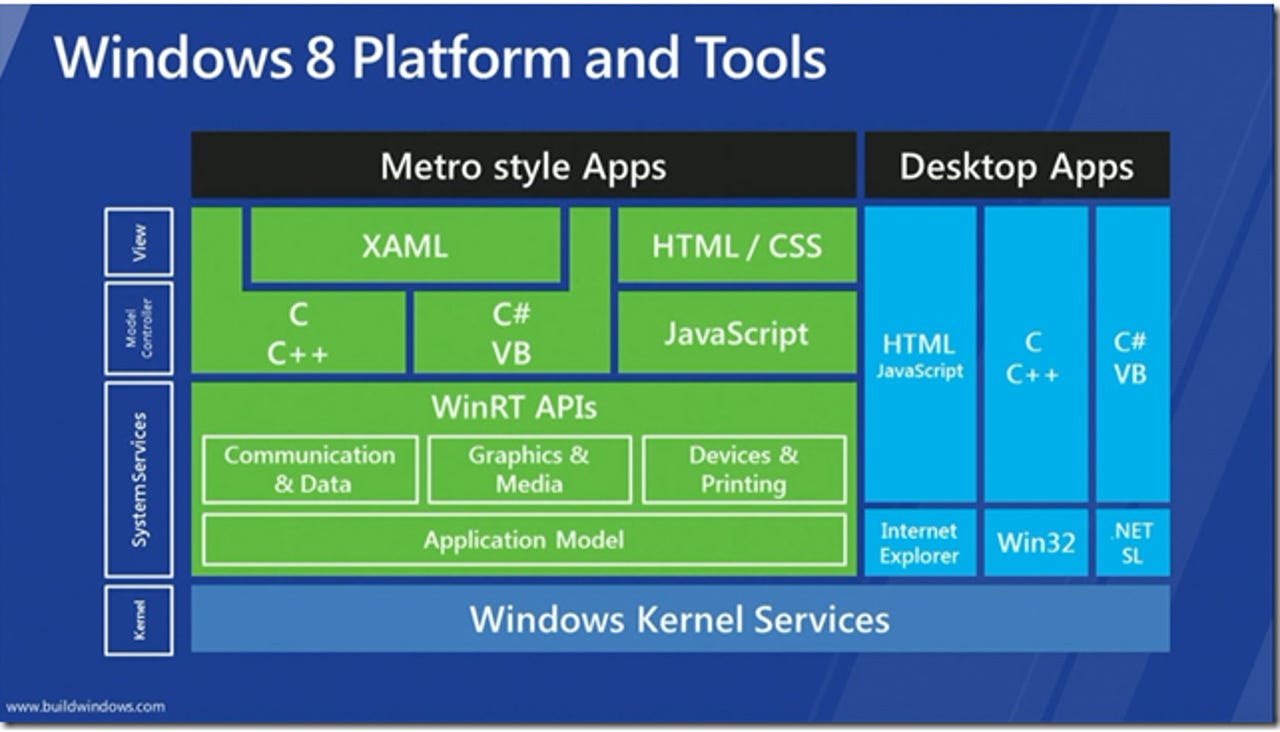
Another problem is that Windows is primarily a desktop operating system. It’s on the desktop that the OS really shines. It also works pretty well on notebooks and not so well on devices that have a cramped screen space such as netbooks. On tablets, it’s a disaster. To help alleviate this Microsoft has developed a completely new user interface called Metro UI with the idea of making a one-size-fits-all interface that will work on a myriad of screen sizes and resolutions, from multi-monitor desktops to tablets. Now that’s a gamble on all fronts. First Microsoft is forcing those traditional Windows users (folks running desktops) to adopt a totally new way of working. There are millions of Windows users out there who are used to the existing Windows paradigm, and these people are going to have to change the way they work because Microsoft wants to offer the same experience across a range of screen sizes.

Now that’s a massive gamble. I know a lot of people who have considered making a switch from Windows, but one of the things that keeps them on the platform is that they know and are comfortable with the way the operation system works. Well, like it or not, these people are going to have to learn something new, and if they’re having to learn something new, why stick with Windows?

Don’t get me wrong, I’m all for progress, and I think that it is time that x86 platform start to fade away. But it feels to me that rather than making a controlled shift to a new platform, Microsoft is leaping into the unknown and taking every Windows user with them on some mystery ride. I don’t understand why Microsoft feels that integrating tablets and desktops under the same OS is needed at this stage. I could understand having an eye for integration down the line, but unification now seems like too much, too soon.

Related:

Kick off your day with ZDNet's daily e-mail newsletter. It's the freshest tech news and opinion, served hot. Get it.

Topics

Adrian Kingsley-Hughes is an internationally published technology author who has devoted over a decade to helping users get the most from technology.

Disclosure

Adrian Kingsley-Hughes

All opinions expressed on Hardware 2.0 are those of Adrian Kingsley-Hughes. Every effort is made to ensure that the information posted is accurate. If you have any comments, queries or corrections, please contact Adrian via the email link here. Any possible conflicts of interest will be posted below. [Updated: February 23, 2010] - Adrian Kingsley-Hughes has no business relationships, affiliations, investments, or other actual/potential conflicts of interest relating to the content posted so far on this blog.

Biography

Adrian Kingsley-Hughes

Adrian Kingsley-Hughes is an internationally published technology author who has devoted over a decade to helping users get the most from technology -- whether that be by learning to program, building a PC from a pile of parts, or helping them get the most from their new MP3 player or digital camera.

Adrian has authored/co-authored technical books on a variety of topics, ranging from programming to building and maintaining PCs. His most recent books include "Build the Ultimate Custom PC", "Beginning Programming" and "The PC Doctor's Fix It Yourself Guide". He has also written training manuals that have been used by a number of Fortune 500 companies.

Adrian also runs a popular blog under the name The PC Doctor, where he covers a range of computer-related topics -- from security to repairing and upgrading.

162
Comments

Join the conversation!

Just In

RE: Why 'post-PC' is a far bigger threat to Microsoft than Mac or Linux every was
prszdn4 29th Jan
A "post-pc" era is coming for sure, but it is not the mobile screen interface, that it will define it. Tablets and smartphones will be just another device that we will use, but a 100-300 watts computing device will continue to exist(call it pc, notebook, android or whatever you like).
The challenge Microsoft and every software company will face is who will come up first with the right apps to use the potential of such a device. In other words, the next "microsoft" will not be the king of tablets, but the king of robots. It seems an exaggeration, but the future is probably more strange and scary than we tend to think. It is just, that we 're in a transitional period when a "tera" scale home device is not here yet, but it is approaching rapidly.
You have "every" in the title - you mean "ever" (you're welcome)
@jeremychappell Also in:

"Microsoft stitched up the PC market tight. It was in the right placed at the right time and managed to get to a position of dominance that has lasted over 20 years."

You mean:

"Microsoft stitched up the PC market tight. It was in the right place at the right time and managed to get to a position of dominance that has lasted over 20 years."

(still welcome)
@jeremychappell
Fixed. Thanks again. happy
0 Votes
+ -
70% of human interaction with the outside world is via eyes, which means that 24' inch screen of a desktop completely and utterly destroys that diminish 10' tablets or 4' smart phones when it comes to user experience any day/week/month/year/decade of the week/month/year/decade/ century, respectively. Unless you can take that visual edge away from desktops the "POST-PC" talking is day dreaming at best.
@jeremychappell
Fixed. Thanks!
....of the gasoline engine!
Apple has never had to deal with a massive corporate installed base!
It might happen, but over decades, not from Windows 8 to Windows 9!
0 Votes
+ -
@kd5auq: things are moving a lot faster than you think. If you look at the chart entitled "Traditional + iPhone + iPad + Android" in the ASYMCO article entitled: "The Rise and Fall of Personal Computing", you'll see that we're long past the tipping point. Almost 50% of the computing devices that we use every day don't run Windows.

The Post-PC era isn't coming. It's here.
0 Votes
+ -
Is it 1996 again already?
pishaw 19th Jan
Back then, the PC was declared dead again. By 1998 we would all be using 'dumb terminals' and access information on servers over the internet. I'm using an Intel-based laptop right now. Apparently the PC wasn't so dead 25 years ago.

And every year, the 'next big thing' is right around the corner. In 1983 Apples' Lisa and Macintosh would be the end of the Intel architecture and the IBM PC. Yep, in a year or so, we'd all be using Apples because they're so cool. Except we didn't. By 1999, Linux was 'the future of home computers', poised to send Microsoft into bankruptcy. Except it didn't. Recently, the 'dumb terminal' has returned for a second failure in the Chromebook. You're using a Chromebook, right? No?

In the early '70s, GM was developing a rotary engine, which would be a paradigm change for the automotive industry. All cars would be rotary. Your car has a rotary, right? Not so much. Almost no one today even knows what a rotary engine is. Even most Mazdas have piston engines. Go figure.

I am sure that someday, devices like the iPhone will become more than the hipster-dufus affectation or email device they are now. They will become useful and productive, and contribute to actual work, as opposed to checking Facebook or 'twit-ing'. But they won't replace a real computer that does real work, like the one I'm using now and the one you used to write this column. Not today, and not in the immediate future.
Even though I'm a UNIX guy, but I still prefer windows as the OS on my desktop and tablet when the Atom based tablet comes and matches with other tablets' battery life. With the Atom cpu, we can still use those excellent "legacy" applications.
@jeremychappell the point from Microsoft is when were they release windows 8 but recently he released developers preview: http://www.technologyfazer.com/how-to-install-microsoft-windows-8.html
Your whole premise that the x86 architecture is going away is just plain wrong. So what is the point of this piece? A lot of drivel.
@mdg1019 I think it's shoving "Metro" apps at desktop users, it "feels" weird when you push "Start" (and why are we still calling it that, as it doesn't say "Start" on it anymore?) a you're dumped at the Metro Launcher, you launch something "legacy" and you're back in "Desktop". Sure, it works, but it's very jarring. There are operations that have to be done in Metro, and some that have to be done in Desktop. Now this might change, but right now, it's weird.

Personally, I don't yet like Metro. Yes, it's clever. Yes, it's different to anything Apple are doing. But right now, with a mouse, I don't like it. Would I feel differently with a Tablet? Probably. But as of now, I find it unhelpful from an organisational point of view (no, it isn't as bad as the "Start Menu" could get - if you did no housekeeping, which a lot of users don't do). It is more consistent than the old Start Menu (where when you were doing housekeeping it looked like a folder rather than a menu).

How would I redesign it? Well on a desktop I'd make it semi-transparent (just the launcher) and a strip at the bottom of the display - I'd remove the pointer and have the mouse move a focus ring, "click to launch". As you never lose sight of the desktop it would be less jarring, and navigation would be easier (especially on a trackpad). If you launched a "Metro App" then (and only then) would the desktop vanish. On a Tablet, just as it is.

I do wonder if keeping the "Windows" name is a good idea. It doesn't make much sense on pure "Metro" devices - there are no "windows" (small "w"). But I might not be the best person to ask on this. I wonder if "LiveTile" might not have been a better name, with the Desktop version being "Windows LiveTile", the WP7 being "LiveTile Call" and tablet being "LiveTile Pure". But what do I know?
0 Votes
+ -
Similar TO, but different FROM
D.T.Long 18th Jan
@jeremychappell

You are also welcome wink
@D.T.Long I think, as a Brit, I'm okay:

http://oxforddictionaries.com/words/different-from-than-or-to

But probably "different from" would have travelled better. wink
0 Votes
+ -
@jeremychappell

You're welcome wink
0 Votes
+ -
RE: semi-transparet -> semi-transparent
jeremychappell 18th Jan
@bitcrazed Nice catch! Thanks wink
@jeremychappell The really old start menu from win95 on is terrific and I might give up Windows if I cannot have that - presently using Vista machines (which work fine, by the way). I hate the big open mess of the present Start system. sem
0 Votes
+ -
Start menu
klumper Updated - 18th Jan
@bigsteve666
I hate the big open mess of the present Start system.

Metro takes the start menu and apparently unloads it all over the desktop. How tidy. Another ribbon with your coffee, sir?

Win7 left a portion of older style SM functionality (assuming you're up to hammering it with a monkey wrench) but inexplicably dropped support for personalizing it. What's with the near kludge lockdown and laborious effort required to do what once was drag n drop simple! WTF were they thinking?

Oh wait -- hit 'Win Key' dummy, and start typing something *bulb* ... pffft
@jeremychappell ummm you don't have to use Windows 8 if you don't want to so no one is forcing anything on you or anyone else smart guy.
@jeremychappell - I agree with a lot of what you're saying, except, I do like metro, even with a mouse. But as you say, metro should only launch on desktop machines when requested rather than automatcally. You suggest not using "windows" in the name but then suggest "Windows Live Tile"- that still keeps "Windows" in the name. I do think that it should be somehow differentiated, perhaps "Windows Metro" instead of merely Window 8? Microsoft needs to keep "Windows" in the name or a lot of people will simply be confused about what they're buying, and confusion about a product, any product, is not a good thing. I know that my mother, for example, and several others still love their xp machines and will use them until the machines die, so they should have a comparable option that doesn't require the use of metro but still allows it when they finally purchase new computers. Microsoft "windows" is known worldwide, as attested by the more than one billion machines in use worldwide (and that number is actually low- I have friends in many parts of the world who use "windows 7" but pirated copies only). Yes, I intend for my next computer purchase to be a tablet running Win 8 because I have a cheap android tablet that was a gift and frankly, it has been relegated to little more than a photo album, so I want something that networks with my other windows machines and has all the computing power needed to run Office, among many other things. "Windows Phone 7" is a lame name, mainly because it doesn't set the new os apart from the old. "Microsoft Metro Phone" may have been a better name, but Microsoft has never before really needed to advertise the way that the marketing company called "Apple" has had to do. But they really need to do that now, before they allow other companies to shill inferior products to the detriment of Microsoft products. But, as you say, "What do I know?"
@mdg1019 the pre teens use smart phones and tablets rather than pcs almost exclusively. in 10-15 years they will be buyers. FOR Exmple, my 3 year old granddaughter would rather Skype on a phone or tablet than on a pc any time we call. she has her won leap pad already. Like hot wheels in the 80s, Today everyone buying a new car wants bigger rims because that is what they grew up seeing day in and day out.
@fierogt - those three year olds also play with Barbies. They learn by the age of 6 that Barbies are for babies. Ask Mattel if this attitude affects their bottom line.
Whats the point of a home PC anymore? Most people have one to get on the Internet. I can get on the Internet from my TV...
@mdg1019
@GoPower What about gaming and game development? Microsoft Windows dominates the PC gaming market. Most questions on gamedev forums relate to DirectX on the PC/XBox...
@CupOfJoe

Not everybody games. In fact, I suspect far more people don't than those that do.
@GoPower

CupOfJoe is right! Bravo CupOfJoe!
Not to mention CAD,web design,video editing etc.
It seems to me this article is not intended for the more astute PC user.
Perhaps the spirit of the article will have more relevance when tablets can actually preform the high intensive, number crunching capabilities of systems containing muti-core CPUs with GPUs in SLI configuration (or better).
@gwito@... HAHA! I would love to see Holywood studios edit movies like Shrek, Phantom Menace 3D from those TABLETS! HAHAA

*sigh*

HAHAHAHA
@GoPower
Well you sure have a funny name for someone who doesn't use a desktop. Apparently you know nothing about power.

Despite all the nonsense spouted around here and elsewhere, do you know what almost EVERY gaming teenage boy and girl I know use primarily? Yes, it is a full blown DESKTOP. They sit in their room at a desktop. Surprising, for people who grew up knowing only Playstation and Xbox don't you think? Do you know why? Because although an XBox or a Wii is a good option for some games, PC's are BETTER. Better keyboards, mice, larger and better screens, better CPU's, DX11 GFX cards drawing a couple of hundred watts of power, better motherboards, MORE ram, speakers with subwoofers, etc. etc. There are far too many PHYSICAL limitations on portable/dedicated devices, for the desktop to be replaced completely.

They may own a laptop and they may own a tablet and they may own a phone and they may use them for checking Facebook, but they may also play games. In fact, they likely spend more combined hours playing games, than they do on Facebook. On a desktop though, we have these things called MULTICORE processors, which means you can, believe it or not, do more than one thing at a time, so the they can STILL mess around on Facebook, while playing a game and have some background music and possibly decode a DVD in the background as well.

To play games, you need a DESKTOP and gaming is a MASSIVE industry. Its also a fair bet as these young people transition to a workplace, that they will be utilising a desktop there as well. I use a desktop at work. I mainly use a laptop at home and I use a phone when I do not have access to the previous superior choices. The fact you still need a desktop in 2012 says a lot about its capability. I've found myself drifting back to desktops from consoles for the same reasons. Desktops are just better - end of!
@GoPower
Well you sure have a funny name for someone who doesn't use a desktop. Apparently you know nothing about power.

Despite all the nonsense spouted around here and elsewhere, do you know what almost EVERY gaming teenage boy and girl I know use primarily? Yes, it is a full blown DESKTOP. They sit in their room at a desktop. Surprising, for people who grew up knowing only Playstation and Xbox don't you think? Do you know why? Because although an XBox or a Wii is a good option for some games, PC's are BETTER. Better keyboards, mice, larger and better screens, better CPU's, DX11 GFX cards drawing a couple of hundred watts of power, better motherboards, MORE ram, speakers with subwoofers, etc. etc. There are far too many PHYSICAL limitations on portable/dedicated devices, for the desktop to be replaced completely.

They may own a laptop and they may own a tablet and they may own a phone and they may use them for checking Facebook, but they may also play games. In fact, they likely spend more combined hours playing games, than they do on Facebook. On a desktop though, we have these things called MULTICORE processors, which means you can, believe it or not, do more than one thing at a time, so the they can STILL mess around on Facebook, while playing a game and have some background music and possibly decode a DVD in the background as well.

To play games, you need a DESKTOP and gaming is a MASSIVE industry. Its also a fair bet as these young people transition to a workplace, that they will be utilising a desktop there as well. I use a desktop at work. I mainly use a laptop at home and I use a phone when I do not have access to the previous superior choices. The fact you still need a desktop in 2012 says a lot about its capability. I've found myself drifting back to desktops from consoles for the same reasons. It's true, that desktops are not best suited to EVERYTHING we do on a computer. For example, I would never watch TV on a desktop, but, they are FAR from dead and they will always have a place, because they are just better - end of!
@gwito@...

"Perhaps the spirit of the article will have more relevance when tablets can actually preform the high intensive, number crunching capabilities of systems containing muti-core CPUs with GPUs in SLI configuration (or better)."

People still miss the point, so let's put it to rest. Even if tablets were orders of magnitude more powerful than desktops, which they will NEVER be, they STILL would not entirely replace them, because as a device, they are nowhere near as capable. Glad to have that settled for now and the future.
@mdg1019 More to the point, why would I buy Photoshop CS6 if it doesn't work on my PC? Why not stick with CS5? Companies like Adobe will start by making versions for multiple platforms BUT it it doesnt sell, the support will vanish faster than a politicians promise.
As per the article, remember MIPS, PowerPC and DEC Alpha...
@mdg1019 I'm inclined to agree, even as an Apple user I tend to use Fusion or Remote Desktop to get from my x86 MacOSX device to my Windows server or Windows 7 machine for most business applications. x86 isn't going anywhere soon and Apple wouldn't have spent a lot of time converting from Motorola chips to Intel if it had been. The benefit of being able to run every legacy application in the business world, Windows and OSX on x86 is going to take an extremely long time to shift. You can call it "post-PC" if you like but I would be prepared to bet that under the hood there will be PC like components for some time to come.
"But the winds of change are approaching, and Microsoft is embarking on what I believe to be its biggest challenge yet ??? the end of the road for the x86 architecture."

Newsflash: They're developing for ARM as well. And I disagree it's the end of the road for x86.

"If the PC era was symbolized by big beige desktops and knee-breaking notebooks, 'post-PC' is the exact opposite. Small, lightweight, low-power, more personal devices."

Windows doesn't care happy.

In fact Windows 8 will work far better with these devices than XP, Vista, or Windows 7. Already, people are complaining that Metro may be designed too well for these devices, because they don't think it will work well on the old form factors. Whether that's really true or not is an open question, and we'll only really find out when Windows 8 is released to the public.

"With the move to ARM, there is no such thing as legacy. The word will not apply. The slate will be wiped clean and it will be a fresh start."

Sure there is. Windows 8 is not dumping x86 support entirely - it will still support the x86 platform.

"and if they???re having to learn something new, why stick with Windows?"

Because the apps they used to use will be ported to Metro, and may or may not be ported to another platform.

"I'm all for progress, and I think that it is time that x86 platform start to fade away."

I don't agree. The x86 will continue. Laptops will continue. Even desktops will continue. People are not throwing away their computers because they have cell phones. This is not a mutually exclusive situation. They will coexist.

"But it feels to me rather than making a controlled shift to a new platform, Microsoft is leaping into the unknown and taking every Windows user with them on some mystery ride."

No, they aren't. If you It's very much a controlled shift. If you want to continue using legacy apps, the x86 version will do the job, and do it well. They have plenty of legacy support if you want to use the legacy platform. I don't see how this could be any more controlled than it is now.
@CobraA1 I disagree with your assumption "the apps they used to use will be ported to Metro", by extension, all those legacy apps will also have to be ported to ARM. Do you really believe the thousands of apps that keep people on Windows will be ported? Many are legacy apps (up to 20 years old) produced by companies that are out of business, so who exactly is going to port them?

I think that is what the author is talking about when he says users have to move a new platform, so why stick with Windows, and he's right.
@anothercanuck

"Do you really believe the thousands of apps that keep people on Windows will be ported?"

Not all of them, but I imagine the most used ones certainly will.

Old corporate apps, probably not, but they won't be upgrading to Windows 8 any time soon anyways. They won't even budge from XP for the most part.

"Many are legacy apps (up to 20 years old) produced by companies that are out of business, so who exactly is going to port them?"

Well, those apps probably don't exist on other platforms, so what's the use of switching to another platform? The point is rather moot.

Apps that old will probably need to be rewritten from scratch, or, knowing how these businesses work, they'll probably stick with x86 and just use a virtual machine that runs XP.

A business that holds onto software that long is not switching to ARM, sorry. They're gonna hold onto x86, and that's one of the primary reasons why Adrian's "the x86 is fading away" claim is bogus.
@CobraA1 : "the apps they used to use will be ported to Metro.

The problem is that they cannot be ported to Metro. Touch based and mouse-based Applications are fundamentally different and inherently incompatible with one another. Apps won't be ported. They'll have to be re-built from the ground up. And without compatibility, users will base their buying decisions on the quality of the software rather than its legacy support.
@Falkirk

"Touch based and mouse-based Applications are fundamentally different and inherently incompatible with one another."

Eh, no. I've used tablet PCs and where I work has a point of sale system that uses a touch screen to drive a mouse. They are not "fundamentally different" or "inherently incompatible."

What is fundamentally different is WinRT vs the old Win32. Any app that gets ported and used Win32 extensively will have to deal with that.

"Apps won't be ported. They'll have to be re-built from the ground up."

Depends on the design of the app. Many apps are built to be more independent of the hardware and APIs, and some aren't.

"And without compatibility, users will base their buying decisions on the quality of the software rather than its legacy support."

I wish.

Actually, they will go to great lengths for legacy support (as far as to get virtual machines or simply not use the new tech), and if it's totally impossible they will go for cheap and somewhat familiar - not quality.
There is no such thing as a 'Post-PC era' and the Business world will be dominated by PC. Its true that consumers have more devices these days to access the web. With Win 8, MS will dominate the tablet space ( apple will have its share and android is dead on tablets). With ultrabooks and all in one pc, MS is going to grab more market from apple.

Now if they manage to sell more Windows phones, I am sure MS will be laughing all the way to the bank for atleast another decade.
@owlnet I think it's more like Radio vs TV. The PC is the radio, the Tablet is the TV. Radio won't die, but TV is going to get VERY big indeed.

Yes, even in business.

But the PC go away completely? No.

However, for Microsoft, this is terrifying, they want growth (their shareholders demand it) they don't want a niche (albeit a big and important one).

This is totally in contrast to Apple, they have ALWAYS had a niche, they are comfortable in that position. They can extract HUGE profits that way. Apple reject commoditisation, Microsoft embrace it. Often we see these two companies as similar, but in this way they couldn't be more different.

Microsoft need to establish a new commodity: a "Windows Tablet", and they have few advantages.
@owlnet "the Business world will be dominated by PC."

The changes in the business world are already occurring if you'd just take the time to look for them. More and more businesses are bringing in iOS and Android phones and tablets and the Mac is having a resurgence in the business world. The Windows monopoly was insurmountable because hardware and software had to be Windows compliant. That just isn't true for most people. People aren't asking if the newest thing is compatible with Windows. They're asking if it works. And in many cases, the answer is leading them to non-Windows products.
I don't know but so far I haven't seen lobbies with iOS and Androids or clerks using iOS and Android to produce documents for their reports or research. May be with a MacOS or Ubuntu but these are still "personal computers".
0 Votes
+ -
"Post-PC" is a misnomer
gafisher@... 18th Jan
The concept and era of the personal computer is not over, it's simply becoming more personal. The overriding goal was never the box, but the access to and power over information. In almost every way we are only now entering the real PC era, and in a decade or two we will likely still be approaching but not upon it.

However, Microsoft is still toast if it fails to keep up.
@gafisher@... I'm not so sure, many of these devices with "storage in the cloud" are anything but "personal computing", more like a new kind of "terminal". So I think "post-PC" might be a good way to think of them (I don't see them as "just a new shape of PC").

However, I do think that tales of the "end of the PC" are rather overstating the case, the "PC" isn't going anywhere. Yes, it's a decline, but not to zero, just to some new lower base.
on sd card usb stick or usb hard drive or LAN server. its a fiction that android only works on the cloud.
@gafisher@...

Well whatever you call that big box with a monitor, keyboard, mouse and other various peripherals that you can't carry with you and needs a big bloated OS that has high security risks and expensive applications that run locally and store all information locally or on a server on the LAN... we're entering the post-THAT era now. Is that better?
0 Votes
+ -
Do you live in a small box?
ddferrari 18th Jan
@Michael Kelly Some of us have ample space for what you refer to as a "big" box. Some of us are able to appreciate the NON-virtual (aka REAL) world, and don't need to have a computer on us at all times to feel right. Some of us like upgrading components and having a very powerful PC- and nothing beats the "box" for that. With 2 TB memory and 16 GB ram, a "bloated OS" means nothing. And, if you really think your info is safer in the cloud than on a drive in your own home... have at it.
@Michael Kelly

None of that describes my laptop running Windows 7 happy.

But nice try.
@ddferrari
If you're trying to protect your data from "binary oblivion" then the safest place to put your data is both on a drive in your own home and in the cloud.
0 Votes
+ -
Hey hey hey! wait just a minute there.
Zurk_Orkin Updated - 18th Jan
@gafisher@...

"Are we not keeping up as pens to this blog-site? Microsoft's new file system is revolutionary if it can pull out the expected performance in computing power when combined with Microsoft Server8 (ReFS) file system upgrades. Besides having multiple parallel task capability, the (ReFS) file system incorporates a sophisticated Raid and file recovery. The only real time issue is that most implementing of new hardware that has gone through testing and being put into service now is two years old. What do you expect; like any other device we use, the consumer market has generally supported the cost of development. Will this trend continue? it has to come to an end at some point when considering this level of end user being the Enterprise Based Customers."

"I am sure all of the top Enterprise Providers are aware of the end game at this point with the continuous consolidation of smaller companies and the start up that are springing ups with the former heads of software going out on their own knowing full well the financial wind fall to follow."
A "post-pc" era is coming for sure, but it is not the mobile screen interface, that it will define it. Tablets and smartphones will be just another device that we will use, but a 100-300 watts computing device will continue to exist(call it pc, notebook, android or whatever you like).
The challenge Microsoft and every software company will face is who will come up first with the right apps to use the potential of such a device. In other words, the next "microsoft" will not be the king of tablets, but the king of robots. It seems an exaggeration, but the future is probably more strange and scary than we tend to think. It is just, that we 're in a transitional period when a "tera" scale home device is not here yet, but it is approaching rapidly.

Join the conversation!

Formatting +
BB Codes - Note: HTML is not supported in forums
  • [b] Bold [/b]
  • [i] Italic [/i]
  • [u] Underline [/u]
  • [s] Strikethrough [/s]
  • [q] "Quote" [/q]
  • [ol][*] 1. Ordered List [/ol]
  • [ul][*] · Unordered List [/ul]
  • [pre] Preformat [/pre]
  • [quote] "Blockquote" [/quote]
ie8 fix
Click Here
ie8 fix

The best of ZDNet, delivered

ZDNet Newsletters

Get the best of ZDNet delivered straight to your inbox

Facebook Activity

White Papers, Webcasts, & Resources
ie8 fix
ie8 fix