Are universities reluctant to use iTunes U?

Many of us remember Steve Jobs and his wish to 'revolutionize education', but how many universities and colleges are taking advantage of the learning-based tools Apple has provided?
Created in 2007, iTunes U is advertised by Apple as a service that can be used to design and distribute courses that go beyond traditional print media. Designed to appeal to educators, the platform can be used to create interactive learning material for students at university, college or K-12 level.
According to Apple, there have been over 700 million downloads to date of iTunes U. However, are there many colleges and universities who have made the transition from their own platforms to the modern service on offer?
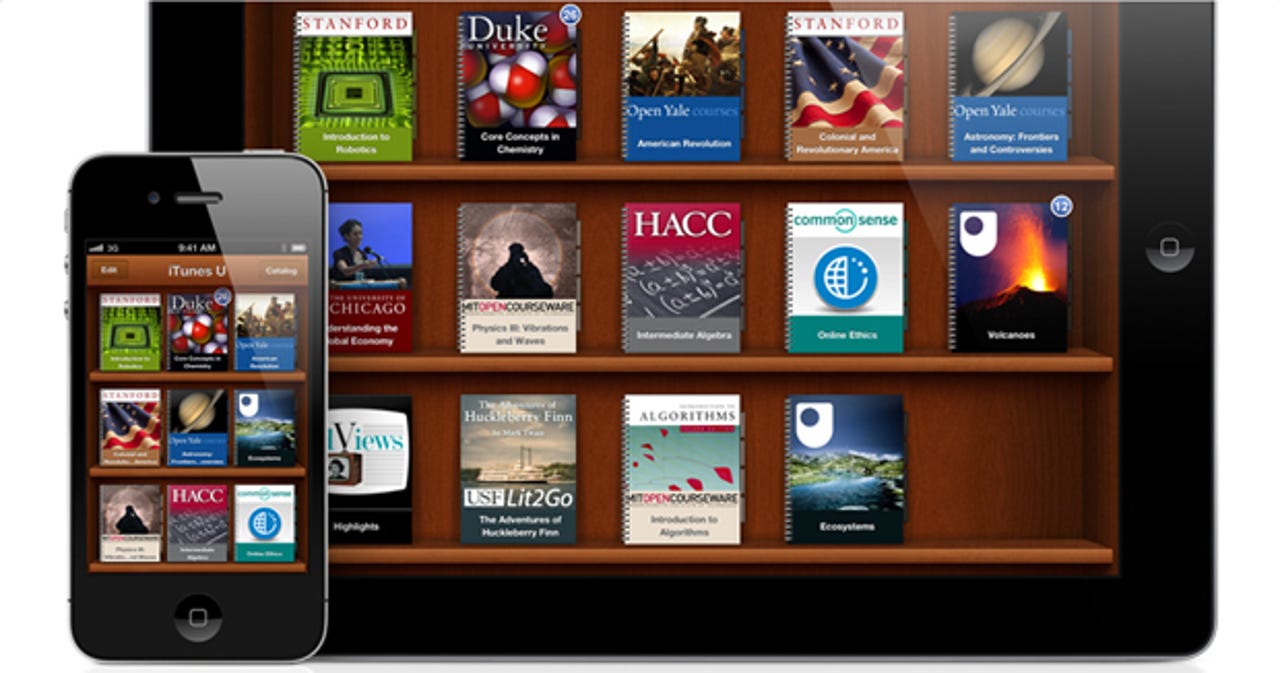
How many universities, colleges and schools use iTunes U?
Stanford, Yale, Oxford, Duke, Harvard and UC Berkeley are the most well-known academic institutions that utilize the platform. There are over 100 courses currently available on iTunes U provided by these schools, and thousands are available from course providers.It is unclear how quickly other schools are moving to take advantage of the application, which still has to gain wider acceptance by the academic community. It may be a 'revolutionary' platform, however it faces opposition from a number of sources; including traditional lesson advocists, in-use management systems and educational establishments already under pressure through financial constraints and increasing class sizes.
"It's competing with some of the traditional learning management systems that have been around a number of years," said John Flores, executive director of the Boston-based U.S. Distance Learning Association.
"It's almost like changing bags or changing doctors or changing barbers. You get comfortable. You want to go to the same resource. The same happens with using a technology."
The use of new technology in class can either reinvigorate tired lesson material and promote more modern learning methods, or it can simply become a fad that does little to inspire teachers, and become phased out quickly.
Some educational establishments use iTunes U purely for promotional video and public content, whereas others avoid it all together; citing the needs of training and a lengthy process of transitional which is not viable.
Why is the iTunes U service used?
Modernizing materialiTunes U is one of the most widely-accessible platforms available that can be used to supplement traditional learning material with more modern alternatives. iTunes U can make the learning experience from K-12 to university more relevant, modern and engaging -- and appeal to a wider range of learning styles, encompassing visual, audio and kinetic aspects.
Students can annotate and contribute on digital content together to improve the overall quality of material available for future studies, and teachers can make the transition from recycling PowerPoint projections and paper quizzes to interactive coursebooks.
Easy access and organisation
The iTunes U platform can be quickly accessed from a number of mobile devices -- including the iPad, iPod Touch and iPhone. As long as the user possesses an Apple device, then the limits of being connected to a school's intranet or the need to rely on campus-based machines to access material is removed.
The platform's interface is also clean and easy for both students and educators to use; simplifying the organisation of course material.
Free courses and positive marketing
Course providers who are using iTunes U tend to focus on promoting their material, and therefore extend their following to a wider audience and are able to gain additional subscribers. These types of organisations currently appear to be more active in utilizing the service than schools, colleges or universities.
The Open University, a global course and learning material provider, has reached over one million active subscribers after its launch earlier this year through the iTunes U app. It currently offers a number of free courses on the platform, and its inclusion has resulted in over 50 million downloads around the world, reaching approximately 40,000 downloads per day.
In contrast, few universities and schools have implemented similar systems -- albeit on smaller scales. For the sake of long-term profitability, an additional revenue stream and as a nod to younger generations often preferring distance-based learning, declining to use these types of platforms may be a missed opportunity for schools on a global scale.
Why is the iTunes U service avoided?
ExpenseAlthough the application is free, the courses can only be accessed on an iPad, iPhone or iPod touch, and these Apple products may not be unaffordable for college students with limited financial resources, or parents of children in average high schools.
It is also the case that if a school decides to opt for iTunes U, it becomes their responsibility to make up any shortage of devices -- if they choose to include a BYOD scheme -- or to cover the cost all together, which may not be viable.
Training
Once an academic institution has spent the time and money required to train its staff in using a platform, the switch to another not only means changing learning methods, material and infrastructure, but retraining staff. This takes both time and money to achieve; something that can be difficult in the current economic climate.
Losing control, reliance on other providers
It may be the case that universities, colleges and schools choose not to transfer to an external provider in order to retain control over the content available to their students; including what material is available to paying students and what is available publicly.
Some schools are concerned that by making material available on Apple's platform, copyright and student privacy issues may blossom -- an element of online learning not generally applicable to others on offer including Blackboard and Moodle.
Time, investment, and resources
The crux of the matter is time, investment and whether or not to open up educational resources. By opting to create a presence within iTunes U, it can generate long-term income for a school, but often making the decision to begin the move costs time and money in training staff.
Many schools find transitioning to new platforms a challenge, due to a lack of technical knowledge, training and budgetary constraints. Although Apple's mobile devices maintain a large share of the consumer market, once an academic institution makes the decision to move to a platform that requires such a device, there are repercussions for both students and the organisation itself.
Perhaps if Apple introduces more extensive large-scale academic pricing agreements with schools for this hardware, then it will increase the rate of institutions adopting the practice, shifting platforms and taking advantage of services such as iTunes U.
However, it is likely to take time for academic institutions to want to invest time and effort making the transition to more modern learning platforms -- if they are willing to abandon other providers.
Course providers can use iTunes U in order to secure an additional, paying subscriber base by offering free courses. Once an individual begins using the service, it is more likely that they would consider going further and paying for their next course if they are pleased with the free options. However, there are few universities who have created free learning material in order to promote their courses -- with the exception of new platforms like MITx, university courses are often campus-based.
If universities are feeling the sting of rising tuition fees and governmental cuts, an avenue they could pursue in order to establish a long-term gain is investing the time and training required to use these platforms -- for both financial gain and for the benefit of students.
Image credit: Apple/iTunes U
Related: