ie8 fix

College students face file sharing penalties under new rules

By | July 2, 2010, 10:12am PDT

College and university students are now facing tough penalties for downloading and sharing illegal files over their institutions networks as of today.

Universities are a hotbed for illegal downloading and sharing activity, with the vast majority of students using school provided high-speed Internet access to download files in as little as seconds or minutes. As a result, the RIAA and other representative organisations are hitting universities hard with lawsuits and threats in an attempt for these institutions to reclaim control of their own networks.
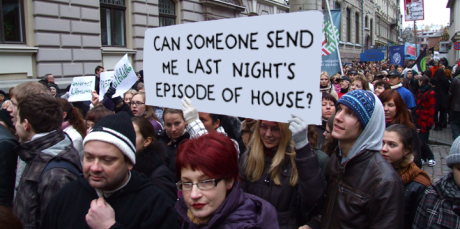
When a student downloads or shares a file illegally and is spotted by the industry authorities, the university will more often than not inform the student of the action and that their IT account may face sanctions or be monitored. This is a counter-move to attempt to calm the industry authorities as frankly, nobody wants a lawsuit, and it allows the buck to stop with the school for them to take action as they see appropriate.

According to CNET, universities and colleges which receive Title IV federal aid have to implement anti-piracy measures under the Higher Education Opportunity Act (HEOA) 2008. This law though designed to implement a round of changes to enable fair and accessible assistance to education for many, also includes provisions supported and backed by the movie and music industries to require these institutions to follow guidelines on illegal file-sharing.

These main guidelines include providing students university policies on file-sharing and understanding of state and federal laws on sharing such files, but more importantly offering alternatives to file-sharing technologies while “combating copyright violations on campus networks using technology-based deterrents”.

This could mean that students’ IT accounts are suspended entirely, thus email accounts and web access are disallowed by the university. This would this have a clear impact on the level of education they could attain. These measures would only affects US universities, colleges and students, but could have a transcending affect on non-US institutions.

The RIAA has sent over 1.8 million notices to commercial Internet providers since October 2008, with just under 300,000 notices sent to universities worldwide during that same time period. This shows clearly that students are in the sights of the RIAA and the industry authorities and are target accordingly.

Today’s new counter-piracy principles will take over the RIAA’s tactic of filing and pursuing lawsuits against students which bullied its way through legal action, and take a wider, sweeping approach to the issue. Yet by “using technology-based deterrents” may enact a wave of back-end changes which traditionally are not enabled at university level, such as port blocking, website filtering and monitoring of files and activity.

Suffice to say, with universities being independent areas of freedom for expression, understanding, the sharing of knowledge and the deepening of consideration on wider society, this seriously infringes on almost-sovereign territory.

But if universities bow down to the pressure of the private industry giants, perhaps the institutions themselves should be firm in their position to ensure that they, and their students which pay tens of thousands of dollars each year are not bullied into something they may not be able to stop.

What do you think? Would you be affected?

Kick off your day with ZDNet's daily e-mail newsletter. It's the freshest tech news and opinion, served hot. Get it.

Topics

Zack Whittaker, a criminologist who studied at the University of Kent, Canterbury, is a journalist, writer and broadcaster.

Disclosure

Zack Whittaker

I worked briefly with Microsoft UK in 2006 but no longer have any connection with the company. Regardless, I remain impartial and unbiased in my views.

I don't hold any stock or shares, investments or industrial secrets in any company, but have signed confidentiality agreements with a number of UK and U.S. organisations, whose names I am not at liberty to disclose.

I was involved with Kent Union, the University of Kent's student union, undertaking voluntary, non-salaried, elected positions between early 2009 and mid-2010.

No other company, body, government department, non-governmental organisation or third sector organisation employs me or pays me a salary in any capacity whatsoever.

As a freelance journalist, whenever expenses are given and taken by a company that is not CBS Interactive, these will be disclosed in each relevant post to ensure transparency.

I currently work with a UK law enforcement unit, but this is an entirely separate position which bears no connection to other work.

(Updated: 23rd October 2011)

Biography

Zack Whittaker

Zack Whittaker, criminologist who studied at the University of Kent, UK, is a journalist, writer and broadcaster.

After studying criminology at university, though still in his early-20's, he has already had a series unconventional work and voluntary positions. He has worked with researchers studying neurological illnesses like Tourette's syndrome (which he suffers from), has given lectures on the nature of disabilities in the public community, and occasionally ends up speaking on television and radio discussing the events of the day.

He first had academic work published at the age of 22, then still an undergraduate, and has been cited by a wide range of publications: from the Huffington Post, Business Insider, AllThingsDigital, The Atlantic Wire and CBS News.

Related Discussions on TechRepublic

Did you know you can take part in these discussions with your ZDNet membership?
13
Comments

Join the conversation!

Just In

RE: College students face file sharing penalties under new rules
debalazo 1st Feb 2011
FACT, only industry reaps the heap off CDs etc. Authors get only the crumbs. The pirates are the howling wolves, greedy thieves. Authors/artists make their money from actual personal presentations/shows. Avaricious RIPOFFs, er, RIAA 'industrialists' should dramatically drop the prices for a product they had no beef, no brain, no talent in authoring, and millions would easily buy their loot. But honesty is not a virtue on select rapinous individuals after all. e-Mule them!!
0 Votes
+ -
independent area of freedom of expression and knowlege sharing doesnt mean they can STEAL other peoples hard work. maybe the university should teach them that.
Regardless of what we think about the RIAA, pirating music and video IS STEALING. Colleges and universities should not be shielding students from the consequences of their actions.
Most universities already do that, and the result is a lot of rapes and crimes that go unreported.
0 Votes
+ -
Old Media and its white whale
P. Douglas 2nd Jul 2010
I think we all have to shake our heads at the recording and movie industries' obsession with file swappers. Has any of their efforts measurably affected their bottom lines? They have become so fixated on file swappers, when they should be exploring new, innovative business models, to adapt to their changing environments. You can't say anything to them, because they are just as engrossed as Ahab. Sigh.
0 Votes
+ -
@P. Douglas
Excellent point sir.

I haven't really seen a dent in there income lately so they need to shut the hell up and go on with their day to day business of producing craphole movies like 'Twilight'.

The thing about it is if you're a big fan of someone's work you'll pay for it to support them. If not and you want a small sample download away.
0 Votes
+ -
RE:Old Media and its white whale
relwolf 2nd Jul 2010
@P. Douglas

By innovative business models do you mean there is a buck in there somewhere? It seems to me the people that advocate "alternative means" really want it to be free without any strings like DRM. iTunes and other pay-per song services work as does NetFlix but I take it those aren't good enough because you still have to pay.

I would like to be able to have a means to transfer the content to other media/devices without purchasing the content again, however I think most people just want to be able to transfer it to their friends so they can share the cost or avoid it all together.

When you stop paying for a thing it ceases to exist.
0 Votes
+ -
What I think
P. Douglas 2nd Jul 2010
@relwolf,

Here is what I think.
@relwolf
see that's not true. amazon had no DRM mp3 downloads. when I want a song, I go there because i have multiple areas where i want that song to be played. Do i share my music? yes, i paid for it, my home shares computer systems, so the music is on a single hard drive. I also own many cd's. Is it illegal to let your buddy borrow a cd? well now just remove the hard medium and its the same thing. Do I dl illegal songs? hell no. first off, if you get caught, you get nailed. secondly, before the whole napster Metallica thing, everyone downloaded illegal songs, and guess what, they got viruses because of it. I have to agree with P. Douglas on this one. The media industry is more thriving than ever and its because of easy digital download. Will there be pirates, of course, should they pay for their crime, absolutely. should everyone be up in arms about it, nope.
@relwolf
see that's not true. amazon had no DRM mp3 downloads. when I want a song, I go there because i have multiple areas where i want that song to be played. Do i share my music? yes, i paid for it, my home shares computer systems, so the music is on a single hard drive. I also own many cd's. Is it illegal to let your buddy borrow a cd? well now just remove the hard medium and its the same thing. Do I dl illegal songs? hell no. first off, if you get caught, you get nailed. secondly, before the whole napster Metallica thing, everyone downloaded illegal songs, and guess what, they got viruses because of it. I have to agree with P. Douglas on this one. The media industry is more thriving than ever and its because of easy digital download. Will there be pirates, of course, should they pay for their crime, absolutely. should everyone be up in arms about it, nope.
  • Flagged
@P. Douglas

Excellent point sir.

I haven't really seen a dent in there income lately so they need to shut the hell up and go on with their day to day business of producing craphole movies like 'Twilight'.

The thing about it is if you're a big fan of someone's work you'll pay for it to support them. If not and you want a small sample, download away.
0 Votes
+ -
Colleges should stop knuckling under to the vile RIAA and its evil twin, the MPAA. What are they teaching in colleges today? Cowardice? We dare send these kids off to war but refuse to defend them. What a crock all around.
0 Votes
+ -
That irritant is what the oyster eventually turns into a pearl. These rules are meaningless, the only students that were ever affected were the clueless ones. The bright ones are building their own meshes, using university pipes with encrypted endpoints, and finding new and innovative uses for proxies. And they are enlisting the active support of faculty and staff to avoid the company spies and honeypots.

In short, while the media cartel bribes Congress and sends out propaganda by the carload, they are still losing the war.
0 Votes
+ -
... the technology in a fair and sensible way, for their own use ...

Let's put things in perspective. The creators of these works, have worked long and hard to produce them, and should get compensated for that. What would you say if your employer decides to say to you one day "Ya know what, I'm not going to pay you for all your hard work this week ... and maybe not next week either"

@relwolf - when you "lend" someone your download, do you erase your copy? if not, you've broken the law. Period. You can lend someone a CD, but you cannot give them a burnt copy, or keep a burnt copy and give them the original.

I completely agree that if you've paid the creator/owner for something, you should be able to do what ever you want with it provided you do NOT increase the number of copies of that work - if you want to give it to a friend, fine, delete all of your copies - if you want to share it with a friend, invite them over for an evening of drinks and music.

This really is a "Black and White" situation, anyone that doesn't see it as that is trying to make it grey for their own benefit.

Ludo
FACT, only industry reaps the heap off CDs etc. Authors get only the crumbs. The pirates are the howling wolves, greedy thieves. Authors/artists make their money from actual personal presentations/shows. Avaricious RIPOFFs, er, RIAA 'industrialists' should dramatically drop the prices for a product they had no beef, no brain, no talent in authoring, and millions would easily buy their loot. But honesty is not a virtue on select rapinous individuals after all. e-Mule them!!

Join the conversation!

Formatting +
BB Codes - Note: HTML is not supported in forums
  • [b] Bold [/b]
  • [i] Italic [/i]
  • [u] Underline [/u]
  • [s] Strikethrough [/s]
  • [q] "Quote" [/q]
  • [ol][*] 1. Ordered List [/ol]
  • [ul][*] · Unordered List [/ul]
  • [pre] Preformat [/pre]
  • [quote] "Blockquote" [/quote]
ie8 fix

The best of ZDNet, delivered

ZDNet Newsletters

Get the best of ZDNet delivered straight to your inbox

Facebook Activity

White Papers, Webcasts, & Resources
ie8 fix