Five reasons why the PC is not dead

By | August 16, 2011, 4:01pm PDT

Summary: The inventor of one of IBM’s first computers says the PC is dead. Here are five reasons why the PC is still going, and will be for some time.

Last week, one of the inventors to the personal computing revolution of over 30 years ago — said that it was time to move beyond and away from the PC.

But as PC sales continue to retain momentum — and tablets and smartphones hogging the consumer limelight — one has to question whether the PC is really on its last legs, or whether we are simply classifying the traditional computer as other things.
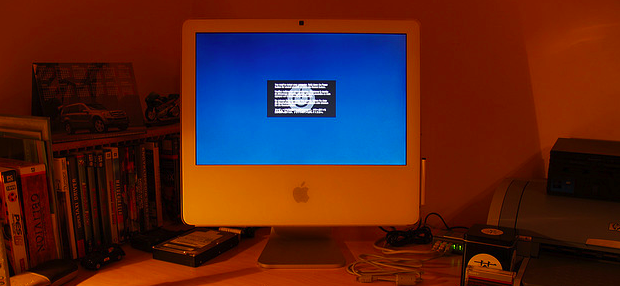

(Image via Flickr)

After churning over the reasons in my head over the weekend, I can think of five solid reasons why the PC is not dead. And, the PC will continue to dominate the computing industry, at very least, for the end consumer and enterprises.

1. PCs can be incredibly cheap, and emerging markets rely on this.

Macs are not cheap, I grant you this, especially from the student perspective. PCs — or rather computers that are not Macs — can be vastly cheaper for what they offer.

The Mac vs. PC adverts by Apple attempted to differentiate the two, but in reality it falls down to the operating systems that people use. In short, Macs are PCs too.

Emerging markets may never see a Mac, because of the price. But for those in low-income areas, PCs can be as slim or as expensive as you want them to be. Even down to the operating system, for those who live in deprived areas of the world, Linux is a strong, free and viable option, and is just as easy as Windows or Mac OS X to use.

2. PCs are expandable and are designed to be built-upon.

The very beauty of the PC is that there is a sliding scale of technologies involved. Expandable in nature, traditional PCs can evolve into computers, which have been added to, slimmed down and modified beyond repair.

In theory, a PC need never be replaced. It’s one of the reasons why there are so many traditional PCs compared to Macs — which frankly rarely need replacing at all.

A dual-monitor display with a productivity breathing out from both screen, cannot even compare to BlackBerrys or iPhones. Unlike a car, a computer can have it chassis ripped out, modified and made better.

3. Tablets are only the next-generation of PCs.

Today, and every day, we are redefining what a PC is. Nowadays, a tablet is just as much a PC as a desktop computer is, as what a smartphone is to a tablet. Different in size, it does not mean a reduction in productivity per se.

What we are lacking nowadays is a crucial definition of what a PC is.

A PC with a camera and a microphone, integrated or otherwise, makes it a ‘media center PC’. It doesn’t make it any less of a PC because it has additional peripherals. Instead, it bolsters the experience.

What we are seeing is a convergence of devices and peripherals. Just because the user-experience differs from devices, does not make it any less than good for what it is — and isn’t intended for.

4. The desktop experience is still a crucial part of the office workplace.

Tablets are great for on the go, and smartphones keep us connected to the world while we are away.

But we’re still tethered to our desks — and most of us do not want to move.

But on a psychological level, having a traditional PC fixed to a desk — in a home office or at the office — keeps us confined to one workspace. Surprisingly, it allows us to be productive and “in the zone”, whilst equally healthily detached and away from work when we are not within the proximity of productivity.

5. PCs are still the world’s ‘looking glass’ to the world.

Only last week I discussed the ongoing Mac vs. PC debate, and all but negating it. Nearly everything is browser based anyway.

If this is the case — and I believe that it is — then the traditional PC and evolved devices, from tablets to smartphones, are merely drones to the slave that is the wider web.

But it is not just limited to the web. Personal productivity and applications rely on PCs. No matter how often you use your mobile device or tablet, nothing will truly replace the standard QWERTY-keyboard at your desk.

Without the PC — whether it takes form as a tablet or a traditional desktop experience — then the web may as well not exist. Sales for Microsoft Office would go through the roof; I joke.

Related content:

Kick off your day with ZDNet's daily e-mail newsletter. It's the freshest tech news and opinion, served hot. Get it.

Topics

Zack Whittaker, a criminologist who studied at the University of Kent, Canterbury, is a journalist, writer and broadcaster.

Disclosure

Zack Whittaker

I worked briefly with Microsoft UK in 2006 but no longer have any connection with the company. Regardless, I remain impartial and unbiased in my views.

I don't hold any stock or shares, investments or industrial secrets in any company, but have signed confidentiality agreements with a number of UK and U.S. organisations, whose names I am not at liberty to disclose.

I was involved with Kent Union, the University of Kent's student union, undertaking voluntary, non-salaried, elected positions between early 2009 and mid-2010.

No other company, body, government department, non-governmental organisation or third sector organisation employs me or pays me a salary in any capacity whatsoever.

As a freelance journalist, whenever expenses are given and taken by a company that is not CBS Interactive, these will be disclosed in each relevant post to ensure transparency.

I currently work with a UK law enforcement unit, but this is an entirely separate position which bears no connection to other work.

(Updated: 23rd October 2011)

Biography

Zack Whittaker

Zack Whittaker, criminologist who studied at the University of Kent, UK, is a journalist, writer and broadcaster.

After studying criminology at university, though still in his early-20's, he has already had a series unconventional work and voluntary positions. He has worked with researchers studying neurological illnesses like Tourette's syndrome (which he suffers from), has given lectures on the nature of disabilities in the public community, and occasionally ends up speaking on television and radio discussing the events of the day.

He first had academic work published at the age of 22, then still an undergraduate, and has been cited by a wide range of publications: from the Huffington Post, Business Insider, AllThingsDigital, The Atlantic Wire and CBS News.

Related Discussions on TechRepublic

Did you know you can take part in these discussions with your ZDNet membership?
41
Comments

Join the conversation!

Just In

RE: Five reasons why the PC is not dead
Third of Five 18th Aug
@zwhittaker Perhaps not less of a person, but if you swap the brain out, the person might be different.

@CobraA1 In fact, I know that in Windows, swapping out the motherboard is regarded as the most significant change you can make to the system; it's generally regarded as being a new system beyond that point (unless the swap-out is merely replacing the old one with the same model in cases of repair).

In general, it's sort of the idea of the Ship of Theseus--whether it's the same apparatus despite all the changes is likely in the eye of the beholder.
I could retire from Starfleet.

plain
0 Votes
+ -
@Mister Spock
+1
0 Votes
+ -
@Mister Spock

OK, I actually laughed out loud at that. Brilliant Mr. Spock happy
0 Votes
+ -
FAIL
Earthling2 16th Aug
@Mister Spock Starfleet used mainframes, dumb terminals and quite a few pads. No PCs. Indeed, it seems PCs have no future. I've seen it on TV. :-|
0 Votes
+ -
@Earthling2 We are already using terminals, connected to servers here. Only about half a dozen PCs and laptops in the place, for workers that travel or need a "full-on" multimedia experience to do their work.

That said, for the average user, there is no real difference between a terminal and a PC. They have a keyboard, mouse and screen and use either Windows or Linux.

I think what is important, is not whether the user is sitting at a PC or a terminal, but rather the input and output devices / methods that will differentiate the way we work.

As has been said, the tablets and smartphones are great, when on the move, but they are not designed for heavy duty data input.

I can knock up a 70 page document on my PC in a few hours, I wouldn't want to do that on an iPad or iPhone. On the other hand, when travelling, having access to that document on a tablet or on my smartphone is very useful, although, again, I wouldn't want to read all 70 pages on my smartphone.

Touch interfaces are also great, on mobile devices, with small displays, but a traditional desktop display is too large to really benefit from touch and your arms would be aching after a few minutes of use - not to mention, you can wipe a 27" or 30" display on your trousers every couple of minutes, to get rid of the worst of the finger smears...

When the network coverage improves and prices drop, the cloud will become more and more of a reality for normal users. But we will still need different input devices and different sized screens for different purposes.

Working on an 18mp RAW image is hard enough on a 24", colour calibrated display, an iPad won't even load a RAW file, heck, it won't even load an un-butchered JPEG version, it will be automatically rescaled by iTunes, when it is synced.

In the long term, I hope that we will end up with a little iPhone sized, or smaller, black box, which is our cloud-access gateway, which is then plugged into a tablet or desktop or media centre as needed (or wirelessly streaming, when it doesn't need recharging).
0 Votes
+ -
@Earthling2

"Starfleet used mainframes, dumb terminals and quite a few pads."

Mostly true, although the amount of theoretical computational power they had largely depended on what they needed to have for the plot, which is usually the case in most types of fictional technology.

Of course you're talking about a TV show that takes place on large, carefully engineered ships where they can afford to place a terminal in every room. It's not as if very many episodes took place in farmland far away from most types of communication.

It should be noted that Tricorders could in fact store their own data, and had some processing power - they weren't completely dumb.

And of course when the ship's computers did go down, the ship and its crew were utterly worthless unless they had said Tricorders. A warning, I think, against this crazy notion of "going dumb" with computing.
0 Votes
+ -
Yes, indeed they did
Mister Spock 17th Aug
@Earthling2
I believe the first was Dr. Daystrum's M5 computer.

I must admit, that did not work out too well at the time.
plain
0 Votes
+ -
RE: Five reasons why the PC is not dead
Cylon Centurion 17th Aug
@Earthling2

What exactly was seen sitting on Captain's desks then? wink
0 Votes
+ -
RE: Five reasons why the PC is not dead
belli_bettens@... 18th Aug
@Earthling2 okay, you're loosing it. I'm out...
0 Votes
+ -
LOL!
William Farrell 17th Aug
@Mister Spock
+1

happy
0 Votes
+ -
@Mister Spock I'll wager 70,000 quatloos on the PC.
One could mention here all of the office applications that just don't work on a mobile device.

Graphic Design, Accounting, Payroll, and Secretarial Work will never be replaced with mobile apps.
0 Votes
+ -
Message has been deleted.
tonymcs@... Updated - 17th Aug
0 Votes
+ -
But they could by thin-like clients
Richard Flude 16th Aug
Ok except for graphic design.

The management advantages are huge in the enterprise. Only the quality of communication infrastructure today restricts these advantages for the home users.
0 Votes
+ -
Like Radio
Jeremy-UK Updated - 16th Aug
PCs are like Radio. When the TV arrived I'm sure people said "oh, radio's dead". However, I still have a radio, I still use the radio, I don't foresee a time when I'll not have a radio.

The PC is like that.

Oh and your Mac vs PC stuff - that's just tired. You use the one that has the apps you need OR if they both do then you make a choice you're happy with. Personally, if I buy a PC it costs about the same as a Mac anyway (if I *NEED* a computer then it's worth having something dependable - an "Enterprise Class" system).

Doesn't mean I don't have a TV (or smartphone/tablet).

PS. How fsck'in old is that picture of the crashed Mac? Honestly!
@Jeremy-UK

Although I wouldn't know if that picture pertains to a kernel fault or not since I've never experienced one since switching to a PPC iMac in 2005.
0 Votes
+ -
@kenosha7777 It's a Kernel Panic... as a developer I see them, it happens when a serious and unrecoverable error occurs in the Kernel. Unless you are monkeying around with code deep in the system, running beta versions of Mac OS X, or have faulty hardware they are vanishingly rare.

That's also a white plastic iMac - possibly a G5, but pretty damn old regardless.
0 Votes
+ -
... stale over the years. The first successful Windows (v. 3.0) was released in 1990. It's UI has not changed very much in over 20 years. MS' method of slowly and slightly altering the Windows user experience worked well when business drove computing; but things have changed now that it is users / consumers who are in the driver's seat. So now Windows 8 is MS' response to a consumer driven computer market. If that thing is revolutionary, then desktop computing will experience a renaissance; and MS will gain tremendous street 'cred' in the consumer space. I'm so happy it is not going to be lame like Mac OS Lion - which is like Windows 7 in the area of touch computing: a half-baked (albeit prettier) attempt at touch based computing. Windows 8 should make users eyes pop at the new desktop, the same way MS Surface causes users' eyes to pop. Also Windows 8 needs to lead to the rebirth of excitement around Windows application development. The main reason Windows remains untouchable in business, is because of Windows APPLICATIONS, APPLICATIONS, APPLICATIONS! In particular, MS Office and custom business applications. Windows needs to return to its glory days of having a vault of applications unrivaled by any other platform.

Man I hope those advocates in the company who keep pushing equality of platforms don't get their way, or else Windows will become history fairly soon. And I still think it is absurd that MS has an online division whose first commitment appears to be to HTML - which competes with Windows - when Windows bankrolls the division's existence. Even if the online division was set up to explore a business alternative to Windows, should Windows have failed, MS should have at least created competing organizations to see if Windows apps could be adapted to compete with HTML apps. Therefore one organization could have put out HTML apps, and the other could have put out Windows based alternatives. Management could then have decided which apps had the potential to make the most revenues / profits. All of this is moot however, because MS' biggest money makers remain Windows based solutions, and Office, MS' biggest app, is selling more than it has ever done in history.

I really have to ask the question, why is MS' online division pulling one way, and most of the company is pulling another way? Doesn't a body work more efficiently when it moves with a unified purpose? I see no pride in Windows by the company's online division, and I just don't get how the company functions this way. I think it is so embarrassing how there are these ultra-slick digital magazines on the iPad, whose growth both benefit its publishers and the iOS platform, and MS has only produced half-hearted attempts at the same. I think it would be so very terrible, if MS does not produce ultra-slick Windows based digital magazine type apps for Windows 8 that go significantly beyond HTML, which better: differentiate and monetize MS services; significantly strengthen the relevance of Windows; and give a great boost to the periodical, publishing industry - in-so-far as demonstrating a great, viable business model. Someone needs to overthrow MS' online division, and make it become pro-Windows, rather than pro-HTML.
0 Votes
+ -
It reached MATURITY
wackoae 16th Aug
@P. Douglas Everything reach maturity ... the PC is not an exception.

But right now, tablets are NOT a replacement for a PC. They are a COMPLIMENTARY gadget.
0 Votes
+ -
@P. Douglas You are right. Things are stale ... all we are seeing is new variations on old themes, pushed forward by individual companies trying to push their personal vision into the public mainstream. This is true for both hardware and software.

What we truly need is a sort of Inter-Company task force to re-establish the goals and future of computing. Put the best and brightest of Apple, Microsoft and the FOSS together in a room and tell them not to come out until they can truly say "And now for something completely different". Scrap everything we think we know about computer software and O/Ss and start from scratch ... no matter how implausible, no matter how ridiculous it may seem, it's worth consideration ... don't think outside the box, get rid of the box.

This goes for hardware too. Computer hardware has been based on the motherboard format for way too long now, is there a better way? Our networking technology is built upon the server/client model ... why is there a server? Why doesn't the system just use the space and resources already provided by the many devices connected together, add another device, more resources and space are available ... these should not be individual devices, but new parts of the whole (and yes, backup would need to be figured out).

These are pretty far fetched ideas, but without vision, there is no moving forward, and we need to move forward, we need to start a Technaissance ...

Ludo
0 Votes
+ -
if i am right, pc means personal computer. and if the history of computing is to be the guide, the pc that we know today will be the large 60's mainframe of tomorrow. pc will continue to shrink until they can be incorporated either in our clothing or inside our body. you might ask how on earth can we shrink the monitors and keyboards or i/o'ses. well, the interface will be different and connected directly to our brain. think of them personal computer (pc) as brain enhancement. ain't it cool?
0 Votes
+ -
I would add...
omdguy 16th Aug
- Resource intensive workloads are not going away anytime soon and you will need a PC for these until the cloud becomes more ubiquitous

- Tablets are niche and always will be. Even if they are cut in half price wise and have more memory and CPU, typing on a tablet sucks big time. Voice control may improve that (can you say Kinect interface on a tablet!) but that is still a ways off
- The PC "experience" is still MUCH better than a tablet or phone. nice comfy office chair, ergonomical keybaord, 24 inch HD monitor (or multi mon) make computing a much nicer experience.

I could go on, but IMO the PC is FAR from dead!
0 Votes
+ -
RE: Five reasons why the PC is not dead
Rick_R Updated - 17th Aug
@omdguy

"The PC "experience" is still MUCH better than a tablet or phone. nice comfy office chair, ergonomical keyboard, 24 inch HD monitor (or multi mon) make computing a much nicer experience."

Absolutely! Today at work (I'm a lawyer without a secretary) I scanned about 200 pages on a high-speed scanner copier, merged various files into large PDF document files (one 147 pages, another 44 pages), OCR'd them and added an embedded index in Acrobat, took a skewed PDF of a document a client had sent, opened it in Paint Shop Pro, straightened the document, removed some comments, saved the file as a JPEG, then imported it into a new PDF. I also downloaded two court opinions in PDF format from WestLaw, a legal research subscription service, then hi-lited portions of each opinion. I also generated several documents in WordPerfect, printed them to PDF, added other documents scanned to PDF, and added "Exhibit" information for each using Acrobat's TextBox tool. Try doing that in Web-based applications on a tablet! I have the latest version of Dragon Naturally Speaking, but I don't use it because my writing style when typing is completely different than when speaking. (Plus, for multiple people working in an area without "cubicles" of some sort, having everyone talking constantly to do input isn't realistic.)

The bottom line is that a lot of things we use computers for really can't be handled easily and efficiently with a touchscreen interface or voice input. Once you can touch type fairly well, a QWERTY keyboard and mouse with full-blown custom powerful applications are just a heck of a lot easier to use than watered-down barebones functionality available in browser-based applications.
0 Votes
+ -
"In theory, a PC need never be replaced."

Although if the motherboard needs replacement, you can expect to be replacing a large chunk of the machine.

"Unlike a car, a computer can have it chassis ripped out, modified and made better."

You need to watch Overhaulin' a bit more often wink. It's a lot more expensive with an automobile, but it can be done.

"Nearly everything is browser based anyway."

Man, you ZDNeters won't give up on that mantra, will you?

Actually, I have more apps on my iPhone than web shortcuts, and I have plenty of non-web apps on my PC.
0 Votes
+ -
Contributr
@CobraA1 Good point on the motherboard -- but then again, if you take the brain of a person out, does it make it any less of a person? wink
0 Votes
+ -
@zwhittaker

"but then again, if you take the brain of a person out, does it make it any less of a person? wink"

Depends if you believe in just the body or the body and spirit, no? Good question. That's the kind of philosophical question that's gonna hinge on word definitions and personal beliefs.

In the case of my personal computer, though, I upgraded the motherboard and memory, but the harddrives stayed intact. Had to perform an "upgrade install" to reinstall Windows without killing my applications, and my data all stayed intact. The actual hardware matters a bit less than the type of data and apps you keep on it.
0 Votes
+ -
@zwhittaker Perhaps not less of a person, but if you swap the brain out, the person might be different.

@CobraA1 In fact, I know that in Windows, swapping out the motherboard is regarded as the most significant change you can make to the system; it's generally regarded as being a new system beyond that point (unless the swap-out is merely replacing the old one with the same model in cases of repair).

In general, it's sort of the idea of the Ship of Theseus--whether it's the same apparatus despite all the changes is likely in the eye of the beholder.
0 Votes
+ -
Agree for the most part
spdragoo@... 17th Aug
Although for a car, it depends on what you mean by "chassis". Most of the newer ones are what they call "unibody", where the body of the car is separate from the frame. The body can be easily replaced or repaired, but frame damage will usually mean killing the car (or at least kissing goodbye the ability to easily obtain insurance coverage).

But yes, the nice thing about "traditional" PCs is that you can upgrade and/or replace parts as needed, whether due to repair issues or to upgrade for better performance. My current PC's "chassis" is about 7 years old, but I've replaced the hard drive three times (once to upgrade, twice for failures), replaced a failed power supply once, & upgraded the RAM on it twice. I've held off on further upgrades for a while, mainly because getting a better CPU would require a new motherboard anyway, but would prefer the upgrade method over buying a new one for a number of reasons (including not having to recycle as many PC parts).
0 Votes
+ -
The PC provides the ultimate and best computing experience. The devices you can add to it is countless. A mini super computer PC can be easily set up under $1000, with a multi-monitor setup, good CPU/GPU, wireless keyboard/mice , sound system etc. Nothing can parallel this experience. The pc box size may get smaller in the future. But will remain as the king of personal computing for many years.
0 Votes
+ -

... stale over the years. The first successful Windows (v. 3.0) was released in 1990. It's UI has not changed very much in over 20 years. MS' method of slowly and slightly altering the Windows user experience


Sadly you are mistaken. Windows UI has undergone significant changes in the last 20 years. You are referring to the layout of the UI itself. Move the bars anywhere else and you will have apple slap infringement all over it. Apple has the system bar at the top and dock on the bottom. Move MS's bar's anywhere else by factory default and apple will claim it's a "dock" therefore infringing on apple. Recent history shows this would be true.
0 Votes
+ -
RE: Five reasons why the PC is not dead
Cylon Centurion Updated - 17th Aug
I disagree about web apps though. They're not bad, but they'll never be able to replace the power of local, offline apps. Look for the web apps to merge with their offline counterparts in the next few years - Similar to what Office 2010 offers.
0 Votes
+ -
I'd prefer that
spdragoo@... 17th Aug
The problem that I see with web apps, & the cloud in general, is that without any offline capability you're always at the mercy of a) the Internet provider, b) the power company, and c) all of the companies that provide the server connections between you (Point A) & your data (Point B).

Which is why I would never consider a web app unless it had the offline component as well.
0 Votes
+ -
RE: Five reasons why the PC is not dead
LoverockDavidson_-24231404894599612871915491754222 17th Aug
A lot of people are saying the death of the PC but I just don't see that happening any time soon, and by soon I mean the next 20 years. PCs are still widely being used by the enterprise. Home users have cut back on PCs but have increased in purchases of laptops which is a portable PC.
0 Votes
+ -
Anyone else sick of seeing one of these "why the PC is or isn't dead" yet articles? Seems like every month we get a new one.

IF the PC were dead they would stop inventing chip sets, stop creating new software and games, stop making new hardware, etc...

And a tablet is only an extension of a PC, not a replacement.
0 Votes
+ -
RE: Five reasons why the PC is not dead
Gadget Girl Updated - 17th Aug
In my humble opinion, I think Zack left out the most obvious reason why the PC is not dead and will never die. The most obvious is the fact that the tablets, smartphones, etc. must be synced with your PC in order get stored information or store information. No one seems to mention it so I am going to do the honors. TABLETS ARE MADE TO WORK WITH THE PC AND/OR MAC. If you think you will operate you tablet the same way as you do the PC, you are sadly mistaken! Tablets are not replacing computers and were never made to. If they were, then they have a lot of work to do. The iPad for instance, does not have the capability to expand its storage. You can't even connect it to a printer. The entire device is ran by apps. Apps are fine, but an app will never replace powerhouse applications like Word, Excel or PowerPoint. 20-30 years from now, computers will still be here. So if you did try to spend hours creating a 10 or so page document, or even a 1-page memo, you either have to email it or sync it to your PC!

And, whoever said that they could get a PC for the same price as a MAC was dreaming. PCs are far more cheaper than MACs. The smallest MAC Book Pro starts at $1,200 bucks. You can get two PCs for that price - laptop or desktop. Forget buying the high-end MAC Book Pro - the 17 inch. The darn thing starts at $2,500!! Who would spend that kind of money when you can get a top of the line PC for half that. Of course the PC is not dead and it never will be.
0 Votes
+ -
"The most obvious is the fact that the tablets, smartphones, etc. must be synced with your PC in order get stored information or store information."

That can easily be changed, and in fact is changing soon for iOS devices with iOS 5.
0 Votes
+ -
Doubtful.
spdragoo@... 17th Aug
The only way *any* device can get data from your PC is if it connects to it (i.e. syncs up). Kind of like how other people can't receive data from you (like emails, for example), unless you have a connection that allows the data to be transferred.

Not unless you have some Star Trek-style device that would directly scan it off of your PC's hard drive, even while the PC is turned off...
0 Votes
+ -
@spdragoo@... It's not magic - it's as simple as going through the Internet. In case you missed the news, Apple is working on iCloud, where data will be synced to/from the internet. It's gonna be a big part of iOS 5, which is coming this fall.

Go to Apple's website and watch the keynote.

FYI, phones and tablets can acess the internet wirelessly through WiFi or 3G networks. No computer needed.
0 Votes
+ -
One reason why the PC is dead. IBM wants the PC to be dead and IBM is large enough to influence the real world intrinsically and through their many outsourcing deals. So if it's in the best interest of the IBM bottom line for the PC to be dead. They have a good shot at making it so.
0 Votes
+ -
RE: Five reasons why the PC is not dead
Lazarus439 Updated - 17th Aug
They're NOT tiny!! The idea of trying to get serious, sustained work done on something the size of deck of cards and too small to use more than two (if THEY are small) fingers is frightening. Not to mention one has to be able to see the screen (with or without glasses, contacts, etc.) for long periods without getting terminal eye strain and headaches and without getting cramped into a position that only a cat could love. For anyone whose work involves long periods of working with a "computational device", even tablets are awfully small.

Computers are, or at least can be smaller. There are any number of small foot print machines no bigger than a phone book and several all-in-one models where the computer "stuff" is glued on the back of the monitor.

The need to see the screen clearly and easily without having hold it 8" from one's nose and the necessity of using more than one or two fingers for interacting with the machine will keep the PC in some form or other around for a long time.
0 Votes
+ -
what can replace the PC
voska1 17th Aug
Not laptops, tablets or smart phones. They all have their uses but not one replaces my PC. I could see my PC in time turning more into server than client though.

Join the conversation!

Formatting +
BB Codes - Note: HTML is not supported in forums
  • [b] Bold [/b]
  • [i] Italic [/i]
  • [u] Underline [/u]
  • [s] Strikethrough [/s]
  • [q] "Quote" [/q]
  • [ol][*] 1. Ordered List [/ol]
  • [ul][*] · Unordered List [/ul]
  • [pre] Preformat [/pre]
  • [quote] "Blockquote" [/quote]
ie8 fix

The best of ZDNet, delivered

ZDNet Newsletters

Get the best of ZDNet delivered straight to your inbox

Facebook Activity

White Papers, Webcasts, & Resources
ie8 fix