Hotmail hacked: Thousands of account details published online

By | October 5, 2009, 9:47am PDT

Summary: Hotmail, which has the largest number of email users on the planet, has been compromised with tens of thousands of passwords being published to the web. Breaking news

Update (19:55 GMT): added statement from Microsoft at the end.

Thousands, perhaps tens of thousands of Hotmail accounts have been hacked through phishing sites and published online, according to the BBC.

The news is still breaking but according to Neowin, who first reported the story, Microsoft have enacted a rapid-response protocol to limit the damage.
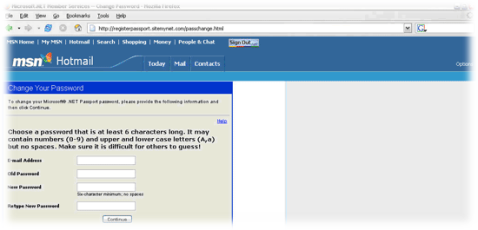
According to Neowin:

“It appears only accounts used to access Microsoft’s Windows Live Hotmail have been posted, this includes @hotmail.com, @msn.com and @live.com accounts.

However, considering the Windows Live ID is a single sign-on solution for all Microsoft and Windows Live services, the implications could be a lot greater than first considered.

While phishing is relatively new in the grand scheme of online malware and threats, it seems the tens of thousands of users have mistaken a genuine login page for a fake one, and are now suffering the consequences.

This poses a question I have considered for some time now. There will no doubt be a number of students who have been a victim in this phishing campaign who have been sending and receiving important emails through the service, instead of their own university dedicated system.

Phishing often relies on the service targeted having a massive user base. In comparison to colleges and universities, Hotmail has a greater number of users worldwide, therefore the benefits reaped would be greater.

As a result, it is not clear whether users of Live@edu were targeted, considering the Windows Live ID sign-in process is identical to that of Hotmail. The potential, however, is very much there,

It is unclear at this time whether this is a “proof of concept” come protest-like attack, as the potential to take advantage of these accounts on a personal scale could be endless. But considering the details were published to the wider web, it seems to me it could be a way of alerting people to the consequences of phishing and/or the security of Hotmail.

With the simplicity of the Windows Live ID sign-in screen, to attempt to create a phishing site from this is surprisingly easy. However with the most recent browsers, a clear green bar or similar will indicate that in fact the sign-in screen is secure.

Nevertheless, it is an interesting story which may well see Microsoft bump up their security to Yahoo! anti-phishing standards.

Microsoft’s statement:

“Over the weekend Microsoft learned that several thousand Windows Live Hotmail customers’ credentials were exposed on a third-party site due to a phishing scheme. As always, upon learning of the issue, we immediately requested that the credentials be removed and launched an investigation to determine the impact to customers.

As part of that investigation, we determined that this was not a breach of internal Microsoft data and initiated our standard process of working to help customers regain control of their accounts.”

Kick off your day with ZDNet's daily e-mail newsletter. It's the freshest tech news and opinion, served hot. Get it.

Topics

Zack Whittaker, a criminologist who studied at the University of Kent, Canterbury, is a journalist, writer and broadcaster.

Disclosure

Zack Whittaker

I worked briefly with Microsoft UK in 2006 but no longer have any connection with the company. Regardless, I remain impartial and unbiased in my views.

I don't hold any stock or shares, investments or industrial secrets in any company, but have signed confidentiality agreements with a number of UK and U.S. organisations, whose names I am not at liberty to disclose.

I was involved with Kent Union, the University of Kent's student union, undertaking voluntary, non-salaried, elected positions between early 2009 and mid-2010.

No other company, body, government department, non-governmental organisation or third sector organisation employs me or pays me a salary in any capacity whatsoever.

As a freelance journalist, whenever expenses are given and taken by a company that is not CBS Interactive, these will be disclosed in each relevant post to ensure transparency.

I currently work with a UK law enforcement unit, but this is an entirely separate position which bears no connection to other work.

(Updated: 23rd October 2011)

Biography

Zack Whittaker

Zack Whittaker, criminologist who studied at the University of Kent, UK, is a journalist, writer and broadcaster.

After studying criminology at university, though still in his early-20's, he has already had a series unconventional work and voluntary positions. He has worked with researchers studying neurological illnesses like Tourette's syndrome (which he suffers from), has given lectures on the nature of disabilities in the public community, and occasionally ends up speaking on television and radio discussing the events of the day.

He first had academic work published at the age of 22, then still an undergraduate, and has been cited by a wide range of publications: from the Huffington Post, Business Insider, AllThingsDigital, The Atlantic Wire and CBS News.

77
Comments

Join the conversation!

Just In

Hotmail Phishing Scam
HT Slider Updated - 28th Oct 2009
A friend of mine fell victim to this scam. A few weeks ago a number of servers in China were set up to "pose" as hotmail, live, etc. servers. The ones I am aware of were posing to provide information on who has blocked your e-mails in the past.

Here is one of these sites: tftys[dot]grab-your-block-status[dot]com (DO NOT PROVIDE ANY ACCOUNT INFORMATION TO THEM)

The area where Microsoft comes in is Microsoft's servers were not able to detect the "Bots" as they accessed victim's hotmail accounts and extracted ALL of their contact information. At this point the Bot would then send out e-mails using the actual, official hotmail account of the scammed user to each and every contact asking each contact to check out the phishing site. Since these e-mails were actually sent by friends and colleagues, many additional people fell victim to the scam.

Ultimately this was a phishing scam, but some could argue that Microsoft should have detected the many 1000's of Bots logging in and extracting all contact information and then sending out e-mails to every contact.

Should Microsoft be able to detect these Bots quickly enough to stop 10,000's of account e-mail addresses from being stolen?

Note there could be other phishing scams related to this post. This is just one I am aware of.
0 Votes
+ -
wrong headline
Linux Geek 5th Oct 2009
while I punch M$ every time it deserves it, phising points to user stupidity not to some sort of hacking or intrusion.
That could potentially happen to ANY online email provider...just replace the phising screen.
0 Votes
+ -
Facts...
Joe_Raby 5th Oct 2009
have never stopped Zack from sensationalizing a story into an anti-Microsoft rant before....
redirecting the login screen, so you think you are
actually logging into your account. That is
different than clicking on a link in your email
that asks for username and password.

Let's wait and see what it really was.
0 Votes
+ -
DNS
LiquidLearner 5th Oct 2009
Unpatched DNS vulnerabilities could lead to this, which is why the DNS flaws recently found were so important. If login.live.com gets redirected to a nasty site then it's the DNS provider's fault. However it's usually something in an e-mail saying you need to update account info, it has a URL Link that really goes to an IP address that mimics the site. If that is the case then it is user stupidity ignoring that you're at an IP and not the correct login address.
0 Votes
+ -
Keep in mind
AzuMao 7th Oct 2009
That phishers aren't limited to using IP links.
They could use a domain name like login.liwe.com
or login.live.co and although you might notice it
most of the time, all it takes is one mistake for
them to have your account.

Best to just never click links in emails at all.
0 Votes
+ -
login.live.co
Me_too 10th Oct 2009
I received 1 of those yesterday from a web mail "login.xyzyx.co," I thought it was a typo so I did a copy/paste to the address bar and I wound up with login.xyzyx.co on the address bar then I added the 'm' on the end and went ahead with the process of answering the request. I had just sent them a request for help so I was expecting the mail.
0 Votes
+ -
*claps*
TylerM89 5th Oct 2009
The one time I've actually agreed with Linux Geek.

This story is all about the author trying to get page views and make money, very sad...
simple phishing attack. It sounds like it IS
something that MS can fix.
0 Votes
+ -
And here I thought..
TylerM89 Updated - 5th Oct 2009
I was going crazy when I actually agreed with Linux Geek, but I'm glad you brought me back to reality, I knew it was to good to be true, Linux/OS zealots being... logical? Impossible!

It actually sounds just like a phishing attack. 10,000 accounts? That's nothing. There are 10s of millions of users.
to hear you say that.

People are not mere numbers, people are people.

So much for your logic argument.
0 Votes
+ -
Way to skim the comment..
TylerM89 5th Oct 2009
If this was a hack, why only about 10,000 accounts? Why not millions, or tens of millions?

People aren't numbers, but in this case, only 10,000 doesn't seem like a hack.

Multiple reliable news sources stated this appears to be phishing, and not a hack.
0 Votes
+ -
hacked???? Really?
pupkin_z 5th Oct 2009
Nobody REALLY hacked their accounts. They typed all the info themselves. You can download all the images to your local computer and make a page that looks exactly like the original. Now you just need to lure customers to this web-site, record their username and password, and redirect the request to the original live.com. The customer would never know that a third-party web-site recorded his/her username and the password. Since this type of phishing became so popular many banks had to change their login process to prevent this happening.

So,,,, dear author, how is this hacking?
there through a hack, of possible the DNS system,
then that is quite a different story than if they
clicked on a link in an email.
0 Votes
+ -
Hold your horses
The Mentalist Updated - 5th Oct 2009
How do you know the users typed the info themselves? Where did you read that? Do you have access to privileged info, something us mere mortals can't access?
0 Votes
+ -
@Mentalist
LiquidLearner 5th Oct 2009
What do you think a phishing attack is? If this is a phishing attack, which we have no reason to believe otherwise (regardless of how it occured), then the users typed in the info themselves. That's what phishing means.
users. Why is this only affecting hotmail users?
0 Votes
+ -
Perhaps...
The Mentalist 5th Oct 2009
that's because stupid users choose to use hotmail leading to the impression that it is the service that is at fault when in fact it isn't, it just happens that hotmail is unfortunate to only attract stupid users.
0 Votes
+ -
So the hundreds of people
LiquidLearner 5th Oct 2009
who fall victim to PayPal phishing attacks on a daily basis are using a service only stupid people use? I fail to see how you're pinning this on MS in any way, shape or form.
0 Votes
+ -
This stupid user only used Hotmail for stupid email.
No More Microsoft Software Ever! 7th Oct 2009
I.E. when replying to ads, etc. Not for any REAL email. Hotmail is only useful for spam collection.
  • Flagged
0 Votes
+ -
Because...
TylerM89 5th Oct 2009
A criminals created extensive phishing sites for Hotmail? The same thing happens to banks, websites, and other notable companies. Windows Live happens to be massive.
0 Votes
+ -
have you read the original story...?
doctorSpoc 5th Oct 2009
it's not established how the info was obtained
yet.. hold your horses..
0 Votes
+ -
Hacked?
planruse 5th Oct 2009
If people gave up there details voluntarily, even via phishing sites, I wouldn't say Hotmail was hacked.
Hotmail. And, it appears that it is something that
MS can fix. So, let't wait and see what really
happened before flying off the handle.
0 Votes
+ -
Why do you say that?
planruse Updated - 5th Oct 2009
Hotmail is the biggest web mail service, especially in Europe, where these email accounts are from. The phishers have tricked people into giving up there details, probably by imitating the login screen. Why do you think phishing attacks can't be limited to Hotmail?

Also who is flying off the handle when I am quoting the blog saying they were hacked which then goes on to say it was probably a phishing attack?
for gmail, yahoo as well.
0 Votes
+ -
They exist... (nt)
LiquidLearner 5th Oct 2009
nt
"While phishing is relatively new in the grand scheme of online malware and threats..."

Phishing is new? Really? I remember getting phishing IMs and emails way back when AOL dial-up was how most people connected to the internet. I would hardly call something that's been in practice since the 90's "new".

Also, the fact that accounts were compromised via user stupidity, rather than someone actually breaking into hotmail somehow, does not mean that any sort of "hacking" was involved. Now, if you were to change the headline to something along the lines of "Phishing scam compromises thousands of hotmail accounts", that would be a much more appropriate headline than your current one. Of course, then you wouldn't get as much traffic to your article. Far be it from me to question your journalistic integrity and/or technical knowledge though...
have been able to redirect the login screen. Tell
me, how is the average user supposed to detect a
redirected login screen. Tell me exactly what URLs
are acceptable.

But, in any case, we need to wait and see what
really happened and why this attack is limited to
Hotmail accounts.
0 Votes
+ -
That Is...
GuyAlanDye 5th Oct 2009
...great advice, so stop responding to every post with a frame of mind that screams "PLEASE GOD, LET THIS BE MICROSOFT'S FAULT!!!"

If I have somehow misread you jumping in with a contrary opinion to anyone stating it's probably just a phishing attack, please correct me.

And have a wonderful day.
Too soon to blame it on STUPID hotmail users.
0 Votes
+ -
try basic security like...
janitorman 7th Oct 2009
LOOKING AT THE URL BOX! If you don't have that on... you shouldn't be using the internet.
And I "tsk" at microsoft for making all these "live" sites instead of secure "hotmail" "msn" etc sites, OR making "live" more secure and making each site "hotmail.live.com" or whatever instead of "mail.live.com"
When they first did that "live" business I thought I'd been redirected to a hacker site, as it was. "Live" just sounds like one of those "social networking" garbage sites like twit or faceless book.
0 Votes
+ -
Phishing is NOT new
rogerbro@... 10th Oct 2009
Phishing goes back even before the internet existed. I used to receive occasional 'Nigerian Scam' letters by post as long ago as about 1985. They were posted to a small business address.
From reading only the information provided in this article, the only solid information provided is that "Thousands, perhaps tens of thousands of Hotmail accounts have been hacked through phishing sites and published online..." He then goes on to SPECULATE that there were sites designed to look like the authentic login screen. There were no facts about how the phishing was done, only that accounts were compromised via phishing. If that's the case, the only thing MS can do to fix it would be to complain and have those sites shut down. Again, though, this is all based upon speculation and assumptions. From only reading the article, there was no evidence or facts pertaining to anything that sounded like "hacking".

As to what URLs are acceptable, for Live if you are using anything other than "https ://login. live. com/" (there may be other characters after that, depending on how you got to the login screen, but I would personally just type that in or bookmark that particular URL), you're asking for trouble.

(EDIT: Sorry, this was in response to DonnieBoy's reply to my original message.)
is limited to Hotmail users, and, it sounds like
it may be only Hotmail users in Europe. But, we
have no real evidence right now to say if it was a
real problem with Hotmail, or just a run of the
mill Phishing attack.

But, do not be too quick to blame this on "stupid"
Hotmail users.
Yes, there is a reason why it was limited to hotmail users and it was probably because whatever 3rd party site was set up was intended to look like the MS Live login page, since, as the article pointed out, it is a simple page that would be easy to replicate.

Given the article's recent update with the quote from MS, it does sound like a simple phishing scam that way too many people fell for and NOT anyone hacking MS's internal data. So, my blaming "stupid" hotmail users that fell for the scam is justified. Also justified is my complaint that there was no hacking involved, but rather a phishing scam. Phishing is NOT the equivalent of hacking and should not be portrayed as such, like the subject of the article does.
for hotmail. And, it said that the users appear to
all be in Europe, so maybe the DNS in Europe was
hacked.

We need more information . . . .
0 Votes
+ -
Hotmail NOT hacked
Joe_Raby 5th Oct 2009
Hotmail wasn't hacked. This was a phishing scheme, plain and simple. Somebody used a fake Windows Live ID login page and collected user details from it. They could've easily posted the link on a frequently-visited webpage that they have [some] control over, and just sat there anonymously collecting results.

I'm sure somebody (Microsoft maybe) will be targetting pastebin.com for information about the anonymous user's connection information such as their IP address, and whatever other information pastebin.com would've collected about them.
If I read this story correctly, someone set up a phishing site and made it look like hotmail, so it was hotmail that got hacked? That makes no sense. It was users logging into a phishing site then the owners of that site posted the login/password info. Microsoft Hotmail in no way was responsible for any of this.
Can I reveal it here? Do you give me permission to do it? Pleeeaase?
0 Votes
+ -
I have it right here...
The Mentalist 5th Oct 2009
Can I reveal it to every one? Pleeeeaaase?
0 Votes
+ -
ARE YOU COMPLETELY STUPID????
de-void-21165590650301806002836337787023 5th Oct 2009
How will explaining that this was just a phishing attack after all generate as many page hits?

(Sorry for calling you stupid in the title - was just to generate hits to this response. Am sure you're not stupid at all :))
0 Votes
+ -
rofl...
jasonp@... 5th Oct 2009
Sometimes responses garner a chuckle. This one came with a screen cleaning as I happened to be drinking a beverage at the time. Brava.
0 Votes
+ -
Sorry 'bout that (NT)
de-void-21165590650301806002836337787023 6th Oct 2009
NT
0 Votes
+ -
Contributr
In my defence
zwhittaker 5th Oct 2009
It was more for alliterative purposes; had a bit of a ring to it. There's no clear cut definition to a hack, as such, so to illegally obtain usernames and passwords shows a "hack" to some extent. Either way, it was just one of those journalistic executive decisions to use that word. The headline is there to draw in readers; the main body of the text is there to explain what the headline is about. I feel I accurately portrayed what I meant by "hack" in the article text.
0 Votes
+ -
My account was HACKED!!!!
tonymcs@... 5th Oct 2009
No it wasn't.

By using the word hacked you just support people in the delusion that it wasn't their fault. Hacking does have a common definition - it means someone else did something evil, not you.

Phishing by definition makes it your fault. You're the sucker on the end of the line and no-one "hacked" your account - you gave it to them freely. Yes we all make mistakes and we can offer sympathy, but no-one got hacked - they got conned instead.

So next time try not to perpetuate the myth and realise that language does matter if it tries to remove people of their responsibility.
0 Votes
+ -
Whose fault?
jpdemers@... 8th Oct 2009
"Phishing by definition makes it your fault."

Really? I'll keep that in mind the next time I get stuck with a counterfeit $20 bill.
0 Votes
+ -
That's not phishing
ITLeader 8th Oct 2009
Nor is it a hack.
0 Votes
+ -
Um... no
mmb311 8th Oct 2009
While there may not be a definitive, clear-cut definition to what "hack" means, what took place was not "hacking". Hacking, to most I would assume, denotes some sort of effort on the part of someone to "break into" somewhere and manipulate things or gather information from within or to somehow intercept communications and use them to the hacker?s advantage. "Hacking" requires, in relative terms, a much higher level of technical understanding and manipulation than "phishing". While there are certainly different complexities of "phishing", all phishing scams rely on the end user not realizing they're voluntarily giving their information to someone who is not who they claim to be. Hacking, on the other hand, assumes that the user IS giving their information to the right people, but someone else has broken into that system or intercepted the communication and is now getting the users information.

Yes, you did accurately portray what you meant by "hack". In your headline you used "hack" and in your article you explain all about "phishing". So, by that logic, I could easily write my own article that "Bad Day: So I shot at random people in the subway today" and then go on to explain how I was having a bad morning and in an attempt to turn it around I made a conscious effort to smile at everyone I saw. See, I accurately portrayed what I meant by "shot". By "shot", I actually meant "smiled". But why would I make my headline "I shot at random people"? Well, you already explained why, to get more people to click on my article. Bravo sir. Bravo.
0 Votes
+ -
wrong wrong wrong
nanotm 8th Oct 2009
hacking is termed as an effort applied in order to gain unauthorised access to information held electronically that may or may not be private. therefore the fact that effort was used makes it a hack, the act of accessing the account would also make it a hack no mater that the login details were harvested with the aid of user interaction as opposed to via some malware activated on the users pc that acted without there knowledge.

i'll give you the report headline is a bit missleading, then again given that one of my accounts was compromised and since i had site adviser running the whole time which didnt trigger any alerts not to mention the fact the infor was collected by a datalogger attached to the live website does make it something of a more sophisticated phishing scam that didnt need anything other than an account holder attempting to access there account (thank god it was one of the dupes used for spam harvesting)
0 Votes
+ -
Hotmail Phishing Scam
HT Slider Updated - 28th Oct 2009
A friend of mine fell victim to this scam. A few weeks ago a number of servers in China were set up to "pose" as hotmail, live, etc. servers. The ones I am aware of were posing to provide information on who has blocked your e-mails in the past.

Here is one of these sites: tftys[dot]grab-your-block-status[dot]com (DO NOT PROVIDE ANY ACCOUNT INFORMATION TO THEM)

The area where Microsoft comes in is Microsoft's servers were not able to detect the "Bots" as they accessed victim's hotmail accounts and extracted ALL of their contact information. At this point the Bot would then send out e-mails using the actual, official hotmail account of the scammed user to each and every contact asking each contact to check out the phishing site. Since these e-mails were actually sent by friends and colleagues, many additional people fell victim to the scam.

Ultimately this was a phishing scam, but some could argue that Microsoft should have detected the many 1000's of Bots logging in and extracting all contact information and then sending out e-mails to every contact.

Should Microsoft be able to detect these Bots quickly enough to stop 10,000's of account e-mail addresses from being stolen?

Note there could be other phishing scams related to this post. This is just one I am aware of.

Join the conversation!

Formatting +
BB Codes - Note: HTML is not supported in forums
  • [b] Bold [/b]
  • [i] Italic [/i]
  • [u] Underline [/u]
  • [s] Strikethrough [/s]
  • [q] "Quote" [/q]
  • [ol][*] 1. Ordered List [/ol]
  • [ul][*] · Unordered List [/ul]
  • [pre] Preformat [/pre]
  • [quote] "Blockquote" [/quote]
ie8 fix

The best of ZDNet, delivered

ZDNet Newsletters

Get the best of ZDNet delivered straight to your inbox

Facebook Activity

White Papers, Webcasts, & Resources
ie8 fix