London Underground considers cell network rollout for 2012 Olympics

By | February 21, 2011, 2:07am PST

Summary: In hope for completion for the 2012 London Olympics, Chinese telecoms manufacturer Huawei is bidding for the contract to supply mobile voice and data to the London Underground transport network.

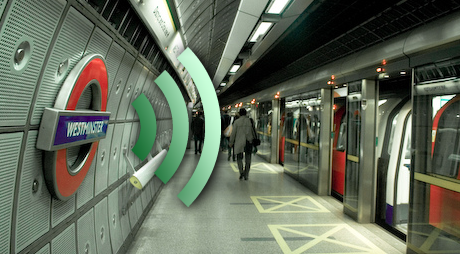
London Underground, colloquially known as the ‘Tube’, may roll out mobile coverage across the network ahead of the 2012 Olympics.

The rollout is currently under bid by Chinese telecoms manufacturer Huawei, which would allow hundreds of thousands of Londoners and tourists each day to work while commuting to work.

Mobile access has been difficult, if not impossible on the vast majority of the network in central London. Only certain mainline railway stations and Underground stations are equipped with Wi-Fi and cell repeaters, such as Charing Cross and St. Pancras.

Oddly enough, nearly 60% of the London Underground network is in fact over ground which has good cell coverage. But for those hundreds of feet under the surface of London who commute around the city center each day, teleworking is impossible.
But mobile network access on the Tube has gone without controversy.

After the Kings Cross fire in 1987, an inquiry headed by Desmond Fennel QC led to recommendations in radio communications on the Underground. Though nearly twenty years after the disaster, now police and emergency service radios now work underground.

Had these changes been implemented sooner, it could have assisted the recovery in casualties during the London suicide bombing in 2005, where 52 people were killed.

Conversely, some are concerned that the ability to communicate through cell networks on the Underground could assist bombers who could remotely detonate explosives on trains, as seen in 2005.

As a frequent commuter on the Underground, along with hundreds of thousands of students who study at over a hundred universities in London, the benefits would outweigh the perceived negatives.

Similarly during the time I spent in New York City last year, I recall looking at my BlackBerry, clear as day as I sat next to Mary Jo Foley on the subway traveling south towards towards Wall Street. I turned to her and said, “Ooh, I can get mobile signal” in a moment of delight.

Perhaps we weren’t that deep underground after all. Nevertheless, I saw this as New York taking care of its telecommuters. How wrong I was.

Though there is no direct cell provision installed on the network, the city authorities are also hoping to bring mobile signal to the entire subway system. Costing $200 million and starting three years behind schedule, the New York Metropolitan Transportation Authority called the subway “an information black hole”.

Considering what the Tube is like first thing in the morning, it should probably come as no surprise that the most popular reason for wanting mobile signal on the Underground was to “let people know when I’m running late”, according to recent research.

Kick off your day with ZDNet's daily e-mail newsletter. It's the freshest tech news and opinion, served hot. Get it.

Topics

Zack Whittaker, a criminologist who studied at the University of Kent, Canterbury, is a journalist, writer and broadcaster.

Disclosure

Zack Whittaker

I worked briefly with Microsoft UK in 2006 but no longer have any connection with the company. Regardless, I remain impartial and unbiased in my views.

I don't hold any stock or shares, investments or industrial secrets in any company, but have signed confidentiality agreements with a number of UK and U.S. organisations, whose names I am not at liberty to disclose.

I was involved with Kent Union, the University of Kent's student union, undertaking voluntary, non-salaried, elected positions between early 2009 and mid-2010.

No other company, body, government department, non-governmental organisation or third sector organisation employs me or pays me a salary in any capacity whatsoever.

As a freelance journalist, whenever expenses are given and taken by a company that is not CBS Interactive, these will be disclosed in each relevant post to ensure transparency.

I currently work with a UK law enforcement unit, but this is an entirely separate position which bears no connection to other work.

(Updated: 23rd October 2011)

Biography

Zack Whittaker

Zack Whittaker, criminologist who studied at the University of Kent, UK, is a journalist, writer and broadcaster.

After studying criminology at university, though still in his early-20's, he has already had a series unconventional work and voluntary positions. He has worked with researchers studying neurological illnesses like Tourette's syndrome (which he suffers from), has given lectures on the nature of disabilities in the public community, and occasionally ends up speaking on television and radio discussing the events of the day.

He first had academic work published at the age of 22, then still an undergraduate, and has been cited by a wide range of publications: from the Huffington Post, Business Insider, AllThingsDigital, The Atlantic Wire and CBS News.

1
Comments

Join the conversation!

If you had to listen to the high volume inane drivel that passes for a phone conversation on the Turkey St. to Liverpool St. main line every day, you might not think this is such a great idea.

Join the conversation!

Formatting +
BB Codes - Note: HTML is not supported in forums
  • [b] Bold [/b]
  • [i] Italic [/i]
  • [u] Underline [/u]
  • [s] Strikethrough [/s]
  • [q] "Quote" [/q]
  • [ol][*] 1. Ordered List [/ol]
  • [ul][*] · Unordered List [/ul]
  • [pre] Preformat [/pre]
  • [quote] "Blockquote" [/quote]
ie8 fix

The best of ZDNet, delivered

ZDNet Newsletters

Get the best of ZDNet delivered straight to your inbox

Facebook Activity

White Papers, Webcasts, & Resources
ie8 fix