The plague of plagiarism: A university's reality check

According to a recent study by The New American, plagiarism is on the rise in universities across America. In conjunction with this, the report suggested that students now display a more casual attitude towards cheating.
An earlier survey conducted by CNN stated that more than 75 percent of students engage in 'serious' cheating, with more than half engaging in the art of plagiarism.
One student participant in the survey stated: "Cheating is a shortcut and it's a pretty efficient one in a lot of cases."
Last year at Utah State University 26 cases of academic dishonesty were reported, but the problem is believed to be far more extensive. Eric Olsen, associate vice-president for student services stated: "Plagiarism is definitely a big deal here, and it is increasing [..] many students don't get caught, and many students get caught by their professors but aren't reported to us."
Increasing pressure to do well in school and achieve high grades may have intensified the problem. The higher your score, the more chance you have of competing for and winning that university place.
There is a strong case for Internet access becoming a major element in current students increasingly committing plagiarism. Easy electronic access through computers or mobile devices, in the same way as downloading copyrighted material, can make plagiarism seem normal and easy to rationalize. Essay writing services of course existed prior to the Internet -- being online hasn't created plagiarism, but it has made it far easier to commit.
But what are the repercussions of this kind of attitude towards plagiarism and cheating?
Consequences at university
The consequences at university can be severe if you're caught. Students can be placed on immediate probation for varying lengths of time; and may in extreme or repeat offences face expulsion from their institution.Notations are likely to be placed on offending transcripts -- with marks being lowered to zero a real possibility. Other pieces of work you submit may also come under intense scrutiny.
Future study prospects
An academic career can be irrefutably damaged. Plagiarism may be a spur of the moment decision, accidental or due to desperation, but any stain on your credibility can impact on future opportunities to continue study.It is also a possibility than expelled offenders may not be permitted to continue working towards a degree in other institutions -- what universities would be willing to take on a student with this kind of branding on their record?
As a rule, the higher you progress in academia, the more scrutiny you will be under -- and the more severe the consequences of academic dishonesty.
Future job prospects
Consider this -- if you apply for a journalism or research-based job in the future and there are notes on your transcripts that you have committed plagiarism, how many employers would find that attractive?The record of plagiarism can be a permanent stain on your integrity and trustworthiness.
If you rely on cheating in order to achieve a certain grade, this can also be detrimental to future job performance. By lacking skills such as analysis, information processing and writing, it is by no means assured that you can 'bluff' your way through an industry and advance further within a future career.
But in reality?
On paper, rules and regulations state all of these dire consequences in one form or another. However, often plagiarists receive no more than the proverbial 'slap on the wrist' by being awarded a mark of zero for copied work, and little more than this. When lecturers have enough on their plate with hundreds of essays to mark, a lengthy examination of a singular student's work may not be a feasible option.In my time at university, it was common knowledge that plagiarists were sometimes able to resubmit coursework after being caught -- with no true detriment to their final grades or marking limitations.
It may be the case that the less plagiarism publicity for a university, and the fewer students recorded to have committed such academic dishonesty, the better for the university as an institution.
In relation to a university's reputation and spot on league tables, simply awarding zero or allowing a coursework re-submission may be the preferable alternative to lengthy examinations and expulsion records.
Another point to consider is that students who are expelled for this kind of cheating no longer continue being a source of revenue for university coffers.
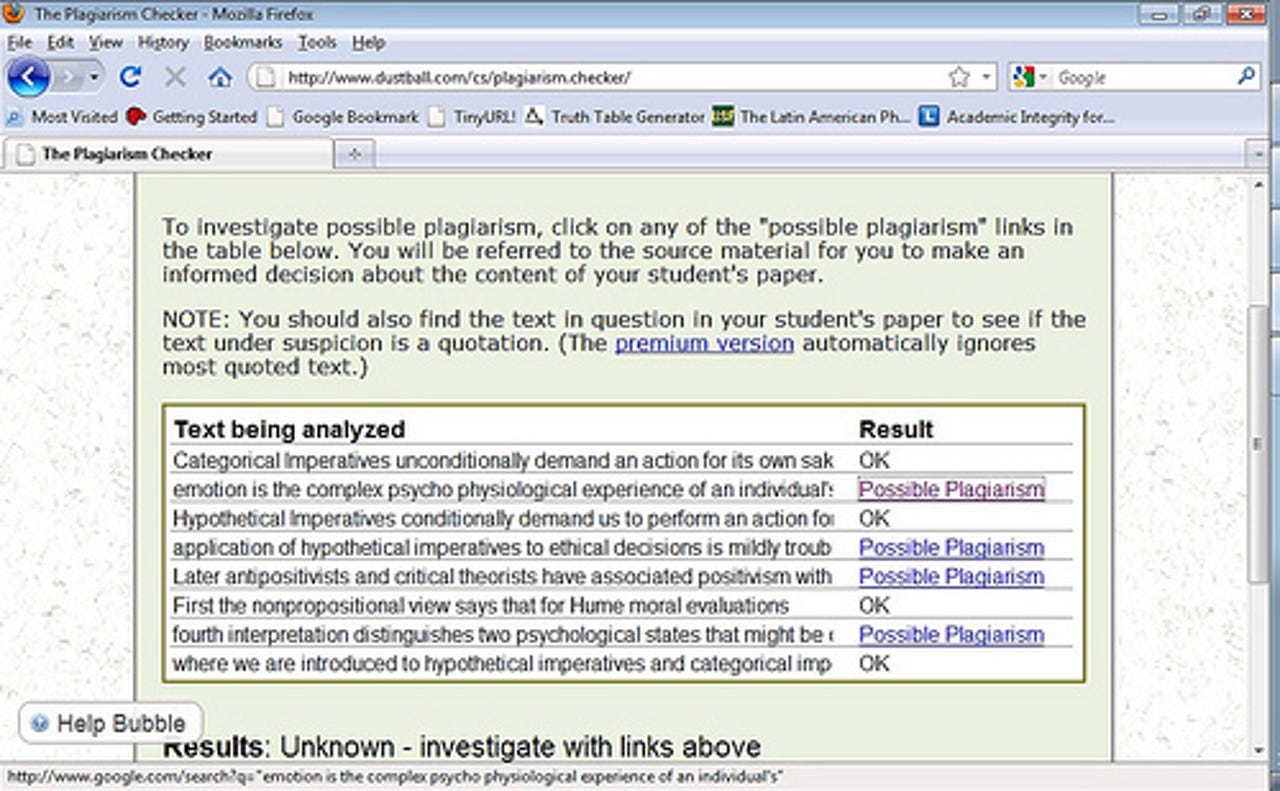
Education professionals do have the ability to fight back -- websites exist that allow teachers to submit their student's papers to check their work for matching prose. However, the determined plagiarizer, if they possess common sense, would be able to keep ahead of these methods of validation.
It may also be the case that with an increasingly tech-savvy younger generation they would know more about the means in which to cheat online -- therefore circumventing checks that their teachers can perform.
Repeat offenders may be rare, but it's best to be careful with your sources in the first place. By committing plagiarism you undermine academic integrity at its core; and it has the possibility to rear its ugly head in the future with damaging consequences.
Perhaps if less emphasis was placed on achieving that perfect grade and regurgitating facts and figures, and more placed on self investment and actual skill building, plagiarism might become less of an issue.
Related: