Will the mobile networks survive New Year?

By | December 31, 2009, 10:11am PST

Summary: With New Year approaching the West and smartphone traffic at an all-time high, will the networks be able to cope with the vast traffic expected on the night?

As countries and continents to the left of Greenwich Mean Time prepare to celebrate the New Year, most would be forgiven for failing to consider the stress on the mobile bandwidths over the celebratory period. After examining last year’s festivities and recent failings and outages across mobile networks, I’m concerned this New Year the networks could crash entirely. even albeit for a short time.
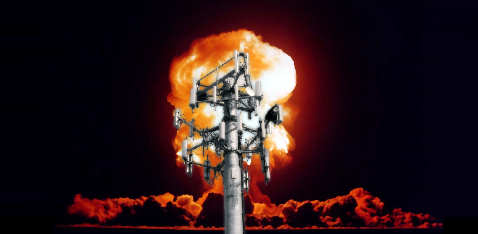
This past year has seen an increase in smartphone sales but also an increase in network outages. London has been affected badly with O2’s network, for a time the only network which offered the iPhone, which left thousands of users without Internet access for hours on end.

Christmas has been and passed with few issues reported, but as New Year approaches, with each timezone hitting 2010 an hour after each other, expect to see network connectivity issues spreading from east to west.

The problem will hit us at New Years. The vast firework spectacles, the social media world erupting with tweets and Facebook statuses wishing everyone a happy New Year, and an expected massive surge in text messages with very much the same content.

The end result would be a massive data surge which, no doubt the networks are aware of and are attempting to preempt any downtime. But the fragility of the network can only be bolstered so much before the overall infrastructure fails.

Almost as soon as Wal-Mart started selling the iPhone 3G, the huge popularity of the phone crippled the AT&T network with users unable to activate their new phones. I foresee a similar thing happening in the next few hours. The BlackBerry network, considered in my eyes as a strong and dependable infrastructure, suffered two outages in the space of a week, questioning the reliability of the network.

With more smartphones taking up mobile web traffic, videos and pictures being sent over the networks, along with ordinary text messages and voice calls being initiated at the same time, the 3G network could crawl at a snail’s pace according to the Telegraph.

Will the networks collapse? I hope not, but once it hits midnight, you may have to keep resending that same text message until you get a gap in the queue.

Kick off your day with ZDNet's daily e-mail newsletter. It's the freshest tech news and opinion, served hot. Get it.

Topics

Zack Whittaker, a criminologist who studied at the University of Kent, Canterbury, is a journalist, writer and broadcaster.

Disclosure

Zack Whittaker

I worked briefly with Microsoft UK in 2006 but no longer have any connection with the company. Regardless, I remain impartial and unbiased in my views.

I don't hold any stock or shares, investments or industrial secrets in any company, but have signed confidentiality agreements with a number of UK and U.S. organisations, whose names I am not at liberty to disclose.

I was involved with Kent Union, the University of Kent's student union, undertaking voluntary, non-salaried, elected positions between early 2009 and mid-2010.

No other company, body, government department, non-governmental organisation or third sector organisation employs me or pays me a salary in any capacity whatsoever.

As a freelance journalist, whenever expenses are given and taken by a company that is not CBS Interactive, these will be disclosed in each relevant post to ensure transparency.

I currently work with a UK law enforcement unit, but this is an entirely separate position which bears no connection to other work.

(Updated: 23rd October 2011)

Biography

Zack Whittaker

Zack Whittaker, criminologist who studied at the University of Kent, UK, is a journalist, writer and broadcaster.

After studying criminology at university, though still in his early-20's, he has already had a series unconventional work and voluntary positions. He has worked with researchers studying neurological illnesses like Tourette's syndrome (which he suffers from), has given lectures on the nature of disabilities in the public community, and occasionally ends up speaking on television and radio discussing the events of the day.

He first had academic work published at the age of 22, then still an undergraduate, and has been cited by a wide range of publications: from the Huffington Post, Business Insider, AllThingsDigital, The Atlantic Wire and CBS News.

2
Comments

Join the conversation!

Just In

Nope
Cylon Centurion 3rd Jan 2010
They failed. I recieved 20 text messages that morning. 6 hours after they were sent out. sad
0 Votes
+ -
of course they will colapse
patibulo 1st Jan 2010
All networks are designed with a specific load in mind, following some statistical usage pattern. Network operators invest their money in updating the speed and quality of that usage pattern. Sometimes they even try to incentive their customers to modify their patterns to their wishes by having special rates in the evenings or weekends.

It makes no sense to invest in coping for a New Year's Eve pattern. Creating such a network would mean having an overscaled network the rest of the year.

They won't cope. They haven't been designed for that. And given that with the financial crisis less people haven't afford a plane ticket home, I predict that many of us will be calling and writing a lot.
0 Votes
+ -
Nope
Cylon Centurion 3rd Jan 2010
They failed. I recieved 20 text messages that morning. 6 hours after they were sent out. sad

Join the conversation!

Formatting +
BB Codes - Note: HTML is not supported in forums
  • [b] Bold [/b]
  • [i] Italic [/i]
  • [u] Underline [/u]
  • [s] Strikethrough [/s]
  • [q] "Quote" [/q]
  • [ol][*] 1. Ordered List [/ol]
  • [ul][*] · Unordered List [/ul]
  • [pre] Preformat [/pre]
  • [quote] "Blockquote" [/quote]
ie8 fix

The best of ZDNet, delivered

ZDNet Newsletters

Get the best of ZDNet delivered straight to your inbox

Facebook Activity

White Papers, Webcasts, & Resources
ie8 fix