Hands-on with the HTC Flyer; the magic Evernote tablet

I honestly didn't give much consideration to the HTC Flyer when I heard it was going to be the first HTC Android tablet. I had my Samsung Galaxy Tab and an iPad at the time and thought it was just another tablet. I was wrong and after using the evaluation model for just a couple of hours on Friday I went to Best Buy as soon as they opened on Saturday and purchased my own HTC Flyer. I posted some initial thoughts on how to use it Sunday and wanted to get more of my thoughts out there for you all to view as you consider this device and what it has to offer.
James posted some quick thoughts on Friday and I read on Twitter about others picking up the Flyer as well. I have an extensive image gallery that includes photos and screenshots, along with a video walk through and detailed written thoughts about my experiences so far. The more time I spend with the HTC Flyer the more impressed I am about all that HTC was able to pack into such a nice device.
| Image Gallery: You can check out over 50 photos and screenshots of the HTC Flyer. | 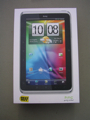 | |||||
In the box and initial hands-on
The HTC Flyer comes in a sturdy white box that matches the quality of the device. Inside the box you will find the HTC Flyer, A/C adapter, USB cable, and some pamphlets. There is no stylus or case, which is a shame. However, you can buy a stylus for $79.99 and I ordered a leather case with stylus holder from Expansys. In Europe HTC includes a stylus and case with the Flyer, but I am not clear if that is for both the 3G and WiFi-only models or just the 3G one. I wish the stylus was $50 or less, but you can honestly use the HTC Flyer without one too (just check out Jenn's post).When I first pulled the HTC Flyer out of the box, I could tell it was a high quality device. The aluminum shell felt great in my hand and the Flyer weighs in at just under a pound so it was not too heavy for me. The width is perfect for my hand, especially when compared to the BlackBerry PlayBook that is just a bit too wide. The display looks great and the curves give it a nice feel in the hand.
Specifications
The specifications for the HTC Flyer include the following:- 7 inch 1024x600 pixel resolution capacitive touchscreen display
- Android 2.3.3 (Gingerbread) operating system
- HTC Sense 2.1 for Tablet UI
- 1.5GHz single core SnapDragon processor
- About 4GB internal application memory and 9GB usable internal tablet storage memory. Total is 16GB internal.
- microSD memory card slot
- 802.11 b/g/n WiFi
- Bluetooth 3.0
- Internal GPS receiver and digital compass
- 5 megapixel rear camera and 1.3 megapixel front facing camera
- 3.5mm headset jack
- 4,000 mAh battery
- Dimensions of 195.4 x 122 x 13.22 mm and 420 grams (7.77 x 4.8 x 0.52 inches and 14.82 ounces)
Two specs that immediately stand out to folks will be the single core processor and the use of Gingerbread rather than Honeycomb. The single core processor is the fastest I have seen and performance has been outstanding. Battery life has been great so far so I am not sure if a dual-core or single core is much of a concern here.
I have yet to find Honeycomb appealing and preferred the Galaxy Tab with Froyo over the Motorola Xoom with Honeycomb. I still think Gingerbread is better since the experience is more fluid and integrated with better application support so I am in no rush to have the Flyer updated to Honeycomb, which I understand HTC will eventually do with the device. Gingerbread works well and with the HTC Sense UI on top, that I love, the device is great for my needs.
Walk around the hardware
The front of the HTC Flyer is dominated by the 7 inch display. While the display looks great, looking at the same photos side-by-side with a PlayBook shows the PlayBook has a better display with clearer and crisper photos. There are no hardware buttons on the front of the Flyer, but there are capacitive buttons for Home, Menu, and Back with a special green one for the stylus. These buttons light up and become functional in portrait and landscape, but not in all four directions.The top holds the power button and 3.5mm headset jack. The power button has an integrated indicator light that shows you charging status. The microUSB port is on the bottom and even though it and the charger/cable end look strange a standard microUSB cable will work to charge and connect your Flyer to a computer or charger.
The right side houses volume buttons and two microphone openings. There is nothing on the left side.
The stereo speakers and 5 megapixel camera are found on the back of the Flyer with the camera offset in the upper left area. There are two white plastic pieces at the top and bottom, but don't try to remove the bottom piece since it is not removable and you will just end up breaking the Flyer. The top piece is removed by pressing down slightly in the middle and sliding up. The only reason to slide this off is to insert a microSD card.
A look at the Sense 2.1, the stylus and software »
HTC Sense 2.1 for Tablets
HTC includes a version of sense on the HTC Flyer that looks a lot like what I have seen with HTC Sense 3.0 coming soon to several smartphones. I love Sense for its excellent Exchange experience that makes me want to use HTC devices rather than my Outlook desktop client.In addition to Exchange, this version of Sense includes four customizable lock screen apps and background weather support. After setting up what app shortcuts you want on the lock screen, if you are not happy with the default ones like me, you then just drag and drop that icon in the big white circle and it will take you right into that application. If you just want to unlock your Flyer you drag the circle up and flick it.
You will then see eight different Home screen panels, versus seven found on earlier versions of Sense. There are three other customizable bottom buttons between the application launcher button and personalize button.
You will also find some wonderful landscape enhancements on the HTC Flyer in these applications:
- Calendar
- Twitter (Peep)
- HTC News
- Gallery
- Exchange email client
With many of these you will see preview panes on the right or other advanced views that have me flipping into landscape just to see how much more functional an application can be.
Stylus pen usage
I will discuss some of the pen apps and functions here, but I am still discovering them after just a couple of days with the HTC Flyer. Make sure to check out the video below from Steve over at Carrypad as he spends about 35 minutes going through all of the apps and pen functionality. He also has four other videos on YouTube for the HTC Flyer you should check out.The pen itself is powered by a single AAAA battery that is included in the package. Two buttons are located on the stylus to enable highlighting and erasing right from the stylus itself. If you tap on the screen in an app that does not have native pen support, like the web browser, then the HTC Flyer automatically captures the screen and pulls it into the HTC Scribble app so you can write on it with the pen. You can then save this and do more with it in the Notes application.
There are six pen tips and one eraser head to use with the pen. Eight colors are available and when you tap on the color palette the ink moves like a drop in a bucket. You also have five available pen tip thicknesses to choose from. Changing all of these is as simple as tapping in the lower right pen control area on the display, as shown in several screenshots in my image gallery.
Unfortunately, there is no means to store the pen so right now I have to remember to carry it around in a pocket or in my bag. When my leather case with stylus holder arrives I will have a place to put it, but it sure would have been nice to have a silo on the Flyer.
Notes
Notes is really the premier Magic Pen-enabled application and the one I think people will use most with the stylus. As soon as I heard that Notes captured here were integrated with Evernote I knew I had to buy the HTC Flyer. Evernote is a fantastic application that offers amazing search capability where you can even get results for your handwritten text. With Notes you can include photos, video, audio files, documents, files and handwritten text to create a note that captures everything you could want. Timemark technology is also included so you can record a meeting while taking notes and see later that the two are synced so if you cannot read your note you might remember as you listen to what was being said as you wrote the note.Notes are killer on the HTC Flyer and as I mentioned already, my Bible study methods have just changed and been improved thanks to the HTC Flyer. You can also add notes to your appointments and when a reminder pops up HTC gives you the quick option to attach a note to that appointment. It looks like my meeting methods have just improved too.
Like many things on Android, you can share ink notes to Facebook, Twitter, etc. and they appear as an image that is very readable and enjoyable for your audience.
HTC Reader
HTC Reader is HTC's ebook application that is powered by Kobo. You can also easily place non-DRM EPUB and Adobe Digital Editions protected EPUB titles on the HTC Flyer through a USB cable connection. Unlike other ebook readers where I have to use the Adobe Digital Editions software on my computer, you simply drag and drop these books into the Digital Editions folder on your HTC Flyer. Within the HTC Reader application you will find an Adobe Digital Edition account sign in that authorizes the book license. I transferred many of my Sony Reader ebooks to my HTC Flyer and checked them out in the Reader.All of the ink functions mentioned above are supported in the HTC Reader so you can annotate away if you desire.
Gallery
HTC also includes the ability to mark up and have fun with photos on the HTC Flyer with support for inking in the Gallery. When you add ink to a photo, HTC saves them in an Inked photos folder so you can easily find them again.PDF Viewer
The included PDF Viewer application supports inking as well, with a limited number of ink options. You will only find a single pen type available in six different colors, and an eraser head, to use for marking up PDF files on the HTC Flyer.Polaris Office
At first I thought Polaris Office was simply a document viewer, I think I said this in my video too, but after further testing I see you can open up Word, Excel, and PowerPoint documents and then edit them with ink or keyboard text and then save them. Thus it is a viewer and editor with no ability to create a document. I suppose you could create blank documents to start as templates and then save them out, which is what we used to have to do with Microsoft smartphones.Again, the same single pen option mentioned for the PDF Viewer is available here in Polaris Office.
HTC apps and services
HTC includes a number of applications and some services on the HTC Flyer and the more I use the device the more I discover. Here are the apps I found on the HTC Flyer that are a bit unique:- HTC Watch: Video rental and purchase service. As of now the selection is quite small with rentals running about $2.99 and purchases at $14.99. I rarely watch movies more than once, but love to load up my devices with movie rentals for trips where hotels charge $12+ for a single movie.
- HTC Press Reader: A slick newspaper reader that can be set to deliver your paper every morning. Subscription trials are available for you to test it out.
- HTC News: This is a Google Reader RSS feed reader that works very well and has an awesome widget that WILL change the way I read my Google Reader content.
- HTC Snapbooth: Similar to Photobooth on the iPad 2, this apps lets you use the front facing camera and make crazy photos with funky effects.
- HTC Locations: This is an offline navigation solution powered by Route 66 and you get a free 30-day premium navigation trial. I included some screenshots in my gallery and until Google comes out with offline navigation solutions like these look decent.
- HTC Car Panel: This utility helps you access functions you would use in a car, such as navigation, Footprints, and nearby points-of-interest.
- Dock Mode: This mode gives you weather, time and date, Twitter status updates and the ability to turn on a photo frame (with music in the background and several effects), connect your media to a DLNA source, or view your calendar. It is a pretty slick utility, but I have yet to see an actual dock for the Flyer.
- HTC Weather: HTC spends a lot of time with weather and the experience on the Flyer is the best I have ever seen. You can get forecasts, including hourly and daily, for several different locations and it is powered by AccuWeather.com. Weather is even integrated into your calendar.
- HTC Music: HTC includes a decent music player on the HTC Flyer.
Other apps
There are several other apps available on or for the HTC Flyer I wanted to mention. You can also download and install thousands of apps from the Android Market.- Google Music: I also discovered that I received a Google Music invite on my HTC Flyer and uploaded 1700 songs. The app works well on the Flyer and with Google Music and Amazon Cloud Player the HTC Flyer turns into a music powerhouse that is still quite portable.
- Soundhound: A music identifier app, similar to Shazam, and is included on the device.
- Teeter: A balancing marble game found on HTC smartphones
- Slacker Radio: A streaming music service, and one that I prefer, especially with the new Android client.
Pricing, final first thoughts, and other reviews »
Pricing and availability
The HTC Flyer is available now for $499.99 at Best Buy with the pen available for $79.99. I could not find a case in stores, but ordered this leather one from Expansys for $35.99.Rumors are that a Sprint one will be launching sometime in June as well
Final first thoughts
As I said, I wasn't even thinking about the HTC Flyer as a serious contender for my cold hard cash, but after just a few hours with the evaluation device I went and bought my own. I am discovering new functions and features constantly and am finding the HTC Flyer to blow away the BlackBerry PlayBook I thought would be my main 7 inch tablet device. It may not have dual-core or the latest Android software, but it works amazingly well and more than gets the job done for me.The HTC Flyer is a high quality device and even though I have an iPad 2 I still don't find it travels with me as much as a 7 inch device does. The HTC Flyer is actually working out as a nice companion to my Nokia N8 too.
Other reviews
Here are some other reviews I found of the new HTC Flyer WiFi model and I encourage you to read more than just one review before making a purchase decision:
- Vlad Savov at Engadget with an 8/10 rating
- Chris Davies at SlashGear (Good battery life test results too)
- Melissa Perenson at PCWorld
- Lisa Gade at Mobile Tech Review