Tech Broiler

Jason Perlow and Scott Raymond

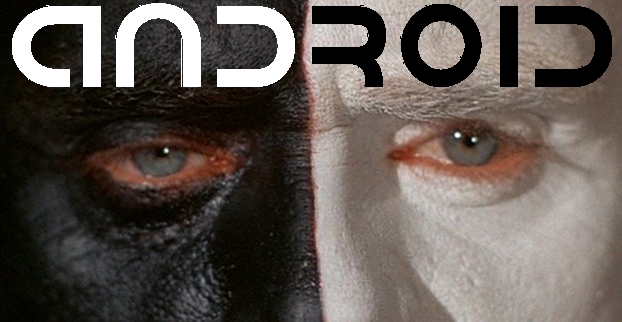
2011: The year Android had Multiple Personality Disorder

By | December 18, 2011, 3:53pm PST

Summary: In 2011 Google’s Android brought us splits in versions, open source commitment, carrier and OEM implementations, preferred device vendors and application ecosystems.

As an avid Android user, 2011 is a year I hope that we never have to repeat.

For all of the progress Android has made in the last year in establishing itself as the leading smartphone operating system, commanding over a 46 percent market share according to comScore in its Q3 findings and sending RIM and its BlackBerry well on its way towards platform irrelevance, so many other distracting things went on that kept it from fully realizing its true potential.

In modern psychiatric medicine, the term “Dissociative Identity Disorder” (or DID for short) is used to describe what is commonly referred to as Multiple Personality Disorder — a rare mental illness in which a human being manifests distinctly different and separate personalities in their own brain, each of which have their own pattern of perceiving and interacting with the environment.

Awareness of the condition was first popularized with the 1974 novel and then the 1976 NBC television miniseries “Sybil” starring actress Sally Field, which was re-made in 2007 with Tammy Blanchard reprising the title role.

The Year in Review, the Year Ahead

If you could sum up what was wrong with Android in 2011, this despite it having achieved the market leading platform position in the mobile industry, Dissociative Identity Disorder just about describes it exactly. Here’s why.

Split Smartphone and Tablet Personalities

The first and most easily recognizable dissociative identity problem is that for the past year, we’ve had entirely different versions of Android for smartphones and for tablets — Gingerbread (2.3.x) and Honeycomb (3.x).

This has not only caused confusion in the marketplace where we’ve had both Gingerbread and Honeycomb used in tablets (the most notable Gingerbread tablet being the Amazon Kindle Fire, that has already sold in the millions of units) but we’ve also had confusion as far as to which Android versions developers should be targeting their application development efforts towards in the first place.

None of these dissociative identity problems have really helped Android at all. Because there were more products with 2.x implementations of Android in the wild than 3.x, developers really didn’t write many tablet-optimized Android apps in 2011.

This is because everyone who was focused on application development was waiting for that single unifying version for smartphones and tablets, Ice Cream Sandwich 4.0, which was only very recently released into the wild.

A Split Commitment to Open Source

As if having two distinctly different versions of Android in the wild to address two different target device formats wasn’t painful enough, Google also decided to withhold the Honeycomb 3.x source code from developers, which potentially damaged their relationship with the Open Source community in the process.

The full reasons why the Honeycomb source was withheld in 2011 from developers is not quite understood, but I have my own theories. By only restricting the source code to licensed OEMs making tablet devices, Google thought perhaps it could prevent further fractionalization.

Google also knew that its tablet implementation of the OS wasn’t ready for prime time and thus by witholding the source, it prevented heavy proliferation of a half-baked, buggy tablet implementation before Ice Cream Sandwich could hit the streets at the end of the year.

Unfortunately, the inability of the developer community to participate in the Open Source process probably resulted in quite a bit of bad blood and and very well may have set back the progress of Android becoming a leading tablet OS by at least a year if not more.

Ice Cream Sandwich’s source code was released in mid-November of 2011 and the community is already hard at work adapting it and improving it for various hardware platforms.

It’s too bad none of that developer activity couldn’t have started 9 months ago with Honeycomb.

A Split Universe Between Google and Amazon Ecosystems

Not to be deterred by Google’s own dissociative identity problems with Android, Amazon went off on its own tangent and released Amazon Appstore for Android.

At first this was perceived as strictly a monetization play in order to piggyback on existing Android devices in order to leverage the growing Amazon ecosystem. Eventually, everyone found out what was actually the real reason for its existence was — to provide the basis for an entirely different Android tablet universe from Amazon, in the form of the Kindle Fire.

Given that Amazon was not a OEM partner of Google’s, and it wanted to produce its own tablet, it decided to go with the most current Open Source version of the OS available – Gingerbread.

I was well aware this was the case long before the Kindle Fire was even announced, and my own predictions actually came very close to reality.

Amazon’s implementation of Android, which I’ve previously nicknamed “Kindlebread” is a fork of the Open Source 2.3 Gingerbread code, but includes special APIs specifically for Amazon’s use as well as a new UI layer and a special Amazon cloud-enabled browser named Silk.

Much like Apple has done for their iOS devices, the Kindle Fire’s Appstore is curated, so as to prevent the introduction of malware, incompatibilities and badly performing applications into their ecosystem, something that the official Google Android Market lacks.

The jury is out as to whether or not Amazon’s ecosystem will be successful, and frankly it’s too early to tell. However it is estimated that millions of Kindle Fires have been sold during the holiday season and as many as twelve million may be sold in the next calendar year.

That’s a lot of devices for Amazon to load up with apps and content, any way you look at it.

Assuming that the “Official” licensed Android tablets from the usual OEMs continue with a similar growth curve in 2012, Kindle Fire is still on track to become the top Android tablet device brand in North America and the world.

The sad thing is that all of this could have been Google and its OEMs domain.

Splits Between Preferred OEMs and Carrier Implementations

The wide proliferation of shovelware, varied implementations of Android versions and the overall inability to get software updates rolled out by the carriers and by the hardware manufacturers despite Google’s stated commitment to rectify this problem back in May at Google I/O is another form of fractionalization that hurt Android in 2011 and projected an overall feeling of Multiple Personality Disorder.

As if everything documented in this article isn’t enough to put a bad taste in everyone’s mouth, 2011 also saw Google drive a wedge between itself and its Android handset/tablet OEMs by announcing back in August that it was going to purchase Motorola Mobility for $12.5 billion.

Many industry observers (including our own Editor-in-Chief) saw this as a sensible decision, particularly for its potential in being an excellent mobile patent play as well as for improvements in vertical integration.

Indeed, both of these are areas in which competitor Apple currently holds the upper hand — but Google hasn’t done a particularly good job in communicating to the industry what it exactly plans to do with Motorola’s device subsidiary when and if the purchase is approved by the US and EU governments.

Will Motorola end up with a “Most Favored Nation” status that will give it privileged access to Android code and other Google ICAP? Right now, Motorola seems to be in a bit of a limbo area.

Motorola’s latest and greatest Android handset and tablet devices such as Droid Bionic, Droid Razr and Droid Xyboard so far have been subject to the same carrier shovel-ware abuse as all the other brands, and are lax in getting these devices upgraded to the current Ice Cream Sandwich software.

To add insult to injury, instead of Motorola, Google decided to use Samsung for its “Google Experience” smartphone with the Galaxy Nexus that launched this last week. Post-Merger, is Motorola going to be producing the Google Experience devices? We don’t know.

Will Motorola only be producing Google Experience devices? We don’t know.

Will Motorola continue to make hardware at all, or simply become a technology foundry for OEMs like Samsung, HTC and LG in order to provide vertical integration services? We don’t know.

In here lies the problem. Nobody knows what’s going to happen to Motorola, and Google hasn’t done a very good job of calming its partners that are naturally feeling extremely edgy about the entire thing.

Will Google find a way to cure Android’s Dissociative Identity Disorder in 2012? Talk Back and Let Me Know.

Kick off your day with ZDNet's daily e-mail newsletter. It's the freshest tech news and opinion, served hot. Get it.

Topics

Jason Perlow, Sr. Technology Editor at ZDNet, is a technologist with over two decades of experience integrating large heterogeneous multi-vendor computing environments in Fortune 500 companies.

Disclosure

Jason Perlow

My Full-Time Employer is IBM. I write as a freelancer for ZDNet.

Disclaimer: The postings and opinions on this blog are my own and don't necessarily represent IBM's positions, strategies or opinions.

I own no investments or direct financial instruments in the companies I write about.

Biography

Jason Perlow

Jason Perlow, Sr. Technology Editor at ZDNet is a technologist with over two decades of experience with integrating large heterogeneous multi-vendor computing environments in Fortune 500 companies. A long-time computer enthusiast starting the age of 13 with his first Apple ][ personal computer, he began his freelance writing career starting at ZD Sm@rt Reseller in 1996 and has since authored numerous guest columns for ZDNet Enterprise and Ziff-Davis Internet. Jason was previously Senior Technology Editor for Linux Magazine, where he wrote about Open Source issues from 1999 to 2008.

In his spare time, Jason is an avid amateur chef and food writer, where his work reviewing New Jersey restaurants has appeared in The New York Times. He is also the founder of the popular food web site eGullet and blogs about restaurants and cooking at OffTheBroiler.com.

82
Comments

Join the conversation!

Just In

RE: 2011: The year Android had Multiple Personality Disorder
bean520 30th Dec
@Paupau

iOS is NOT linux based. It is based on BSD
As the Wiki points out, there is controversy about DID and Sybil's personalities might not have been as distinct as portrayed.

Otherwise, I agree with your conclusions about Google. It's as if Android is still in Beta.
YAWN! Give it a rest with the Android bashing. These articles have been posted a zillion times before. Android is what it is, buy an iPhone and shut up.
0 Votes
+ -
@bradavon It's almost as old as the iPhone bashing.
@bradavon Better yet buy a Windows Phone Mango and upgrade to a better experience!!
@bradavon The whole of Google behaves as if it's still in beta. It's like a parent with a difficult child refusing to eat breakfast until ALL the options have been laid out for it to try! So, as well as a case of multiple personalities, it's also a case of lack of maturity.

Personally I'm very disappointed. But something began to rot at Google some time back. Do we blame the adult supervision - leading that double game over at Infinite Loop? Larry did end up replacing him. Do we blame the duo themselves? Or do we blame whoever is in charge of the very very confused Android experiments?

Well, I WAS disappointed. But now I no longer care. I predict their game will peak and implode soon. But one thing is certain, several players in the handset game are about to fold... or go begging for a style Nokia deal up in Redmond - which pretty much means the same thing.
@Mac Hosehead Jason, I agree with your overall assessment of Android in 2011, but not your conclusion. It's not an issue of multiple personalities, it's an issue of growth. More like going through puberty, if you will. And it will only get better. Just look at Ice Cream Sandwich. The reviews are almost universally positive that it's going in the right direction. 2012 will be the year of Adult Android. happy

However, I don't agree that having the Amazon marketplace is a negative as you imply. It's great to have more than one marketplace. It's fit perfectly into the Android model of open access. I also love the free app per day on Amazon.
I agree. Android is slowly beginning to mature. I own both Android and Apple devices, and The only thing failing Android, (my opinion), is a managed app store. Hardware vendors are still feeling their way with Android and some will fail, others will get it right. The same could be said about Windows back in the 90's. Let's wait and see who innovates, provides suitable security and listens to what people want. 2012 should be very interesting. Pity about Win Phone 7. Wish MS could become relevant and cool again.
0 Votes
+ -
Oh man!!!
wackoae 18th Dec
You are definitely brave ...... fandroids are pretty soon coming out in drones to kill you.

Sad part is that 100% of you you are saying is true .... but fandroids will deny it to hell and back.
@wackoae +1000
0 Votes
+ -
RE: 2011: The year Android had Multiple Personality Disorder
Return_of_the_jedi Updated - 19th Dec
How many ways can Zdnet write Android is not an Iphone.

Accept it for what it is, not what you want it to be.
@Return_of_the_jedi And simply repeating the claim that it is "open" wont fix it. Right now, Fandroid is only popular because its the only alternative to iPhone and its the only OS supporting 4G LTE.

Android could be much better, let's hope Google listens to all the complaints.
@otaddy My Android phone just automatically downloaded and update that completly changed everything and eliminated my contact list. I had to dig out my old phone and take both of them to ACS so they could download my contact list out of my old phone and reinstall it on my Android. It turned on apps that I didnt want or use which caused the battery to die in 4 or 5 hours. Not at all happy with Motorola. Nokia phones were always the best but ACS doesnt use them.
@otaddy

Google needs a way to distribute their spyware. As soon as most users realize this, Android will be history.

Amazon, on the other hand utilizes 'Android' for what it is - an embedded Linux variant. In order to make it useful, they built whatever UI and API they needed on top of it --- by the way, just as Apple did with iOS and MacOS X on top of BSD UNIX.
@Return_of_the_jedi I thought Android was whatever you wanted it to be... a handset OS, a tablet OS, a TV OS, a STB OS, or a desktop/laptop/netbook OS.
@Return_of_the_jedi couldn't be said in a better way, thanks dude.
0 Votes
+ -
Been waiting for this one
rhonin 19th Dec
Good write up!

3 needs to diiiieee......
The latest of 2 is good......
4 going forward......

Maybe, just maybe we can finally see a bit of stability?
0 Votes
+ -
@rhonin

I'm not sure which is worse....
Chaotic Android or Ho-Hum iOS?
0 Votes
+ -
Then Grab a Nexus
Maarek 19th Dec
The Google Nexus Prime runs Android 4.0, ice cream sandwich, and is available by Verizon. You don't have to purchase any Gingerbread phones if you don't want to, but many will receive the update to ICS if their phone was purchased this past summer. Meaning that their hardware is possibly compatible with the newer OS. Tablet... well I'm not seeing any love there. They probably will not depending on their manufacturer.

Personally I think Android is the greatest and still contains the most potential for any future ideas, innovations, etc.
@Maarek I have Droid Bionic and Acer A500 tablet. Both have announced updates to ICS in Jan 2012. It appears that almost all manufacturers of hardware which can handle ICS are announcing updates.

We will see haow close to their announcments, they actually release the updates.
@pdowns -- exactly the point I was gonna make before I scrolled down past your comment. While the comparison probable makes the point about the Droid world woes -- I have a Motorola Bionic and live with the outcome of such issues -- it doesn't lend credibility to the work to cite a known fraud.
0 Votes
+ -
Contributr
@geek49203_z I did not cite a known fraud and it has absolutely no reflection on the credibility of the article whatsoever. DID is a real but rare psychiatric condition and I specifically said the television miniseries raised awareness of the condition. There was very little point in espousing on whether or not the real life "Sybil" was a fraud or not. It also has very little to do with the crux of the article other than the fact it explained what DID was.
@jason this is a nice piece, spot on, I even liked the Sybil reference. Andriod has some problems right now, and you did a good job of objectively bringing some of them to light.
What is happening in the Android market is simply typical of technological evolution in a highly competitive market with multiple vendors. We saw the exact same dynamic play out in the microcomputer industry back in the 1980s.
0 Votes
+ -
Any word on when Google will fix the Shoddy Exchange support?
Snooki_smoosh_smoosh Updated - 19th Dec
.... I guess not, because even Google has refused to answer that.
http://www.google.com/support/forum/p/Google%20Mobile/thread?tid=4ac83c696297f13f&hl=en&start=80

Interesting enough that ZDNET authors don't air out Android Dirty laundry.

9 Months of issues, and Google has yet to fix it.
@Snooki_smoosh_smoosh The entire article was dirty laundry. Please.
@jperlow Well, it was a good attempt at dirty laundry, leaving out common sense.
0 Votes
+ -
We now see the limit of open sources... LOL

It is just crap...
@EricDeBerg You get what you pay for! Try a Windows Phone Mango and get a better experience!! Microsoft stands behind the OS unlike Google!!
0 Votes
+ -
Sigh.......
rhonin Updated - 19th Dec
@jatbains

iOS - same ol stuff with a bit more polish ..... Almost antique wink

WP7 - great for social but...... What else does it do?......

Android - bit of chaos BUT I can adjust all I want... Just wish the updates were a bit better....

BB - I came, I saw, I laid flowers at your grave...

Next?
@rhonin,

All Linux, including Androd is DIY. If you know how to handle DIY things, it can do wonders for you.

But DIY is not for phones, period.
My Acer A100 has Android 3.2 and my LG G2x has android 2.3.7, I don't see a problem.
I've said it before, and I'll say it again. ZDNet obviously has a real problem with Android. And I'm sick of it. You've lost a reader and a subscriber today.
0 Votes
+ -
@tdan76 Translation: "I'm sick and tired of you guys bringing up the truth about Android - why can't you go back to Apple bashing? Why can't you bash WP7? I'm going home and I'm taking my ball with me" Wah, wah, wah, wah".

Hey tdan76 perhaps you don't really read many of the articles here but ZDNet gives quite a bit of time to the faults of Apple and Microsoft products as well but if your feelings are hurt we can always call you the waaaaaaaaaaambulance... but since ZDNet has ...lost a reader and subscriber today... then don't let the door hit you in your whiny butt on the way out.

Sorry, supposedly grown up adults acting like children really grates on my nerves.
0 Votes
+ -
Nonsense
radleym 19th Dec
This article is just dumb.
Here you are given a free OS, with different versions available in the wild, so you can set up your phone or tablet with Froyo, Gingerbread or ICS, and all you can do is complain and whine about having TOO MUCH choice.
And whine about the non-rlease of a version thaat you simultaneously trash! Imagine if Honeycomb had been released, what a whine you would have sent up.
In fact, I can easilly imagine your complaints if the opposite had happened for each of your arguments.
Apple fanboy click bait, no other value.
Good article. It is funny listening to Apple and Android fanatics. I want a phone that does what I need. I don't care what the OS is. I like the smooth operation of WP7 and the flexibility of Android. Ultimately, I may have 2 phones because there isn't 1 that does everything I want: WP7 for work because it integrates with our enterprise infrastructure better; and Android because I have more flexibility and there is a better variety of apps.
0 Votes
+ -
The article is interesting but when I consider my needs I believe that the turbulence resulting from OS personality disorders is healthy and inspires new innovation and feature sets that will eventually sort themselves out. I believe that interoperability between OS brands should be a marketing goal. This is a very exciting market condition and I love researching and testing of these new variations of smartphone and tablet technologies that will blaze the way ahead for years to come. The more capability and speed per pound per dollar is the never ending thirst. Add to it cross platform OS interoperability and I say "Keep it Coming.

Lou Foltzer
0 Votes
+ -
Have to agree
rhonin Updated - 19th Dec
@llf@...
When you look at some of the Android only functionality, you find the others leveraging it.

That is healthy and growing.....
from my vantage, just as there are distro's of Linux, in an open eco system forks are a good thing and the market usually adjusts to accodomate them. That said, the development community needs to develop in a way that decouples the applications from the OS. Where have we heard that before....
0 Votes
+ -
Is Android is suffering forking like Linux distros?
a foot in both camps Updated - 19th Dec
I'm surprised that there were over 200 million Android devices in use by November 2011
( http://en.wikipedia.org/wiki/Android_%28operating_system%29 ) given the variation of the software platforms based on Android. Linux never took off partly because of the multiple distros forked from the Linux kernel?
Apple's iPhone is very popular of course. Some unfairly may say that is because of its fashionista followings.
Me I'm a tightwad, did not want to buy a smartphone and could have entered a contract for an iPhone but the cost was not competitive. So I have an HTC Wildfire S running Gingerbread and am reasonably happy with it. I'm on a 24 month Talkmobile contract at 12UKP per month
( http://www.talkmobile.co.uk/pay-monthly/htc/wildfire_s_white/tmsmartplan24m121gb/tmsp24m121gbhtcwildfireswhite.html )
because it meets my requirements. I did not want to buy a smartphone, will terminate my contract when it ends and will review what technology offers then.
@a foot in both camps

@a foot in both camps

"Linux" is used on many more devices than "Android" (which again, is Linux).
Most networking gadgets, small routers, APs etc run some variant of Linux. There are far, far more than the mobile phones out there.
@danbi

IOS (which again, is Linux based.)
@Paupau

iOS is NOT linux based. It is based on BSD
You've summed up my reasons for dropping Android phones and from considering them in the near future. While it's great to let the OS sort itself out from a developers perspective, it's awful from a consumer perspective. Unless I buy the newest Android phone every year, I run the risk of my OS being outdated and incompatibility with Apps updated for newer versions of the OS. Good for phone makers because I have to keep updating, bad for me because I have to fork out money to do so.
0 Votes
+ -
So what....
rhonin 19th Dec
@biobat
How is that any different than any other OS?

I have apps for my iPad2 that will not run on the iPad.
Same is true for the iOS5 vs 4 vs 3 vs.....
Then the devices... On my iPhne 4 hat won't run on the 3GS, or the 3G, or the....

Not getting your point.
@rhonin
Very well said..

@biobat
"While it's great to let the OS sort itself out from a developers perspective, it's awful from a consumer perspective.."

Can you explain how are you affected? geez..
@biobat
the situation is similar for most phone OS.
At least Android didn't purposely disable a working function (Siri) so you have to buy the new model phone (4S) in order to run it. That is the ultimate in burning existing customers.
0 Votes
+ -
Yep, check this out...
tek_heretik 19th Dec
Facebook is a 4th party 'barnacle-app' in Android 2.3.5, have to read the lengthy Google/Android EULA, see what the 'deal' is. Can't un-install, can't shut it off (not start with phone boot) and it uses bandwidth I PAY FOR, along with other 'barnacle-apps'. I don't like Zuckerberg or the crappy app, bad enough I have an account because EVERYBODY else does. Am sick of the web giants sniffing EVERYTHING I do online, how about you?!

Join the conversation!

Formatting +
BB Codes - Note: HTML is not supported in forums
  • [b] Bold [/b]
  • [i] Italic [/i]
  • [u] Underline [/u]
  • [s] Strikethrough [/s]
  • [q] "Quote" [/q]
  • [ol][*] 1. Ordered List [/ol]
  • [ul][*] · Unordered List [/ul]
  • [pre] Preformat [/pre]
  • [quote] "Blockquote" [/quote]
ie8 fix

The best of ZDNet, delivered

ZDNet Newsletters

Get the best of ZDNet delivered straight to your inbox

Facebook Activity

White Papers, Webcasts, & Resources
ie8 fix