AMC's Dine-In Theatres: The Movies' Last Stand at the Box Office?

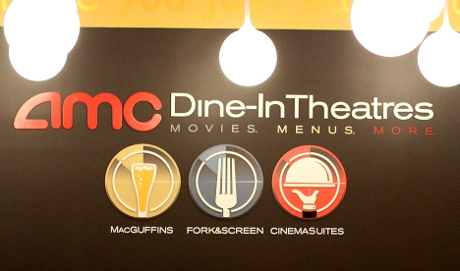
AMC's Dine-In Theatre seeks to re-invent the movie-going experience with in-theater dining, cocktails and waitress service right from your seat. But in the face of On-Demand streaming content and inexpensive, high-definition home entertainment technology, is the movie theater still viable?
Like many Americans, I love going to the movies. There's something special about the entire experience, sitting in the dark theater with a huge screen, booming sound system, munching on popcorn, and being in a large venue where you're sharing the experience with others.
Movie-going has been practically a cornerstone of American society -- more marriages and long-term relationships have probably started from "dinner and a movie" than any other. I myself can attribute the first date with my wife to going to a movie some 16 years ago. I even remember what film we saw -- Star Trek: Generations. The movie was so awful, I'm surprised I even got a second date.
However, no matter what the American attraction to the movies may be, theaters themselves have been in decline, ever since home entertainment technology entered the picture, starting with the VCR and VHS video rentals in the early 1980s.
Nevertheless, the box office and the traditional theater was still king because you really couldn't replicate the in-theater experience at home, despite the advantages of being able to pause and rewind the film, provide your own food and refreshments at significantly lower cost, and stay at home with your family.
Also See: AMC Dine-In Theatres (Gallery)
Also See: AMC's "Dine-In" Delivers a Big Wow (Baristanet.com)
With the introduction of the DVD, cheap High-Definition video televisions, inexpensive surround sound and now On-Demand video from suppliers such as NetFlix, Amazon Video and Apple TV, the home movie-watching experience is now at a point where one could argue that it's actually superior to going to the average movie theater.
The realities of the current economy adds additional pressure when you consider that the typical movie-going experience is $12-$14 per ticket plus $10 or more per person for concessions, not counting going out for a meal with your family or date.
On-Demand and Pay-Per-View/Subscription content from Amazon, Netflix or your satellite TV/cable provider is considerably cheaper, if you factor in a entry-level home theater investment of about $2,000 (including HDTV, receiver/amplifier, surround speakers, media player/streaming devices) and an average play cost of about $5.00-$10.00 per premium film, provided you aren't just watching stuff on basic cable or premium content packages like HBO or Showtime
To fight back the Home Theater onslaught, the Box Office has had to do a number of things in order to stay relevant in the digital, On-Demand age. The first of which was renovating many theaters for Digital Cinema, which began as a result of George Lucas releasing the Star Wars prequel films in digital format in 1999. This technology upgrade included HD digital projection as well as THX-certified and/or SDDS sound systems.
With the full DTV conversion in the summer of 2009, many consumers went out and purchased HDTV equipment, which has significantly come down in price in the last several years. The Box Office then needed to pull another trick out of its sleeve -- by focusing a lot of its forthcoming releases on 3D digital films, such as Avatar.
Not to be deterred by this, the home entertainment industry and TV manufacturers began to release 3D HDTV technology this year, but the sets are still considerably more expensive than their regular HD counterparts. Still, we can expect that 3D capability will become a regular built-in feature in even basic HD sets in the next few years, which leaves movie theaters with few compelling technology improvements to continue to bring in the throngs of moviegoers.
Page 2: [Dine-In, the future of moviegoing?] »
If the basic technology in the movie theater can't compete with the home, what does the Box Office do? well, it has to re-invent itself completely, and provide services you can't get at home.
Along with a group of local New Jersey and NYC bloggers, I recently had a chance to experience AMC's Dine-In Theater at the Essex Green shopping center in West Orange, New Jersey, which opens for general audiences tonight. Two more locations are scheduled to open in New Jersey in the next several weeks, and three other locations have recently opened in Atlanta, Kansas City and Olathe, Kansas, with a Grapevine, Texas location due for opening in December as well.
The basic concept is thus -- the "Dinner and a Movie" has now been combined into a single experience, where your every whim is catered to. Instead of just popcorn, sodas and candy, the theater now offers a complete menu of pub-type food as well as alcoholic beverages, with items similar to what you'd find at a TGI Friday's or a Bennigans -- fried appetizers, burgers, sandwiches, chicken fingers, wings, salads, and other types of finger-food stuff.
All of this food and drink is consumed directly from your seat, and is ordered via waiter/waitress service, who are manned with wireless POS terminal devices which place your order before the movie, and can be called at any time to get you additional food with the push of a button.
AMC provides two distinct experiences for the "Dine-In", depending on your taste. The first, the "Fork & Screen" is for general audiences, and unlike a traditional movie theater, anyone under the age of 18 has to be accompanied by an adult which is at least 21 years of age.
That means no giggly teenagers going on dates unless they're with their parents or another guardian. The Fork & Screen costs $10 for the movie per person, and AMC charges an additional $10 "Experience Fee" for each person which is essentially is a credit towards your food and drink, a minimum charge.
The "Cinema Suites" is a more high-end affair, and the one which I had a chance to experience. The minimum charge is an extra $5.00 per person, and only adults 21 and over are allowed. In a Cinema Suite, each patron is given a huge, motorized La-Z-Boy-esque comfy chair that can recline up to 180 degrees, so you can lie back with your feet up and drink/munch up at the same time.
In addition to the regular TGI McFunster's selection of food, the Cinema Suites have premium dinner entrees and snacks for order, such as Bacon Bleu Cheese Chips, Fried Calamari, Lobster Ravioli and Sirloin Steak Tips.
I admit that the pampering at the AMC Dine-In is extremely alluring, particularly if the idea of being a complete Nero-esque couch potato in full mushy recline while the waitstaff brings you anything you desire suits you. But there's a couple of problems I had with the experience, even though I really did enjoy myself and I probably would do it again.
First is the issue of the level of distraction by having servers interrupt the film. If you do this, you're probably going to want to order all your stuff at the beginning, so that all your food and drink is delivered to you before the film starts. Otherwise, it gets annoying when the servers come to take your order, and then another one comes back to deliver it and tries to figure out who ordered what, despite the fact that they had an advanced POS system which was supposed to sort it all out.
The group of us watched Iron Man 2, a film my wife and I had already seen, so we were really focusing on the Cinema Suite experience and the quality of the food and service itself. However, if I had really cared about the film, I'd probably be annoyed with servers walking in and out and in front of us constantly.
Then there's the issue of the "food in the dark" think itself. You really can't see what you're eating (in the photos I took for the Gallery I had to use external illumination) and a lot of the food is ... drippy. Most of the items have some kind of dressing or a sauce, so inevitably, you're going to get some of it on you, especially if you're leaning back in your seat.
Dine-In Tip: don't wear anything that you don't care about having to spray some stain remover on and sending through the wash. I was also somewhat disappointed that there weren't more healthy or more interesting options available, but then again I'm a foodie and not the average American moviegoer.
One advantage to the Dine-In concept is that unlike a regular movie theater, you have to purchase and reserve your seats on-line, or at the theater with some additional advance notice. This is similar to buying tickets on an airline or for a Broadway show, where you get to pick from a seating chart, so there's no surprises when you get to the movie and only the front eyestrain or the nosebleed section seats are available.
Of course, this also means you can't really do a Dine-In as a spur of the moment thing, although I suspect some sort of iPhone/Android/Smartphone application is probably due where you could check the available seats with 2 hours or less notice.
AMC has obviously taken a big risk with this concept, particularly in the midst of when Americans are tightening their belts and are spending more and more time at home. Generally speaking, I'd have to say that the Dine-In is a fairly decent value, particularly if you do the Cinema Suites, as it really isn't more expensive then going out to a regular movie and ordering a popcorn and soda and candy for each person. The $15 above the ticket price essentially covers one beer/cocktail and one other item for each seat.
Still, it's the kind of thing my wife and I would really only do occasionally, and not as a regular thing. When we want to go out to the movies, it tends to be really only for a film we actually care about, so we're probably going to eat at home or out to a restaurant first, and we also tend to go to matinée showings on the weekend.
I also don't see it as a full dinner replacement -- the food choices are a bit too downscale and too QSR/chain-style to compete with our regular routine of going out for Chinese Food, Sushi, or whatever. I could definitely see doing this maybe a few times a year, where we'd order a few drinks and maybe a snack or dessert each, and for films that we really aren't too concerned about concentrating our attentions on, and this might be what a lot of patrons end up doing.
Whether AMC can make a sustainable business out of the Dine-In is another matter entirely. They've had to sacrifice a lot of the box office seats in order to accommodate the Fork & Dine/Cinema Suite theaters, so I'm sure they are counting on much higher concession orders than at a typical movie theater to make up for it. I'm skeptical, but there's always hope that the movie theater will always be around.
Are you interested in trying AMC's new Dine-In? Talk Back and Let Me Know.
[poll id="25"]