Cisco Linksys: The Makeover

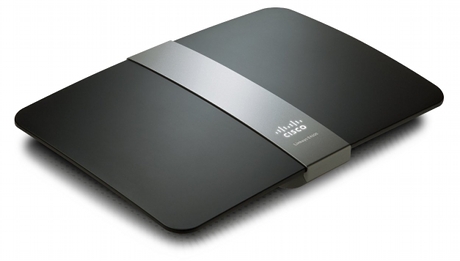
Drastic changes at Cisco's Linksys division have re-established my confidence that the company can again produce high-quality and reliable consumer networking products.
When I last spoke of Cisco's Linksys division, back in November of last year, I was not a happy camper.
To summarize, I had purchased their top-of-the-line consumer router at the time, the E3000. After 30 days of use connected to my 100Mbps Optimum Online Ultra broadband, the router stopped working.
Specifically, I experienced a condition where all of the switch ports, including the WAN port on the device would lock up after a few hours of use. Effectively, this knocked me off the Internet.
In my research into the issue, I had discovered that a large number of users including my tech blogger peers were experiencing similar problems with current vintage Cisco Linksys "Pancake/UFO" shaped routers including the WRT-610N, E3000, E2000and E1000. From the information that I had gathered, many users were complaining that the routers were getting extremely hot and having various reliability issues.
Reliability aside, I had begun to think that the lights were on at Cisco Linksys but nobody was home. It was as if Linksys, the once king of consumer networking products had been swallowed up into the bowels of its parent company, never to be heard from again, and were now producing sub-par equipment.
Their two Twitter accounts had been abandoned, and inquiries into their regular tech support channels seemed futile at best.
My E3000 effectively became a paperweight. I swore off the product and told others to look for other brands, such as NETGEAR, noting my horrible experience.
Shortly after my scathing article appeared on ZDNet, I was contacted by Cisco Linksys' head of Global PR. To make a long story short, she was extremely helpful in getting me and another tech journalist experiencing similar issues, Rafael Rivera, hooked up with the engineering team in Taiwan.
After a long series of back and forth emails, the engineers were still unable to duplicate the problems we were experiencing. We couldn't completely establish from our end if the issues were being caused by a device that was sending bad packets or if it was an actual overheat issue on a certain batch of units, as the engineers in Asia were able to keep their router running for 12 hours under full load at 104 degrees F.
Still, at least Linksys was now being proactive, and signs of life were clearly returning to the company. I have since learned that as of late last year, there has been a change of management pretty much across the board in key positions, and new folks were brought in to right the ship, so to speak.
They even got back on the Twitter train again, with @OfficialLinksysas well as an active FaceBook pagewhere the company is responding quickly to even the most irate customers seeking assistance.
More importantly, however, we found out in our discussions with the company that Cisco Linksys was going to re-vamp the entire consumer router line, from entry level to high-end. Now known simply as the "E-Series", the new routers are sleek, very well engineered, are packed with competitive features, and most importantly work reliably even under heavy loads.
The first of the "new" E-Series to be introduced and the most high-end product in the lineup, the E4200, has been operating flawlessly in my home office since Mid-January. This new router, along with the E3200, represents the state-of-the art in consumer broadband routers today.
Also Read: Cisco rolls out new family of Linksys E-Series Routers; Starts at $59.95
Also Read: Cisco introduces new top-of-the-line Linksys Wi-Fi Router
If you are an Optimum Online Ultra or Verizon FiOS customer with 50Mbps+ broadband connections, these two routers should be considered on the top of your list. Both of these feature a Gigabit Ethernet WAN port as well as four (4) Gigabit Ethernet ports on the integrated switch, as well as dual-band 2.4Ghz/5Ghz Wireless-N using dual Broadcom 802.11a/b/g/n Wi-Fi transceivers.
The E4200 has integrated media sharing with support for USB hard drives, with a 3x3 transmit/receive MIMO antenna array, with a maximum wireless throughput of up to 450Mbps across your Gigabit Ethernet LAN.
The E3200 lacks the media sharing of its higher-end sibling and has one less MIMO transmit antenna (2x3) yielding up to 300Mbps transfer speeds across your home Gigabit Ethernet LAN, but otherwise has very similar performance characteristics for wired broadband connections. Both routers can also take USB hard disks to act as basic file servers.
Wireline speeds with Gigabit Ethernet connected PCs on the E4200 are extremely impressive -- with my Linux desktop and my Mac Mini using Chrome 12.0.712.0 developer and Safari 5.04, I was able to achieve download peak data transfer rates of 95Mbps to 100Mbps and upload peak data transfer rates of over 14Mbps, which is well within the maximum advertised capability of my broadband connection.
In my wireless tests with the E4200, I have found it to produce very strong signal in both the 2.4 and 5Ghz frequency ranges, with full penetration (5 bars) all the way through my basement to my upstairs bedroom while using an Intel Ultimate N Wifi Link 5300 wireless chipset with a 3x3 antenna array on a Lenovo x200 laptop.
Performance throughput on the Wireless-N laptop via Optimum Online on Speedtest.net varied between 75 and 80 Mbps downlink and 10 and 14Mbps uplink, which was very close to maximum wireline speeds.
On handheld devices and media players with less powerful transmitters and less antennas, such as on my two Android smartphones (Motorola Droid 1 and HTC EVO 4G) and on my iPad 2, speed suffered but performance was respectable.
On the Android phones using Wireless-G, I was able to achieve download speeds of approximately 7Mbps and upload speeds of 1.5Mbps using 1x1 antennas. On the iPad 2, using iOS 4.3.1, which has an integrated Wireless-N/G dual 2.4 and 5Ghz chipset but has only a 1x1 MIMO antenna, it fared a bit better, approximately 25-30Mbps in burst modes with 12-14Mbps uploads.
I should also add that when it comes to heat dissipation and ventilation, the E4200 is vastly improved over previous Linksys designs. The device certainly gets a little warm when under heavy stress over long periods, but definitely not hot.
While the E4200 does not currently support IPv6 in its integrated firmware, an update will be released in June of 2011 to provide that functionality, so those of you who are concerned about the transition need not worry about whether or not your device will be compatible. The remainder of the E-Series line is slated to get the IPv6 update firmware by Fall.
Overall given the exceptional performance of this router I'm going to say that Cisco Linksys is now doing a very good job at engineering and well on their way to getting back to the top of the consumer networking products heap.
So is there room for improvement at Cisco Linksys? Absolutely.
[A recipe for Open Source Community, Security and Value Add]»
Firstly, I can't stress enough how important it is for the company to get engaged with the Open Source community, particularly the folks that put together alternate firmware distributions such as DD-WRT so that fully authorized ports for these new routers can be released quickly.
While your typical end-user may not need the advanced features of these alternate firmwares, much of the talent behind testing these routers and ensuring that they interoperate well with different products lies in the open source community. Additionally, power users which can take advantage of DD-WRT are probably the best customer advocates of high-end home networking products like the E4200 and E3200.
As of today, Linksys really doesn't have a good line of communication with these folks and making sure that they get sample routers as well as all required source code to complete the ports is going to be essential in re-establishing good will and a healthy relationship with the community.
Linksys' GPL Open Source codesite is at least a generation outdated and needs to reflect code used in current products. This needs to be refreshed as soon as possible.
It should be noted, however, that Linksys appears to be complying at least to the letter of the GPL, as it pertains to actual code requests. However, a comprehensive site with the available code and browse-able GPL source repository and designated community liaison(s) to facilitate the code sharing would be preferable to making one-off requests.
In addition to improving their relationship with the Open Source community, I would also like to see Linksys take an active role in improving Internet security for the home user and leverage the technology of its enterprise parent, Cisco, to work closely with ISPs to give enterprise-grade Unified Threat Managment to the consumer.
In my article "Browser Protection, The Next Generation" I discussed how it would be possible to do packet-level inspection at the ISP before it filters down to the consumer's broadband router.
As many ISPs and telecom carriers use Cisco's enterprise equipment, Cisco Linksys is in the unique position of being able to seamlessly integrate its consumer line with the ISP/Telco carrier equipment, and give their customers access to SAAS-based solutions where the end-user could choose from a portfolio of cloud-based security products such as IP and MAC-based site filtering.
Concerned parents, for example could subscribe to a Cisco-provided service which blocks lists of sites, reviewed by educators and law enforcement, which contain objectionable content that they do not wish their children to see, as well as activate UTM to provide a first line of defense before their PCs have to intercept malware.
Right now, the E-series only provides rudimentary NAT/SPI firewall protection with an access control list, which is no better than what NETGEAR, D-Link or any other consumer networking product vendor is selling. Cisco Linksys could certainly do better and leverage that enterprise expertise instead of being just a commodity consumer network equipment vendor.
Indeed, the E4200 and the E3200 are very nice routers, but they really do not differentiate themselves significantly from other products competing in the space, such as the NETGEAR WNDR3700v2, particularly in regards to security. And in terms of Wi-Fi performance, NETGEAR will be at parity with Linksys shortly with the introduction of the WNDR4000 (3x3 MIMO) and WNDR3800.
So differentiation and value-add will be absolutely key for the Linksys consumer products division at Cisco going forward.
Still, even with these issues, I think that Cisco Linksys has redeemed themselves with their new product line. I am again confident in the quality of their engineering and believe strongly that the consumer division is well on their way to a full-blown and successful makeover.
Have you tried any of the new E-series routers yet? Talk Back and Let Me Know.