Digital Underclass: What Happens When the Libraries Die?

Summary: Libraries will need to be replaced with digital equivalents as publishing moves towards eBooks. As a result, will a new "Digital Underclass" be created from the base of technology have-nots?
Over the past several years we've seen an ever-increasing move towards digital media as the preferred way of distributing books, magazines and newspapers.
Whether it's eBooks, websites or some other form of digitized distribution mechanism, the writing is on the wall for the printed "dead tree" medium.
Within 20 years, perhaps even as few as 10, virtually almost all forms of popular consumable written media will be distributed exclusively in an electronic format.
While there are clear advantages to digital media, such as the instantaneous purchase and delivery of that content, elimination of book shortages at bookstores as well as the obvious portability benefits, it has a sociological impact that many have not considered.
The "Have Nots" of society may find themselves denied access to an entire range of content they enjoyed previously with the printed book, newspaper or magazine.
- Digital Underclass 2: The Future of Books and Libraries (2011, with Podcast)
- Digital Underclass? Only If We Allow It (ZDNet Education)
- Should our Libraries be Outsourced? (ZDNet Government)
- The Challenges that Public Libraries Face with eBooks (Podcast)
What I'm talking about of course is the Public Library. You know, those big, quiet buildings in your town filled with shelves of books, card catalogs, and librarians to help you find that material.
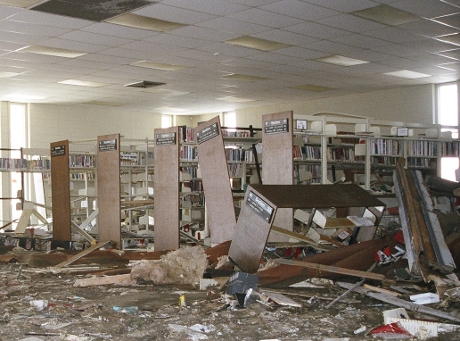
In a fully digital society, we won't need Public Libraries anymore. They won't be cost effective, and there will be far less new printed books, magazines and newspapers being released to stock these libraries with.
The demise of the Public Library will be a slow one. As printed content becomes more scarce and less people visit the libraries, there will be a culling which will start with library consolidation in towns, counties, major metropolitan areas and states.
Instead of having 75 public libraries in say, a local library system (such the BCCLS that my wife and I enjoy in Bergen County, New Jersey, one of the most populous counties in the United States) there may only be 20 libraries. Or less. Some less-fortunate areas of the country might be forced to shutter their libraries entirely.
This almost already happened, such as in the case of Salinas, California, which would have had to shut down all of their libraries in 2005 had there not been intervention due to a last-minute tax increase, but they now run at reduced hours.
In recent years, New York has had to close several branches of their extensive Public Library system and reduce hours of operations due to funding cuts, and Philadelphia has had to cut funding to their public parks system, police and fire departments in order to keep all of its libraries open.
In the last several hundred years, Public Libraries have been a cornerstone of having a literate society, and it's something that many consider to be a basic human right -- free access to books and information, paid by the state and local governments from our collective tax dollars.
In contrast, most e-Book and digital media consumption requires a personal outlay of funds.
With e-books, you pay Amazon, Barnes & Noble, SONY or Apple or any number of other 3rd-parties to download books. Those books cannot be gifted or shared with someone else, as with real, tangible printed media.
Even though you may have bought it, they are typically tied to the platform that they run on, such as the Kindle and NOOK readers and software for smartphones and tablets.
This in and of itself is an issue that needs to be dealt with -- should books really be considered software, with EULAs? Should there be laws in place that ensure the perpetuity of purchased content, should Amazon or some other company fold? Or should standardized data formats, such as EPUB, be required for eBooks so that the entitlements are transferable to other platforms?
While there are limited e-book lending programs in place with DRM-enabled EPUB files for the Nook and the SONY readers, and there is a certain amount of free e-book content available, that material is in the minority. So if you want to be able to read e-books, you need to possess a certain amount of technology and/or capital as an individual.
This is not the case with public libraries. At a Public Library, you walk in and read what you want, for as long as you like, for free, because you pay state and local taxes that fund their operation.
To check that material out of the library on loan, you typically only need to prove residency for that town, city, or county. No technology is required, although at bare minimum, you might need some paid transportation to get to a library, depending on how far you live from one.
In a digital society where almost all books and written media are electronic, the Public Library needs to be rebooted, especially if as a society we are to continue the tradition of providing free access to books and periodicals.
It means that we need to guarantee that citizens have access, even if they are poor. It means each citizen needs access to free bandwidth to get books and they need devices to read the material on. We can assume that everyone in 10 years will be able to afford a smartphone or a super-inexpensive tablet device with inexpensive Internet connectivity, but that's an awful big assumption.
And assuming that we aren't going to cede the distribution of all electronic books to the Amazons of the world, then we need to start thinking about how we build that Digital Public Library infrastructure. Does it make sense to build datacenters at the state or county level with huge e-book/e-media repositories?
Or should this really be something that should be built at the Federal level, like an Electronic Library Of Congress where every US citizen gets access, with representative funding coming from each state, or earmarked Federal funding that would have gone towards paying for brick and mortar libraries?
And if we do build an Electronic Library of Congress, with free access for all citizens, then how does e-procurement work? How many electronic copies of The Girl With the Dragon Tattoo do you need to have on hand for the entire population of the US, the entire State of New Jersey or even Bergen County?
And if you've loaned out all your "copies" or entitlements, what happens when someone needs another copy? Do you procure it from Amazon or another vendor or publisher electronically and charge the user an optional expediter fee (such as a fraction of the book's cost) if they don't want to wait?
I don't know the answer to these questions, and I know that there are even more questions that need to be asked. But we need to start thinking about them, before we have tens of millions of people -- a new Digital Underclass -- who won't be able to get books as easily as they used to.
Are we creating a new "Digital Underclass" with the elimination of printed media? Talk Back and Let Me know.
Kick off your day with ZDNet's daily email newsletter. It's the freshest tech news and opinion, served hot. Get it.
Talkback
RE: Digital Underclass: What Happens When the Libraries Die?
Conservatives outgive liberals three to one in charitable
Echo (ditto head) chamber?
Plus, a lot of that 30% is going back to churches (conservatives are more likely to go), and there are other socio-economic factors to consider. Maybe you should focus more on what is alike about us rather than the cliche political differences.
Very true
RE: Digital Underclass: What Happens When the Libraries Die?
Right, there has recently been a lot made about how long things remain on the Internet (pictures on facebook, etc), but I think our real worry is exactly the opposite. We see how links degrade over time and how things that you might have even put on the web yourself become hard to find after a while. Digital preservation is extremely important for large-scale digital libraries.
If that Commodore 64 floppy ...
RE: Digital Underclass: What Happens When the Libraries Die?
Another factor is that libraries are a significant income source for book publishers. They're an entire channel unto themselves and if they close, the income that makes it possible for many books to come to market may go away with them. End result: we may have less actual books created.
Maybe so ...
There are lots of benefits to this approach.
The creation of content is the expensive part because it requires huge numbers of man-hours. Today, authors use publishers for distribution but that may change. They may start publishing their works themselves - just as some musicians do.
RE: Digital Underclass: What Happens When the Libraries Die?
Underclass in the library?
It's a mistake to think that if a building exists its intended audience will utilize it. You can lead a horse to water...
Free e-books and content will have the same effect as free bus passes and library cards.
RE: Digital Underclass: What Happens When the Libraries Die?
These are great questions to ask. I love the library, some have wonderful reading rooms that create a quiet, companionable atmosphere for reading and studying. To think that this may disappear is a cultural loss, as well as a loss of information access. There already is a "Knowledge Gap" or "Digital Underclass" for people who can't afford smartphones and data plan , great apps etc.., with fast access to information. There are plenty of people who do not own PCs and have to go the Library to use one. Where will they go when or if the libraries go? Considering the state of the economy it's hard to see local or federal funding for libraries. Foundations like Gates might do some funding, but the last thing we want is for readers to be locked into anything proprietary. I think the answer may be in part to have companies such as Amazon, and e-book readers give a percentage of each sale of a device and a book, go toward creating digital libraries or god forbid, maintaining existing libraries. Another aspect of e-content regards text books. There is the real issue of different types of learning styles. E-content is great for people who are just visual learners. People who need to highlight, underline, fold pages etc., i.e., kinetic learners will be at a disadvantage. They will still need tactile elements. Then there are people who need audio as well.
Maybe there will need to be more grass roots involvement and get PTAs and education groups involved. I do know the answers, but capitalism with a touch of social good is not as horrible as shareholders think. Maybe people need to reread John Donne (1572-1631) "No man is an island" poem to understand the interconnectedness of all things (yes, it is about mortality).
On a last "Butterfly Effect" note, a country that has more uneducated poor, a shrinking middle class, and one percenters can morph into a 3rd world nation.
Ugh. You do NOT read at a public library for free
And considering that a family of four under the poverty line qualifies for $40,000 a year in state aid via rent subsidy, food stamps, WIC, tax credits, etc. I'd say that the problem is something other than lack of money.
RE: Digital Underclass: What Happens When the Libraries Die?
http://aspe.hhs.gov/poverty/08fedreg.htm
(hint, I doubt anybody had the time and you are more likely falsely inflating figures to promote an inaccurate belief. Do you have any links to back up your $40k reference?)
They'll just morph.
Another thing is that being a "librarian" is [b][i]boring[/i][/b] but being a "digital information specialist" is [b][i]cool[/i][/b]. More knowledgeable specialists means there will be more demand and more availability--not less.
Looking forward to it.
I'm sad to say that America is on track to lose the edge it had in science and technological innovation that it enjoyed for the entire 20th century. Much as people would like to blame the failure on schools or libraries, it really comes down to problems at home. No school or library is going to help us when we won't help our own kids understand and prepare for the future.
RE: Digital Underclass: What Happens When the Libraries Die?
http://www.huffingtonpost.com/mike-papantonio/gop-calls-unemployed-work_b_544160.html
http://motherjones.com/kevin-drum/2010/01/vicious-cycle-stagnant-wages
http://www.mydd.com/story/2007/2/7/184312/5388
Sorry, but I don't buy that.
Our "technical" people are getting competition from well-educated 3rd-worlders who grew up surrounded by massive poverty, yet they were still able to get an education and be able to compete on a global level. No politician "forces" a kid to hang out with a gang instead of studying at school or reading at the library.
RE: Digital Underclass: What Happens When the Libraries Die?
And personally I will call "bullshit" on all of the folks who will try and make this into a Conservative/Liberal Republican/Democrat issue. Bull. Shit. This isn't about giving hand-outs to poor people and debating if they're slacking off work. This is protecting something which has helped define and differentiate our country from "the Old World" since Mr. Franklin and his contemporaries kicked around the idea in the 1730s. Access to books and reference materials may not technically be a "right" as an American, but its damned close.
The actual buildings may have to close. But the IDEA needs to be kept alive, even if digitally. Basic access to that material needs to be free (by necessity that would include the way to access the information too, since getting Internet ain't exactly the same as walking a few blocks to the Library, or even forking over a buck to hop on a bus).
And I'm glad you used a piece of Fiction as your illustration. It would be a cop out to insist only Reference books are included in this. A lot of people are gonna whine about how ebook loaning is going to take money out of author's mouths. Well, sure. But Libraries have been doing that for a long time and where were the complaints then? As have Used Bookstores, Tag Sales, and people who simply loan or give their old books over to someone else (and then in turn those books could be passed through hundreds of people).
RE: Digital Underclass: What Happens When the Libraries Die?