Internet killed the radio star: let NPR "go dark"

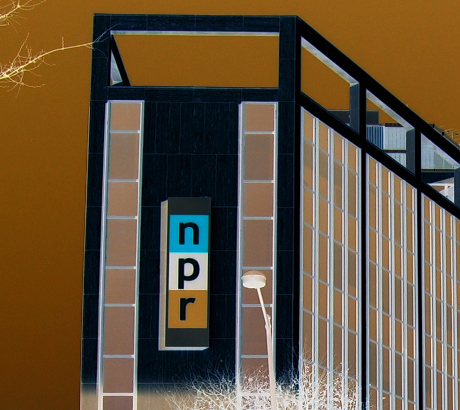
National Public Radio is facing the threat of losing its federal funding and having member stations lose their programming. But would this really be a bad thing?
Today, Republicans in the US House of Representatives are going to vote on the elimination of federal funding of National Public Radio as well as prohibit local public radio stations from using federal funds to pay NPR dues.
If you're reading this article and you don't know what NPR is, essentially it is the radio equivalent of PBS, the network of public television stations that carry popular public TV programs such as NOVA, Frontline, American Experience, Masterpiece Theater, Antiques RoadshowandSesame Street.
In addition to its newscasts, NPR is probably best known for All Things Considered, a two-hour weekday program that covers a variety of news and cultural subjects that has been on the air since 1971.
Both of these systems were formed in the late 1960s and the early 1970s by the Corporation for Public Broadcasting(CPB)which is a not for profit organization that is directly funded by the United States government.
CPB provides some funding to PBS and to NPR, but a substantial amount of funding to PBS and NPR also come from private sources via fundraising efforts and endowments by charitable organizations.
The Republicans in the House are livid and are on a de-funding warpath because of a release of a video last week where prominent fundraiser for NPR, Ron Schiller, was secretly tapedmaking reportedly anti-conservative, anti-Republican, anti-Tea Party commentsby political activist James O'Keefeduring a private meeting with a fake front group for the Muslim Brotherhood, organized by O'Keefe.
[EDIT: Per reader requests, I am pointing to the unedited, uncut version of the O'Keefe video so readers can make up their own minds about the context of Ron Schiller's comments.]
To say that Schiller was "Punked" by O'Keefe is an understatement. There has been some concern that the video(s) which he has posted have been selectively edited in order to put the worst face on Schiller's comments, which could be taken out of context.
Still. the fallout from the release of this video has been considerable. Schiller was fired. Shortly thereafter, the Board of Directors of NPR has also fired the not for profit's Executive Director, Vivian Schiller (no relation).
That being said, I do not wish to get into the finer points of partisan politics. That's not the role of this blog, which is to focus on technology. My own political leanings are what could be described as "Right Centrist Libertarian". You can interpret that any way you like.
I call myself middle of the road, with very liberal social leanings -- I'm pro gay marriage, pro-choice and pro marijuana legalization. I'm pretty much pro-everything that most conservatives and right-leaning politicians hate. On the other hand, I believe in having a very conservative economic policy (meaning we should be very careful how we spend government money) and a strong defense of our nation and our allies around the world.
At the same time I am also of the opinion that the government should be hands-off from just about everything as it concerns regulation and intervening with our capitalist system unless it becomes absolutely necessary to do so.
While I cannot say I am in general alignment with much of the legislation the Republicans and their Tea Party and other conservative-aligned supporters bring forth in the House and the Senate, I do have to agree that it probably no longer makes sense to spend federal money on supporting terrestrial radio broadcast infrastructure for NPR.
There are a number of reasons for this, but I'll state this plain and simple --- NPR should become an Internet-only radio station, where practical.
This morning, where I awoke to the news that NPR would be facing possible legislation in the House that could severely curtail funding from the federal government and prevent local radio stations from paying for NPR re-broadcast using government funds, the first thing I did was see if I could access NPR over the Internet.
More accurately, as I was lying in bed and watching CNN, what I actually did was grab my iPad 2 and go to the App Store to see if there was an iOS application to stream NPR from my device. There indeed is one, for iPad, iPhone and iPod Touch, and as a matter of fact, it is an EXCELLENT application. Not only can you live stream NPR from dozens of radio station affiliates, but you can also listen to pre-recorded podcasts and view news stories.
On the Android platform, there is an equivalent application, and my wife installed it on her Droid and it works perfectly. It should also be noted that any PC or Mac (Including the Linux system I am writing this article from now) can listen to NPR via live stream using their web-based player application. If you don't listen to NPR today via these mediums, I highly encourage you to do so.
Now, it could be argued that if NPR stops working with the large majority of public terrestrial radio stations who pay dues to carry their programming, it will lose a significant source of income. This is true.
Like PBS, NPR is a membership corporation, composed of public, non-commercial radio stations. As of 2009, NPR's income was approximately $160 million, with most of its revenue coming from programming fees it charges to stations which carry its programming (roughly 40 percent of its income) grants, contributions and sponsorships.
On the average, member stations that carry NPR content derive about 10 percent of their revenue from federal government funding, which comes in the form of grants from the CPB. NPR itself does not receive direct funding from the federal government. Rather, in addition to the CPB providing funds to the member stations which pay dues to NPR, it also provides funds that equal approximately 1.5 percent of NPR's revenues directly to the organization in the form of grants.
So if the legislation by the Republicans in the House (and eventually the Senate) passes, these radio stations which receive government money will not be able to use it to pay for NPR programming. Additionally, the CPB itself will not be able to issue grants directly to NPR.
This does not mean that public radio stations will "Go Dark". People will still be able to get local news, traffic, music, and other programming on those stations as they do now.
[NPR: Going the way of iTunes and Netflix?]»
They just won't be able to get NPR programming on stations that are unwilling to pay for it without government money. And the concern is by the Democrats and other public interest groups that are fearful of this legislation passing is that the problem won't be that the big cities like New York, Chicago and Los Angeles won't be able to get NPR content broadcasted -- it will be the ones in the rural areas which have less sources of income.
You could also argue that once NPR "Goes Dark" on these public radio stations, you won't have ones to stream from. On the iOS and Android apps as they exist today, you have to select specific stations as your stream source.
This can be fixed with some technology intervention. Doesn't NPR know anything about consolidating their infrastructure? Couldn't they just cut some kind of deal with both Google and Apple to stream their live broadcasts and archived podcasts from a few centralized data centers? Hello, iTunes? Amazon MP3 anyone? Pandora? Netflix? Maybe even Microsoft and Bill Gates can help.
I have to think that even with a 40 percent revenue loss, with their infrastructure being consolidated that NPR can more than just plain compensate. In fact, by going all-Internet streaming, NPR could have more than one "live stream" or "channel" at a time besides their podcast programming.
How hard would it be for NPR to add in-app payment for doing "Virtual Pledge Drives" on iOS and Android? Or use PayPal or Google Marketplace to take donations over their web player? And provide special features on those apps for those who contribute? Anyone who really wants to listen to NPR -- their core audience -- will gladly donate $5 per year via in-app purchase if Internet streaming becomes the only viable way to listen to this content.
And if we are talking an audience that is estimated between 27 and 32 million listeners, that's 135 million to 160 million dollars right there. And yes, I am aware of Apple's 30 percent cut on in-app purchases, but I think they could be persuaded to suspend that for a not-for-profit or significantly lower that number.
Now, I realize not everyone who wants or could to listen to NPR has Internet access. But people who live in the big cities for the most part do. NPR should de-emphasize working with local affiliates in the major cities and concentrate its efforts on getting over-the-air broadcasts to rural environments where broadband may be difficult to access.
Still, the amount of bandwidth required to stream an 44Khz sampled PCM variable bit rate encoded audio stream (considering most of NPR's content is essentially talk radio and does not require the same level of fidelity as music) at 32Kbps or even 64Kbps is not a heck of a lot. It's not like you need super-fast cable broadband to do it. Even dial-up users should still be able to get it.
One could also argue that by going all-Internet, that you won't be able to listen to NPR in your car. While that might be a problem for a few years, there will certainly be enough 3G and 4G infrastructure within the next 3-5 years where that isn't really a concern. And of course, NPR could also continue to simulcast on Sirius XM for those of us who really want that convenience.
So I say to NPR -- "Go Dark" on your terrestrial radio. And light up the 'Net.
Should NPR move towards becoming a provider of Internet audio content? Talk Back and Let Me Know.
Disclaimer: The postings and opinions on this blog are my own and don’t necessarily represent IBM’s positions, strategies or opinions.