Tech Broiler

Jason Perlow and Scott Raymond

Textbook of the Future: The challenges

By | January 28, 2012, 11:01am PST

Summary: It’s actually cheaper to go to another planet than to give an iPad to every child.

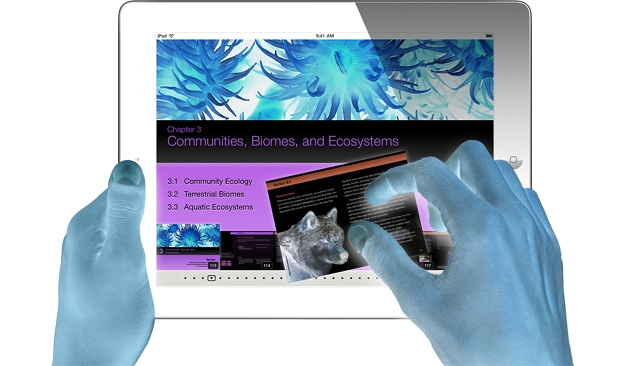
This month, Apple dropped a bombshell on the academic community by introducing iBooks Textbooks and iBooks Author. In combination, the two create a compelling framework for re-engineering the textbook in electronic form for K-12 students, permitting for rich color educational content and possibly an entirely new textbook ecosystem that could be made accessible to tens of millions of schoolchildren.

The problems with Apple’s daring textbook plan are twofold. First, in that the iPad as a hardware platform is completely unsuitable to the needs of schoolchildren and schools, not just from an initial capitalization factor but also from a durability one.

Second, legitimate concerns with the company’s “walled garden” aside, is that the iPad lacks the type of software management ecosystem that is required to host and deploy an entire curriculum of schoolwork for thousands of American schools and millions of K-12 students.

I discussed at length with my ZDNet Education colleague Chris Dawson exactly what type of hardware and software and back-end infrastructure would be required, and the conclusion we came to is that the scale of the problem that we are trying to solve is monumental.

Also Read (By Christopher Dawson)

How monumental are we talking? Space program sized.

If we do some back of the envelope calculations using the iPad as a reference device, assuming full retail pricing ($500.00) as a baseline, and we multiply it by the number of students that attend preschool through 12th grade annually (approximately 55.5 million according to the US Census) then we get a whopping $27.5B hardware cost to equip every child attending school with an iPad.

That’s $27.5 billion, and that is an estimated hardware cost for a device that would have best case scenario an expected lifetime of two years when put through the rigors of daily use by schoolchildren.

I say best-case scenario because only the most careful children will keep the device in good working order for that time, and the least careful would likely render it inoperable in a fraction of that.

Now, assuming that Apple can provide iPad 2 or a similarly capable iOS device at a generous 20 percent educational discount, maybe a little bit higher, we can knock $7.5 billion off of that two year cost. So let’s say conservatively $20B for two years.

Where this $20B would actually come from is hard to say. I believe that funding this entirely as a government-sponsored effort paid for by our tax dollars is highly unrealistic. At best, it would probably end up being a half parent/government proposition, and even that would be difficult to sell to lower class families, many of which are living below the poverty line.

And arguably, while I’m not factoring in the possibility that Apple could get consumer refurbished iPads into the hands of schoolchildren a bit cheaper, as well as iPads are selling, I don’t think the recycling rate is going to be high enough to allow for more than a quarter of all of those devices targeted towards public schools to be cheaper refurb iPads coming out of the Apple Outlet pool.

The problem is that any electronic textbook program would have to be a ten to twelve year commitment at bare minimum in order to send a single generation of kids through elementary and high school.

So now the magnitude of the problem is quite evident.

You’d really be looking at $100B to do this with Apple technology, for just the hardware for a 10 to 12 year commitment. Even if you could get government to subsidize half the cost of this, assuming a generous discount on Apple’s part,  you’re looking at $50B of government money and $50B that families are going to be expected to cough up as well. For just the hardware.

In case you were wondering, the recently proposed manned moon program for the 2020’s at NASA was budgeted at around $38B. To put that in perspective, the 1960’s Apollo program valued in 2012 dollars was around $100B, give or take a few billion.

And manned Mars programs have been estimated in the last five years at around $80-$100B for the first several seed missions before establishing a permanent colony.

In summary, it’s actually cheaper to go to another planet than to give an iPad to every child.

Any way you look at it, the cost of just getting the iPad hardware into the hands of children is staggering. And the more you analyze it, the more you realize how uniquely unsuited Apple is to the task of actually pulling it off.

And as to the e-Texts themselves? If you’ve read James Kendrick’s earlier piece and understand the fine print about how Apple intends to sell the actual e-texts to schools, we know this will never work based on how local school systems procure textbooks today. The model they have established is completely nonsensical.

Essentially, Apple is asking for schools to buy large vouchers for volume textbook purchases by which coupons will be handed out to individual students to buy texts at $14.99 apiece. Once purchased, the student owns the textbook, and it cannot be passed down to another student.

The entire idea is absurd, because it eliminates the concept of textbooks as school assets that are reuseable. A typical $50-$75 textbook today is expected to have a life of at least five to ten years before replacement. While the textbook publishers enter contracts with schools to replace them periodically with new editions, many systems often struggle to come up with the funds to do so.

The Apple iBooks Textbooks sales model as it stands today is designed to benefit only the absolute wealthiest of school systems. And it also stands to benefit the traditional textbook publishers more than it does the schools themselves.

So we have to ask ourselves that even at half the cost, or even at a quarter of the cost of Apple’s iPad and iBooks Textbooks, are electronic textbooks still a solution looking for a problem?

Indeed, many American public schools face tremendous challenges today for funding basic needs, not just textbooks. And traditionally, they have always given our kids just enough to get by, and will try to do more with less.

Only the best funded school systems can afford good textbooks and the best teachers and the best facilities. That’s still not going to change with proposing iPads for every child. We have to fix the problems endemic to the entire education system itself before even thinking about re-engineering the textbook.

Is the notion creating electronic textbooks really benefiting the schools and the children or is this something a bunch of people completely detached from reality cooked up in Cupertino for children living in Palo Alto when they really should be looking at the situation in places like Compton?

Because if we can’t make it work for the most disadvantaged of communities and school systems, we can’t make this work at all.

Now, don’t get me wrong. As a futurist and a technologist, the idea of giving American children enabling technology to help them learn and become more competitive with the rest of the world is a powerful one.

But I think we seriously need to get back to the drawing board before we can think about re-inventing the textbook for the 21st century.

In my next piece, I’ll talk a bit how we might begin to accomplish that, from a hardware perspective.

Do you believe an iPad for every child is a realistic and sensible goal, or do we need to completely re-evaluate what educators and schools actually need to secure the educational future for our children? Talk Back and Let Me Know.

Kick off your day with ZDNet's daily e-mail newsletter. It's the freshest tech news and opinion, served hot. Get it.

Topics

Jason Perlow, Sr. Technology Editor at ZDNet, is a technologist with over two decades of experience integrating large heterogeneous multi-vendor computing environments in Fortune 500 companies.

Disclosure

Jason Perlow

My Full-Time Employer is IBM. I write as a freelancer for ZDNet.

Disclaimer: The postings and opinions on this blog are my own and don't necessarily represent IBM's positions, strategies or opinions.

I own no investments or direct financial instruments in the companies I write about.

Biography

Jason Perlow

Jason Perlow, Sr. Technology Editor at ZDNet is a technologist with over two decades of experience with integrating large heterogeneous multi-vendor computing environments in Fortune 500 companies. A long-time computer enthusiast starting the age of 13 with his first Apple ][ personal computer, he began his freelance writing career starting at ZD Sm@rt Reseller in 1996 and has since authored numerous guest columns for ZDNet Enterprise and Ziff-Davis Internet. Jason was previously Senior Technology Editor for Linux Magazine, where he wrote about Open Source issues from 1999 to 2008.

In his spare time, Jason is an avid amateur chef and food writer, where his work reviewing New Jersey restaurants has appeared in The New York Times. He is also the founder of the popular food web site eGullet and blogs about restaurants and cooking at OffTheBroiler.com.

Talkback Most Recent of 316 Talkback(s)

  • To put in an actual relevant perspective
    The 2005-2006 school year costs to the US for K-12 was $536 billion, for a single school year. I don't know how much of that was for books.

    P.S. before someone accuses me of having made up that number the source was the US department of educations own web site.
    ZDNet Gravatar
    oncall
    28th Jan
  • RE: Textbook of the Future: The challenges
    @oncall

    You must have made that up, because other organizations say that it is BARELY 200 billion dollars a year spent in the United States.
    ZDNet Gravatar
    Lerianis10
    28th Jan
  • You can Google it
    @Lerianis10

    But at the risk of having this post banned I will try to give it to you:www2.ed.gov/about/overview/fed/10facts/index.html
    It's right there from the horses mouth. It's an awful lot of money. However, that is not the real point is it. If you want to put $27 billion in perspective you compare the cost of an apple (get it) to the cost of an apple pie. You don't compare the real cost of an apple to the imaginary costs of a self-sealing stem bolt (for all you Trekkies out there).

    P.S. for extra credit you can dig around there and see between that report and 2008 per student spending increased over 10% to just over 10k per pupil per year.
    ZDNet Gravatar
    oncall
    28th Jan
  • RE: Textbook of the Future: The challenges
    @Lerianis10

    The $200 billion is approximately the amount each year taken from citizens of the states according to their ability to pay and dolled out to the 50 states according to their need and subject to requirements, as determined by the wise politicians in Washington, DC. This does not include state and local funding of state-run schools, nor private education.
    ZDNet Gravatar
    monkey2man
    30th Jan
  • RE: Textbook of the Future: The challenges
    @Lerianis10 Indeed, many American public schools face tremendous challenges today for funding basic needs, not just textbooks. And traditionally, they have always given our kids just enough to get by, and will try to do more with less.Flat Stomach Exercises
    ZDNet Gravatar
    lubnapipo
    15th Feb
  • RE: Textbook of the Future: The challenges
    @Lerianis10 We have to fix the problems endemic to the entire education system itself before even thinking about re-engineering the textbook. Best Running Shoes l pet insurance
    ZDNet Gravatar
    saminabiz
    4 days ago
  • RE: Textbook of the Future: The challenges
    @Lerianis10 You can access the desktop, but when you click on the familiar location for the start menu, it goes back to the Metro tiled layout.Music Software l Dubturbo Review
    ZDNet Gravatar
    saminabiz
    4 days ago
  • RE: Textbook of the Future: The challenges
    @Lerianis10 eTexts zap the need for that (due to the all-in-one reader/tablet/magic beasty that one can actually carry to and from home or even to be made available from home so the wee darlings don't strain something heaving a wee beasty around).gilbert divorce attorneys
    l phoenix zoning attorney
    ZDNet Gravatar
    larzze
    4 days ago
  • Apples and Rocks
    @oncall
    Cost of books is so minuscule it doesn't even show as a blip in a breakout.
    Most of that is schools, teachers, and admin.
    As a parent in one of the largest school districts, we get to anlyze the crap out of this locally(LAUSD).
    ZDNet Gravatar
    rhonin
    28th Jan
  • Indeed
    @rhonin

    The costs of books, and iPads is a "rounding error" in the big scheme here. I mean he's talking here like, what did Jason say, $10 billion a year is going to break the system. This $500+ BILLION dollar a year system? That's probably why Jason didn't bring up "the big number" because he knew if he actually did people would laugh at him for describing something that would amount to less than 2% annual expenses as "Whopping".

    And of course we are conned into thinking textbooks are a deal for schools. Not really. The K-12 textbook industry is a multi-billion dollar a year industry that YOU and I are paying for right now. You think a list price of $75 on Amazon reflects the true costs to the school system, and all the meetings and committees and town halls that went into choosing a book so the taxpayer can feel he is getting his moneys worth? I mean, where the heck do you think that $10,400/year/student (in 2008 dollars and climbing) is going?
    ZDNet Gravatar
    oncall
    28th Jan
  • RE: Textbook of the Future: The challenges
    @oncall
    Look beyond the iPad cost...
    The ability to put in place the infrastructure and continue to support it year after year is well beyong the affordability of most schools.

    What programs / areas do you rob to pay for this?
    ZDNet Gravatar
    rhonin
    29th Jan
  • @rhonin
    Well, in terms of (at least hypothetical) cost savings, you'd get to not have to waste huge rooms/buildings on textbook storage. Then there's all the effort on textbook issue, repairs and maintenance and all the people paid to do that and all the time and money it wastes.

    Also, I hazard a guess from across the pond that you'd reduce the pressure on having locker space to hold books, and (correct me if I'm wrong) but isn't there a law that says the kids have to have made available to them one book for at school and another at home? eTexts zap the need for that (due to the all-in-one reader/tablet/magic beasty that one can actually carry to and from home or even to be made available from home so the wee darlings don't strain something heaving a wee beasty around).
    ZDNet Gravatar
    ego.sum.stig@...
    30th Jan
  • RE: Textbook of the Future: The challenges
    @rhonin

    Sure the cost is small compared to everything else, but it's still money spent. What needs to happen is an open source textbook reform. Some districts in Texas took open source books, and then modified them to be up to their standards. Schools say they don't meet the rigor they expect, but they can make them meet that rigor. Once that is done, they could supply all the other schools. The problem is that it needs to happen on a large scale, and someone that knows curriculum needs to head that up.

    With common core, it should make it even easier for schools, I would think. You don't need a local consortium, or even a state. You could do nationwide deals with bigger schools. The could still be a cost associated with the books, book MUCH less. Just enough to cover the cost of the people updating the books and preparing them. A stipend if you will. Whatever schools are involved in that organization would then have books freely available whenever needed without a limit on usage.
    ZDNet Gravatar
    farmers@...
    30th Jan
  • Ten billion? Dream on. Dream on.
    @oncall

    Do some math and real world thinking.

    55 million students, at even $400 a piece is 22 billion even before the Pads are loaded with books. And then there is maintenance costs, replacement costs and how about the electrical costs to keep 55 million iPads charged up every day. Look at this little endeavor to cost about $40 million in the first year start up and additional millions over the years to keep things going.

    Its a super dumb idea unless you own shares in Apple.
    ZDNet Gravatar
    Cayble
    30th Jan
  • RE: Textbook of the Future: The challenges
    @rhonin Fire one vice principal and a basketweaving instructor, and get them all OLPC's. Oh, and cancel the football program unless the fans want to support it entirely.
    ZDNet Gravatar
    james.vandamme
    31st Jan

Talkback - Tell Us What You Think

Formatting +
BB Codes - Note: HTML is not supported in forums
  • [b] Bold [/b]
  • [i] Italic [/i]
  • [u] Underline [/u]
  • [s] Strikethrough [/s]
  • [q] "Quote" [/q]
  • [ol][*] 1. Ordered List [/ol]
  • [ul][*] · Unordered List [/ul]
  • [pre] Preformat [/pre]
  • [quote] "Blockquote" [/quote]
Click Here

The best of ZDNet, delivered

ZDNet Newsletters

Get the best of ZDNet delivered straight to your inbox

Facebook Activity

White Papers, Webcasts, & Resources