Tech Broiler

Jason Perlow and Scott Raymond

Why personal telepresence will fail: it ain't the price

By | October 9, 2010, 3:03pm PDT

Summary: Personal telepresence systems will fail to take hold due to self-consciousness and a desire for privacy.

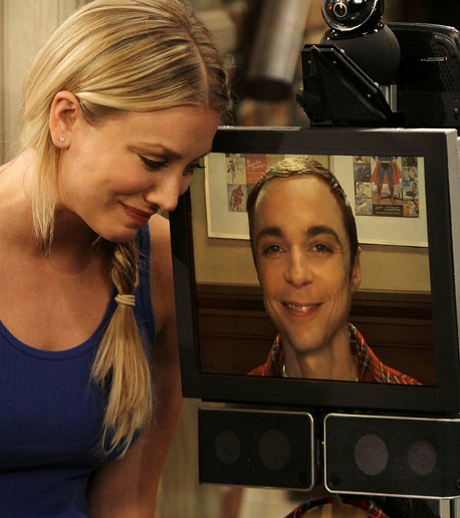
The high cost of first generation personal telepresence systems such as the Logitech Revue and the Cisco Umi may be a barrier for some, but at the end of the day the major resistance to adoption will come down to self-consciousness and privacy (Photo: CBS)

This last week, Logitech and Cisco both launched new personal telepresence products — the Revue and the Umi — in a bid to finally bring video calling and videoconferencing, a technology that has been largely targeted towards corporations for reducing the cost of business and travel — to the masses.

My colleague and Editor-in-Chief Larry Dignan has declared that both of these two products are likely to fail because they are both too expensive in terms of equipment and recurring service costs. While I agree with this at least in terms of early-adopter resistance, I don’t think that this is the real reason why this technology is unlikely going to catch on soon, and interestingly enough I don’t think it has much to do with cost, at least long term.

Video calling and telepresence technologies are not new, and there have been multiple attempts in the last 40 years or so to bring it to the average citizen, including by Ma Bell herself, who spent hundreds of millions of dollars in research & development during the 1960’s and the 1970’s and eventually marketed video phones in the late 1990’s that used fairly modest bandwidth (essentially dial-up modem speeds) with primitive but still quite functional picture quality.

In 1995, the price of an AT&T VideoPhone 2500 cost $1000 with a recurring monthly cost of $90 (in addition to regular voice call overhead) which while certainly a considerable sum of money for the average citizen was not entirely out of reach of the upper middle class and early adopters during a relatively strong economy compared to what we have today.

AT&T and other companies which offered similar products still failed to successfully market and sell these personal video calling solutions, with no lack of customers with money to burn during the naughty nineties.

In just the last 10 years, we’ve easily had the technological ability with cheap CCDs (1-5 Megapixel), low power microprocessors, ASICs and commodity cable modem and DSL bandwidth to allow more than just rudimentary 2-way video calling that would allow mass-market video appliances to be connected next to TV monitors all over the house.

These would not be just hobbyist webcams to be used in the proximity of our PC monitors for recording vanity YouTube videos or having short Skype IP-based video calls from our office desk environments as they are used today.

What would it cost, really, to make a simple 2MP SVGA/XVGA video phone as a consumer appliance paired with an inexpensive IP calling service such as Skype or Google Video nowadays, $100? Certainly much cheaper than what the average iPod or smartphone costs to manufacture. So if the technology is so cheap, why has it never actually caught on outside the workplace?

Dr Heywood Floyd calling his daughter from earth orbit in 2001: A Space Odyssey (1968)

The idea and the dream of personal and widespread-use of video calling has always been a staple of science fiction. We’ve seen it portrayed as a common enabling technology on any number of TV shows such as Star Trek (1966) or in classic SF movies such as 2001: A Space Odyssey (1968) and Blade Runner (1982).

Science Fiction can teach you a lot.

One of the things I’ve noticed about the use of telepresence technology in Sci-Fi is that you almost never see full-body representations of people in private, home environments. Sure, on Star Trek, you’ll sometimes see Captain Picard or the Romulan Commander standing on their bridge of their respective ships from the perspective of their opponent’s viewscreen, but that’s a work environment: Corporate Telepresence.

However, when they get a call in their quarters, or even with the usual ship-to ship call (especially with a hostile, alien species) it’s usually just a shot of the face and shoulders — just like with the FaceTime feature on the new iPhones.

At work, we’re much more aware of our surroundings, we groom ourselves, and we get dressed for business. When telepresence technologies are used, they are in completely controlled circumstances.

Video conference calls at work are scheduled, as usually they are confined to conference rooms where a number of people at each side of the video link have to gather. If someone is being focused on for any particular time, it’s usually the head and shoulders area and people are prepared in these situations to be seen and heard.

Excuse me, but do I look bloated? I’m feeling kind of self-conscious today. Oh, and you have five minutes to surrender your vessel to the Cardassian Empire or we blow your ship up.

In Star Trek and movies like 2001 and Blade Runner, they actually got video calling and telepresence right. For starters, in these movies and shows, you frequently see these video calls as being screened before a picture shows up. Secondly, you only tend to see a person’s face, because people don’t want to get caught off-guard in their living room or their bedroom with half (or less than half) of their clothes on or appearing in a casual, unkempt way.

For what it’s worth, I’m leaving out the adult applications of telepresence for those who WANT to be naked on video. That’s an entirely different conversation and outside the scope of this article.

In an age where we can now easily move from point-to-point transmitting VGA or 1 or 2 Megapixels to full 720p full-motion HD video representations of bodies and faces in sharp detail, along with every pore and imperfection using relatively inexpensive hardware, people will become very self-conscious of making ad-hoc video calls especially if their bodies and wider fields of view of their homes and personal spaces are exposed.

And nobody will want to receive these calls unsolicited.

Deckard calls Rachael on a Bell System video phone in Ridley Scott’s Blade Runner (1982)

So what about technologies like Apple’s FaceTime? I’m not going to argue that this isn’t a killer feature for the device, and certainly the commercials portray a more human and emotional aspect to linking people together using the technology.

But as in Sci-Fi, FaceTime is a good application of telepresence because it allows the users at each end to be selective, and because the field of view is limited to the face (and not in super-sharp, 720p or 1080p detail yet) it allows for some privacy if needed.

Still, I think technologies such as FaceTime will be the exception rather than the rule, and price, while not the primary factor, is definitely going to have some influence as to how quickly the technology is used.

4G data plans are going to have to be fairly inexpensive to allow mobile video calling on smartphones to be common place, and from what the industry is telling us, we’re more likely to see tiered data plans that might make people think twice before phoning video when the meter is running if it costs $2 a minute or more to make a 4G video call.

And I don’t even want to get into the issue of competing protocol standards for video calling. That needs to get sorted out way before we get into a “You can’t call my Revue or my Droid from your iPhone or vice versa because you use FaceTime or Umi instead” situation.

And I’ve said in regards to streaming video in hotels and use of other public Wi-Fi hotspots, the accompanying backbone public infrastructure to make these calls more commonplace than for just arranged corporate video meetings via WAN or point-to-point tunneling is going to have to be beefed up considerably.

You think the download speeds at a hotel are bad from congestion and shared segmentation? Try doing hotel video calls from an iPhone or Android device like the EVO 4G — the upload speeds are even worse.

Even if the 4G and public Wi-Fi bandwidth and Internet backbone is beefed up, however, there’s one other thing that’s nagging me about video calling, and that has to do with the generation of customer that companies like Apple, Logitech and Cisco think they are marketing to.

As far as I can tell, the only people who might even be remotely interested in this sort of thing are Gen-X and Boomers, who want to see their children and grandchildren over long distances.

It’s no secret that Apple’s FaceTime commercials strongly feature children talking to parents and grandparents. But Generation Y? Give me a break. We’re talking about an entire demographic that prefers to communicate over texting and FaceBook rather than make voice calls, so that they can shield themselves from regular human contact as necessary.

Have you ever actually tried to call a Millennial on the phone and have more than a 1 minute conversation without them telling you to text instead because of how awkward and uncomfortable you’ve made them feel for intruding on their personal space and time?

So now Cisco, Google, Logitech and Apple actually believes that this entire young generation of reclusive prima donnas would be willing at look you directly in the face or profile a larger section of their body using a high-definition camera while they talk to you on the phone, or when they are lying on the couch in their snuggies in their living room or on a dorm room bed?

No, I just don’t see that happening. Not even when they grow up.

Will video calling and personal telepresence ever catch on, no matter how cheap or easy it is? Talk Back and Let Me Know.

Kick off your day with ZDNet's daily e-mail newsletter. It's the freshest tech news and opinion, served hot. Get it.

Topics

Jason Perlow, Sr. Technology Editor at ZDNet, is a technologist with over two decades of experience integrating large heterogeneous multi-vendor computing environments in Fortune 500 companies.

Disclosure

Jason Perlow

My Full-Time Employer is IBM. I write as a freelancer for ZDNet.

Disclaimer: The postings and opinions on this blog are my own and don't necessarily represent IBM's positions, strategies or opinions.

I own no investments or direct financial instruments in the companies I write about.

Biography

Jason Perlow

Jason Perlow, Sr. Technology Editor at ZDNet is a technologist with over two decades of experience with integrating large heterogeneous multi-vendor computing environments in Fortune 500 companies. A long-time computer enthusiast starting the age of 13 with his first Apple ][ personal computer, he began his freelance writing career starting at ZD Sm@rt Reseller in 1996 and has since authored numerous guest columns for ZDNet Enterprise and Ziff-Davis Internet. Jason was previously Senior Technology Editor for Linux Magazine, where he wrote about Open Source issues from 1999 to 2008.

In his spare time, Jason is an avid amateur chef and food writer, where his work reviewing New Jersey restaurants has appeared in The New York Times. He is also the founder of the popular food web site eGullet and blogs about restaurants and cooking at OffTheBroiler.com.

57
Comments

Join the conversation!

Just In

RE: Why personal telepresence will fail: it ain't the price
JACOBSONR 14th Oct
Good day to confirm this comment I would appreciate T h e b e s t o f Z D N e t d e l i v e r e d your website very nice to everyone Yes, Oracle is the only one with shared-disk architecture, but that is there advantage. It means you can add or remove nodes and the database lives on. In a shared nothing architecture, if you lose a node, you lose the system. I'm sure Oracle appreciates EMC highlighting their advantage.I also desire to signal in your RSS feeds. Thank you as soon as once again and maintain up the great operate Awesome post! Thank you very much || thanks for nice content this is really benefit to me.
0 Votes
+ -
Totally agree.
peter_erskine@... 9th Oct 2010
Many, possibly most people will regard this as a nightmare technology!
@peter_erskine@...

Americans are so touchy about their "privacy". Would it surprise you that there are cultures that don't regard this as important. I expect India will lead the world in video calls.

I could just as easily extrapolate from Americans' obvious desire to appear on reality TV to say that it will be taken up in droves.

You also fail to mention that a lot of people already web call with a technology that's used by over 90% of the planet - MS Messenger.

Essentially you are just blowing bubbles. You have no actual data and to suggest Gen Y uses texting and facebook because they want to "shield themselves from human contact" is just stupid. This tech is cheaper, that's why younger people use it. What do they use it for? Human contact (and don't bother with face to face or talking being different - it's all just data to the brain).

Must have been a slow weekend Jason.
0 Votes
+ -
"You have no actual data"
Info4Sherlock 11th Oct 2010
@tonymcs@...

"You have no actual data"

you state that, "You also fail to mention that a lot of people already web call with a technology that's used by over 90% of the planet - MS Messenger.


Well where is your data?
0 Votes
+ -
Contributr
@tonymcs Americans are absolutely touchy about their privacy. Considering that I write for a primarily American audience, and not the rest of the world, I'm addressing concerns specific to our market, not anyone else's.

In regards to India and other markets, I think at least some of those countries are more concerned about keeping their citizens out of abject poverty than placing video calls. The majority of Indians live in so much squalor that acquiring technology is extremely low on the priority list for the average citizen, let alone those who are privileged enough to feed their families.

In terms of proof or data, I'll offer this -- over the weekend I received the following email from an employee of CISCO, which is one of the companies that manufactures the video phone units:

"Jason,

I had to chuckle reading your article. You are dead on target. I work for Cisco. Everybody has video phones of one sort or another - NOBODY uses them. Not at their desk, not during WebEx meetings - nada.

I even made movie about how I'd been working for Cisco for years an nobody ever called me on my video phone. I posted it on our own internal version of YouTube - about 2 years later someone saw my video and called me for fun - they were the first to ever call and it basically freaked me out. I didn't know what was happening because for long time I'd been using the camera to see who was in the hallway and had forgotten I'd turned it back towards me.

Even internal telepresence when used to meet your comrades in Bangalore, you only use it once, after that you've already seen their mugs enough!"


Human contact is all just "data to the brain"? Really.
@tonymcs@...
I cannot agree with you.
I look at all the calls I make in a day; home work other.... (btw I work remotely in my job) and if I ask myself "would I want this call to be a video call?"; in over 95% I would reply "No".

There are exceptions but these I do not see driving public adoption of the technology.

My work, I have access to full video conferencing. I think I have used it 2x in the last couple of years....

This article (as it applies to the US market) is spot on.
0 Votes
+ -
when it is the conversation that is important, not the view.

Language is the communication, not sight.

Unless you plan on writing down all that which you needed to say for me to read off the screen.
plain
0 Votes
+ -
@peter_erskine@... While as a geek I think it would be cool. I do think there is the whole "hidden" idea behind the phone that will keep from becoming a reality. While nightmare is probably strong, bad from a social perspective is probably more accurate. Why do you think social media and texting are so popular? People can hide behind the Avatar or text.
The tech concept is a lot older than the article suggests.

There were working models in Nazi Germany (the Germans were rolling out telepresence to Reich post offices before WWII interrupted their plans) and Bell Labs had test models in 1957.

But telepresence engineering and artistic drawings dated back more than 130 years as this gallery shows:

http://www.crn.com.au/Feature/159854,video-conferencing-face-to-face-far-away.aspx
0 Votes
+ -
Contributr
@Natecochrane Yeah, very early stuff. The Germans and Bell I knew about, but I was unaware there were actual applied commercial applications earlier than say, 1965 or so.
@jperlow The Germans got no more than a handful of sites into production before the war intervened. But it's interesting that the concept was known (and its marketing materials largely distributed!) long before.

The early French artistic impressions evoke the same emotions that Apple and Cisco and others try to in their modern materials.
The reason why I am negative on the Umi is that it doesn't interoperate with any business telepresence or videoconferencing (H.323 or Cisco). Working from home is clearly the killer app for home telepresence. Many people would get or stay dressed up for a 10:00 PM call with Beijing or Bangalore, if it meant they didn't have to drive into the office. Presumably this will come, but, until it does, I don't think this device will catch on much.
0 Votes
+ -
Hmmm... not the killer app for the umi
JohnRobinson 11th Oct 2010
@TMEubanks I know people who use TP in their homes. They do it from their home office, at their computer. I work from home myself, and I AM NOT going to use my TV and my living room to have video collaboration sessions.
0 Votes
+ -
Ustream generation is already there.
dave95. Updated - 10th Oct 2010
Generation y has already taken to the live streaming technology with services like Ustream, YahooLive and others. It's already happening online now, on a computer's web cam. Privacy is off little concern to this generation, it's all about social, connecting with friends, fun.

I could see this generation as being the ones to really popularize video calls on devices like the iPhones and iPod Touches. Forget the expensive Logitech and the Umi boxes, way too expensive to really take off. No ones going to pay a monthly fee for video calls.
@dave95. Those live streams you mention are all about Gen Y's presumption that anything can be made into entertainment.

But they AREN'T about spontaneous unplanned reveals of people au natural. Maybe these people aren't doing hollywood makeup and lighting for their little live web streams, but they're not totally unprepared.

And live streams like that aren't typically going out to people who have relationships which MATTER to most people. Its not a business associate, or a client, or even your grandma. Its putting on a show for the world, even if its low budget and mostly off the cuff.
Recall, Jason, that with FaceTime technology, each participant in the video conference can transmit a POV to the other party instead of just transmitting his or her own image. This is a feature that you didn't expound on but I believe it is the one feature that will ultimately become the main reason behind a FaceTime session.

For example, I think most persons wish to convey some interesting observation to another person rather than just having a video face-to-face meeting. Even Apple cites this feature in their promotion of this technology.

"Hello Grandma. Look what your granddaughter is doing now!" ... and then the FaceTime session changes from a simple face to face video exchange to a more pleasing experience.
0 Votes
+ -
RE: Why personal telepresence will fail: it ain't the price
Sebhelyesfarku Updated - 10th Oct 2010
Video calling has been available on 3G camera phones since 2005 or 2006.
I think you have to keep in mind that expectations of technology and privacy are not constant, and people will adapt relatively quickly if the incentives exist to make it worthwhile.

I don't think it's a question of the ultimate success or failure of Telepresence. I believe it will ultimately become ubiquitous and people will boggle that we ever had this conversation. It's more a question of whether it will succeed in the home in the short term.

The history lesson is interesting, but not really relevant; yes, people have wanted to make this work for decades, but they also lacked the wherewithal to do it in such a way that didn't completely suck. Older style video conferencing systems were really *annoying* with their low resolution, poor frame rate, high latency, etc. Having a conversation on a system like that was never fluid or natural like having a telephone conversation. You can't really compare it to the 1080p, 30fps systems available in 2010.

As for who might adopt such a thing... well, I have conversations over Skype with my parents, and they don't mind my bad hair days. I suspect that "keeping in touch with family" will be a major driver for personal TP. That's why I'd consider it. Once personal TP adoption increases, I suspect we'll also see a demand for interoperability with more costly business units, especially among telecommuters, and I would be very much surprised if we didn't see the various vendors making interoperability a goal, if not a priority.
@spatula6 It's not just about the history, it's about the psychology. Using Skype--and the ways Skype can be used--is somewhat different than what the umi and Revue are attempting. Take a look at the different ways you wish to utilize your living room. Then ask if you want all those functions coopted by taking a call, then add the inconvenience of taking that call if it's not expected/scheduled, and finally, at the end, add price. Facebook and Skype (and likely FaceTime going forward) will do a fine job with "Keeping in touch with family," but true personal TP adoption will not likely be driven by that.
@spatula6
Now if I could make a call as follows:
{all vocal}
"Call Bob; video off"
System calls Bob disabling oputgoing video....

or

{all vocal}
"Call Bob; video on; Den"
System calls Bob routing video to flatscreen in my den.......

I might, maybe, just possibly, I think, use it.....

We have the technology, cost is prohibitive, ease of use is not there.....

till then..... nope.
0 Votes
+ -
"So if the technology is so cheap, why has it never actually caught on outside the workplace?"

This is a question ZDNet should ask more often. Because there are countless examples of ZDNet saying something will take off or is even "inevitable" (LOL, I laugh every time a blogger says that), yet never comes to pass even when the price and the tech are there.

"What would it cost, really, to make a simple 2MP SVGA/XVGA video phone as a consumer appliance paired with an inexpensive IP calling service such as Skype or Google Video nowadays, $100?"

All you really need is Skype and a webcam. If you really wanna go cheap and ignore the 2 MP number, it can be as low as $10.
0 Votes
+ -
Contributr
@CobraA1 All you really need is Skype and a webcam. If you really wanna go cheap and ignore the 2 MP number, it can be as low as $10.

And yet, you don't see this technology being used as widespread for video calling as you think it would be.
I love Skype. I would welcome Facetime on my phone. I especially use it to see my children (grown ones and grandchilldren) when they are far away. My son can communicate with me from around the world (China, Japan, Ireland, etc) and he can show me the cities from his hotel room, etc. I think it is wonderful, even if you want to share views of your cat!!
@MaryU@...

Mary, you're exactly the demographic that Jason indicated would gratefully and enthusiastically embrace telepresence. Your very post validates his point about what generations are open to the technology.

Just saying...
0 Votes
+ -
I agree with MaryU
OffsideInVancouver 15th Oct 2010
@PollyProteus

I'm a generation Y expat and the last thing I did before emigrating was show my parents how Skype works. I also use it to keep in touch with mates from back home. Most of my communication with people from home is email or Facebook, but sometimes I actually want to see the face of the person I talk to.

I doubt that telepresence will replace voice calls any time soon as the defacto method of having a conversation with someone not within earshot, but to say it will "fail" is ridiculous. It has a limited number of use cases and will meet them adequately enough for adoption, just because it's potential market is relatively niche does not necessarily make it a failure.
Having a camera that can be hacked, to allow anyone, including the government, to see what you are doing 24x7 isn't a very good idea.

Of course, we would like to see the person on the other end but we wouldn't necessarily want them to see us.
0 Votes
+ -
It's because it's like taking a step backwards
JohnMcGrew@... 11th Oct 2010
Up until now, technology has been a great equalizer; it really doesn't matter how attractive you are when you're working remotely. All anyone cares about is your work product.

Now all of a sudden, we're being thrown back to the '70s where everyone is going to have to get dressed up and have their hair and make-up done before they have their conference call.

This all works much better in TV and the movies when the actors have already spent hours in make-up before their scenes with this futuristic technology. For the rest of us, it's a step backwards and too much trouble.
And it sure "ain't" privacy! Just look at every minute detail posted between FaceBook and TWITTER! It doesn't appear that any "milleneals" have any concern for privacy at all, at least at this time.
I agree completely with those who claim it hasn't worked in business. My former company had it installed in key conference rooms, but it was rarely used. Look around the room during the next conference room to conference room teleconference at work, and notice all the background activity, offline communication, signaling, etc. etc. that goes on that you wouldn't want on the screen. Everyone was far more comfortable flipping Powerpoint slides and talking.

As far as personal life, even if you have a choice of doing video or just voice, then you have the issue of denying video access when the other person wants it. Sounds to me like even more calls will get screened to voice (video?) mail.

Anyway, I can conceive of a few uses (grandkids for sure), not to mention adult communications, but mostly, I can live without this.
"...tried to call a Millennial on the phone and have more than a 1 minute conversation..."

My 22 year old son has been this way since the age of 5 when he could handle a telephone on his own. That said, he doesn't respond to emails either, he prefers face to face conversations, if he can't have that, he'd rather not converse in any way.
0 Votes
+ -
John Naisbitt nailed this conversation back in '82 in distinguishing and then backing up his argument in the "high tech high touch" trend part of the original "Megatrends" book. He revisited and expanded on that conversion in '92.

Here's a link to an updated book on this conversation and a summary of that conversation at Amazon:

http://www.amazon.com/High-Tech-Touch-Technology-Meaning/dp/1857882601/ref=sr_1_1?ie=UTF8&qid=1286819182&sr=8-1

To enlarge the conversation, it's not just telepresence (for work or non work situations) that has already failed for quite some time. It's the entire possibility of decentralizing work thru the available enabling tech despite the limited mobility laptops and phone provide a limited few (I say limited given the opportunity currently available) who spend most if not all of their time out of a centralized office. Most don't and the relationship between high tech and the need to balance it with high touch addresses this behavior in (for me) a completely satisfying manner.
0 Votes
+ -
It ain't an issue of privacy ...
gerhart 11th Oct 2010
Since huge numbers of people freely give away their private information daily via Facebook, Twitter and others, I would argue that privacy is not the issue. I think it is more related to the "value" of watching a talking head. In the grandchild/grandparent scenario, there is an aspect of social bonding related to seeing the other party. For business conferencing, it can be the same issue ... trust is built from a bonding relationship that includes some level of visual reference.

Your eyes are the highest bandwidth input device on your body (perhaps after the skin). Most of us get "bored" if that input device is being used poorly. Just watching someone elses talking head is very poor use of the bandwidth to the brain in most cases.
As you say, it's only used in totally controlled situations. The point is, telepresence opens the way to non-verbal communication. Those nonverbals are usually unconscious mannerisms; and are far too often wrognly interpreted.

Cross cultural misinterpretations of body language is rampant. So too is misinterpretation within a culture. For all the cuteness of the concept, the TV show "Lie To Me" would never work in real life. Classic examples are schizophrenics and autistic spectrum disorders. One is reacting to phenomenon that only they are aware of, the other is reacting with or to, inappropriate cues.

Finally, do you REALLY want people to see your hep desk people rolling their eyes, or giving the receiver the finger for the most idiotic of questions? "Excuse me, but where is the Any Key?"
You guys really had me going on this article until I got to "at the end of the day". only 2 things happen at the end of the day, depending on your perspective; either it's now night, or it is the beginning of the next day.
Over on our blog I've discussed this several times, including a couple sci fi references (Star Trek, no less...), but without looking at the "why" as in-depth as here. Nice, Jason. Add "multitasking" (grandma doesn't need to know you really want the TV to play Halo rather than staring at her), and the combination of convenience and privacy that Jason mentions here, and you have an accurate psychological profile of why this just won't work. (Price being a no-brainer.) What disturbs me about Cisco et. al.'s continued attempts at making novelty items is that it can hamper long-term efforts to innovate telepresence in ways that add value to and expand the market for videoconferencing. They need to sit down and read Jason's article here, maybe do a little market research (remember how the study Cisco did with NYU revealed people don't use telepresence the way Cisco thought they used it?), and try to leverage the tech to improve on, rather than imitate, seeing each other.
0 Votes
+ -
The Jetsons
kmb623 11th Oct 2010
Remeber that the videophones on the Jetsons came with full face and hair masks so that Jane could talk to her friends without exposing that she just rolled out of bed?? Give me that and I could give it all a try happy
@kmb623
awesome idea! totally remember that! I wouldn't imagine it will be much different... or something like Johnny Mnemonic... something akin to the different 'modes' you can take pictures with a digital camera (sepia, b&w, etc). I see an entire industry building up around the different 'digital outfits' you can buy from the app store to dress your video chat character self up in... Apple'll make $billions. That way, you actually can still be in bed with the webcam automatically scanning your facial patterns in all its unmakeup'd glory but communicate that to a former picture/video of yourself that presents those as if it was you... then again, it was your idea, not mine.
0 Votes
+ -
Gen Y, GenX ??
Tom6 11th Oct 2010
I'm about 40 something and seem to neatly fall into the GenY category here. I just hate real-time communications with just 1 person or just 1 topic. Big Yawns!!
In a word: Yes!
This technology has its uses, certainly, but not to average people, and that is for shure. You can imagine a lot of cost reduction in company staff meetings, or in judgements, for exemple, when you do not need to go through air travel to discuss company strategies, or when you dont need to mobilize a lot of resources for presioneer transport.

But these are pre-stabileshed scenarios, where you have control of the situation, ar least, in the majority of times.

Another diferent thing is you running to answer a call when you are dressing up, or when you are toyng with your pet, specilly a if it is a job call.

And about privacy, I can say as a bachalor degree historian that every culture steems its privacy, one way or another, even in India. Sure, if you are a "economically confortable person", and have someone to clean your house in a everyday basis, you will not worry about showing the messy room in the background when you are recieving a calling of you boss.
The biggest problem? Getting working and then keeping it working.
0 Votes
+ -
I think, given the deplorable state of broadband in MOST of the country, and given the complete lack of advertising by Skype and Google, that we see an AMAZING amount of video communication adoption.

Also, you say 2MP and then suggest that 720 is better than that. 1080P is 2MP. 720p is 1MP. A flip can do 720p. You're whole notion of HiDef seems to be a bit off.

I think it's still early. I think it needs to be a more dynamic experience. Sometimes, I want to see their face, and I want to share what's around me, and I want to share my desktop and what I'm doing. Currently, I can share my desktop or I can video conference, and I can't smoothly transition between. Yes, the tech is there, but the software isn't yet. Oh, yeah, and my friends and relatives have sucky internet. Oh, and Comcast blows, so they're all dual NAT'ed, too(at least, that's the only conclusion I can come to when the modem serves my PC a 192.x.x.x IP address for the first several minutes when I connect directly to it.
0 Votes
+ -
Agree with the author...completely.
KarrasB 11th Oct 2010
Thing is, most of us need a time to not be dressed, not have the hair or makeup done, all that grooming required in the "real world." Having a home video phone would be like being on stage 24/7.
this is all speculation (obviously). As the technology comes, it will be adapted and used organically. You're approaching this from the same angle the industry has for 40 years (out of necessity): a point to point proprietary approach. ex: an AT&T $1000 phone system over an AT&T network using an AT&T video-calling plan to another $1000 AT&T phone system on the other end. Its going to be much more jumbled than that, different operating systems, different browsers, different devices, different connection environments (wired/wireless to cellular and back again).
Until the products actually exist (which they're very much so starting to), we won't know. And it will start with the free Google video chat / Skype / Facetime like services and scale up from there. with businesses obviously paying more for the more complex secure and reliable services, texting teens with the Qik/Facetime quality freebies.

Then, and only then, will we know how its going to be.
Until the costs come down, the technology moves forward, and I have grandkids, who needs it?
It's because some marketeer felt the need to change videoconferencing to telepresence. What, exactly, is "present"?
0 Votes
+ -
RE: Why personal telepresence will fail: it ain't the price
horusbedhetys@... Updated - 12th Oct 2010
I am 56 years old, the youngest of 4 siblings: we all use video calling now rather than "plain old phone calls" as my big sister calls it. When I talk to my twin and her kids or grandkids are visiting, they all participate. Her grandkids think they are on TV and they love it. We don't consider these calls as an inconvenience and they are always welcome. Now, my friends?...that's a different story. Few of them want to participate in video calls for any number of reasons, but none of the reasons are privacy issues...or so they say. My favorite experience so far has been Skype-ing with my niece in London while on an Amtrak train near Albuquerque. Unbeatable!
0 Votes
+ -
You ignore the Videophones, which work without plugging into a screen or alternatively have that option too.
Why just buy a box ?

You can use the ACN/Worldgate Iris/Ojo 3000/5000, much cheaper than UMI
It works as a standalone video phone with pstn fallback
Automatic bandwidth adaptation
Configurable bit rate from 80 kbps to 1mbps
Available in 21 countries

You can turn off the camera during calls for privacy reasons too
http://www.ojoservices.com/_files/product-support/Digital-Video-Phone-Specifications-1280951425.pdf
US pricing
https://www.myacn.com/digital/videophone.html
$179.00
with two-year monthly
service agreement
Additional Costs
Requires the ACN Digital
Phone Service $29.99/month
calling plan

http://www.acnvideos.com/acn-video.html
You know: If technology never changes again: If the inventory nature of the human is stopped today, you're absolutely right!
You remind me of the guy, hmmm, can't remember his name, that said "All that will ever be invented has already been invented."
Prices change, technology changes, inventions are invented, and society changes. I think that your article is a little closed minded. Who knows what what's coming!
I've been lurking in vidconference-related forums and mailing lists for a few years, and I can tell you that there is quite a bit of elitist snobbery amongst the various platforms -- and not necessarily between brands; but instead, between classes of functionality. The 'pros' cannot conceive of a reason that anyone would want anything less than 30fps full-screen in-the-room-with-my-audience glory; while the 'cheap seats' personal-class vidiots (iChat, FaceTime, Google Chat, Skype, etc.) don't understand why anyone would want to spend the price for entry into 'enterprise class' video. Just for fun, I tried reasoning with a few of the 'pros' on several occassions; but they thought my description of small-window video as a 'gateway drug' was anathema to their snooty standards for QOS. I have not been able to talk anyone down from the class warfare long enough to get them to grasp the idea that business users want the ability to connect to anyone, at any time -- not just regardless of brand -- but regardless of bandwidth and endpoint hardware. If I'm in a 'room' with several participants at full screen, beautiful and smooth video, I don't want to have to tell the others connected that, "I'm sorry, but we can't call George into this meeting, because his endpoint is only capable of an eighth of this resolution and a fourth of the speed -- so his input is simply unavailable to us at this time." That's STUPID. We, as users, want to COMMUNICATE more than we care about making sure that all seats happen to be in a posh conference room. It's my feeling that Skype has become so popular because people have been using it as the 'anarchists choice' -- going AROUND the hegemony of enterprise-class-ONLY video that seems to be the glass floor of vidconferencing today. Our problem is not technical -- it's social.
I also desire to signal in your RSS feeds. Thank you as soon as once again and maintain up the great operate! nccma cooler
Good day to confirm this comment I would appreciate T h e b e s t o f Z D N e t d e l i v e r e d your website very nice to everyone Yes, Oracle is the only one with shared-disk architecture, but that is there advantage. It means you can add or remove nodes and the database lives on. In a shared nothing architecture, if you lose a node, you lose the system. I'm sure Oracle appreciates EMC highlighting their advantage.I also desire to signal in your RSS feeds. Thank you as soon as once again and maintain up the great operate Awesome post! Thank you very much || thanks for nice content this is really benefit to me.

Join the conversation!

Formatting +
BB Codes - Note: HTML is not supported in forums
  • [b] Bold [/b]
  • [i] Italic [/i]
  • [u] Underline [/u]
  • [s] Strikethrough [/s]
  • [q] "Quote" [/q]
  • [ol][*] 1. Ordered List [/ol]
  • [ul][*] · Unordered List [/ul]
  • [pre] Preformat [/pre]
  • [quote] "Blockquote" [/quote]
ie8 fix

The best of ZDNet, delivered

ZDNet Newsletters

Get the best of ZDNet delivered straight to your inbox

Facebook Activity

White Papers, Webcasts, & Resources
ie8 fix