ie8 fix
madison

Dell lawsuit: Pattern of deceit

By | June 30, 2010, 4:54am PDT

Summary: According to a recently unsealed lawsuit, Dell shipped approximately 12 million computers containing faulty components and then tried to hide the problems from buyers.

According to a recently unsealed lawsuit, Dell shipped approximately 12 million computers containing faulty components and then tried to hide the problems from buyers. By doing so, Dell allegedly engaged in a large-scale pattern of deceit against its enterprise customers.

New York Times article describes the massive extent of this problem:

Internal documents show that Dell shipped at least 11.8 million computers from May 2003 to July 2005 that were at risk of failing because of the faulty components.

A study by Dell found that OptiPlex computers affected by the bad capacitors were expected to cause problems up to 97 percent of the time over a three-year period, according to the lawsuit.

As complaints mounted, Dell hired a contractor to investigate the situation. According to a Dell filing in the lawsuit, which has not yet gone to trial, the contractor found that 10 times more computers were at risk of failing than Dell had estimated. Making problems worse, Dell replaced faulty motherboards with other faulty motherboards, according to the contractor’s findings.

The lawsuit accuses Dell of deliberately blaming customers for product failures caused by the faulty components. The Times article explains this deception:

Dell employees went out of their way to conceal these problems. In one e-mail exchange between Dell customer support employees concerning computers at the Simpson Thacher & Bartlett law firm, a Dell worker states, “We need to avoid all language indicating the boards were bad or had ‘issues’ per our discussion this morning.”

In other documents about how to handle questions around the faulty OptiPlex systems, Dell salespeople were told, “Don’t bring this to customer’s attention proactively” and “Emphasize uncertainty.”

One document from the lawsuit, which is embedded at the bottom of this post, makes a variety of specific allegations against Dell:

  • Dell’s Motion serves up half-truths while sweeping inconvenient information under the rug…
  • When Dell first knew or should have known about the defective capacitors in the Dell OptiPlex computers. Dell admits in a 2004 e-mail in response to a customer inquiry its awareness of motherboard and thermal issues in November 2002.
  • When Dell first…acknowledged defective capacitors as the cause of computer failures... Dell documents indicate strenuous efforts to attribute OptiPlex failures to customer use and site conditions even when Dell knew that defective capacitors were to blame. Dell advised enterprise customer that it was the “only one” reporting OptiPlex problems.
  • What Dell knew about the pervasive impact of defective capacitors on computer failures when supplying the defective computers. Dell knew before March 2005 that 1.8m units were potentially affected and estimated in September 2005 that 8.m+ were potentially affected by motherboard issues
  • Whether Dell misled AIT and other enterprise customers about the computer failures customers experienced. Dell documents indicate an orchestrated campaign to pin the failures on customers even though Dell knew about the capacitor problem.
  • Whether Dell conducted sham analyses on the causes of computer failures to deflect attention from the cause of the capacitor failures at [plaintiff] AIT. Dell documents indicate that Dell concocted “individualized” solutions to what Dell knew to be an “industry-wide” problem that affected all customers alike. Dell internal communications in April 2005 directing Dell employees to divert attention from OptiPlex quality issues Dell was already aware of to customer-related causes

I asked Ira Winkler, author and expert witness against Dell, to explain the significance of this case:

The most striking aspect of this story is that Dell knew about problems with the capacitors but did not alert customers, which could have prevented damages from occurring. Dell also made up ridiculous reasons for the failures.

This is the first case where liability for hardware or software failures is heading toward plaintiff success in a big way. Typically, hardware and software manufacturers are only responsible for replacing the failed products. In this case, however, the judge is allowing a company to pursue Dell liability for replacing failed products and for all damages resulting from the failures. That outcome involves potentially hundreds of billions of dollars in aggregate, if you use the plaintiff’s claim as a base.

The Austin Statesman reports Dell’s reactions to the New York Times story: “Dell said the issue was ‘old news and the implication that this situation affects Dell currently is incorrect.’”

My take. This situation should remind enterprise buyers to work with trustworthy vendors who have demonstrated willingness to acknowledge and fix problems in a timely manner. The need for trust applies equally well to hardware vendors, software vendors, and consulting companies.

Most large initiatives encounter unexpected challenges somewhere between start and completion. Therefore, the true measure of a vendor becomes their willingness and ability to help customers overcome difficulties that arise.

The lawsuit alleges that Dell arrogantly and callously abused its customers’ trust. If Dell loses, I urge the court to award aggressive damages.

Please share your thoughts on Dell and this situation in the comments.

Dell Lawsuit Document

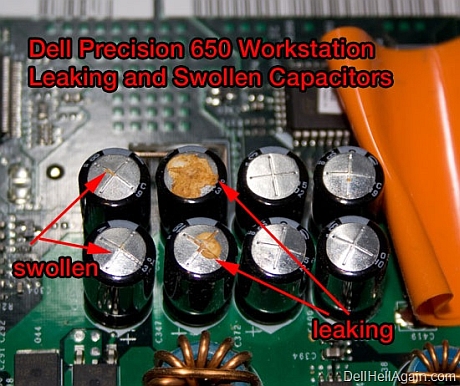
Photo of leaking Dell capacitors from Dell Hell Again.

Kick off your day with ZDNet's daily e-mail newsletter. It's the freshest tech news and opinion, served hot. Get it.

Topics

Michael Krigsman is a recognized authority on the causes and prevention of IT failures.

Disclosure

Michael Krigsman

Michael Krigsman writes and speaks about technology in a manner that most observers consider to be fair and balanced. Michael believes that writing about IT failures, which often have complex causes, creates a unique obligation to be reasonable and accurate in both reporting and analysis.

Michael maintains active personal and professional relationships with enterprise technology buyers, vendors, analyst firms (or individual analysts), consultants, and system integrators. As CEO of Asuret, Michael sells and delivers paid services to members of these same groups.

Vendors regularly reimburse Michael's out-of-pocket travel expenses to attend industry conferences and events. Conference organizers frequently waive entry fees when Michael attends industry events. Michael often speaks at industry conferences and events.

He is a member of the Enterprise Irregulars, a loose association of consultants, investors, industry representatives, analysts, and users of enterprise software.

For daily updates on Michael's activities, follow him on Twitter.

Biography

Michael Krigsman

Michael Krigsman is CEO of Asuret, Inc., a consulting company dedicated to reducing technology implementation failures. Asuret's suite of software tools improve the success rate of enterprise software deployments by quantifying and measuring governance issues that cause most project failures. Michael led the research effort underlying Asuret's model of collective intelligence and its practical application to reducing IT failures in consulting environments. He is a recognized authority on the causes and prevention of IT failures and is frequently quoted in the press on IT project and related CIO issues. He is considered an enterprise software industry "influencer" and provides advice to technology buyers, vendors, and services firms.

Previously, Michael served as CEO of Cambridge Publications, which develops tools and processes for software implementations and related business practice automation projects. Michael has been involved with hundreds of software development projects, for companies ranging from small startups to Fortune 500 organizations. Michael graduated with an M.B.A. from Boston University and a B.A. from Bard College. He is a Board member of the America's Cup Hall of Fame and the Herreshoff Marine Museum in Bristol, RI.

Related Discussions on TechRepublic

Did you know you can take part in these discussions with your ZDNet membership?
128
Comments

Join the conversation!

Just In

RE: Dell lawsuit: Enterprise failure and deceit
nrg108 3rd Mar 2011
@itguy08
All the big companies do the same-maybe HP Gateway are worse, check out all the crap laptops with bad power jacks motherboards that fail just after warranty ends. But the Studio Dell line is crap-the right side power switch breaks apart, falls out, and is totally useless-I am sure Dell knows about this horrible design but does nothing about it!
0 Votes
+ -
I've always said Dell is Junk
itguy08 30th Jun 2010
Dell is the utter junk of the computer industry and I hope this lawsuit wipes them out!
0 Votes
+ -
@itguy08 I don't. I hope they see the light and change their practices. I'd much rather remedy than kill. Lots of folks depend on the enterprise and it's viability. We need a better hammer. Executive accountability? YES!! Death to folks who couldn't help it? no.
0 Votes
+ -
I fail to see
Mister Spock 30th Jun 2010
the logic in your statement.
Is there some gain to be had by you if they were to cease to exist?
plain
0 Votes
+ -
Sounds like @itguy08 forgot to eat his Wheaties today...
0 Votes
+ -
@itguy08 Not so with most of their laptops in our experience. My company programs insurance on the web and all the Dell laptops we have had have been quite robust. We had to recently put a 7 yr old Dell unit back in service after the HP we replaced it with went down. It's slow by today's standards, but still a solid workhorse.
@itguy08
All the big companies do the same-maybe HP Gateway are worse, check out all the crap laptops with bad power jacks motherboards that fail just after warranty ends. But the Studio Dell line is crap-the right side power switch breaks apart, falls out, and is totally useless-I am sure Dell knows about this horrible design but does nothing about it!
darn cheap capacitors!
I ran into one this month that was only a year old!
These problems are still not solved
somebody is still buying these timebombs
0 Votes
+ -
Same old story
kwormwood@... 30th Jun 2010
This happened to my company with a bevy of Dell desktops. Unfortunately for us, the caps had the uncanny ability of crowning or leaking 2 - 4 weeks after the warranty expired. No matter how much we pushed them on the parts being defective they wouldn't bite.

We of course changed manufacturers. Good job Dell!
0 Votes
+ -
@kwormwood@...

Man that sucks... My employer buys dells as well due to their air quotes CHEAP costs. I personally would not spend my hard earned money on a dell ever.
0 Votes
+ -
That was 5 years ago
ahh so 30th Jun 2010
Unless you're gonna accuse them of still doing it...
0 Votes
+ -
@ahh so
Nuff said...

Pagan jim
0 Votes
+ -
RE: Dell lawsuit: Enterprise failure and deceit
txmacarthurs@... Updated - 30th Jun 2010
Their pattern of deceit doesn't end with their products. It's rampant through the whole company. I worked that their corporate office for just short of year because I couldn't stand the lies! My job required me to work very closely with the corporate legal department, and when I would ask why the company was doing [insert illegal issue here], and the only response I would get was "I don't disagree with you."... come on! Why do you think they settled the lawsuit about the lack of promotions for women - because the director of my former department had made promises she never kept, and the company knew they were screwed! And when it comes to looking at vendors for your benefit plans, one of the first rules as a fiduciary is to act in the best interest of the plan participants, NOT to base your decisions on how many Dell computers they've bought. Any US employees participating in any plan governed by ERISA and sponsored by Dell should start asking questions...
0 Votes
+ -
I worked for a company like that once
Daniel Breslauer 1st Jul 2010
@txmacarthurs@...

I also worked for a company like that once, and also abandoned it, after 2 months already in my case. Just couldn't stand lying to customers any more. Thank G-d I found a better job now. happy
0 Votes
+ -
RE: Dell lawsuit: Enterprise failure and deceit
txmacarthurs@... 2nd Jul 2010
@Daniel575 - good for you! I moved my family all the way from ME to TX thinking that I had finally "arrived" at my dream job. Turned out to be the biggest nightmare and mistake of my life. Still trying to recover from the financial decision to leave and come back to ME, but at least I can sleep at night and look myself in the mirror every day. As my husband often tells me, whenever I question my decision, "It would have been a mistake to STAY and be miserable." I have never burned out faster on a job than I did there. Even made me too sick to continue in my line of work, so I'm considering a complete career change into a completely different field. Money isn't everything, but my happiness and my family sure are! happy
0 Votes
+ -
don't forget the software
Linux Geek 30th Jun 2010
if dell used Linux, there would have been far fewer issues.
windoze only made it worse!
0 Votes
+ -
Re: don't forget the software
AllanV 30th Jun 2010
@Linux Geek - what a joke! funny indeed.
0 Votes
+ -
@AllanV Oh that's right, Linux doesn't use capacitors.
0 Votes
+ -
This problem had nothing to do with the OS installed on the machine; it is completely hardware related. Please stop making absurd comments, it makes us other Linux users look bad.
0 Votes
+ -
Correct. I have reinstall different OS, from Windows to Linux, and same thing happens on a Optiplex I had. I strange it how it dies, it does boot from CD and you can load the OS (Linux or Windows) to the hard drive but when you try start up using the hard drive it dies. Pain. We should have Dell replace the bad motherboards or compensate all of us that have these defective units.
0 Votes
+ -
@Linux Geek Dell does provide Linux on some computers
0 Votes
+ -
@Linux Geek
0 Votes
+ -
@Linux Geek
Looks like Linux Geek has taken over the tired old "get a mac" responses we used to see every time a question arose. And he's just as believable and effective too; give it a rest, geek, don't you realize it just makes you look like a complete fool?
I have nothing particular against Linux (or Macs for that matter), but responses such as this do just the opposite of what they are intended to do. Who would actually want to switch to Linux after ridiculous responses like this, if that's the mentality of its users?
0 Votes
+ -
@garyleroy@...
Agreed:
Do you think some of the apparently equally uncritical "Windows is the greatest" fans are actually Mac freaks?
Note: depending on application, I use Windows, Linux and Macs. Personally I prefer Linux overall, and I persuade myself that the reason is that malware does not so easily penetrate into the guts of the OS - but the truth is more likely that it's because I'm tight.
0 Votes
+ -
@garyleroy@... I **hope** he was going for irony. Ironically "get a Mac" would be a better suggestion! (and you could even install Windows on it...)

Probably more helpful is suggestions of what would be a suitable replacement. As someone you either builds or "gets a Mac" I don't have any really useful suggestions.

Anyone?
0 Votes
+ -
@Linux Geek
Oh, come ON guys. Can't you smell a troll like this a mile away? This is obviously a spoof post. I doubt Linux Geek ever touched a Linux box.
0 Votes
+ -
LOL, how they bitin' this morning?
SonofaSailor 30th Jun 2010
@Linux Geek
Seriously... You've just pegged yourself as a retard once again. If you use crap hardware components, they will break down regardless of which OS you use.
0 Votes
+ -
@Linux Geek

Clearly a Micro$oft zealot incognito.
Dell does use Linux (just look at the web site, but not under consumer machines).

Even the awsome spectre of WindoZe does not make capacitors leak and burst out of their cans.

If you must post, check your facts first.

By the way, it wan't just Dell who was affected by the faulty batch of capacitors. From memory, there was at least two other major PC makers affected.
0 Votes
+ -
Is this a joke?
Daniel Breslauer 1st Jul 2010
@Linux Geek

As NetAdmin1178 said - you make other Linux users look bad. What is the relation here???
0 Votes
+ -
@Linux Geek

What the hell does that have to do with anything. I'm an advid Linux user, but this statement is beyond stupid!!!!
As noted elsewhere, most of these computers lived past their warranty period. I can tell you that Asus had no interest in replacing my mother board when in failed due to this problem, nor did HP when I found some at work. They were all outside of the warranty. If Dell replaced the boards that were under warranty, then they fulfilled their obligation. Of course they tried to cover it up. I?m willing to bet so did every other manufacture that used these parts. So if you don?t like, don?t buy Dell. But are you sure your new vendor is not guilty of the same?
0 Votes
+ -
@pmcgrath@...
0 Votes
+ -
@pmcgrath@... To me it's unacceptable for a company to have any warranty limitation on a known problem. Much like a car safety recall these computers didn't just stop working, they could be potentially dangerous when they fail. Off topic, I'm sick of companies saying their stuff is so great with a huge mean time before failure (LCD lifespan for example), then they give only 90 day to 1 year warranties. If they claim it'll last 5 years then they should be forced to stand by that statement. Too many new products don't last.
0 Votes
+ -
@pmcgrath@... Actually, Apple had the same problem with some of these capacitors and issued recalls on numerous occasions.. And if I recall correctly, so did HP.
0 Votes
+ -
@daftkey@... Issuing a recall is certainly more customer-friendly than ignoring the problem!
Their job is to make money for shareholders. That's it. If using questionable parts makes money for the shareholders, you can expect that is what is going to happen. That's what PR firms and law firms are for.
0 Votes
+ -
@mr1972 Dell is in world of hurt because their stock is declining and they are losing marketshare. This has spawned all kinds of measures including taking the company private and/or replacing Dell as CEO.
0 Votes
+ -
RE: Dell lawsuit: Enterprise failure and deceit
txmacarthurs@... 2nd Jul 2010
@gwd3@... Dell is still publicly traded, and even though Michael Dell did step down a few years ago, he came back and was still there when I left. So just was wondering about the basis of your comment above??

Michael is definitely not the "rock-star CEO" he used to be back in the 1980s, although he'd like to think he still is. Example, there was a meeting he attended (footage was available on youtube, not sure if it still is) while I was there in early 2009 which included many large multi-national businesses and Vladimer Putin of Russia. Although I'm not at all a Putin fan, Michael's comments to Putin were completely condescending and insulting. Then he had the nerve to ask Putin how Dell could help bring Russia into the "now". It was too funny to see Putin put Michael in his place and bluntly say that Russia didn't want or need any help from Dell. The joke around the vicinity of my desk in the corporate office was "Dude, Putin ain't gettin' a Dell!" Seriously, when the area in our building where Michael and his minions sit is referred to as "the God Pod", what does that tell you about the arrogance pervasive from the top down.

But anywho, the point I was going to make is that the top brass would hold employee meetings indicating that if the company didn't change its current path, they would be out of business within 10 years if not sooner. That's because they were still following an extremely outdated business plan, among other things. I worked for a much smaller but still multi-national semiconductor company prior to working at Dell, and I was shocked at how many years behind Dell is in such things as - oh let's see - updating their long-term business plan, succession planning, disaster recovery planning and other such minor details. There is so much unnecessary overlap, it was like being in the movie Office Space (which, ironically, was filmed in Austin, TX). Employees at Dell refer to it as "the churn". Everything would just go round and round, and no one would take the initiative to make a decision. I was hired for my experience, knowledge and expertice in my area of work, and was asked to streamline any processes that weren't working smoothly. But when I would try, most of the time I was shot down because I wasn't doing things "the Dell way" (God, I wanted to PUKE every time I heard that phrase used). Well obviously the Dell way wasn't working, or you wouldn't have hired me to change it! Most of my time was wasted in weekly "1 on 1" meetings with my 3 immediate supervisors (even though I only had one "official" supervisor on paper to make the department look more streamlined). Then those 3 would get together and discuss how I wasn't conforming to the Dell way, lol. Then we would have a weekly staff meeting with my official supervisor, then another meeting with my official supervisor and her peer and those that reported to her peer, then another meeting with their boss, who was at the director level.

And if you needed to have a meeting with another department, forget it! You'd have to have a meeting about the meeting to discuss the pre-meeting about the meeting we needed to have. You wouldn't even know that all of us worked for the same company - there was so much undercutting and backstabbing going on. No one would take the responsibility to make any decisions at these meetings, so we'd then continue to have follow-up meetings until finally it would come down to my director and the other department's director having one or two meetings to make a decision. Come on! We were getting paid a lot of money to keep the day to day **** running and prevent it from even having to ever get to the director level! There was also the familiar practice of "dump and run" where something got put on your plate to fix that wasn't at all your responsibility, but no one else wanted to touch it (cough, stock recission nightmare, cough). There was absolutely no chance to be pro-active on anything because we were constantly having to be reactive and put out new fires every day.

And the people who made these mistakes that cost the company millions of dollars at a time were never held accountable that I could see. Instead they would lay off thousands of other employees. Rather than have the balls to come out and say OK, Dell is going to be laying off 8-10K employees, and get it all done at once, Michael would cleverly avoid a lot of press by laying off a couple of thousand here and there, even though everyone in the company knew what was going on. Talk about a way to kill the moral of your employees! Instead of making the "survivors" more productive, they just worried about if they were on the chopping block next.

I'm not saying every and all employee/department at Dell is like this. I did meet some folks that you would need their expertise on something, and they wouldn't hesitate to help. But they were few and far between.

Anyway, thanks for letting me blab on (not like I gave you a choice, lol!). I guess only time will tell how Dell will turn out, but right now, I must admit I'm enjoying watching "the squirm".
0 Votes
+ -
@mr1972
I don't think that is absolutely true. You need a good company to make a good product or service so they can make profit from it. It is the financial services companies like stockbrokers, banks, people and other financial institutions (commonly called the shareholders) that invest in these companies that make money and this cycle is of investing in good companies make money for the company and shareholders. However, if no one wants to buy your company's product due to bad products then the shareholders will suffer also but the corporate big wigs will still make their money in terms of their set salary and the company and shareholders will suffer the lost.
0 Votes
+ -
RE: Dell lawsuit: Enterprise failure and deceit
shtromer Updated - 30th Jun 2010
@mr1972
Curious: 1972 is the year that my local delivery-dairy owner gave a talk to his customers on how he determined the level of service he could offer:
First, the effect on return to shareholders (his family would kill him if he folded their business...)
Next, the employees (without them he has no business)
Finally, but still critically, his customers (if he doesn't serve them he'll have no money to pay anyone else)
He then made a comment on integrity and short-termism: customers stay in each home for an average of 8 years; they stay in the area for an average of 20 years; they talk to each other...
0 Votes
+ -
@shtromer: Interesting anecdote and explanation of the hierarchy that many companies follow. Contrast this with the founder of Lincoln Electric (original quote was from sometime in the early 1920s I believe):

1) Customers - Without them the company has no meaning and no future. The policy is to always keep a standard level of quality, but keep costs as low as possible with that standard in mind, and always price based on cost (for many years, and even today, L.E. has been known as BOTH a cost leader AND a quality leader in their field. Not something you see often).

2) Employees - Again, without them, the company wouldn't exist and could manufacture nothing. For this reason, L.E. had a very agressive (especially for that time) compensation system, including guaranteed hours of work and employment once hired (including during the Great Depression - L.E.'s employees still enjoyed a guaranteed 30 hour per week minumum, even if they didn't really have anything to do).

3. Shareholders: While still a critical part of the company, shareholders are often passive members and don't participate in the company's success directly. They are critical ONLY because they own the company and determine the CEO's salary.

Not to say that Lincoln Electric has been without its problems, but they survived many financial catastrophes and are still the leader in their main industry (and have been for many decades now).
0 Votes
+ -
As a contractor for Dell during that period I replaced thousands of these boards. We were given the standard speech that the Capicator Manufacturer was to blame and that Dell was doing everything possible to repair the boards. The capicators in some of the power supplies being used by Dell still have the same problems Today. Crack one open sometime...
0 Votes
+ -
Ditto
oldskillz 30th Jun 2010
In our enterprise environment, we were replacing three motherboards a day from failing systems. Before hand went on DeLL websupp and the same issues were all over their blogs and saying environmental conditions was causing the capacitors to burst. No way!!!! At my home business, I was encountering the same thing and to add to this mix were Sony VAIO systems too!!!! Just right at the 3 year mark, boom, failure!!!! Contact DeLL India Support for my home clients which stated exactly like DeLL told them to say, it was the user(s) fault, the environment, etc., etc. Would not replace the motherboard even if it was out of warranty and if I stated the same thing was happening at work, they would say we have record of these particular issues!!! Calling me a LIAR???? Told my client to buy a new box other than DeLL and would transfer the data from old to new.... They knew about it and cover it up.... Hang their asses to the cross.....
0 Votes
+ -
We didn't see any deciet
voska1 30th Jun 2010
Dell contacted us and sent out couple techs to replace about 800 motherboards in our organization. We didn't even have a support call in though about the time they showed up to replace these board we did have few fail before they got replaced.
0 Votes
+ -
RE: Dell lawsuit: Enterprise failure and deceit
wysetech2000@... 1st Jul 2010
@voska1 If i had 800 computers in one company I too would be tripping over my feet to kiss their butts !
0 Votes
+ -
Bargain basement components
croberts 30th Jun 2010
I story I was told by a former Neoware reseller (Neoware was bitten hard by capacitors) that there was industrial espionage going on and that someone tried to steal the electrolyte formula from a Japanese company. They only got part of the formula, and the market was flooded with knockoffs.

Not sure how true that is, but I can believe that in an age of contracting out there aren't too many questions being asked as long as cost targets are met.
0 Votes
+ -
It could be worse
ejhonda 30th Jun 2010
The cases could have been made out of Chinese drywall.
0 Votes
+ -
I had no intention of my next computer being a Dell... but this kind of permanently queers it for Dell in my book.
0 Votes
+ -
Dell? No!
kg6ygs@... 30th Jun 2010
Our school district had a similar problem with Dell CRTs about the same time, except the monitors arrived in the box nonfunctional--we are talking about a couple of hundred of them, not one or two. The scary part was that Dell was aware of the issue even before they shipped the monitors, went ahead and shipped them anyway, then included the procedure of how to return them for functioning monitors, a process that took well over a month, considering the numbers involved. Wonderful example of quality control--and no compensation for our trouble. I will never personally buy a Dell.
0 Votes
+ -
I like DELL so hearing this is rain on my parade. Damn you DELL!

Join the conversation!

Formatting +
BB Codes - Note: HTML is not supported in forums
  • [b] Bold [/b]
  • [i] Italic [/i]
  • [u] Underline [/u]
  • [s] Strikethrough [/s]
  • [q] "Quote" [/q]
  • [ol][*] 1. Ordered List [/ol]
  • [ul][*] · Unordered List [/ul]
  • [pre] Preformat [/pre]
  • [quote] "Blockquote" [/quote]
ie8 fix
Click Here
ie8 fix

The best of ZDNet, delivered

ZDNet Newsletters

Get the best of ZDNet delivered straight to your inbox

Facebook Activity

White Papers, Webcasts, & Resources
ie8 fix
ie8 fix