Opera's Hakon Wium Lie compares IE7 to Ford Pinto

By | August 30, 2006, 4:39am PDT

Summary: Last week I had the pleasure of talking Microsoft is "doing a paint job on their Pinto" to Opera’s Chief Technology Officer Håkon Wium Lie. We spoke about IE7’s standards compliance (or lack thereof) and also Opera’s many great features. In this post I’ll highlight our CSS discussion and in a follow-up post we’ll look at [...]

Last week I had the pleasure of talking Microsoft is "doing a paint job on their Pinto" to Opera’s Chief Technology Officer Håkon Wium Lie. We spoke about IE7’s standards compliance (or lack thereof) and also Opera’s many great features. In this post I’ll highlight our CSS discussion and in a follow-up post we’ll look at Opera’s features and future.

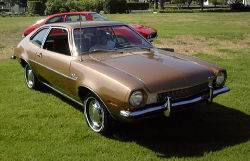
250px-Ford_Pinto.jpg 

On the topic of CSS, Håkon is an acknowledged expert. He used to work for the W3C on style sheets - what’s more, in 1994 he proposed the concept of Cascading Style Sheets (CSS). He’s also written a book on CSS. So you won’t come across many more qualified people to talk about CSS compliance. This is reflected in Opera’s CSS compliance record, which is among the best of the current lot of web browsers. Not perfect, by any means - Opera 9 has had its problems. But certainly better than IE… 

Which brings me to the first topic we discussed - Håkon’s reaction to my interview with Microsoft’s Chris Wilson, Group Program Manager for IE. If you remember, in that interview Chris said IE7 will increasingly support CSS standards over time. I asked Håkon what he thought of Microsoft working towards standards support, also considering Microsoft’s need to be backwards compatible with previous versions of IE. Is Microsoft making a big effort, I asked? 

Håkon said in response that Microsoft has a responsibility to follow up on their promises to support CSS 1 and 2 - meaning they need to both implement the standards and also to fix the bugs they’ve introduced. Up till now, Håkon said, Microsoft’s CSS efforts have been "half-hearted". He said:

"They did a pretty good job in the early years when they had competitors, [but] as they more and more dominated the browser market - their support for CSS didn’t really improve that much. And the last [major] release of IE was in 2001 and there were many important features from CSS2 that were missing. So they didn’t put in the features that were needed - and secondly they haven’t been fixing the bugs either. The IE team was starved, given no resources to fix these issues that people were struggling with. Any web designers will tell how much pain and grief IE5 and 6 have given them - and I think it’s been a tremendous cost to society, all these intelligent people working on web design having to debug their IE7 quirk mode late at night in order to make it look reasonable in a second rate browser."

So Håkon was not mincing his words!

He does acknowledge "These bugs have been lingering and a pest to society" Microsoft’s "renewed effort" in IE7 - and that they’re fixing bugs now. But he calls them "self-inflicted problems" and said that the bugs should’ve been fixed years ago - "these bugs have been lingering and have been a pest to society".  

But Håkon’s real beef with IE7 is that it’s not adding many features:

"The new functionality that they’ve put in, which was specified [in CSS] in the 90’s, is still not there. We can’t do generated content, for example. We can’t do CSS tables. We can’t do counters. And these are features that other browsers put in years ago."

Håkon has a nice turn of phrase for what he thinks Microsoft is doing with IE7: "they’re doing a paint job on their Pinto". The Ford Pinto is a car from the 70’s that has become a symbol for a ‘cheap economy car’ or ‘cheapness’. It also has a reputation for being unsafe.

So Håkon’s point here is that while Microsoft is making an effort now to fix bugs, he doesn’t think "the underlying machinery is worth their effort". He says in particular their formatting engine "isn’t up to speed".

Harsh words then from Opera’s CTO Håkon Wium Lie - understandable in a way, given his background in CSS and current role as a competitor of IE.

See Also: IE7 Release Candidate 1 - Review and Image Gallery 

Kick off your day with ZDNet's daily e-mail newsletter. It's the freshest tech news and opinion, served hot. Get it.

Topics

Biography

Richard MacManus, formerly a ZDNet blogger, is a Web consultant and writer based in Wellington, New Zealand. He specialises in next generation web technology and runs a popular weblog called Read/WriteWeb on this topic. He currently does research, analysis and writing for Internet companies in Silicon Valley, the UK and beyond. Prior to that, he worked with some of New Zealand's top commercial companies as a web manager and producer.

Related Discussions on TechRepublic

Did you know you can take part in these discussions with your ZDNet membership?
61
Comments

Join the conversation!

Just In

That's kind of like saying...
ju1ce 12th Sep 2006
Well let's go back to Arpanet times because that was what the "internet" was designed to be.

Software evolves.
0 Votes
+ -
Two different issues
Anton Philidor 30th Aug 2006
The first is fixing bugs, which should in fact have happened years ago.

The second is backward compatibility. Arguably, those problems should not have happened at all, but IE 6 has been the most essential to consider for the past 5+ years. IE's problems are the web's problems.

So backward compatibility is a substantial issue, and obviously not just for Microsoft. The comments quoted appear to overlook that issue.


I also missed the part of the discussion in which he said,

"Ignoring Microsoft's contributions and valuable features is getting stale. We missed a chance to improve design because we set 'standards' to avoid having to acknowledge the most important browser. That was foolish.
I think the time to make real standards has arrived, and I think we owe Microsoft an apology. We'll sit down and work on the technical issues, and not let ourselves be controlled by attitude and ideology and competitive advantage."

That, too, is important.
0 Votes
+ -
Expand on this "backward compatibility"
Roger Ramjet 30th Aug 2006
The HTML and CSS "standards" have not changed (much) since IE6 was launched. Just what "backward compatibility" are you talking about?
0 Votes
+ -
If IE 7 could not...
Anton Philidor 30th Aug 2006
... work well with pages written for IE 6, then that would be a problem, no? Particularly because IE 6 (as well as 5) will probably remain the most common browser for a long time to come.

Could even Microsoft maintain a browser that incorporated both IE 6 and an entirely incompatible IE 7? As No_Ax likes to observe, past success exacts a price from the future. He thinks that Microsoft should pay that price now, but I think the company would be too afraid of people delaying upgrades (and thus reducing sales) because of the inconvenience.
0 Votes
+ -
"Price to pay", by whom?
PhilippeV 30th Aug 2006
haven't all others paid much enough the price caused by Microsoft IE incompatibilities?
When a company has reach a monopolotistic position in which it can get 97% of the market, it can pay now that price.

Others have already paid too much! (given that 1/3 of all IT's staff are employed at fixing MS bugs or creating workaround, this means that thousands of billions of dollars have been paid by their organizations and their customers).

Given the price paid by so many people, Windows should come back to the public; there's absolutely no reason to accept that Vita will be even more expensive than XP, given the evident lack of development, and repeated late deliveries of announed features, i.e. pure insuling lies to the public).

Let's split Microsoft and apply the antitrust law now: Windows prices must be slashed dramatically to less than $30 per packaged copy, or become completely free to have a chance of having others making the job more efficiently than what Microsoft did since years: it will be less expensive for everyone than having to work constantly on workarounds.

And all Microsoft divisions must be splitted and made financially independant and viable, by forcing each entity to enter into competition between each other, with their own alliances; the products that have been already overpaid by the public and that Microsoft no longer want to support must be completely published with ALL their sources (including accessories, and their associated development tools).

What is unacceptable is the monopole used as a business strategy only to break the competition and innovation.
0 Votes
+ -
Pricing.
Anton Philidor 30th Aug 2006
My hypothesis was that Microsoft could not make IE 7 entirely responsive to "standards" without badly breaking backward compatibility with IE 6. A repair of that break would be costly for Microsoft to produce and to maintain.

IE 7 will have to read sites prepared for IE 6 for some time.

So the price in my post would have to be paid by Microsoft, and the effort would have no connection to any outside browser.


On the cost of Windows, most people obtain their copies from OEMs with new compters. The price the OEMs pay is $50, approximately. Please don't base your idea of the price of Windows on retail costs. Those are much, much higher.

Even in the Microsoft anti-trust trial, in front of a very hostile Judge whose mission became hurting the company and Bill Gates in particular, no one claimed that Microsoft overcharged for its monopoly product.

A few States did make that claim, and some were able to obtain gift certificates as well as the customary huge fees for the lawyers involved. (The fees themselves became subject to a charge of price gouging, but I believe the lawyers escaped.)

In general, because everything else in computing is becoming less expensive, Microsoft has been able to maintain charging even the same amount for years by adding more and more to the operating system.


And on splitting Microsoft...

The Judge at the trial had so much rage at the end of the trial that he asked the government's attornies what would be a good sentence.

They said, Split the company. Judge jackson said, Done! just about that quickly.

Because there was no hearing on the penalty and because of some comments that the Judge made in public and because of some other mistakes he made, the Appeals Court told off Judge Jackson about as strongly as one Judge can tell off another without formal procedures.

The Appeals Court removed the split of Microsoft with language suggesting that penalty never would be approved, and sent the case back to another Judge to fix Judge Jackson's mistakes. That's when the settlement happened.

The price Micrsoft had to pay for some of its business tactics did not involve splitting the company. That has been decided already.
0 Votes
+ -
but
mypl8s4u2 30th Aug 2006
Why change the price if the core is the same and you only have more eye candy? It?s like buying a 1968 car with a better interior. Nothing has changed but the color of the interior. Would you pay for a car based on 1968 technology and economy, and expect that same car to perform adequately with the cars of today? Of course not, that car would be slow as hell, heavy, parts hard to find and a host of other issues. Microsoft Windows is the same, hasn?t changed in years.

IE set it?s own standards in the face of universal standard setters. When standards are finalized, all must comply with those standards. Remember the Blue-Ray? A standard will come out and those who do not meet the standard must comply or be left behind. IE claims that the standards should be based on them, not anyone else due to shear market share. But what people don?t understand is that in order to comply, Microsoft must divulge the code so others may be compatible. And they won?t do that.

Also, any machine running windows 95 and up have IE incorporated or integrated so it?s not much of an option to uninstall and load your favorite browser because MS will never allow 100% compatibility to IE.

I think the public has paid enough and I think its time for change. Many companies I deal with refuse to upgrade to Vista because of the past problems with the systems they have. Any company will tell you that time is money and having idle workers bites their bottom line and when those users are hindered from working for more than a day, you have hell to pay later.
0 Votes
+ -
In more than one comment, you imply that Microsoft set the standard with IE5/6, and then some upstart(s) came along with CSS. If that is your understanding, well, you are wrong.

What was to become the CSS1 standard was already in discussion before Internet Explorer 1 was released in August, 1995. It became a Working Draft in November, 1995, and was a W3C Recommendation as of December, 1996.

When Microsoft released IE3 in August of 1996, it had some limited support for CSS1. Thus, Microsoft was claiming that they were writing IE to support the CSS standard. Unfortunately, they never carried through on that claim, nor their later claim to be including CSS2 in the standards that IE supports.
0 Votes
+ -
CSS
Anton Philidor 31st Aug 2006
Microsoft claimed to be in compliance with CSS 1 and has a goal of being compliant with CSS 2.

See:
http://www.microsoft-watch.com/article2/0,1995,1842522,00.asp?kc=MWRSS02129TX1K0000535

Quoting:
"Microsoft's failure to support completely the Worldwide Web Consortium's CSS standards (beyond version 1.0, with which Microsoft did comply, according to company officials) has been a sticking point for the company."

Quoting again; punctuation as in original:

"I want to be clear that our intent is to build a platform that fully complies with the appropriate web standards, in particular CSS 2 (2.1, once it's been recommended). I think we will make a lot of progress against that in IE7 through our goal of removing the worst painful bugs that make our platform difficult to use for web developers," [Craig] Wilson [Internet Explorer lead program manager] said.


CSS 2 was produced while IE 7 was a fixed target. It was apparent while CSS 2 was being developed that future IE versions would have to be backward compatible, no?

So if those who produced CSS 2 standards made it impossible for the browser to follow the standard and to be backward compatible, then they had to know they were creating a significant difficulty for Microsoft. A difficulty which could not be solved in IE 7 despite the company's announced willingness to follow the standard.

CSS is not the best example of my view, because Microsoft's prior effort is arguably not the best possible. But it does still show a standard being promulgated that Microsoft could not meet.

And that should have been of concern at the time the standard was issued. Because by then, it was... forking against the browser used by close to all users.
0 Votes
+ -
Sounds like a beaten man to me. (NT)
No_Ax_to_Grind 30th Aug 2006
.
0 Votes
+ -
Which is your poison No_Ax ....
bportlock 30th Aug 2006
... rose-tinted glasses or mind altering drugs?

Did you actually read what he said or did you just cut'n'paste "MS-Fan-boy response - number 26" in to your browser?

The issues are there to be addressed. Even Anton notes that Microsoft has work to here.
0 Votes
+ -
It could be worse...
zkiwi 30th Aug 2006
You could have offered a supported opinion. That would have astounded people.

Are you saying Opera is "dead"? It's share of usage hasn't dropped during the period since Microsoft have been working on IE7. But hey, that's something that would require thought, reading etc on your part.
In fact, ie dominance is exacerbated by the fact that others have made efforts to adopt the standard, without being bound to MSIE bugs.

One of the most convincing reason why IE was bossted is that, given IE dominance, many website authors were bored at making their websites compliant and working with compliant browsers, and so many sites were designed only for IE.

Opera failed on Windows because it could not support the IE quirks mode correctly. The other other reason is that Windows now represents 97% of the OS market, and that Windows comes with IE bundled with it, and it is absolutely required to get important services such as Microsoft updates for the OS.

It's unadmitable that Microsoft delivers OS upgrades by requiring IE for getting them online for free. And unadmitable that IE can't be uninstalled in favor of another browser; given that it will remain there, on 97% of hosts (on which Microsoft has a monopole), how could this be other than IE constantly getting larger dominance.

Opera could have survived by offering a good IE quirks mode that is compatible with websites created by bored designers. The quirk mode would have been used in case of any compliance error on the website, so Opera users would have not been bored. But all advanced Opera features would have been disabled, except those supported in the latest version of IE.
This way, new websites would be incited to use the new CSS features, without fear of being incompatible with IE; and only IE users would have seen that they lack the benefits of new CSS features.

But IE7RC1 is really deceptive: it goes against what the Microsoft Beta team was saying everywhere when IE7Beta1 was announced: they *PROMISSED* to get full compliance to CSS1 and CSS2, and *most* of CSS2.1.

Microsoft has lied in many aspects, and instead, has focused on minor things such as tab browsing which is a very minor development that could be done externally (there are already other browsers based on the IE renderer component that support tab browsing).

In addition, the new interface that IE promotes so much is criticized by many, but users are given no choice whever they like the tabs or not (for me, tab browsing is ugly, and just takes precious screen space, as well as the ugly and very large address bar on a row where you can't arrange the menu bar or any toolbar, not even the default one, as well as the presence of the ugy search mini-bar!).

So may be the solution will be, for IE fans, to use their own interface around the IE7 renderer. But clearly, the new interface had absolutely NO priority and was not necessary; what was needed really was to work effectively on:
* CSS1 and CSS2 full compliance
* full compliance to internationalization (IE7 is WORSE than IE6 there, failing to detect correctly many non-English European encodings)
* A Secure sandbox (postponed to Vista: why????)
* Correction to the DOM interface for Javascript and its methods (full compliance to ECMAScript, still delayed without any good reason, despite this is really not a difficult issue to add the missing or unimplemented methods)

IE security and bugs are most often not in IE itself but in Windows networking services used by IE. So their solution was left to Windows core developers.

What did the IE tem did during so many years? Nearly nothing. Not because theyr did not work, but simply because they were understaffed and Microsoft did not want to inject any money in the development team, and prefered to put it in marketing teams in charge of promoting IE assistance services for web designers.

But look at the Office development teams: they have been barred from developing light and elegant solutions only because of IE failures. Microsoft has not been able to create a stable platform for developing its own web services only because of IE quirks and bugs that have not been corrected since years.

Microsoft has really lacked vision. If it had admitted that the lack of development for standard compliance was also limiting its own application developments, today we would already know what Web 2.0 means: much more interactive services on the web, personalized experience, content aggregation, and many more service offers available much more simply from the web.

And within this larger cloud of innovation and creation, Microsoft would have found many new ways to get profits, rather than insisting to have users pay incresing prices for the OS alone.

Really, the Microsoft offer is extremely flat and deceptive. What users do want is not a giant OS, but a large offer of small services that just fit what they need and when then need. With this vision, Windows should have shrinked to a commons platform, with much less superfluous components installed by default, and less potential bugs left open in unneeded Windows components. And because of that, the life of hackers/spammers/thieves would have been much more difficult due to the much smaller common platform: Microsoft would have been able to concentrate first on the common platform to make it extremely secure (with few possible bugs that are unavoidable being much harder to reproduce in a way that could be easily exploited like today).

And with such a stable small core platform, Microsoft should have embraced Linux by making it the true HAL platform to support appliations made for other OSes, including by making its own Linux distribution, based on a HAL core compatible with the Windows HAL core.

Really, Microsoft would have much more interesting thing to do by changing itself into a service provider company, offering personalized experience to users, instead of selling them very expensive dynosaurs that don't fit their needs.

So now, let's look at Opera: it has also forgotten the user expectation, by not being able to adapt to market immediate demand for compatibility with IE (something that was unavoidable, but that would have left their project surviving and help getting more money to advance on the best innovative standards).

This was the strategy of Microsoft to abuse of its dominance and get lot of money without making anything: during that time, all its competitors have suffered starvation.

But now that Microsoft is a true monopole. It's high time that the US law applies to such Trust: divide Microsoft or force it to slash radically its prices for the OS (including making a completely free version, with all sources published). It's high time that Windows goes to the public.

The Microsoft monopole on the OS market is against all competition and breaks all customer rights and laws, and the price paid for it by OEM manufacturers and finally by customers and public services is clearly unjustified, given the total absence of service that Microsoft demonstrates since years (and that it demonstrates now with Vista, now even more expensive).

Also, it's completely unacceptable that a company in a situation of monopole decides ALONE about the lifetime of its products, notably its OSes where it has the monopole: if Microsoft really wants to stop this support, it MUST give back the FULL SOURCES of every OS version that it does no longer want to support.
0 Votes
+ -
Impressively long...
zkiwi 30th Aug 2006
But...

I'm not sure if I buy your argument that Opera failed on Windows. Opera albeit a minority player hasn't exactly vanished in terms of its share of usage. Adding to that, all non IE browsers have issues with reacting to pages generated for IE.

Other than that, I didn't really expect an anti-Microsoft diatribe as a response.
0 Votes
+ -
Opera's share of the market...
Anton Philidor 30th Aug 2006
... has probably been restricted by FireFox's acceptance as The alternative browser. It hasn't failed, I agree, but it's not as popular as it might have been.

Do you think that preference for FireFox was the result of that browser's avoidance of a paid version and some use of volunteer rather than salried staff?
Was antagonism to profits and employment part of the reason for FireFox's success?
0 Votes
+ -
IE Combatibility
mypl8s4u2 30th Aug 2006
Firefox has an extension that is capable of reading ?IE? only pages. Opera does not. There are plug-ins for Firefox that allow it to be more compatible then Opera. I like Opera but it?s like Linux, nice base but the core components needed by most businesses put it on the shelf. There are a lot of programs designed for browsers that simply don?t run on Opera. Case in point, I like to use AI Robo-form. It runs on IE, Firefox, Netscape, but not on Opera. There are some rendering issues when displaying certain sites. Firefox has a cleaner display, and the tabs are great.

In terms of a standard, Microsoft thinks it?s leading the group but in reality, has ignored standards for a long time. They must be compliant in order to compete with todays browsers which are compliant. Many developers find that CSS offers more features then IE and many are redesigning their sites to take advantage of those features. Problem is the majority of users still use IE for no other reason then, it?s there. And thus limiting web developers from updating their site.

I feel Microsoft is hindering progress.
0 Votes
+ -
... is not a standard set in order to assure consistency. The goal must have been other than simplifying the work of those creating websites.
(Alternate browsers now have a share over 5%, of course. I'm thinking of when the standard was created.)

There has been an issue for some time whether standards should be set on the basis of technical superiority. In the past, the betamax situation was an example of the conflict. The Blu-Ray situation may prove to be a more current example.

This isn't an issue limited to Microsoft.

One should also distinguish between looking at alternatives and identifying a failure in functionality. A bug should not become a standard. But I'll argue that anything that works as intended is potentially a standard.

And technical superiority should havereal significance. The superiority of betamax, for example, was not so great that the alternative could not be used successfully.

The establishment of a standard is to be discussed, not simply asserted.
0 Votes
+ -
Nah, Opera isn't all that great.
osreinstall 30th Aug 2006
Wium Lie may say that IE is a Ford Pinto, but Opera is a AMC Pacer. I once had Opera broken on my Windows 2000 box where it needed a reinstall just by playing around with the settings. Their UI is a little alien but I could get use to it. Their eMail isn't worth a damn and cannot import very well. Bookmarks are bizarre and a lot of panels and subpanels that were clumsily laid out. I use SeaMonkey on Windows 2000 and would not even bother looking at Opera. As for their speediest browser on earth? Another myth. Just set the networking settings in the registry for IE or the networking settings in user.js for any Mozilla product.
Results that backup Opera's claim of being the fastest browser.

Question:
Where are yours, where is your data to prove your claim that "tweaking the networking settings" makes Opera's proven results a myth?

I don't want to get into a pissing match over browsers, just show me proof that your statement wasn't utter BS...
0 Votes
+ -
That isn't BS.
osreinstall 31st Aug 2006
From past experience Opera is not any faster than the other two. Maybe dead stock Opera will surf faster than the other two, but then I said to optimize Mozilla or IE then Opera doesn't have a speed advantage.


To speed up explorer:
Windows Registry Editor Version 5.00

[HKEY_CURRENT_USER\Software\Microsoft\Windows\CurrentVersion\Internet Settings]
"MaxConnectionsPerServer"=dword:00000008
"MaxConnectionsPer1_0Server"=dword:00000008

[HKEY_USERS\.DEFAULT\Software\Microsoft\Windows\CurrentVersion\Internet Settings]
"MaxConnectionsPerServer"=dword:00000008
"MaxConnectionsPer1_0Server"=dword:00000008


To speed up Mozilla:
user_pref("browser.cache.memory.capacity", 1024);
user_pref("browser.display.show_image_placeholders", false);
user_pref("browser.download.dir", "C:\\Download");
user_pref("browser.sessionhistory.max_total_viewers", 1);
user_pref("dom.allow_scripts_to_close_windows", false);
user_pref("dom.disable_open_during_load", true);
user_pref("dom.disable_window_open_feature.close", true);
user_pref("dom.disable_window_open_feature.directories", true);
user_pref("dom.disable_window_open_feature.location", true);
user_pref("dom.disable_window_open_feature.menubar", true);
user_pref("dom.disable_window_open_feature.minimizable", true);
user_pref("dom.disable_window_open_feature.personalbar", true);
user_pref("dom.disable_window_open_feature.resizable", true);
user_pref("dom.disable_window_open_feature.scrollbars", true);
user_pref("dom.disable_window_open_feature.titlebar", true);
user_pref("dom.disable_window_open_feature.toolbar", true);
user_pref("mailnews.headers.showOrganization", true);
user_pref("mailnews.headers.showUserAgent", true);
user_pref("network.http.keep-alive.timeout", 30);
user_pref("network.http.max-connections", 32);
user_pref("network.http.max-connections-per-server", 32);
user_pref("network.http.max-persistent-connections-per-proxy", 4);
user_pref("network.http.max-persistent-connections-per-server", 2);
user_pref("network.http.pipelining.maxrequests", 8);
user_pref("nglayout.initialpaint.delay", 0);
user_pref("plugin.expose_full_path", true);
user_pref("ui.submenuDelay", 0);

The network described ones do the performance wonders. The browser.sessionhistory solves the notorious memory leak. The dom.disable_ takes care of browser controls in windows. The rest are for convience.

Cold start is always IE. Then come Opera then Mozilla. Cold start doesn't matter that much. Surf speed and downloading matters. I will give you that Opera is good on older systems that will bog down on Mozilla. But once you have a Athlon, why bother.

And since Opera is anal rentitive on standards, it doesn't render pages properly that were written sloppy or not perfectly. It doesn't forgive as well as the other two. It doesn't allow for the f***up factor. That is Opera's fault and no one elses. Perfectionist always screw it up for everyone. More web pages break in Opera than any other.
0 Votes
+ -
You're right about tabbed browsing.
Anton Philidor 30th Aug 2006
This is a good summary of new features to be turned off, though it leaves out RSS:

"... for me, tab browsing is ugly, and just takes precious screen space, as well as the ugly and very large address bar on a row where you can't arrange the menu bar or any toolbar, not even the default one, as well as the presence of the ugly search mini-bar!"

The word "ugly" does apply, and I'll add that, considering the effectiveness of the taskbar, the word "useless" is valid as well.

I hope that tabbed browsing and other unnecessary features can be turned off easily when IE 7 is issued.

One advantage of IE 6 is its simplicity. Any desired features can be added easily using free software to create the browser I want to use.


You made a few factual errors and I disagree with some of your assertions, but you are entirely right on this issue.
0 Votes
+ -
gestures....
JoeMama_z 30th Aug 2006
no IE gestures in site, Maxthon sucks, and the 2 addons i have found we pretty awful.

tabbed browsing with gestures makes it easy to surf without any navigation bar giving you much more screen realestate.

IE7 doesn't have a decent add-on framework like its competitors, this will haunt them until they fix it.

No IE7 till gestures and super drag and go functionality.
0 Votes
+ -
Tried Avant then?
Anton Philidor 31st Aug 2006
I've read Microsoft staff use Maxthon, but one good thing about IE is the number of alternate ways to set it up.

Mouse gestures are another unnecessary feature to me, but you can get the feature separately or as part of a number of packages.

I agree with you about the need for onscreen real estate. I've reduced the top of the page to a single bar.

Which add-ons did you try?
Maybe there are better alternatives. With IE there are always alternatives.
0 Votes
+ -
Re: You're right about tabbed browsing
barsteward 2nd Sep 2006
Talking complete verbal diarrhoea as usual.

If you find you "dont have enough screen estate"
(cr*p again) you have the full screen option with
one keystroke - i know its difficult for you
NBMers to press F11.
Taskbar can be moved out of the out the way to
create even more - might make IE with multiple
windows open difficult to work without it.

Opera knocks the sh*t out of IE. Its only
downside are idiots who write websites without
using documented W3C standards, but they are few
and far between
0 Votes
+ -
Sounds like No_Ax to me
nizuse 30th Aug 2006
with the same tone of response as ever... Always the same old line, always not responding to the issue, never providing insights, never providing an opinion either. It's always "live with it", or "MS will win stop whining". Really, is this a 10 year old boy with some grudge against his uncle because he was forced to take a shower with him? NoAx, lighten up, get educated, and come back when you're take on the world is less gloomy.
0 Votes
+ -
Yep, You're A Beaten Man Bitty
itanalyst 30th Aug 2006
You post one-liners with no fact or substance...admit it, IE7 sucks, and people have moved on to something better.
0 Votes
+ -
Admit that you suck? In public? Ok..
No_Ax_to_Grind 30th Aug 2006
Folks, it's true, itanalyst can out suck a hoover.
0 Votes
+ -
No_Ax shows his true face
nizuse 30th Aug 2006
Why do you act like this? It's so childish.
0 Votes
+ -
personal experience?
B.O.F.H. 30th Aug 2006
I presume that you have intimate knowledge of this (or you would have stayed in the closet).
0 Votes
+ -
Considering that Opera ASA is a successful money-making company, how exactly would you justify your comment No_Ax?
0 Votes
+ -
It isn't a Pinto!
code_flogger 30th Aug 2006
It's a Traubant.
0 Votes
+ -
Trabants are appreciated.
Anton Philidor 30th Aug 2006
True, the original design was for a scooter, and the change to a car was accomplished haphazardly. And true, the Trabant engine made it technically a riding mower.

But in a world which prizes Kharmann Ghias and accepts the Mini Cooper, the Trabant can have an honored place.

Particularly because you can replace the engine with any number of others, including bicycle pedals, without difficulty.
0 Votes
+ -
True
PhilippeV 30th Aug 2006
Although this car was not very cute, it has not killed much people and has allowed even the poorest classes to get access to mobility. So it gave a real service to people, and was worth the value. And it was rock solid.

Compare it to the Citroen 2CV which was so funny and sold by millions in France and elsewhere in the world. It was made initially for farmers to bring a sack of potatoes to the market. It was not made to be a fast engine. But despite its funny design, it was extremely robust, and had excellent stability on road (much more than most berlines of yesterday and even today: it was nearly impossible to have the car roll on the roof). Designed before WW2 this car was built just after it and was the symbol of freedom for generation of young people and students with little money.

So let's not compare the IE empty carton box, full of straps applied on it but still not able to protect from water drops those trying to get their data in it, with successful symbols of vehicules that have proven their usefulness and that were true symbols of freedom and emancipation.

For now, IE has not offered to any one any good service, except than requiring people to buy Windows only to have IE running on it as a decoration. IE was nbot made from any innovation (all was copied opportunistically by Microsoft, and IE was not initially designed as a true utility, given that Microsoft did not think about the Internet becoming a public commons; remember what were MSN and CompuServe: Microsoft was favoring proprietary networks, and IE was based on demonstration NCSA mosaic code, and badly bound to the MSN software, before being changed later into a bad Windows service by mixing the development layers).

When I look at Windows and IE, it's a fragile pack made of several pieces of carton assembled with patches, covers, and pieces of threads.

And in fact, I have serious doubt about the capability of Microsoft of even understandinc how this pack does not collapse and work, because the design is so poorly documented and it's so complex to understand the various interactions introduced years after years within successive patches.

It's like a car maker that does not know where to place the motor and the seats, and constantly calls back its cars back for reparation, due to new defects; there's no engeneering at Microsoft, only marketers!
I babysit MS every day. I often wonder what we could do with the manhours everyone wastes "working around" MS's flaws---that should have been fixed YEARS ago. Thousands of hours worldwide. Just Google anything you want to fix and follow the thousands of convoluted work-arounds other people have come up with. 1000's of manhours.

When I hear employers talking about "productivity" --- when HALF of their IT time is spent babysitting MS and one-third of their employee time, I just gotta laugh. When will it end?
0 Votes
+ -
Oh, and this is bad??
mustang_z 30th Aug 2006
Well, it will end when you and other IT Pros are not needed anymore. Hows that?

You might be thankful to Mircosoft for the work that you have! It this were a perfect world, no one would need you. But it's not, so there you are.

It's never too late to appreciate what you have...
0 Votes
+ -
As an IT pro...
jasonp@... 30th Aug 2006
my time could be put to much better use than creating workarounds to known issues with any software, not just software coming out of Redmond. Don't think for a minute that if all software bugs disappeared tomorrow that any of us would be out of a job. That 25% of our time we spend applying duct tape and string to keep our software running with some semblance of stability would be welcome doing something like actually moving the technology ball down the field. That's just me though. Other people are just fine cleaning up after other people's messes. I like to leave that to folks making minimum wage bussing tables or sweeping the store.
0 Votes
+ -
Well, you know, productive work.
lsmithes76 30th Aug 2006
Don't mind working, just want it to be productive... see the second reply under my message.

I'd like to see the job pushing the ball forward, as the other guy/gal said. Maybe we'll get back to that someday.
0 Votes
+ -
that not fair pinto never deserved this
Quebec-french 30th Aug 2006
nothing deserve to be put on the same level with M$ not even lada or yugo there nothing worst that M$.
0 Votes
+ -
Well, there is ONE thing worse
John Zern 30th Aug 2006
But I would hate to drag down ALL of the great people of Canada just becuase of Quebec...
0 Votes
+ -
drag down for what tell me enlighten me
Quebec-french 31st Aug 2006
because we don't particularly like what W Bush is doing at the moment and we find him as warlike moron

because we don't agree on the way that Steven Harper ( our idiot in charge let its self rip off by USA on the softwood crisis and on other stuff, well two redneck moron help north America sure)

Because Quebec province don't agree on the war in iraq or afghanistan or the israel disproportional action again Lebanon

because we dont find that USA is the friend or ally that it claim ( a ally dont fvck at every corner when ever it like it )

Because we are sick and tired of USA ways of dealing with thing and most not all but most Quebecer dont see eye to eye with how thing get done

Should i keep on going

Draging down Canada Because of Quebec there no insult there we are not the same poeple never was never will.

So MR Zern Before trying to insult me try to now a thing or two before.
0 Votes
+ -
Opera user
honeybl 30th Aug 2006
I am an Opera 9 user, and I will admit that I love the browser, so much so that I even dowloaded the mobile version to my 3G phone. *stick THAT in your code compiler, Microsloth!* While the rest of you complain about tabbed browsing as being "ugly", I love the ability to hover over a background tab and get a thumbnail of the webpage. I like the ability to keep my taskbar uncluttered by several opened instances of IE. Granted, Opera (and sometimes Firefox) does have issues related to sites composed strictly for IE. If that's the case, I just don't visit those sites. If a company would rather waste it's time sucking up to Microsloth's version of the Internet, I just won't go there. I really haven't used IE much since version 5, as I hated the feel of it. It feels.. well.. old.. bloated.. and slow. IE 7 is Microsloth's attempt at trying to get an old dog to learn new tricks. I tried it, and immediately uninstalled it. Not impressed in the least.

I had been using Firefox predominantly for the last year or so, but it has issues as well - mostly crashing at the drop of a hat. So I downloaded an old friend - Opera. I had used Opera many years ago, but got tired of the ad banner in the top corner. Now that it's not ad-supported (no banner!!!), it runs so much faster and smoother. And, by providing a mobile version of their browser, Opera has shown that they can be innovative. Yes, I know that mobile phones come with their own browsers. But now you have a choice in your mobile browsing needs as well. Isn't choice a good thing?
0 Votes
+ -
Web Site Follies
mypl8s4u2 30th Aug 2006
I was quoted by an Intuit tech support rep that IE has more features then other browsers and therefore have set their Quickbooks On Line based on IE. However, when IE developed a problem for access regarding Content Advisor, Quickbooks On Line was inaccessible because of that quirk. Content Advisor could not be disabled because it was never enabled in the first place. Intuit did say they were looking at other browsers for compatibility but I can?t confirm that they are indeed looking into that. This caused us to reformat the machine due to that simple problem because it was the only machine in the office exhibiting that behavior. After reload and updates applied, Quickbooks 2006 wouldn?t install due to XP SP2. So again, we had to reformat the drive to comply.

IE has always had problems in terms of speed, and bloat. Resetting the cache files, trying to limit the history retention all met with failure in controlling the ongoing slowness in their browsers. I?ve had to go in manually to delete the temp folders under each user that uses a single computer in order to achieve a boost of speed.

Rightly so, when there?s no competition, there?s no need to fix what is broken because there is no other browser to turn to. Now that Firefox and Opera are on the scene, IE, though broad based, is losing ground to these faster, more robust browsers that don?t include the bloat. In terms of backward compatibility, I only see IE having a problem. Many sites that still employ HTTP 1.1 are still viewable by other browsers but IE has a problem and can?t display the page correctly.

When I reloaded the above machine twice prior to SP2, I still can?t display the Windows Update page. It breaks with an error so updates can?t be performed regardless. I would love to use other browsers but many corporate sites that we deal with are ?IE? only and that creates a problem should the system exhibit other issues that may require reformatting of the system. To date, we?ve disabled automatic updates as we can not depend on Microsoft to do what is right. The last batch of updates ended up being a very costly endeavor. Since Microsoft isn?t footing the bill, upper management has decided on the above action until further notice.

My major complaint is that I am an efficient worker and I hate having to fix what isn?t broken but breaks due to Microsoft thinking that it might break sooner so they try to intervene only to end up screwing up a perfectly working system and sometimes causing me to reload a system when it wasn?t necessary in the first place. This month I?ve had to run around quite a bit putting out fires that were due to August updates.
0 Votes
+ -
"Pinto" might be a touch exagerated
John L. Ries 30th Aug 2006
After all, I don't know of any web browsers that literally explode on impact (exploitable bugs aren't really the same thing).
0 Votes
+ -
Pinto may be about right.
gribblq 30th Aug 2006
Maybe it doesn't explode exactly, but I've had numerous occasions where an error message in IE resulted in the dreaded BSOD, resulting in a necessary reboot of the system. Maybe other problems besides IE, but that is usually where the system halted at. Moot point now, I've since switched to Linux. No further issues since doing that.
0 Votes
+ -
Why doesn't M$ just drop IE
DarthRidiculous 30th Aug 2006
It makes them no money and gives them nothing but problems. Let Firefox and the other deal with it and M$ can concentrate on getting Vista and Office out the door. The only reason I can think of for carring IE is just pure ego and the belief that M$ can do anything better.
0 Votes
+ -
It makes them money
John Zern 30th Aug 2006
Indirectly, but it does
0 Votes
+ -
Explain please (NT)
DarthRidiculous 30th Aug 2006
.
0 Votes
+ -
Explanation, you're welcome
Colonel Panijk 31st Aug 2006
Microsoft chose to interweave Internet Explorer all through Windows, so that it couldn't be easily separated out. It's now a basic core service of Windows, not an add-on program like FF or Opera. So while MS doesn't make any money selling IE directly, it is an integral part and parcel of the very lucrative Windows product.
0 Votes
+ -
Aaaah you mean its free
TonyMcS 31st Aug 2006
NT
0 Votes
+ -
Aaahh.. he means its bundled
barsteward 2nd Sep 2006
nt
0 Votes
+ -
That's kind of like saying...
ju1ce 12th Sep 2006
Well let's go back to Arpanet times because that was what the "internet" was designed to be.

Software evolves.

Join the conversation!

Formatting +
BB Codes - Note: HTML is not supported in forums
  • [b] Bold [/b]
  • [i] Italic [/i]
  • [u] Underline [/u]
  • [s] Strikethrough [/s]
  • [q] "Quote" [/q]
  • [ol][*] 1. Ordered List [/ol]
  • [ul][*] · Unordered List [/ul]
  • [pre] Preformat [/pre]
  • [quote] "Blockquote" [/quote]
ie8 fix

The best of ZDNet, delivered

ZDNet Newsletters

Get the best of ZDNet delivered straight to your inbox

Facebook Activity

White Papers, Webcasts, & Resources
ie8 fix