Did Microsoft pull the trigger on Windows 8 too early? Weigh in

Summary: Intel's CEO allegedly has said he considers Windows 8 to have been deemed finished before it should have been. Do you?
There's a September 25 Bloomberg report out of Taiwan claiming that Intel CEO Paul Otellini privately told Intel staff that Windows 8 is being released before it's fully ready.
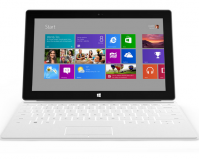
My first reaction: No operating system release from Microsoft or any other vendor is ever really "done." Anyone remember this infamous memo -- dating back to the Windows 2000 days -- from a Softie admitting there were thousands of bugs (63,000, to be exact) left in the "finished" product? Hotfixes, updates, service packs are all meant to continue to patch and fix operating systems until a new version is released.
My second thought: Is this sour grapes? I wonder whether Otellini is trying to soften the blow when ARM-based systems come out of the gate beating Intel Atom ones on battery life, performance and other specs... But that's just pure speculation on my part, since none of us independent reviewer types have gotten any real hands-on time with ARM-based Windows RT PCs or tablets at this point.
Microsoft, predictably, isn't conceding anything. A company spokesperson sent me the official statement that's going out to all reporters asking about Otellini's alleged remarks:
“With over 16 million active preview participants, Windows 8 is the most tested, reviewed and ready operating system in Microsoft’s history. We’re looking forward to making Windows 8 available to the world on October 26th.”
All that said, I'm not giving Microsoft a blanket hall pass on this one.
Windows 8 is more like a brand-new operating system, rather than a fairly minor update to an older version of Windows -- like Windows 7 was/is. It's going to take some time for drivers to materialize; for applications optimized for it to make their debut. And without more help and how-to guidance -- beyond a very short navigational tutorial built into the OS -- many users are going to call Windows 8 buggy and unstable just because it is very different and unfamiliar.
As I've said repeatedly, I'm skeptical about how well Windows 8 will be received by less-technical users and consumers when it "launches" on October 25. (More tech-savvy users already have had access to the final bits since August.) I don't consider Windows 8 the best choice for non-touch PCs and laptops; I think Windows 7 is the better option on those systems. I'm hoping Windows 8 and Windows RT work well on the new generation of hardware optimized for the operating system that will start shipping this fall.
I'm not the only one saying this, by the way. Even though there've been positive reviews of Windows 8, there has been plenty of criticism, too. I don't think CEO Steve Ballmer will have a leg to stand on, this time around, if he tries to claim the beta testers didn't warn him about Windows 8 -- something he said after Vista made a very bad showing.
So what's your take? Did Microsoft declare Windows 8 "done" too early? Would waiting another month or three -- leading to the company missing holiday 2012 -- have made a difference?
Kick off your day with ZDNet's daily email newsletter. It's the freshest tech news and opinion, served hot. Get it.
Talkback
No, I think it needs to be released
If Microsoft waited much longer, they'd be falling behind rather than pushing tech forward.
I agree, with the first sensible cross platform release, they can't wait.
Also, unless i've missed something here, what bloomberg called "bugs" actually turned out to be driver support? and some software titles... So not the OS really.
I won't lie, i'm still not sold on the start menu; don't get me wrong I like it fine, and i'm looking forward to the tablets... I litterally don't like the cross over to the desktop from the start menu... But that's just my taste!
There will be bugs; it's a new OS release. At the end of the day only the foolhardy replace thier primary OS in the first month. I shall be installing on release day, but as ever i'll be dual booting 'till the worst of the bugs come to light.
Released with minor bugs and SP1 follow shortly
Agreed, get it out the door already with caveat
Lazy Partners
I agree and too many computer models
Just like the automotive industry. You cannot be an automaker with 100 different starters for a single model year and compete again other automakers that have 5 different starters. Windows PC's to many models and options verses Apple models and options.
You also cannot sell cars without A/C like they use to. Is is not standard equipment and to cost to the automaker for A/C in a car is now less than it was when it was optional. What version of USB does each model have, what out graphics memory, or video out ports? This is all stuff cosumers should not have to worry about. All computers should have USB 3.0, with at least a medium amount of graphics memory, and HDMI mini port. Guess what, if that is the standard the hardware accessories become more standard and the whole windows plateform is better for it long term.
Windows OEM's just don't get it.
Well, yes and no!
That said, Windows OEMs often stretch themselves too thin with a large number of similar offerings which end up on discount shelves. They would be much better off by selling fewer platforms with more expandability than offering a platform for everybody and selling them at premium prices.
Cars are a good example - the Japanese car makers sell 2 or 3 models of each platform with each model having a different options package. No mixing and matching.
American auto makers sell 3 or 4 options packages with each and every model which can be mixed and matched at will. The buyer can pick any combination there of PLUS they can add any single option the buyer wants. The problem is that to get what the buyer wants, they have to order it from the factory.
The Japanese auto dealer has at least one of each on the lot. No muss, no fuss. And if you want a different color, they will get you one from another dealer.
Too many choices? Buy an Apple product!
Techies study “spec sheets” for impressive numbers, but ordinary consumers look at reliability, service and being able to do with the device what it was designed for. Windows 8 has impressive specs and is technologically sophisticated, but it tries to be a Swiss Army knife, rather than a focused tool. There should be 2 versions. One specializing for desktop use and productivity, as well as another one focused on touch, data presentation and mobility features, such as long battery life. A Swiss Army knife can fulfill all of its functions, but many of them are very much compromised compared to the specialized tools they are trying to emulate.
Not really, no
More importantly, though, Apple has no fallen behind the curve and begun to make mistakes. The iPhone 5 is a mediocre upgrade that still lacks an HD screen, now trails behind other smartphones (notably the Android Galaxy S3 and the Windows Phone Nokia Lumia 920) in numerous areas, including screen quality, pixel density, resolution, brightness, touch sensitivity, camera quality and integration with online services.
Sure, iOS 6 plays catchup with Windows Phone from 2 years ago, finally getting Facebook and Twitter integration (twitter in 5, of course), but they've made some serious missteps. Abandoning Google Maps in favor of their own half-baked solution was a big mistake, and Siri...well, we all know by now it doesn't work as advertised. Apple has now become the company of "iteration" while everyone else is innovating and breaking new ground, particularly Nokia and Microsoft.
Intel themselves
USB is a dead-end though
Daisy chaning sounds good!
Actually
Thunderbolt is a nice interface, but it's hardly what one would call "ubiquitous." USB 3.0 isn't quite as fast (5Gb vs 10Gb) but it's totally backward compatible and is rapidly replacing USB 2.0 as the defacto port standard.
I expect TB will stick around for a long time, and I hope it'll eventually become common in every PC, but it's just dishonest to call USB a dead end.
in what sense?
I do think many of their partner designs are "meh" (though Surface looks brilliant), but there's no way to argue that there is a lack of hardware support for Windows 8. There are DOZENS of models from which to choose.
Lexmark
Lexmark not a good example
Couldn't happen fast enough
I agree also
You assumption
So now you have most people that dont even like the metro look/feel or the start screen, and they add another layer frustration with the back and forth between the two and stuff like two versions of IE, one that does work with plugins, one that does not.
You end up with a nightmare of a product that is destined to fail big time.
Too early for 8