HP: Is a push into tablets, smartphones risky?

Summary: An analyst downgraded shares of HP based on a likely push into tablets and smartphones. However, HP has to push into the post-PC era regardless of the risks.
Hewlett-Packard is taking on a risky strategy to "aggressively attack" the smartphone and tablet market and risks damaging its balance sheet, said Jefferies analyst Peter Misek.
The larger question is whether HP can afford to stay out of the mobile fray in the name of profit margins.
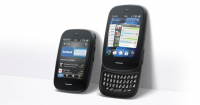
In a research note, Misek said "we believe HP will aggressively attack the smartphone and tablet markets, which we believe are risky investments."
He continued:
After failing with its acquisition of Palm and subsequent goodwill and inventory write-offs totaling $3.3B, recent comments from HP management point to a retargeting of tablets and smartphones. While the move makes sense strategically, we see it as a high risk move. On top of adding costs and working capital burdens to an already stressed balance sheet, there could be additional write-offs. We note that to date almost all PC OEMs have failed to gain significant traction in consumer tablets/smartphones.
Misek's point is well taken. HP's mobile plans will be risky. And no PC makers have made the mobile transition except for Lenovo, which is gaining traction in China.
But the reality is that HP is a PC company facing the post-PC era. It's clear that the PC and printer businesses will be challenged for some time. However, HP has to try. Is doing nothing on the mobile front really a choice?
The short answer is that HP thinks it has to go mobile. Meg Whitman told Fox Business that it has to offer a smartphone. Other signs point to HP making a mobile move.
It's clear HP is caught in a bit of a mobile vice, but the do-nothing option isn't much of one.
Kick off your day with ZDNet's daily email newsletter. It's the freshest tech news and opinion, served hot. Get it.
Talkback
HP really blew it with the Palm debacle
nobody does
Are you sure?
This isn't a "VM" solution (well no more than any other Android handset) like RIM's Playbook, but "proper" Android with an added JavaScript Framework.
That not an interesting proposition?
Of course, they are also sat on the BeOS, this would require more work - but I could see a mobile platform built on that being mighty.
They had the chance but did blow it big time
Half Palm's fault?
The WebOS table was nice, but it had its weaknesses in the hardware and design. I had one fail and brick, another is working fine. After the first major software update, that is. Sadly, the software just wasn't ready at release. Had they had the software version from September or so at release in June, we might be seeing a whole different market today.
No, I don't see Palm having fault in the failure. The fault lies squarely on the shoulder of those who took it over and destroyed something quite exceptional.
OS?
OS
WebOS could be a strong move
WebOS
Regardless of how, it seems clear that HP must find a way to get a foothold in these markets and they cannot fail this time.
So ......
vice?
I guess you could call mobile phones a vice, but I believe you meant to say vise.
If HP can make quality equipment and convince buyers to go for it they should have no problems. I still am using my HP computer from several years ago and we are using an HP Printer that is less than the computer in age, but still a few years old. I have an HP laser printer at my desk that is 18 years old and still works, it is not pushed hard though. The point is they know how to make quality products--have you ever seen HP test equipment? They were the industry standard, then they spun that portion off as Agilent. I know that they had problems a while back with their tablet offering, and when they bought Compaq, but those were more problems with purchased companies and melding their products into thier own lines, not quality of manufacturing.
What reality are you living in?
PC makers in the smartphone market:
Acer
Asus
and, hmmm, who I forgetting... oh, yeah. SAMSUNG!!!!!!!!!
As for HP, they never tried. Buying a company doesn't count as trying. Hurd was an idiot. We should all be glad he's gone.
Solutions
Those are pretty much the only ones they're going to sell anyway, so setting expectations higher than that is a mistake.
An Open WebOS
Small 'apps' don't always cut it. With WebOS, you have a real Linux system. The front shell runs something kinda sorta like Android does. Then, just have well documented hooks into the hardware, and there you go.
Make the things on a heavily automated assembly line, instead of using Chinese slaves, and get the cost down lower than they can go. Then, sell one to everybody. It would be the book reader of choice. How many school kids are there in the US anyway? What about Europe? Or, India?
I know that I would buy a $200.00 7 inch tablet with a 1024X760 screen, and switchable back light or reflected light source. Let me buy the SD card separately. It could ship with a very cheap 4GM internal, and then I just buy a plug in card for my user memory. Put /home on the SD, and it's all good. USB port for both charging and data transfer, wireless and Bluetooth and we're set. It's not a phone, and I would only need a face camera.
Yes, that sounds like a winner.
Looser is to try to put out a $600.00 weak machine that is undersold by their own laptops in price.
Palm, WebOS, and HP
Simplicity. It's the simplicity, stupid.
There's A Difference Between "Risky" And "Foolish"
"Foolish" = going with anything with "Windows" in its name.
Last Time I Looked
The WebOS tablets sold very quickly, once the price dropped to what the market was willing to pay. The tablets seem to have been very good for use too. The problems were that HP wanted too much money, and that they didn't give enough support. More community support from HP, and the tablets would have sold well. As it is, HP sold every tablet it made in less than two months.
Market Failure is having a warehouse full of something and no one to buy it.
What HP suffered wasn't market failure, it was management failure.
HP Needs
Anyways they will both add up to total sales volume, and WebOS is great for HP to offer lower cost option since they don't have to pay Microsoft for licenses on that device. Although an hi-end WebOS device would be nice, as HP need to get WebOS in the spotlight too.
No-brainer
If IT departments have access to a smartphone with device management and security built in, they will fall over themselves to offer it to their users.
I'm a Google/Android man myself, but anyone who thinks the Windows mobile platform isn't going to be a massive player in large organisations is sorely mistaken. The hype over BYOD is far exceeding the reality.
Re: The vast majority of HP shops would also be Windows shops.
That’s why it needs to branch out. Mobile is the obvious growth business to be in. And the fastest-growing part of mobile is Android.