Intel steps up its Atom mobile push
Summary: Intel still has a rough road competing with the likes of Qualcomm and ARM. A clearer picture of Intel's mobile success will emerge beginning at the end of the year.

Intel is stepping up its mobile chip cadence with new Atom processors coming up as the chip giant tries to entice more smartphone and tablet manufacturers to go with its platform.
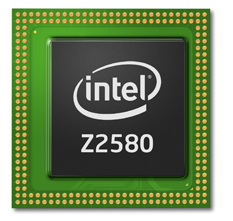
At Mobile World Congress in Barcelona, Intel outlined the following:
- A dual-core Atom platform for smartphones that will double compute and boost graphic processing.
- Multimode and multiband LTE chips for global roaming. These processors will land in the first half of 2013.
- Asus will launch a new Atom Z2420 based Android tablet.
- Lenovo's IdeaPhone K900 is the first product with the new Atom processors. Those phones appear in China in the second quarter.
- A roadmap that includes a quad-core Atom system on a chip, dubbed Bay Trail, a processor available for the holiday shopping season of 2013.
Overall, Intel's new Atom processors---Z2580, Z2560, Z2520---come in speeds ranging from 1.2 Ghz to 2 Ghz. The processors also support larger screen tablets.
Add it up and Intel is seeding the globe with its Atom chips and working out agreements with device manufacturers. The company, however, still has a rough road competing with the likes of Qualcomm and ARM. A clearer picture of Intel's mobile success will emerge beginning at the end of the year.
Kick off your day with ZDNet's daily email newsletter. It's the freshest tech news and opinion, served hot. Get it.
Talkback
Confusing...
But products only being available in time for Christmas 2013, that is a long time to wait. I was thinking of getting a tablet and thought, "oh, I'll wait," until I got to the end of the press release.
It sounds impressive though.
How Will Intel Make Money From This?
They're almost there for power consumption
I really want to love ARM, and I still do a little, but I'm not crazy. ARM designers need to step up their game.
To a point
Intel can also stay ahead of the curve in terms of die size. Building a new FAB for a smaller scale (E.g. 22nm) requires an investment that runs into the billions. Intel can invest that money up front, many foundries need to milk the current generation as far as they can, before they can justify the expense of a new foundry.
As to ARM vs. Intel in actual processors, Intel's ace up its sleeve is Windows compatibility. Tablets running full Windows, using Atom, run as long as Windows RT, Android or iOS tablets, yet can also run all of your day-to-day applications.
An Intel tablet + dock, 24" Monitor, mouse and keyboard mean that a tablet can be used to tablet tasks on the move and plugged into a docking station and used as a PC when at base - which is what I do. That means I have all of my apps and data with me on the move and don't need to sync, even to the cloud, in order to work at my desk, when I get back.
And if I need to call up an Office document, edit source code etc. on the move, I have my desktop applications instantly available.
Obviously, I prefer to use tablet apps on the move. For example, I take notes in One Note for Modern UI on the move, then have them open in a window in One Note 2013 on my desktop, alongside a Word to type up my notes.
This is what Intel does best.
Re: This enables them to make stuff significantly cheaper than their compet
Why are their chips so expensive?
Re: They're making a lot of money, it should be obvious.
We'll see