Microsoft Project Austin: A new Windows 8 note-taking app inspired by Courier

Summary: The Microsoft Visual C++ team has built a Windows 8 app that takes much of its inspiration and code from Microsoft's never-realized Courier dual-screen tablet.
A group inside Microsoft's C++ team has developed a digital note-taking application for Windows 8 that is codenamed "Project Austin."
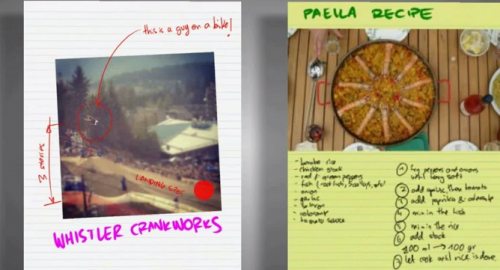
The app allows users to add pages to a notebook, delete or move them, use digital ink to write or draw and add photos. Notes created in Austin can be shared with other Windows 8 apps, like e-mail and SkyDrive. Users can choose different types of "paper" and view the pages in a variety of ways, including leafing through them like a paper book.
The Austin team wasn't trying to compete with Microsoft's more robust OneNote digital note-taking app, according to a September 20 post on the Visual C++ team blog about the new app. But they did take "much of the inspiration and code" from Courier, Microsoft's cancelled, dual-screen note-taking tablet.
"We believe in the beautiful simplicity of just a pen and a piece of paper, and that's what we tried to recreate with it. Much of the inspiration and code for the Austin app draws from an earlier project code-named Courier," blogged Visual C++ developer Jorge Pereira.
Courier was a Microsoft-developed dual-screen tablet that never made it out of incubation. It was shelved before it ever came to market back in 2010.

The real reason behind the development of Austin wasn't so much to resurrect Courier as it was to showcase C++ and Visual Studio 2012 features like automatic code vectorization and C++ AMP, its built in parallel-computing technology, Pereira said.
"Austin aims to demonstrate with real code the kind of device-optimized, fluid and responsive user experience that can be built with our newest native tools on the Windows8 platform," he wrote.
The Austin team is making the majority of its source code available for download via CodePlex. The team also is planning to continue a series of blog posts about how they built Austin. Austin is built mostly on C++, and also uses C++/CX to interface with the Windows Runtime and XAML to display some user interface elements, according to the post. The graphics engine is built on DirectX.
Austin's code is structured with common functions grouped in a library, which the team has codenamed "Baja."

There's no word in the post, designated part one of six, about when and if the team plans to make its app available in the Windows Store. If I get more information, I'll add it to this post.
Update: This isn't the first time Microsoft has used the "Austin" codename, by the way. The defunct ResponsePoint 2.0 product was codenamed Austin. And Austin also was the codename of the cloud version of Microsoft's StreamInsight complex event processing technology.
Update No. 2: A Microsoft spokesperson said the Visual C++ team had "nothing more to share" as to whether, when or how Project Austin will be available to Windows 8 and Windows RT users.
(Thanks to @gregcons for tweeting the link to the Austin post.)
Kick off your day with ZDNet's daily email newsletter. It's the freshest tech news and opinion, served hot. Get it.
Talkback
Microsoft Project Austin: A new Windows 8 note-taking app inspired by Couri
The original Courier software engineers developed their apps for the iOS
Hopefully, this "Courier" software app can be ported to run on Win 8 RT tablets with the same degree of functionality that the iOS "Courier" apps have. If that scenario does come to pass, owners of Win 8 RT tablets will benefit greatly.
However...
You would never be able to get the feel right with those fat-tipped things that pass as a "stylus" on iOS.
;) I'll be the first to point out
...even though the company that is putting the boots to their mobile sales and has a hit on their hands (Galaxy Note), as well as another company, that has the market-leading handheld gaming console (Nintendo DS/3DS), don't agree with Apple's position.
But I hear ya. And actually it is 256 pressure points (zero does count) in a lot of Wacom digitizers, but many of the higher-end models support pressure levels in the thousands. What other companies make pressure-sensitive digitizers for touchscreens and tablets? You never really hear about anybody other than Wacom.
Tapose was NOT made by the Courier team
Paper, however, was designed by the former Courier team. It is just a sketching app, but it contains the same kind of notebook graphics and animations as the Courier mockup videos. It lacks most of the other functionality.
I should know - I bought both of them (but wish I hadn't - hindsight is a b*tch).
Mary Jo penned a ZDNet blog that stated Tapose was a product by a few
You were right, Tapose was a Kickstarter project. However, that Kickstarter project was funded (mostly by) and aided by J. Allard - former Microsoft Chief Experience Officer and champion of the MS Courier project.
J. Allard brought together former MS designers and developers that were part of the "Pioneer Studios", an in-house Microsoft unit spearheading the Courier project.
These facts were taken from a MJF story "originally published as "Former Microsoft Courier team members launch hot new apps for the iPad" on ZDNet's All About Microsoft blog. You might want to look that up, Joe_Raby
Why Bother?
But really, other than a few fancy page layouts and animations, what is the point? This doesn't do anything better than OneNote or even OneNote MX, and is missing a ton of functionality from those two.
This is part of the problem with Microsoft, in my opinion. There's so many different divisions that half the time they're competing with other groups without even knowing it. Why have a group working on OneNote MX and another on this? And what happened to all the Microsoft Research stuff about a natural user interface for touch and pen allowing the paper itself to be manipulated with the other hand while writing with the pen. They worked on that demo / paper and after that it just vanishes?
It just always seems like they don't always use their enormous resources very well, when there's all these projects that compete with each other instead of being combined into one.
You missed the point ...
That was it. Period.
Of course, but...
Typical
OneNote could have been the killer app for Windows 8
The courier idea, may still exist in the minds of the people at MS...
What is needed is for MS, or some other enterprising OEM, to take the idea of the Surface tablet, and remove the flat keyboard side, and in its place, put a second screen, which can serve as a keyboard and/or screen, depending on the functions being served by any application. Both screens could be used at the same time, for one application, or for separate applications.
It will happen
This app would work great on Sony S Tablet