Shuttleworth's one device: The smartphone is the tablet and the PC

Summary: Forget post-PC. Canonical's Mark Shuttleworth envisions a future where the smartphone is the brain of your tablet as well as your laptop and even your TV set, all connected to the cloud.

One device, one cloud. Let's get together and feel all right.

It sounds very Bob Marley, but that is exactly what Canonical's South African CEO, Mark Shuttleworth, is suggesting will be the future of computing.
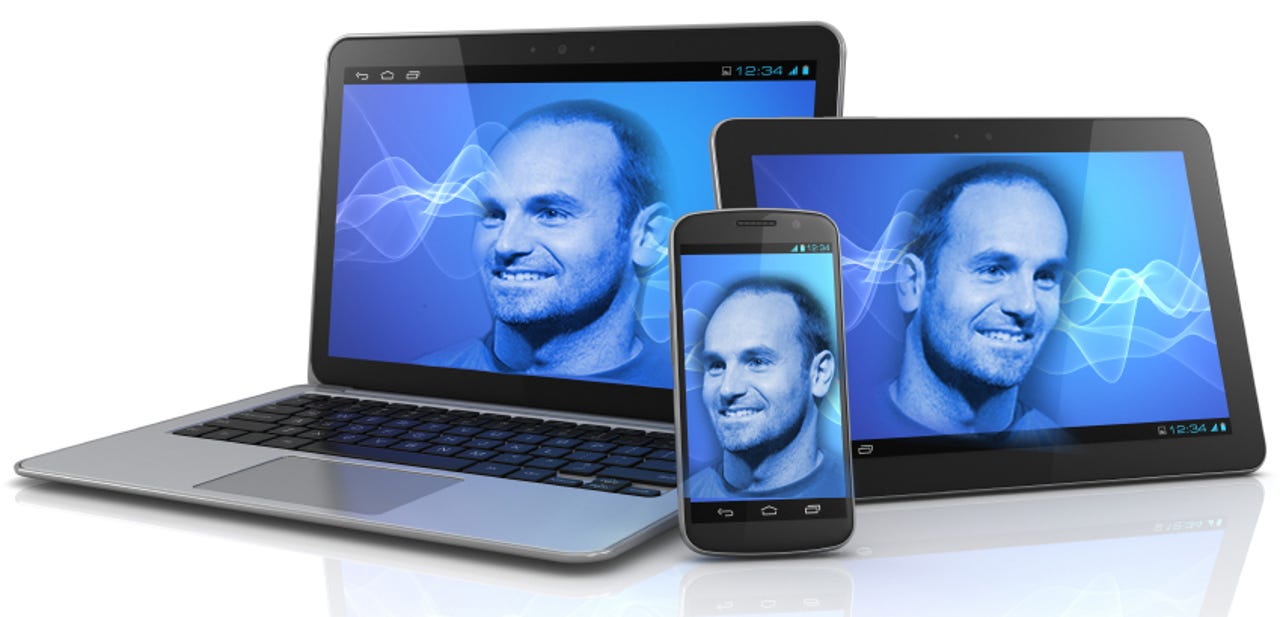
3devicesMark-cropped

In a video posted to YouTube this week, a very Bono-like Shuttleworth, channelling his inner Jony Ive and Steve Jobs, spoke at length about the mobile version of the company's open-source and Linux-based operating system, Ubuntu for tablets. The OS will be entering a preview release shortly that will be installable on selected Android hardware, such as Google's Nexus 7 and Nexus 10 tablets and Galaxy Nexus phone.

The mobile version of Ubuntu has spent a long time in gestation. Canonical is entering the tablet and smartphone market five years after industry leaders Apple, Google, Microsoft and BlackBerry all carved out their respective chunks of the consumer and enterprise pie for mobile operating system mindshare.

Of course, we're talking about a very dynamic and volatile industry, where anyone coming up with a better idea can disrupt the marketplace. It's also a market where the existing players aren't sitting still, and are constantly improving their software and continuing to battle for better market position.

The future of mobile computing is absolutely not set in stone. I really have no idea how well the mobile version of Ubuntu will be received, whether OEMs will choose to create product offerings out of it, or developers will dedicate time to porting applications to it.

I don't want to make any predictions about Ubuntu for tablets, if only because I work for a company that is itself jostling for mobile position in the tablet and smartphone space, and it would be improper and unethical for someone who has a captive audience on a major technology content site to make forward-looking statements about competitors.

However, it is what Shuttleworth said toward the end of this video that I found most compelling, and I think what he speaks about in general can be considered in a platform-agnostic form as being very prescient about the future state of mobile and desktop computing.

Whether you are an adherent to developing for or using Apple, Google, Microsoft, BlackBerry or Canonical's mobile operating systems, I believe the concepts he is talking about to be fundamentally universal.

Specifically, I am referring to the fact that Shuttleworth believes that the smartphone of the future will be the single device at the center of the end-user's universe. In summary, it will act as a "brain" for the tablet, laptop, and even TV sets, which will simply be just modular display and peripheral extensions of the handheld device.

In the future, according to the video, smartphones will contain the CPU, storage, and wireless connectivity "core" of the user experience, running on a unified mobile operating system — in this case, Ubuntu running on the ARM architecture.

Instead of carrying three devices — a smartphone, tablet, and laptop, all of which would have discrete storage and memory, and would have to be independently managed — the user would just carry the smartphone and have attachable modules, such as a tablet screen, a large high-definition display, a detachable keyboard and wireless human interface devices that the smartphone would plug into or communicate with.

What he described is going even further than Steve Jobs' "Post-PC" concept, and into what I would call Unified Computing, for lack of a better term.

Of course, what Shuttleworth does not talk about in this brief video describing the benefits of Ubuntu for tablets is the back-end public and private cloud infrastructure that this mobile OS would need to leverage in order to run the most demanding sorts of applications, via web APIs and desktop as a service (DaaS). But this is implied.

Over the years, I have talked at length about cloud-based remote computing, and what shape and form the end-point devices might have. I've used the term "The Screen" to refer to a SoC-based thin client that would be a hybrid of localized processing of mobile apps in combination with desktop apps running remotely in the datacenter.

I have also written some highly speculative things about what I thought computing would be like in the third decade of the 21st century. The reality is that many of these things are closer to reality than I thought, whereas other things are still much further away.

Today, "The Screen" already exists as discrete computing devices such as smartphones, tablets, set-top boxes (Apple TV, etc) and even thin clients like Chromebooks. In the future, perhaps some five or ten years from now, that distinction between form factors may not even exist.

For Shuttleworth's vision to become a reality, you need platform unification. In other words, the smartphone, tablet, and desktop OS need to become the same operating system and developer target. Clearly, this is what Canonical is doing with Ubuntu, based on the video above.

Microsoft has also been doing this with its modern Windows UI that has initially been rolled out in Windows 8 and Windows RT tablets as the WinRT API set, or the Windows Runtime. Windows Phone 8, for the time being, while different to the Windows Runtime, has similar, but also overlapping, development APIs.

While I cannot comment on Microsoft's platform strategy over the long term, any armchair observer of this industry would have to notice the unification of major pieces of the basic core operating system on all the major Windows platforms. Windows 8, Windows RT, and Windows Phone 8 all run on the same kernel and core today.

Apple has clearly invested a lot of time in developing iOS into a very big developer ecosystem. How and when the company will approach platform unification and convergence is anyone's guess, but it is almost certain that it is coming.

And Google? The company is currently developing two different operating systems for smartphones, tablets, and laptops — Android and Chrome OS. But I think it's safe to say that platform convergence is coming sooner rather than later.

Is Shuttleworth's vision of platform unification and smartphone as center of the user experience a hallucination, or the future of personal computing? Talk back and let me know.

Topics: Smartphones, Android, Ubuntu, Tablets, Mobile OS, Microsoft, Linux, Laptops, Google, Apple, PCs

About

Jason Perlow, Sr. Technology Editor at ZDNet, is a technologist with over two decades of experience integrating large heterogeneous multi-vendor computing environments in Fortune 500 companies. Jason is currently a Technology Solution Professional with Microsoft Corp. His expressed views do not necessarily represent those of his employer.

Kick off your day with ZDNet's daily email newsletter. It's the freshest tech news and opinion, served hot. Get it.

Talkback

148 comments
Log in or register to join the discussion
  • Desktop as a Service?

    No, I don't think Shuttleworth implied Desktop as a Service in his announcement. In another announcement there is a pretty high requirements for a phone to be able to boot into Ubuntu Desktop. This includes minimum 1GHz clock or an intel cpu. This implies that the Desktop runs locally, in the phone, instead of as a Service.
    sidic
    • I find nothing insightful in this at all. Its been said for years. I think

      it was actually more applicable years ago than it is today. The device os convergence is where everyone seems headed, MS first and apple probably last. But now computing is getting so cheap that theres not much reason to have a tablet or any other device be dumb. And the cloud, yeah theryre all already connected to it.
      Johnny Vegas
      • BYOB: Bring-Your-Own-Brain

        He starts in the video talking about tablets & ends saying essentially the smartphone will be the brain of just about all devices. Perhaps it will be that & also the remote control for all devices. He is certainly not the 1st to have that idea as you can see in this Tech News Article: 2013 Smartphones Trend
        http://blog.parts-people.com/2012/11/02/2013-smartphones-trend-smartphone-lapdocks-or-webtops-convergence-or-just-a-fad/

        --- Paul Wordman
        https://plus.google.com/114660584480111918841/about
        Paul B. Wordman
        • It really makes one wonder...

          When an article like this makes a direct prediction, when so many here aptly proclaim its not a new idea, but instead one idea thats been a very long time in the making, dosnt anyone now understand exactly the direction and reasons why MS has started the whole Windows 8 movement?

          You can love it, you can hate it, but if the best you can say is that its a stupid poorly thought-out idea, your clearly WRONG.

          There are three, count ‘m, three huge huge reasons that make the Windows 8 environment an overwhelmingly compelling direction to take Windows in. And as I said, love it or hate it all you want, these three reasons alone clearly indicate why Microsoft felt it was so important to get the Windows 8 type of IT environment underway.

          1. It’s a movement closer to cloud computing and cloud computing has a couple of significant advantages to a software company like MS beyond whatever so called practical advantages pro cloud computing companies tell users they will enjoy with cloud computing. Advantage one, it begins the process of getting the public into thinking that paying monthly fees for all sorts and kinds of computing needs is normal, things that we would currently pay for once now a days and do as often as we like, paying only for our internet connection on a monthly basis. Companies love the steady predictable monthly stream of income supplying a service provides for them. It stabilizes and makes profits more predictable. The funny thing is the very same companies themselves fight tooth and nail generally to reduce their monthly recurring costs in most cases. It makes one wonder how they can sell the cloud to the public at all sometimes. Secondly, if your computing device dosnt install apps, has little onboard storage area and eventually gets everything that makes it “go” and be entertaining from the cloud, it makes pirated software and entertainment content a far more difficult, even pointless concept. A full on cloud environment where you merely use a gateway to the net would effectively end software and media piracy as it now exists. Unless you can hack your way into the services and content from your device for free. I suppose…

          2. Its easy to see why Microsoft could easily perceive the prospect of Apple deciding its time for touch screen computing to at least be broadly available for large screen devices, such as PC’s, and to make it available before Microsoft ever did, to be a terribly frightening thing for Microsoft. Apple now has a very strong history of being able to create and market new ideas in computing in rather surprising way to levels of almost unexplainable success. All the armchair pundits in the universe can sit around and explain why big screen touch screen computing isn’t a huge selling point all they like. The problem is its still inexplicable how Apple managed to sell so many devices that have no USB support, no media drive, comparatively little storage area compared to modern standards in even economy brand laptops, and is underpowered enough that it dosnt run full desktop style applications. But Apple did it. To an astounding degree. They could have sold large screen touch computing in the next year or two as “another magical thing Macs can do and PC’s cannot”. It would have been a very very ugly situation for MS and Windows to be caught flat footed on that and you can count on the fact Apple would have sold it. No matter what the armchair pundits say. MS didn’t want to be in second place in that race and now they are not.

          3. Cross platform integration of operating systems has some significant potential, particularly where you see the long term prospect for computing is seen as likely coming by way of a hand held device that’s much like a smartphone but is actually the brain for all your platforms. Moores law has been inferring that possibility forever from the hardware perspective. A largely cloud computing based environment clearly makes such a possibility all the more easy to bring in. Windows 8 is clearly the primitive first step toward that kind of reality. How do you think Windows so called “smartphone” sales would improve if it comes to be Microsoft brings in a hardware environment where your so called Windows phone is actually your Windows computer and simply plugs into all your Windows computing devices, or even remotely controls them?

          So ya, love it or hate it, fine, but don’t call it stupid because if there is one thing it is not, its stupid.
          Cayble
          • Indeed not! And here's evidence:

            The Casetop, seeking funding right now on Kickstarter.

            http://www.kickstarter.com/projects/lividesign/casetop-every-phone-becomes-a-laptop
            smather
    • while more and more of our data is moving to the cloud

      at the same time, hardware is getting better and cheaper to the point where the core OS really doesn't need to be in the cloud. I think most likely desktop will remain hardware, but each OS will have more and more seamless syncing of your data and apps to the cloud, so while the OS runs on hardware, you can access your desktop from any device; you just have to use your google, outlook, etc login to pull it all up.
      theoilman
      • @ moving to the cloud

        You didn't account for the corporate environment, where cloud computing and storage could eventually mean eliminating terminal hardware, wiring and servers literally BY THE TON ! Not to mention the savings in high dollar metropolitan square footage no longer needed for those machines. Oh yeah, and then there will be all those extraneous IT people. . .

        The potential Dollar savings are just too big to ignore.
        materva
        • RE: @ moving to the cloud

          I don't think you will see all businesses doing this, especially defense manufacturing. Better to keep certain ...secrets backed up on hard drives. Also, cloud computing won't happen to everyone on the consumer side either, because not everyone has the same type of internet connection.

          So we're still a way off from this happening all over, maybe 15 years minimum, IMO...

          TW
          T-Wrench
          • Large Corporate Cloud

            When a large corporation talks 'Cloud' they are not talking internet, but intranet. As long as the data stays on the corporate network, it is still owned by the corporation. All these other 'toys' are just ways to get to the servers. The server is where all the action is. For the largest enterprises, that's where it always was, since the 1960s. That hasn't changed. IBM still sells Billions of dollars of 'mainframe' hardware. Today's supercomputer is tomorrows must have server. well, maybe 5 years from now.

            I am expecting to see any time, a home/SMB based server appliance that will allow many of the benefits of rack computing. Why not have all your video and audio disk collections on a large hard disk? why not have a server with somewhere between 64 and 256 processors just waiting for you to need them? Think of the games that could play. Such a server could be running simple ARM chips and still give you the power of the supercomputers of five years ago. Existing Linux software could already run such a beast. So could BSD Unix. Nee more, just plug in a card with another 16 processors. How about another 256 gigs of ram, or another Petabyte of SSD storage.

            It seems an obvious direction for computing. Here, Ubuntu is claiming to be the future for these devices, that will run everything for you.
            YetAnotherBob
      • Keeping the OS on your hardware

        There is a security benefit to doing this as well. Sync with the cloud the things you choose to, but keep the basic OS on the hardware. Well here's a company doing something pretty incredible right now on Kickstarter. It's called the Casetop, and it turns your smartphone into a laptop with 720p or 1080p screen, a full sized quality keyboard, AND and 30+ hour battery. Only 10.5 days left to get it funded. Go here for more info:
        http://www.kickstarter.com/projects/lividesign/casetop-every-phone-becomes-a-laptop
        smather
    • The Ubuntu Unity desktop does run locally along with many native apps

      However, there was the bit about running non native apps including MS office using thin client. It is then possible to imagine running an entire desktop as a service using thin client so it is certainly implied that this phone may be capable of that.
      techadmin.cc@...
      • Already Does

        As long as you aren't too concerned with speed, Smartphones already have the memory and processor power to do that, at least on the top end. It does require an emulator for x86, or perhaps Wine and/or KVM, but, it's all already tested software.
        YetAnotherBob
  • Copying Microsoft

    "In other words, the smartphone, tablet, and desktop OS need to become the same operating system and developer target. " So basically Shuttleworth is promising what Microsoft is already doing...
    whiteafrican
    • Not quite

      The difference lies in the Shuttleworth is saying that it will be done from one device i.e. the cellphone is docked into the tablet to become the tablet and is docket into the pc to become the pc, docked into the TV to become the TV. The idea is that you don't have to duplicate processors, memory etc...

      Windows 8, RT and phone are three different OSs scaled for different use, while Ubuntu is one OS that resides in the cellphone and morphs form according to its requirements.
      Tom.SmithZA
      • Yes that's Mark aim and vision.

        Yes that's Mark aim and vision, and I support that. Microsoft's number priority is for high returns so if they can get people to pay for 3 or different OS's, software, cloud (xbox live) they will. And because it's Microsoft people will pay.
        root12
      • So you're saying he's copying ASUS...

        http://www.engadget.com/2012/06/12/asus-padfone-review/

        Also, extending this idea to the desktop / TV is a terrible idea: Want to make a phone call or send a text while you watch TV? Can't. The phone is docked in the tablet which is docked to the TV. Want to play a FPS game on your desktop? Can't. You've only got a cell phone processor.
        whiteafrican
        • never heard of

          speakerphone? bluetooth headsets? a set of earphones with a mic on them? plenty of options for your phone calls.
          theoilman
          • and to your main point

            yes, sometimes it is better to have multiple devices. but to always have the option of interoperability is huge, even if you don't always use 1 device for everything. you can plug your phone into your friend's TV and use it as a PC or an HTPC on his TV. you can plug your phone into/wirelessly pair a projector at work and give a slideshow. the options are endless when it's the same system that changes based on your context.
            theoilman
          • but we have memory sticks for that

            you want to bring your slide show to work? put it to your memory stick, stick it into whatever device with the usb port, and bingo - you can show it. Your presentation did not magically appear on your phone. I bet you'd use some big screen computer to make it.
            ForeverSPb
        • What if you want to watch TV and Talk on Phone??

          You are missing the point. Because the smartphone is the current mobile computing device, does not mean the phone will always contain the main mobile CPU.

          Apple may be on to something if the iWatch is a Pocket Watch and not Wrist Watch. Think of our common mobile CPU residing in your Watch Pocket. All its I/O is wireless. The smartphone is no longer smart, it is just a set of peripherals. That set being comprised of mic, speaker/ear plug, and the mobile display.

          When we get to the office or home the Pocket CPU syncs to the Home /Office Display. For a display, thing 3D displays a la Spielberg's movie Minority Report. For real life think Microsoft Surface. No, not RT or Pro, but the MS Pixel Sense Surface, like in Minority Report.

          The Pixel Sense Surface is not only very cool display technology, it is also the Best Touch Technology available today at 10x faster response (10 milliseconds vs. 100) than the common capacitive touch tech currently in use.

          I have seen many comments in various discussion forums regarding the uselessness of touch tech. This is also related to the disdain for Win 8. Taking into consideration that the majority of desktop apps have been written for a keyboard input with mouse assistance. Point of Sales is the only industry that comes to mind that has embraced touch. It's the mind set.

          If you have not owned or used touch every day you will NOT understand until you do. And you will. Fight it as much as you want but touch is going to be in your future. The tablet has broken the ice. More and more desktop apps are embracing touch.

          The writing is on the wall. Why did MS name their tablets Surface? They are branding the Surface Name in preparation for the introduction of the new surface display technology. Why is Win 8 touch optimized? Why did MS buy Perceptive Pixel Inc.? Just connect the dots. Connect the dots. Have you seen Perceptive Pixel's 82” mulit-touch display? The active stylus?

          What about Samsung's Smart Window? Showcased at CES 2012. Or the Samsung SUR40 table top display using Microsoft's Pixel Sense.

          That's not all. The display surface can also “see”. It records and image of what ever comes into contact with the surface. Need to scan a paper page? Tilt your display flat and lay the page on the display surface. With the SUR table top surface you can use objects that represent various parameters as an input to the app.

          Now picture a group of people around the Surface Table and all their Pocket CPU's are networked together collaborating with the Surface App.
          Patrickgood1