Smart TVs may be taking off, but they're still not smart enough

Apple, Google and Microsoft have all eyed the TV market, and some expect Apple to launch a TV set next year. However, the current Smart TV market doesn't look very smart, according to Informa Telecoms & Media’s latest Smart TV forecasts. It seems a large proportion of Smart TVs are used as dumb TVs, and they go out of date too quickly to act as "digital hubs".
Informa thinks 54 million Smart TV sets will be sold world-wide in 2012, growing to more than 220 million units per year in 2017. By then, most homes in North America (63 percent) and Western Europe (64 percent) will have one, so it sounds like a healthy market. However, Informa senior analyst Andrew Ladbrook estimates that more than half of the 800 million Smart TV sets in use in 2017 will not be connected to the internet, and therefore not smart at all. He adds:
"Moreover, while any 'smart' TV bought in 2011 or 2012 can be used for streaming online video services for a few years, they lack the processing power and the necessary hardware to perform those smart TV functions that will be standard in 2015. Simply put, any smart TV purchased in 2012 will be effectively obsolete by 2015."
Part of the problem is that TVs have long lifecycles compared to smartphones, tablets, set-top boxes, media streamers and games consoles. These smart devices are often cheaper and they are much more frequently replaced.
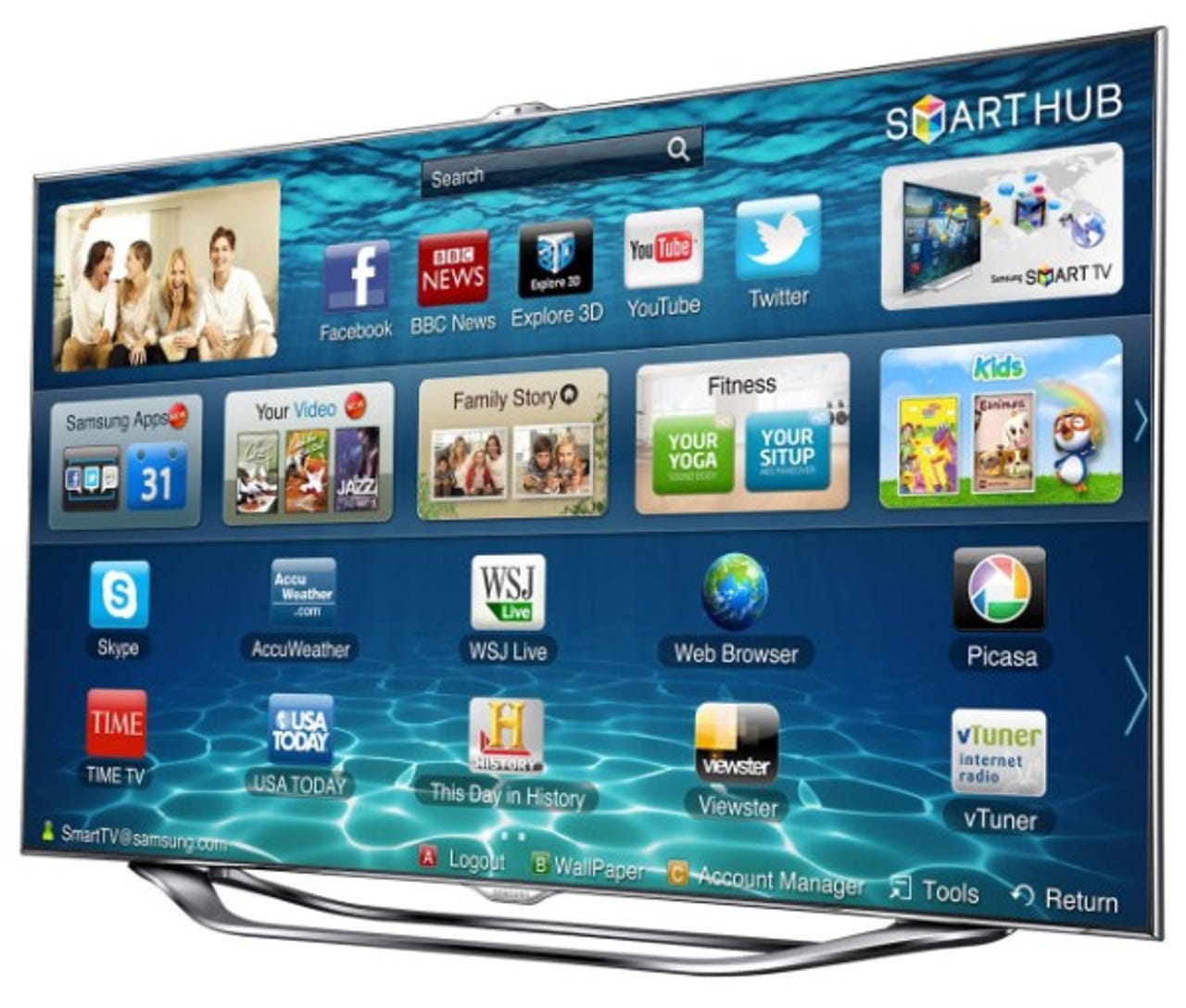
Informa also says the smart TV market is "plagued" by the "fragmentation of platforms and standards". This makes it difficult to add apps, and limits support beyond the leading suppliers, Samsung and LG. Informa "believes that Google TV or Android will come to be the default Smart TV OS for Smart TVs, [but] that is still some years away".
Since most Android apps are written for smartphone screens and look dreadful on 10-inch tablet screens, the prospect of using them on 50-inch TV screens is somewhat less than enticing. But we trust that will change….
Google launched Google TV two years ago in conjunction with Sony and Logitech, but it flopped. However, the system is based on Google Android, Google Chrome, and the Google Play store, so the company is likely to persist even in the face of market indifference. In the long term, Smart TV is likely to provide the opportunity for Google to sell more of its search advertising, apps and content, and it’s the TV manufacturers who are carrying most of the financial risk.
The TV has also been part of Microsoft's strategy for well over a decade, and is the "big screen" in the slogan first popularised by former chief technical officer Ray Ozzie: "three screens and a cloud". In Microsoft's case, it's using the Xbox 360 games console as a television set-top box, and the next version of the Xbox is expected to shift the emphasis towards home entertainment. (Microsoft closed its 500-employee Ultimate TV division in 2002, and re-assigned its hardware developers to the Xbox project.)
Apple launched Apple TV in 2006, but it has failed to make much impact on the market. It's a media streaming device with limited functionality, and has to compete with more versatile systems from Roku, Boxee, Western Digital and other suppliers. However, there have been persistent rumours about Apple producing its own TV set, and Piper Jaffray analysts Gene Munster and Douglas J. Clinton have confidently predicted Apple TV sets in the 42-inch to 55-inch range, selling for $1,500 to $2,000, and Apple could once again redefine the market.
But as Adrian Kingsley-Hughes pointed out here: "It should be noted that Munster has been talking about an Apple TV for over four years, and he confidently predicted that a standalone Apple TV would be available in 2011."
Informa's Ladbrook says:
"If TVs are going to be truly smart they must do more than offer a wide variety of online video services. Instead they must add advanced functionality including voice control, motion control, advanced advertising, attractive user interfaces and two-way communications with other smart devices – so-called ‘second screens’ – allowing these devices both to send video to the TV and know what is being watched. Manufacturers should focus less on adding more content and more on improving how users can interact with that content."
If he's correct, Microsoft has a reasonable chance of competing. Its Kinect peripheral already allows motion control of the TV set, and its "three screens" strategy allows one screen to be used instead of another, or for multiple screens to work together. SmartGlass is an example.
There are obvious business benefits if people using small screens, whether smartphones or tablets, can switch seamlessly to using large-screen Smart TV sets, when available. And if Informa is correct, they will become common over the next five years.